



Natalizumab (Anti-CD49d)
Based on 5 publication(s) in Google Scholar
Natalizumab (Anti-CD49d) (AN100226; BG00002) Solution is a humanized monoclonal IgG4 antibody inhibitor that selectively targets α4 integrin (CD49d), blocking the interaction of integrins such as α4β1 (VLA-4) with vascular cell adhesion molecule VCAM-1, intercellular adhesion molecule ICAM-1, and fibronectin by competitively binding to the α4 subunit. Natalizumab solution inhibits the adhesion, retention, and transendothelial migration of immune cells (such as CD4+ T cells), reducing the infiltration of inflammatory cells into the central nervous system or lesion sites, thereby exerting anti-inflammatory and immunomodulatory activity. Natalizumab (Anti-CD49d) solution is used in the study of relapsing-remitting multiple sclerosis (RRMS) and is also applied in the research of autoimmune or inflammation-related diseases such as Crohn's disease, B-cell lymphoma, and non-infectious uveitis. Natalizumab (Anti-CD49d) can also prevent lymphocytes from entering the central nervous system, thus preventing acute demyelinating relapses.
For research use only. We do not sell to patients.
- Purity : 99.71%
- CAS No.: 189261-10-7
- Molecular Weight:146.22 kDa
-
Storage:
Please store the product under the recommended conditions in the Certificate of Analysis.


To place orders, for customer services and technical support, please contact: MedChemExpress USA
Tel: 609-228-6898 E-mail: [email protected] [email protected]


-
 Biological Activity
-
Chemical Information
- Protocols
- Purity & Documentation
- References
-
 Help & FAQs


-

HY-P9911
Vedolizumab -

HY-P9984
Etrolizumabβ7 Integrin Inhibitor -

HY-P9913
RituximabCD20 Inhibitor -

HY-P9970
InfliximabTNF-α Inhibitor -

HY-108831
NatalizumabAnti-α4 Integrin Monoclonal Antibody -

HY-P9911A
Vedolizumab (anti-α4β7-integrin) -
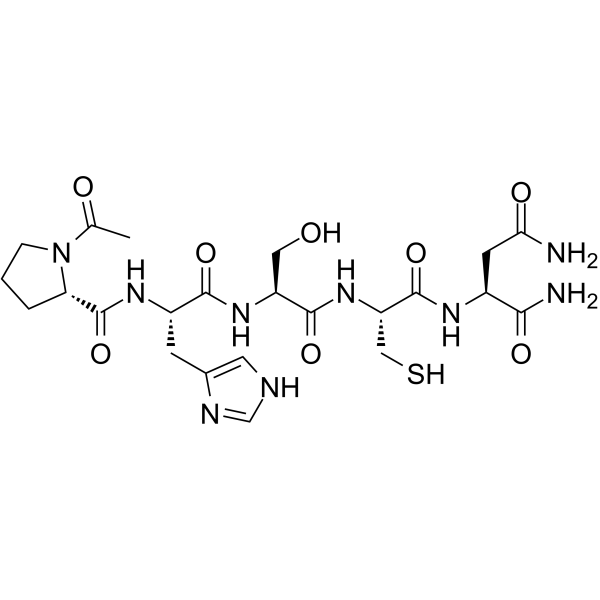
HY-13535
ATN-161α5β1/αvβ3 Integrin Binder -
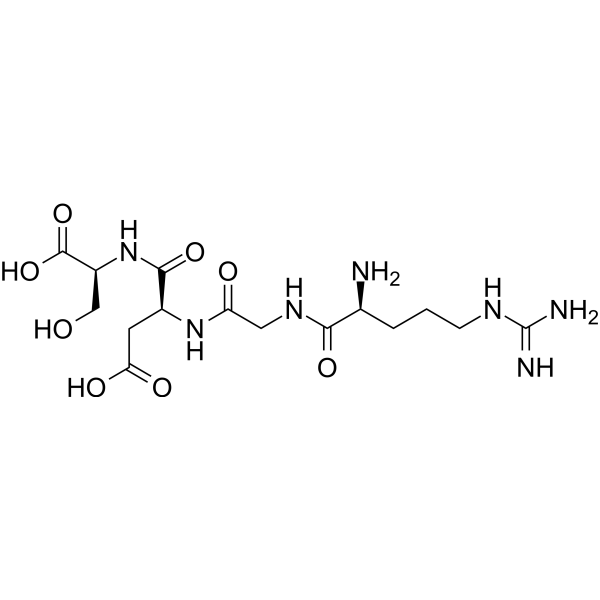
HY-12290
Arg-Gly-Asp-SerIntegrin Inhibitor -
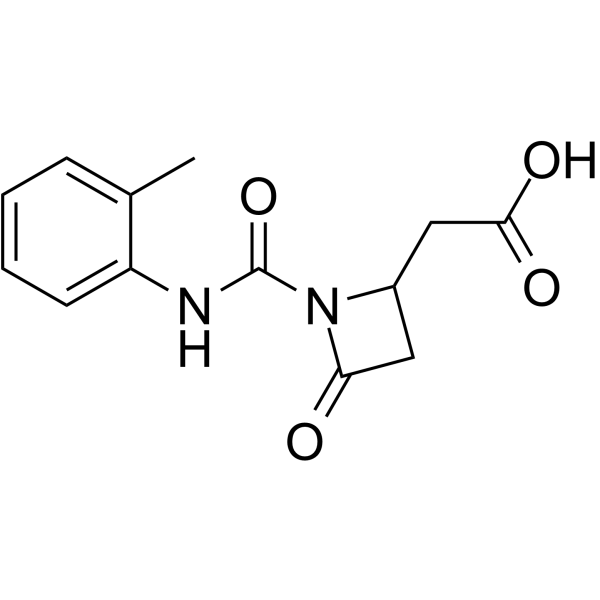
HY-134130
Integrin modulator 1α4β1 Integrin Agonist -
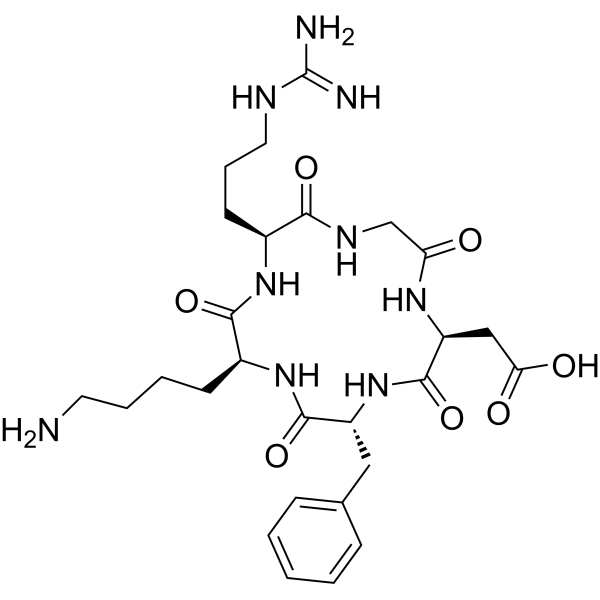
HY-P0023
Cyclo(-RGDfK)αvβ3 Integrin Inhibitor -
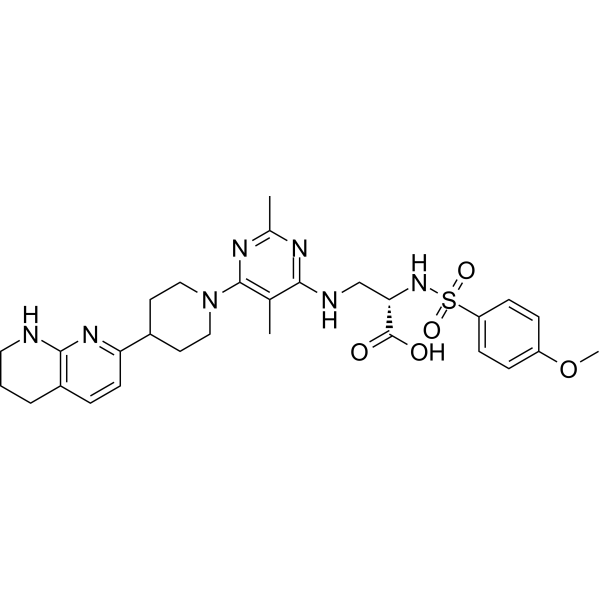
HY-100506
GLPG0187Integrin Receptor Antagonist -
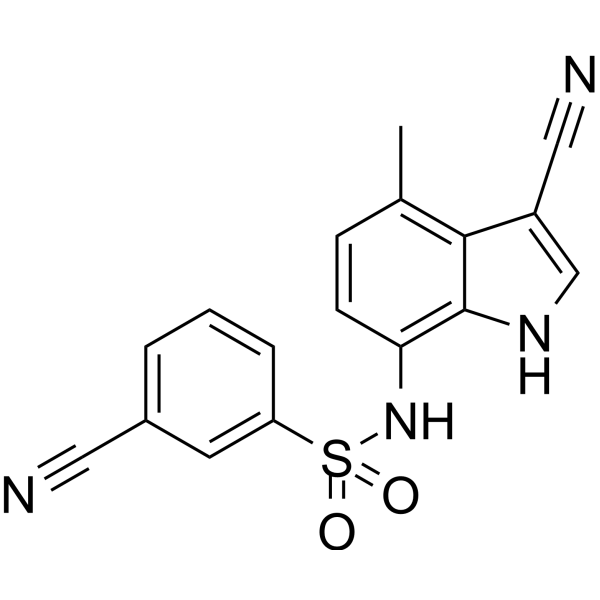
HY-14571
E7820Angiogenesis Inhibitor
Publications Citing Use of MedChemExpress (MCE) Natalizumab (Anti-CD49d)
More Customer Validation & Images

-
Histological Imaging/Staining

-
IHC

-
IF


Biological Activity
Description
Isotype
Human IgG4 kappa
Recommend Isotype Controls
Species Reactivity
Human
IC50 & Target
ITGA4
In Vitro
Natalizumab (Anti-CD49d) (10 μg/mL, 2 h) reduced the adhesion of VLA-4-positive lymphoma cells (Raji, Karpas-422, etc.) to fibronectin by 75-95% and altered cell adhesion morphology[2].
Natalizumab (Anti-CD49d) (10 μg/mL in combination with rituximab) partially overcame the protective effect of bone marrow stromal cells on lymphoma B cells, mitigating resistance to apoptosis induced by Rituximab (HY-P9913) and cytotoxic drugs[2].
Natalizumab (Anti-CD49d) (30 μg/mL) slightly upregulated the expression of IL-2, IFN-γ, and IL-17 in activated CD4+ T cells, triggered MAPK/ERK phosphorylation, and downregulated CD49d surface expression[3].
Natalizumab (Anti-CD49d) (1 μg/mL) alone could not significantly inhibit the retention of CD4+ T cells or PBMCs in an inflammatory state BBB model (BLEC, HBMEC, etc.), requiring co-inhibition of β2-integrin for complete blockade[1].
Natalizumab (Solution) (1 μg/mL) was ineffective in inhibiting shear-resistant retention of CD4+ Th1 cells when the molar ratio of ICAM-1 to VCAM-1 was 10:1[1].
MedChemExpress (MCE) has not independently confirmed the accuracy of these methods. They are for reference only.
In Vivo
Natalizumab (Anti-CD49d) (170 μg/mouse; intravenous injection; single dose) only partially and transiently reduced the firm adhesion of human T cells to the activated BBB in a TNF-α-induced acute systemic inflammation model in female SJL mice, significantly reducing T cell rolling along the vessel wall but not affecting capture[4].
Natalizumab (Solution) (0.625-2.5 mg/mouse; intravitreal injection; single dose; 21-day observation period) showed no functional or structural toxicity to the retina of New Zealand white rabbits at doses of 0.625-1.25 mg, with no significant changes in the amplitude and latency of a-wave and b-wave in electroretinogram (ERG), but the 2.5 mg dose caused retinal dysfunction, with significantly reduced a-wave and b-wave amplitudes in ERG, and ultrastructural damage in the outer plexiform layer and inner nuclear layer[5].
MedChemExpress (MCE) has not independently confirmed the accuracy of these methods. They are for reference only.
Gene ID
Accession
Conjugated
Unconjugated
Reconsititution
The product can be reconstituted/diluted with sterile PBS or saline.
Format
-
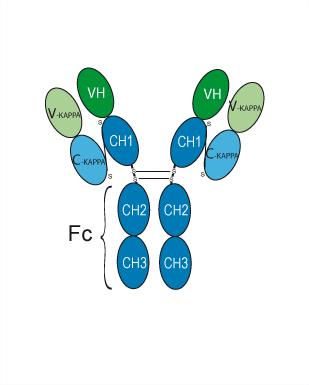
IgG4-kappa
Application
ELISA, FACS, Functional assay
Verified Bioactivity
-
 Flow cytometric analysis of 1X10⁶ Jurkat cells with Natalizumab (Solution) (HY-108831A, red). Cells were fixed with 4% paraformaldehyde. Then stained with the primary antibody at 1/200 dilution for an hour at 4℃. Alexa Fluor 488-conjugated AffiniPure Goat Anti-Human IgG H&L (HY-P83776) was used as the secondary antibody at 1/1,000 dilution for 30 minutes at 4℃. Human IgG4 (S228P) kappa Isotype Control (HY-P99003, blue) was used as the isotype control, cells without incubation with primary antibody were used as the unlabeled control (black).


Chemical Information
-
CAS No. 189261-10-7
-
Appearance Liquid
-
Molecular Weight 146.22 kDa
-
Color Colorless to light yellow
-
SMILES
[Natalizumab (Anti-CD49d)]
-
Synonyms
AN100226; BG00002
-
Shipping
Shipping with dry ice.
-
Formulation
Please refer to the lot-specific COA for specific buffer information.
-
Storage
Please store the product under the recommended conditions in the Certificate of Analysis.


Publications (5)
-
Journal Impact Factor
-
Most Recent
-
-
Mol Med
2024 Apr 22;30(1):54. PMID: 38649802
Natalizumab (Anti-CD49d) purchased from MedChemExpress. Usage Cited in: Mol Med. 2024 Apr 22;30(1):54. [Abstract]
Representative immunohistochemical analysis of Rad51 (brown) in lung sections. The control group showed strong positive staining for Rad51 compared to the BLM and BLM + Natalizumab (NTZ: 5 mg/kg) + Anti-Ly6G group (Arrows).
Natalizumab (Anti-CD49d) purchased from MedChemExpress. Usage Cited in: Mol Med. 2024 Apr 22;30(1):54. [Abstract]
Natalizumab (NTZ: 5 mg/kg) . Representative images of Rad51 expression in AECs by co-immunofluorescence staining with both Rad51 (green) and PDPN (red).
-
Pharmaceutics
LPX-TI641, a Tim3/4 Agonist, Induces Long-Term Immune Tolerance in Multiple Sclerosis Models. [Abstract]2025 Oct 30;17(11):1402. PMID: 41304740
Natalizumab (Anti-CD49d) purchased from MedChemExpress. Usage Cited in: Pharmaceutics. 2025 Oct 30;17(11):1402. [Abstract]
Microscopic imaging (10×) of Luxol Fast Blue staining of brain tissue from EAE mice treated with: (i) LPX-TI641 (Gr 6); (ii) a single dose of natalizumab (100 µg IV every three days for a total of three doses)(Gr 4); or (iii) two doses of natalizumab followed by LPX-TI641 (Gr 5).
-
-


Purity & Documentation
-
Data Sheet (265 KB)
-
SDS (252 KB)
- English - EN (252 KB)
- Français - FR (252 KB)
- Deutsch - DE (252 KB)
- Norwegian - NO (252 KB)
- Español - ES (252 KB)
- Swedish - SV (252 KB)
- Italian - IT (252 KB)
- Korean - KR (252 KB)
- Portuguese - PT (252 KB)
-
Inhibitory Antibodies User Guide (603 KB)
References
[1]. Soldati S, et al. High levels of endothelial ICAM-1 prohibit natalizumab mediated abrogation of CD4+ T cell arrest on the inflamed BBB under flow in vitro. J Neuroinflammation. 2023 May 23;20(1):123. [Content Brief]
[2]. Mraz M, et al. Bone marrow stromal cells protect lymphoma B-cells from rituximab-induced apoptosis and targeting integrin α-4-β-1 (VLA-4) with natalizumab can overcome this resistance. Br J Haematol. 2011 Oct;155(1):53-64. [Content Brief]
[3]. Benkert TF, et al. Natalizumab exerts direct signaling capacity and supports a pro-inflammatory phenotype in some patients with multiple sclerosis. PLoS One. 2012;7(12):e52208. [Content Brief]
[4]. Coisne C, et al. Cutting edge: Natalizumab blocks adhesion but not initial contact of human T cells to the blood-brain barrier in vivo in an animal model of multiple sclerosis. J Immunol. 2009 May 15;182(10):5909-13. [Content Brief]
[5]. Chawla R, et al. An experimental study to evaluate safety/toxicity of intravitreal natalizumab. Indian J Ophthalmol. 2018 Oct;66(10):1441-1445. [Content Brief]

Calculators
Concentration (start) × Volume (start) = Concentration (final) × Volume (final)


Natalizumab (Anti-CD49d) Related Classifications
HY-108831A Related Classifications
 Powered by Bioz