



α1β1
α1β1 integrin functions as a primary collagen receptor, mediating cell adhesion, migration, and extracellular matrix remodeling[1][2]. Mechanistically, α1β1 activation triggers intracellular signaling via the Ras/ERK and Rac1 pathways, which regulate mesangial cell migration and collagen matrix reorganization[1][2]. In disease models, α1β1 integrin contributes to Alport syndrome by promoting Rac1-dependent mesangial invasion of glomerular capillaries, exacerbating glomerular basement membrane pathology[2]. Distinct from related isoforms such as α2β1, α1β1 primarily enhances ERK/AP-1-mediated collagen remodeling rather than p38 MAPK activation, conferring isoform-specific downstream signaling effects[1][3]. In immune cells, α1β1 integrin synergizes with the interleukin-7 receptor to upregulate RANKL expression, promoting osteoclast differentiation and bone resorption[4]. Pharmacological studies demonstrate that blocking α1β1 inhibits mesangial migration, collagen remodeling, and osteoclastogenic signaling, underscoring its potential as a therapeutic target for renal and bone-related pathologies[1][2][4]. Collectively, these findings position α1β1 integrin as a critical modulator of collagen-dependent cellular functions, with isoform-specific signaling, disease relevance, and experimental tractability for pathway-focused interventions.
References:
- [1]. Ivaska J, et al. Integrin alpha2beta1 mediates isoform-specific activation of p38 and upregulation of collagen gene transcription by a mechanism involving the alpha2 cytoplasmic tail. J Cell Biol. 1999 Oct 18;147(2):401-16. [Content Brief]
- [2]. Zallocchi M, et al. α1β1 integrin/Rac1-dependent mesangial invasion of glomerular capillaries in Alport syndrome. Am J Pathol. 2013 Oct;183(4):1269-1280. [Content Brief]
- [3]. Gendron S, et al. Alpha1beta1 integrin and interleukin-7 receptor up-regulate the expression of RANKL in human T cells and enhance their osteoclastogenic function. Immunology. 2008 Nov;125(3):359-69. [Content Brief]
- [4]. Kagami S, et al. PDGF-BB enhances alpha1beta1 integrin-mediated activation of the ERK/AP-1 pathway involved in collagen matrix remodeling by rat mesangial cells. J Cell Physiol. 2004 Mar;198(3):470-8. [Content Brief]
-
α1β1 관련 제품 (3)
관련 제품 (3)

-
Recombinant Proteins (2)
-
TC-I 15
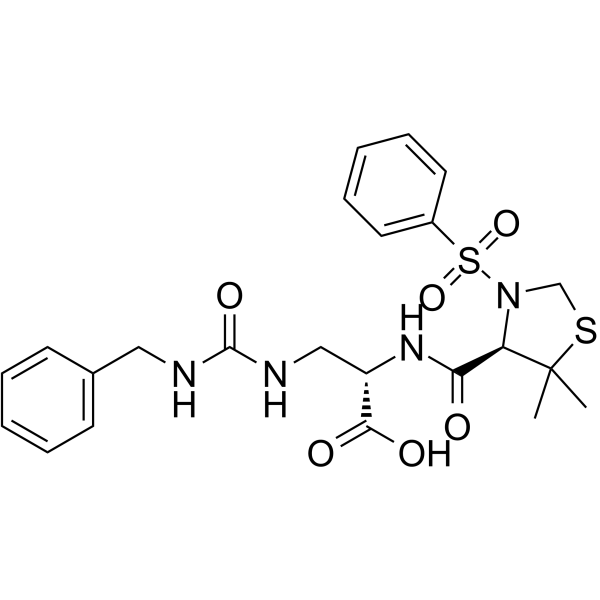 0 ImagesTC-I 15 (TC-I-15) is a type of allosteric collagen-binding integrin α2β1 inhibitor, and it also inhibits α1β1 and α11β1. TC-I 15 inhibits platelet adhesion to collagen and thrombus deposition. TC-I 15 prevents the formation of a pre-metastatic microenvironment by inhibiting the uptake of cancer-associated fibroblast (CAF) extracellular vesicles (EVs) by lung fibroblasts, which reduces the metastasis of salivary gland adenocystic carcinoma (SACC) to the lungs in mouse models, .
-
GFOGER peptide
 0 ImagesGFOGER peptide is an artificially synthesized collagen-mimetic sequence. GFOGER peptide acts as a ligand for α2β1, α11β1 and α1β1 integrins, thereby supporting integrin-mediated cell adhesion to collagen. GFOGER peptide triggers signaling pathways mediated by the α2β1 integrin receptor and upregulates osteoblast differentiation. GFOGER peptide accelerates and enhances bone formation at sites of refractory femoral defects. GFOGER peptide can be passively adsorbed onto polymer scaffolds for cell-free/growth factor-free bone formation. GFOGER peptide is used in biomaterials such as hydrogels and 3D bioinks for tissue engineering research including bone formation.
-
Collagen (bovine skin)
 0 ImagesCollagen (bovine skin) is a three-dimensional cell culture matrix and morphoregulator extracted from bovine skin, which binds to integrins (such as α1β1, α2β1, α11β1) and discoidin domain receptors (DDR1 and DDR2). Collagen (bovine skin) can be reconstituted into a three-dimensional fibrous network to mimic the in vivo tissue environment. It can not only be modified through cross-linking or concentration adjustment, but also interact with fibronectin to enhance matrix-associated cellular activities. Collagen (bovine skin) mediates the proliferation, aggregation, durotactic migration and differentiation of fibroblasts, regulates the synthesis, remodeling and contraction of extracellular matrix, and modulates the expression, activation of MMP as well as cell apoptosis, etc. Collagen (bovine skin) can be used in studies related to the mechanisms of cancer occurrence and development.




