



α2β1
Integrin α2β1 functions as a principal collagen-binding receptor that mediates cell-extracellular matrix (ECM) adhesion, mechanosensing, and intracellular signaling[1]. Mechanistically, α2β1 engagement activates downstream kinases including p38α, Src family kinases, PLCγ2, and PI3Kβ, thereby regulating cytoskeletal rearrangements, platelet spreading, and smooth muscle cell migration[2][3][4][5]. Compared with related isoforms, such as α1β1, α2β1 specifically upregulates type I collagen transcription via its α2 cytoplasmic tail and selectively activates signaling pathways including Cdc42-MKK3/4, whereas α1β1 preferentially triggers Shc-Ras/ERK signaling[2]. In disease contexts, α2β1 contributes to metastatic processes in breast carcinoma and melanoma by promoting proliferation, invasion, and anoikis resistance, as well as modulating tumor-ECM interactions and immune evasion[6][1][7]. In platelet biology, α2β1 mediates outside-in signaling independent of GPVI-FcRγ complex, coordinating tyrosine phosphorylation and calcium mobilization essential for thrombus formation[4][5]. Agonists such as the thrombospondin-1-derived peptide 4N1K enhance α2β1-dependent chemotaxis via Gi-mediated suppression of ERK activity and cAMP levels[3]. Small-molecule inhibitors targeting the I-like domain of the β1 subunit, including CSW4-161, effectively block collagen adhesion and platelet aggregation with high specificity and low toxicity, demonstrating utility for anti-thrombotic applications[8]. Additionally, biologically derived inhibitors, including snake venom C-type lectin proteins and Kunitz-type molecules like Bannakunin, selectively antagonize α2β1-mediated platelet functions while sparing other integrins[9][10].
References:
- [1]. Ivaska J, et al. Integrin alpha2beta1 mediates isoform-specific activation of p38 and upregulation of collagen gene transcription by a mechanism involving the alpha2 cytoplasmic tail. J Cell Biol. 1999 Oct 18;147(2):401-16. [Content Brief]
- [2]. Wang XQ, et al. Integrin-associated protein stimulates alpha2beta1-dependent chemotaxis via Gi-mediated inhibition of adenylate cyclase and extracellular-regulated kinases. J Cell Biol. 1999 Oct 18;147(2):389-400. [Content Brief]
- [3]. Kozlova NI, et al. Implication of Integrin α2β1 in Proliferation and Invasion of Human Breast Carcinoma and Melanoma Cells: Noncanonical Function of Akt Protein Kinase. Biochemistry (Mosc). 2018 Jun;83(6):738-745. [Content Brief]
- [4]. Inoue O, et al. Integrin alpha2beta1 mediates outside-in regulation of platelet spreading on collagen through activation of Src kinases and PLCgamma2. J Cell Biol. 2003 Mar 3;160(5):769-80. [Content Brief]
- [5]. Jakubowski P, et al. Identification of inhibitors of α2β1 integrin, members of C-lectin type proteins, in Echis sochureki venom. Toxicol Appl Pharmacol. 2013 May 15;269(1):34-42. [Content Brief]
- [6]. Wang L, et al. Integrin α2: mode of regulation and functioning in the metastatic cancer cascade. J Transl Med. 2026 Mar 10;24(1):687. [Content Brief]
- [7]. Manganaro D, et al. Activation of phosphatidylinositol 3-kinase β by the platelet collagen receptors integrin α2β1 and GPVI: The role of Pyk2 and c-Cbl. Biochim Biophys Acta. 2015 Aug;1853(8):1879-88. [Content Brief]
- [8]. Beauséjour M, et al. Suppression of anoikis in human intestinal epithelial cells: differentiation state-selective roles of α2β1, α3β1, α5β1, and α6β4 integrins. BMC Cell Biol. 2013 Dec 1;14:53. [Content Brief]
- [9]. Miller MW, et al. The Design and Synthesis of Small Molecule Inhibitors of Collagen Binding to Integrin α2β1 as Antithrombotic Agents. Blood. 2007;110:306-306.
- [10]. He M, et al. Bannakunin: a dual-target Kunitz inhibitor bridging anticoagulation (FXa/XIIa) and anti-platelet (α2β1/P2Y12) pathways. Cell Mol Biol Lett. 2026 Feb 22;31(1):38. [Content Brief]
-
α2β1 Related Products (9)
Related Products (9)

-
TC-I 15
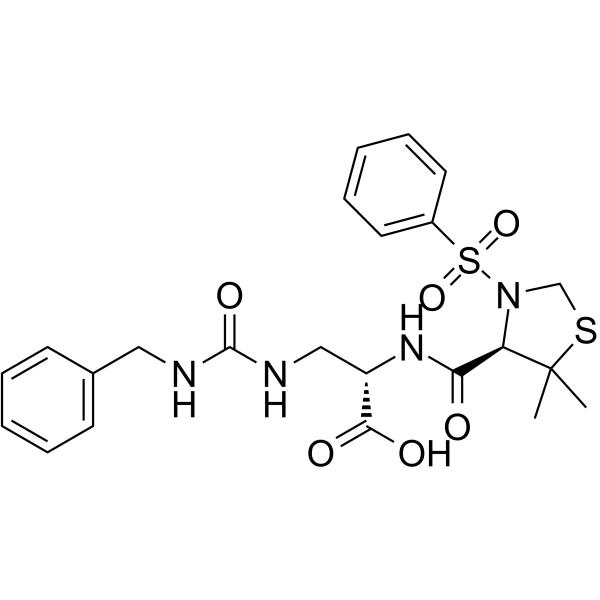 0 ImagesTC-I 15 (TC-I-15) is a type of allosteric collagen-binding integrin α2β1 inhibitor, and it also inhibits α1β1 and α11β1. TC-I 15 inhibits platelet adhesion to collagen and thrombus deposition. TC-I 15 prevents the formation of a pre-metastatic microenvironment by inhibiting the uptake of cancer-associated fibroblast (CAF) extracellular vesicles (EVs) by lung fibroblasts, which reduces the metastasis of salivary gland adenocystic carcinoma (SACC) to the lungs in mouse models, .
-
BTT-3033
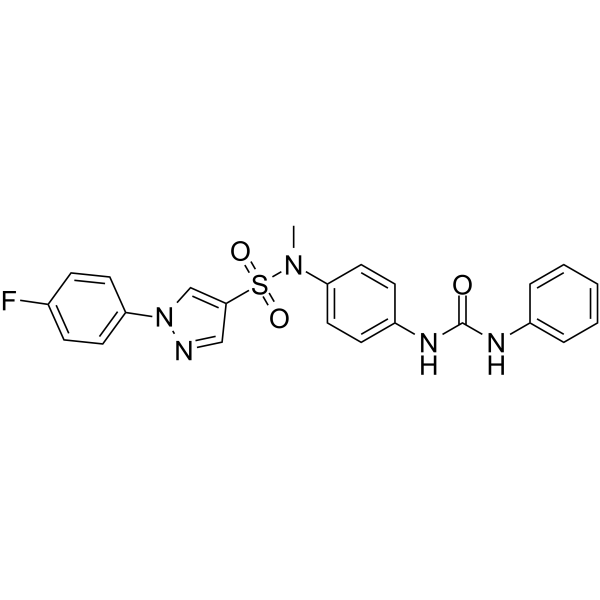 0 ImagesCat. No.: HY-110112CAS No.: 1259028-99-3BTT-3033 is an orally active conformation-selective inhibitor of α2β1 (EC50: 130 nM) by binding to the α2I domain. BTT-3033 inhibits platelet binding to collagen I and cell proliferation, and induces cell apoptosis. BTT-3033 can be used in the research of prostate cancer, inflammation and cardiovascular disease.
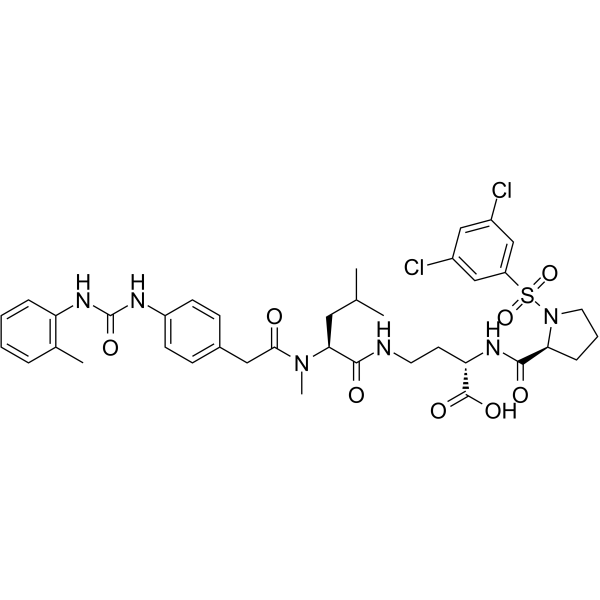
-
2-Methylbutyrylcarnitine
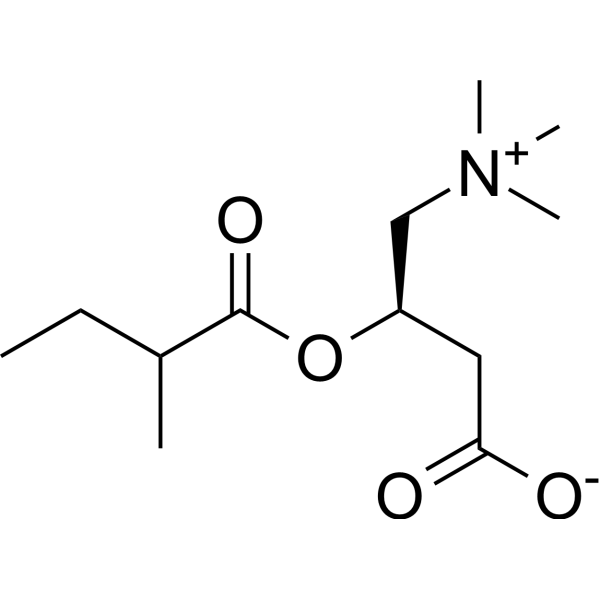 0 ImagesSynonyms: 2MBC2-Methylbutyrylcarnitine (2MBC) is an orally active short-chain branched-chain acylcarnitine and a gut microbiota co-metabolite produced from 2-methylbutyric acid via branched-chain amino acid catabolism. 2-Methylbutyrylcarnitine activates platelet integrin α2β1 (Kd = 10.6 μM), initiates the downstream p38‑cPLA2 signaling cascade, elevates TXA2 production, and thereby enhances platelet hyperreactivity. 2-Methylbutyrylcarnitine can be used in research on atherosclerosis and thrombosis.
-
BIO5192 hydrate
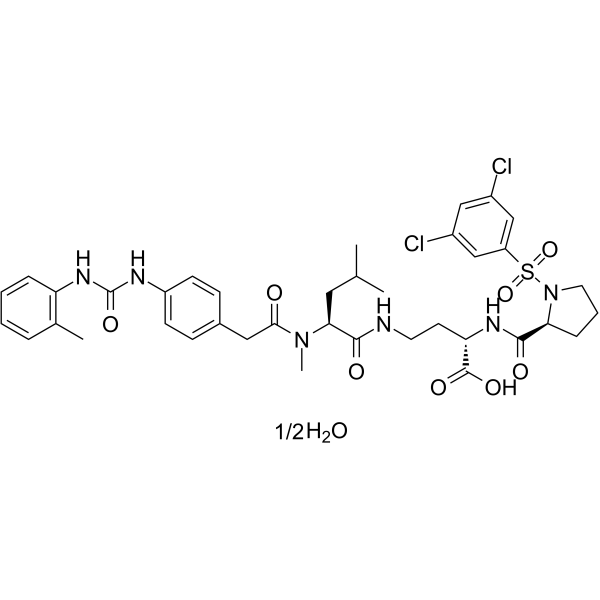 0 ImagesCat. No.: HY-107589APurity: 99.96%BIO5192 hydrate is a selective and potent integrin α4β1 (VLA-4) inhibitor (Kd<10 pM). BIO5192 hydrate selectively binds to α4β1 (IC50=1.8 nM) over a range of other integrins. BIO5192 hydrate results in a 30-fold increase in mobilization of murine hematopoietic stem and progenitors (HSPCs) over basal levels.
-
2-Methylbutyrylcarnitine chloride
 0 ImagesCat. No.: HY-W654264Purity: 98.92%Synonyms: 2MBC chloride2-Methylbutyrylcarnitine chloride (2MBC chloride) is an orally active short-chain branched-chain acylcarnitine and a gut microbiota co-metabolite produced from 2-methylbutyric acid via branched-chain amino acid catabolism. 2-Methylbutyrylcarnitine chloride activates platelet integrin α2β1 (Kd = 10.6 μM), initiates the downstream p38‑cPLA2 signaling cascade, elevates TXA2 production, and thereby enhances platelet hyperreactivity. 2-Methylbutyrylcarnitine chloride can be used in research on atherosclerosis and thrombosis.
-
GFOGER peptide
 0 ImagesGFOGER peptide is an artificially synthesized collagen-mimetic sequence. GFOGER peptide acts as a ligand for α2β1, α11β1 and α1β1 integrins, thereby supporting integrin-mediated cell adhesion to collagen. GFOGER peptide triggers signaling pathways mediated by the α2β1 integrin receptor and upregulates osteoblast differentiation. GFOGER peptide accelerates and enhances bone formation at sites of refractory femoral defects. GFOGER peptide can be passively adsorbed onto polymer scaffolds for cell-free/growth factor-free bone formation. GFOGER peptide is used in biomaterials such as hydrogels and 3D bioinks for tissue engineering research including bone formation.
-
Collagen (bovine skin)
 0 ImagesCollagen (bovine skin) is a three-dimensional cell culture matrix and morphoregulator extracted from bovine skin, which binds to integrins (such as α1β1, α2β1, α11β1) and discoidin domain receptors (DDR1 and DDR2). Collagen (bovine skin) can be reconstituted into a three-dimensional fibrous network to mimic the in vivo tissue environment. It can not only be modified through cross-linking or concentration adjustment, but also interact with fibronectin to enhance matrix-associated cellular activities. Collagen (bovine skin) mediates the proliferation, aggregation, durotactic migration and differentiation of fibroblasts, regulates the synthesis, remodeling and contraction of extracellular matrix, and modulates the expression, activation of MMP as well as cell apoptosis, etc. Collagen (bovine skin) can be used in studies related to the mechanisms of cancer occurrence and development.
-
P15
 0 ImagesP15 is a type I collagen-mimetic peptide with pro-adhesive properties. P15 binds to membrane integrin, including α2β1, to mediate cell adhesion and trigger the production of growth factors and cytokines. P15 upregulates the expression of osteogenic genes via targets including RUNX2, OSTRX and BSP. P15 stimulates the adhesion and proliferation of osteoblasts, enhances alkaline phosphatase activity and calcium deposition, and supports osteogenic differentiation. P15 can be used in research related to periodontal bone defects, cervical intervertebral disc defects, and non-union/bone defects.



