α9β1
Integrin α9β1 mediates cell adhesion and migration through extracellular matrix and endothelial ligands, including VCAM-1, which supports neutrophil adhesion and transendothelial migration[1]. Mechanistically, α9β1 ligation activates Src, p130Cas, Rac1, and inducible nitric oxide synthase, linking its cytoplasmic domain to nitric oxide-dependent cell migration[2]. In vascular smooth muscle cells, PDGF-BB upregulates α9, while anti-α9 antibody or smooth muscle-specific α9 deletion suppresses synthetic phenotype, proliferation, migration, and injury-induced neointimal hyperplasia through reduced FAK/Src-ERK/p38-GSK3β/β-catenin signaling[3]. In disease models, α9β1 and ligands such as osteopontin and tenascin-C contribute to autoimmune disease biology, including rheumatoid arthritis and multiple sclerosis models[4]. In lymphatic biology, EMILIN1-α9β1 interaction supports lymphatic valve formation and maintenance, and α9β1-deficient mice develop fatal bilateral chylothorax[5][6]. Compared with RGD-binding integrins such as α5β1, α9β1 recognizes non-RGD motifs and uses β1 as its reported partner, supporting isoform-specific experimental design[3]. For experimental applications, blocking antibodies such as Y9A2 and 55A2C enable α9β1 pathway interrogation in smooth muscle, vascular injury, thrombosis, and inflammation models[3][7].
References:
- [1]. Taooka Y, et al. The integrin alpha9beta1 mediates adhesion to activated endothelial cells and transendothelial neutrophil migration through interaction with vascular cell adhesion molecule-1. J Cell Biol. 1999 Apr 19;145(2):413-20. [Content Brief]
- [2]. Gupta SK, et al. Integrin alpha9beta1 mediates enhanced cell migration through nitric oxide synthase activity regulated by Src tyrosine kinase. J Cell Sci. 2009 Jun 15;122(Pt 12):2043-54. [Content Brief]
- [3]. Jain M, et al. Integrin α9 regulates smooth muscle cell phenotype switching and vascular remodeling. JCI Insight. 2021 May 24;6(10):e147134. [Content Brief]
- [4]. Kon S, et al. The role of α9β1 integrin and its ligands in the development of autoimmune diseases. J Cell Commun Signal. 2018 Mar;12(1):333-342. [Content Brief]
- [5]. Danussi C, et al. EMILIN1/α9β1 integrin interaction is crucial in lymphatic valve formation and maintenance. Mol Cell Biol. 2013 Nov;33(22):4381-94. [Content Brief]
- [6]. Huang XZ, et al. Fatal bilateral chylothorax in mice lacking the integrin alpha9beta1. Mol Cell Biol. 2000 Jul;20(14):5208-15. [Content Brief]
- [7]. Dhanesha N, et al. Targeting Myeloid-Specific Integrin α9β1 Improves Short- and Long-Term Stroke Outcomes in Murine Models With Preexisting Comorbidities by Limiting Thrombosis and Inflammation. Circ Res. 2020 Jun 5;126(12):1779-1794. [Content Brief]
All Product Categories
-
α9β1 관련 제품 (4)
관련 제품 (4)

-
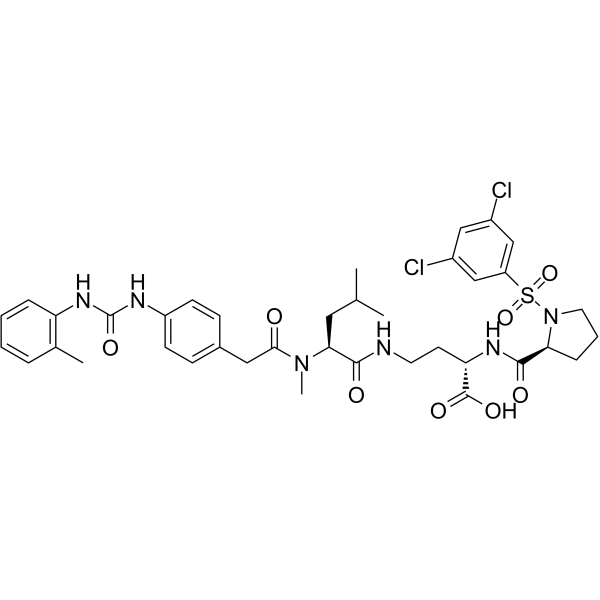
BIO5192 hydrate
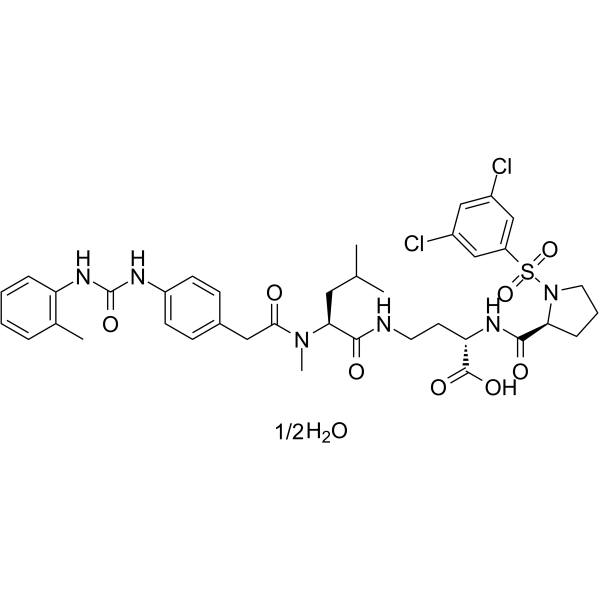 0 ImagesCat. No.: HY-107589APurity: 99.96%BIO5192 hydrate is a selective and potent integrin α4β1 (VLA-4) inhibitor (Kd<10 pM). BIO5192 hydrate selectively binds to α4β1 (IC50=1.8 nM) over a range of other integrins. BIO5192 hydrate results in a 30-fold increase in mobilization of murine hematopoietic stem and progenitors (HSPCs) over basal levels.
-
BOP sodium
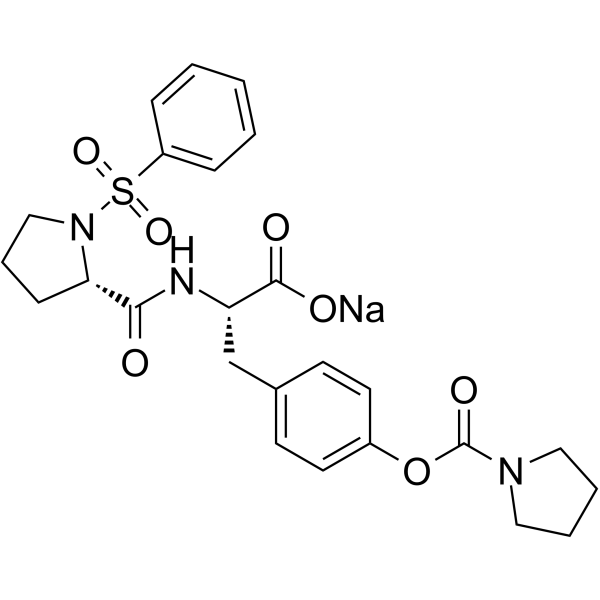 0 ImagesBOP sodium is a potent and selective dual α9β1/α4β1 integrin inhibitor with Kd values in the picomolar range. BOP sodium shows the rapid and preferential mobilization of hematopoietic stem cell (HSC) and progenitors. BOP sodium has little inhibitory activity on α4β7, α1β1, α2β1, and α5β1, αIIBβ3 integrins.