



PLP (180-199)
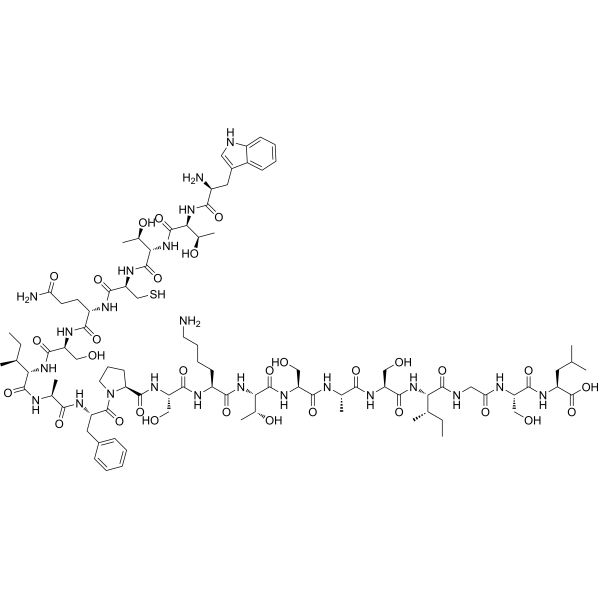
PLP (180-199) is a myelin proteolipid protein-derived peptide corresponding to amino acids 180-199 of PLP. PLP (180-199) acts as an encephalitogenic peptide and induces experimental autoimmune encephalomyelitis (EAE) in susceptible BALB/c mice. PLP (180-199) can stimulate antigen-specific T-cell responses, promote inflammatory cytokine production including IFN-γ and TNF-α, and is used for the study of autoimmune encephalomyelitis and multiple sclerosis-related immune responses.
For research use only. We do not sell to patients.
- CAS No.: 165549-58-6
- Formula: C92H145N23O30S
- Molecular Weight:2085.34
-
Storage:
Please store the product under the recommended conditions in the Certificate of Analysis.

To place orders, for customer services and technical support, please contact: MedChemExpress USA
Tel: 609-228-6898 E-mail: [email protected] [email protected]


-
 Biological Activity
-
Chemical Information
- Protocols
- Purity & Documentation
- References
-
 Help & FAQs




Biological Activity
Description
In Vitro
PLP (180-199) stimulates antigen-specific lymphocyte proliferation in spleen and lymph node cells isolated from PLP180-199-immunized BALB/c mice after peptide restimulation[1].
PLP (180-199) (10 μg/mL) induces IFN-γ and TNF-α production in lymphoid cells isolated from PLP180-199-immunized BALB/c mice after peptide stimulation[2].
PLP (180-199) (10-14 days after immunization) stimulates proliferation and IFN-γ production of spleen and lymph node cells from wild-type and B cell-deficient BALB/c mice after PLP180-199 immunization[3].
MedChemExpress (MCE) has not independently confirmed the accuracy of these methods. They are for reference only.
In Vivo
PLP (180-199) (200 μg/mouse; s.c. immunization) induces EAE in BALB/c mice with increased clinical disease scores and characteristic ascending paralysis[2].
PLP (180-199) (200 μg/mouse; s.c. immunization) induces EAE in wild-type and B cell-deficient BALB/c mice and regulates disease severity through antigen-specific immune responses[3].
Note:
Please do not refer to only one article to determine the experimental conditions. It is recommended to determine the optimal experimental conditions (animal strain, age, dosage, frequency and cycle, detection time and indicators, etc.) through preliminary experiments before the formal experiment.
Administration: PLP (180-199) peptide (200 μg/mouse) emulsified 1:1 in incomplete Freund’s adjuvant (IFA) containing Mycobacterium tuberculosis H37Ra (0.5 mg/mouse; 0.1 mL emulsion/mouse)•administered subcutaneously (s.c.) at immunization sites. Pertussis toxin (300 ng/mouse) was injected intravenously (i.v.) at the time of immunization and 72 h later to induce EAE
(2) Pertussis toxin administration is required for EAE induction and was given intravenously at immunization and 72 h later.
(3) Clinical EAE severity was evaluated using a clinical scoring system based on paralysis progression.
Histology analysis: Inflammatory cell infiltration, demyelination, and axonal loss in the central nervous system.
Immune response analysis:Increased PLP-specific T cell responses and altered cytokine production, including IFN-γ and IL-10 changes.
MedChemExpress (MCE) has not independently confirmed the accuracy of these methods. They are for reference only.


Chemical Information
-
CAS No. 165549-58-6
-
Molecular Weight 2085.34
-
Formula C92H145N23O30S
-
Sequence
Trp-Thr-Thr-Cys-Gln-Ser-Ile-Ala-Phe-Pro-Ser-Lys-Thr-Ser-Ala-Ser-Ile-Gly-Ser-Leu
-
Sequence Shortening
WTTCQSIAFPSKTSASIGSL
-
Shipping
Room temperature in continental US; may vary elsewhere.
-
Storage
Please store the product under the recommended conditions in the Certificate of Analysis.


Purity & Documentation
References

Calculators
Concentration (start) × Volume (start) = Concentration (final) × Volume (final)


PLP (180-199) Related Classifications
HY-P5462 Related Classifications
 Powered by Bioz