



TNFRSF1A/CD120a
TNFRSF1A/CD120a, also named TNFR1/p55, mediates cellular responses to soluble TNF and forms a high-affinity receptor system for soluble tumor necrosis factor[1]. Mechanistically, TNF-TNFR1 signaling activates NF-κB and MAPK pathways and can also trigger apoptosis or necroptosis, linking inflammatory transcription with regulated cell death[2]. In vascular models, TNFR1 stimulation was sufficient and necessary for TNF-α-induced endothelial permeability, whereas antagonist anti-TNFR1 antibody blocked this response and antagonist anti-TNFR2 antibodies did not[3]. In disease-focused models, Tnfrsf1a mutations associated with TRAPS reduced cell-surface TNFR1 expression and suppressed responsiveness to TNFα, indicating that mutant-receptor biology requires model-specific validation[4]. Compared with TNFR2/CD120b, TNFR1 shows distinct functional output, because TNFR1 accelerated NK-cell death whereas TNFR2 promoted NK-cell accumulation and effector function in infection models[5]. For experimental applications, antagonistic anti-TNFR1 antibodies such as ATROSAB inhibit TNFR1-mediated responses in vitro, and anti-human TNFR1 targeting modulated immune responses in humanized autoimmune disease models[6][7]. - TNFR1/CD120a supports inflammation, endothelial permeability, and regulated cell death pathway studies. - Selective TNFR1 blockade helps separate TNFR1-driven pathology from TNFR2-mediated immune functions.
References:
- [1]. Grell M, et al. The type 1 receptor (CD120a) is the high-affinity receptor for soluble tumor necrosis factor. Proc Natl Acad Sci U S A. 1998 Jan 20;95(2):570-5. [Content Brief]
- [2]. Ting AT, et al. More to Life than NF-κB in TNFR1 Signaling. Trends Immunol. 2016 Aug;37(8):535-545. [Content Brief]
- [3]. Ferrero E, et al. Roles of tumor necrosis factor p55 and p75 receptors in TNF-alpha-induced vascular permeability. Am J Physiol Cell Physiol. 2001 Oct;281(4):C1173-9. [Content Brief]
- [4]. Akagi T, et al. TRAPS mutations in Tnfrsf1a decrease the responsiveness to TNFα via reduced cell surface expression of TNFR1. Front Immunol. 2022 Jul 22;13:926175. [Content Brief]
- [5]. McCulloch TR, et al. Dichotomous outcomes of TNFR1 and TNFR2 signaling in NK cell-mediated immune responses during inflammation. Nat Commun. 2024 Nov 14;15(1):9871. [Content Brief]
- [6]. Richter F, et al. Antagonistic TNF receptor one-specific antibody (ATROSAB): receptor binding and in vitro bioactivity. PLoS One. 2013 Aug 19;8(8):e72156. [Content Brief]
- [7]. Williams SK, et al. Anti-TNFR1 targeting in humanized mice ameliorates disease in a model of multiple sclerosis. Sci Rep. 2018 Sep 11;8(1):13628. [Content Brief]
-
TNFRSF1A/CD120a Related Products (8)
Related Products (8)

-
Oxazolone
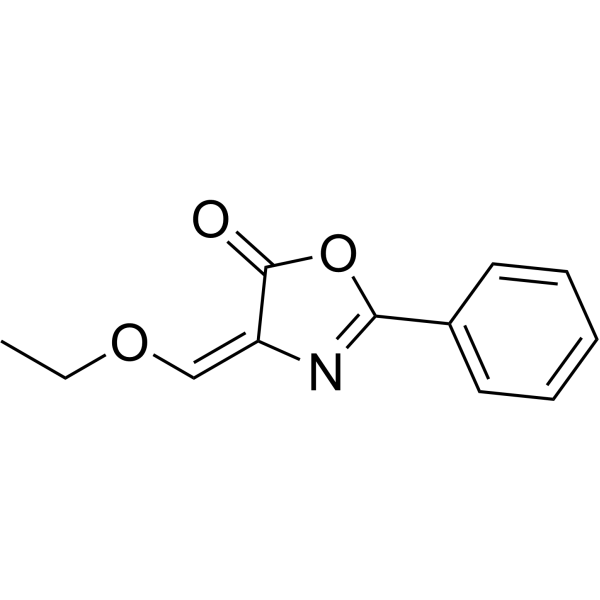 0 ImagesOxazolone is a haptenizing agent that induces acute or chronic inflammation of the large intestine and is used to construct models of colitis. Oxazolone can cause Th1/Th2-dependent colitis with weight loss and diarrhea. Oxazolone-induced inflammation can be mitigated by neutralizing anti-IL-4 or anti-TNF-α antibodies or decoy IL-13R2-α-FC proteins.
-
GSK1995057
 0 ImagesCat. No.: HY-P991400Purity: 99.09%GSK1995057 is a human monoclonal antibody (mAb) targeting TNFRSF1A. GSK1995057 selectively binds to TNFR1, blocks the binding of TNF-α and LT-α, and does not interfere with TNFR2 signaling. GSK1995057 inhibits the activation of NF-κB, JNK and MAPK pathways, alleviates apoptosis (apoptosis) and inflammatory responses (inhibiting IL-1β, IL-6, IL-10, TNF-α), and prevents viability loss of human nucleus pulposus cells. GSK1995057 inhibits the expression of cytokines and neutrophil adhesion molecules in human pulmonary microvascular endothelial cell monolayers, and reduces inflammatory responses and lung injury symptoms in non-human primates. GSK1995057 forms complexes with HAVH autoantibodies, thereby activating TNFR1 and triggering the release of cytokines and IL-8 in human cells. GSK1995057 can be used in research related to intervertebral disc degeneration and acute lung injury.
-
HDMAPP triammonium
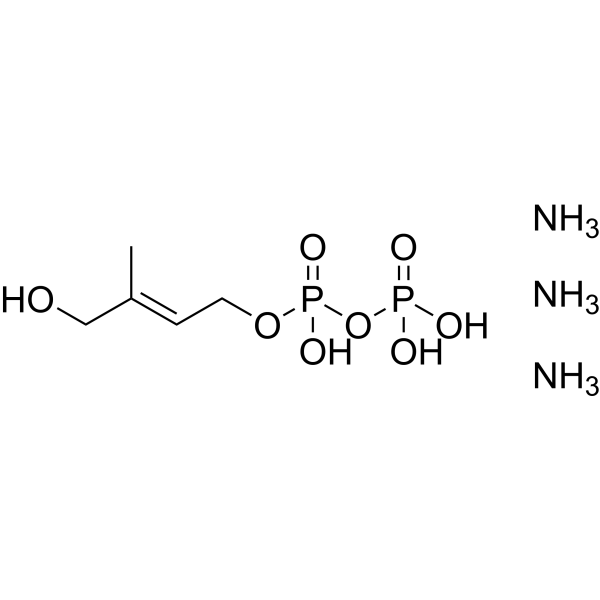 0 ImagesCat. No.: HY-145498CAS No.: 443892-56-6HDMAPP triammonium is a potent phosphoantigen in the ammonium form and the pyrophosphate form of (E)-HDMAPP. HDMAPP is also a potent activator of γδ T cells and can induce T cell stimulation in vitro (EC50=0.39 nM, TNF-α).
-
GSK2862277
 0 ImagesCat. No.: HY-P991401GSK2862277 is a human monoclonal antibody (mAb) targeting TNFRSF1A. GSK2862277 increases neutrophil extracellular trap formation and alveolar macrophage phagocytosis. GSK2862277 can be used in Acute lung injury and Acute Respiratory Distress Syndrome (ARDS) research. Recommended isotype control: VHH-hFc.
-
(E)-C-HDMAPP ammonium
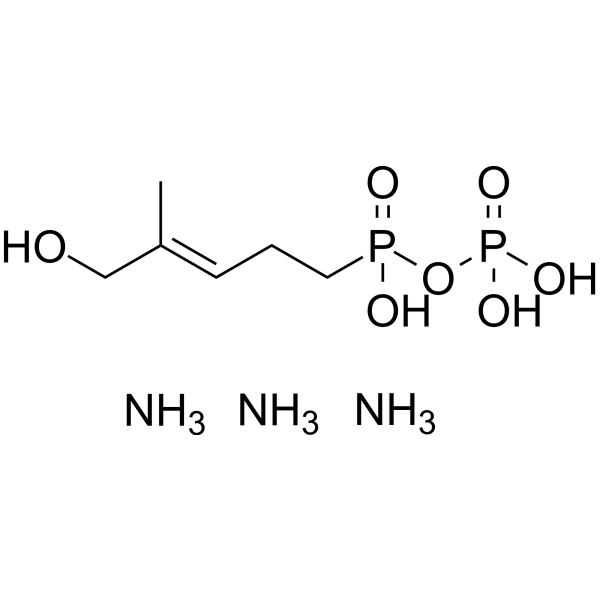 0 ImagesCat. No.: HY-134950CAS No.: 933030-60-5(E)-C-HDMAPP ammonium, is a potent phosphoantigen in ammonium form as well as a pyrophosphonate form of (E)-HDMAPP. (E)-C-HDMAPP is also an effective activator of γδ-T cells, induces T-cell stimulatory responses in vitro (EC50=0.91 nM for TNF-α release).
-
Cudraflavone B
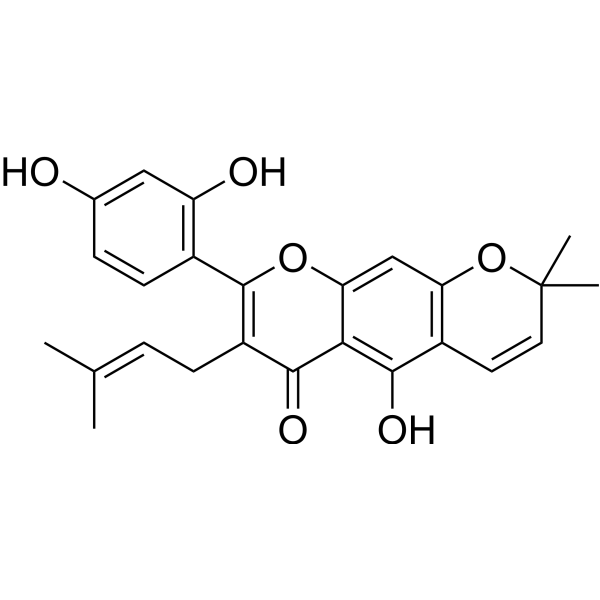 0 ImagesCat. No.: HY-N10009CAS No.: 19275-49-1Cudraflavone B is a prenylated flavonoid with anti-inflammatory and anti-tumor properties. Cudraflavone B is also a dual inhibitor of COX-1 and COX-2. Cudraflavone B blocks the translocation of nuclear factor κB (NF-κB) from the cytoplasm to the nucleus in macrophages. Thus, Cudraflavone B inhibits tumor necrosis factor α (TNFα) gene expression and secretion. Cudraflavone B also triggers the mitochondrial apoptotic pathway, activates NF-κB, the MAPK p38, and ERK, and induced the expression of SIRT1. Thus Cudraflavone B inhibits the growth of human oral squamous cell carcinoma cells.
-
Arucadiol
 0 ImagesCat. No.: HY-134028CAS No.: 105037-85-2Arucadiol is a rosane-type diterpenoid anti-inflammatory agent. 5 μM Arucadiol significantly inhibits LPS-induced TNF-α, IL-1β, and IL-8 production (inhibition rates of 39.8%, 44.4%, and 34.5%, respectively). Arucadiol exerts its anti-inflammatory activity by inhibiting the mRNA and protein expression of inflammatory cytokines and can be used in research on inflammation-related cardiovascular diseases such as atherosclerosis. Arucadiol can be naturally extracted from the roots of Salvia miltiorrhiza var. alba.



