1. Search Result
Search Result
Results for "

hydrophobic groove

" in MedChemExpress (MCE) Product Catalog:

8

Inhibitors & Agonists

1

Screening Libraries

2

Fluorescent Dyes

1

Biochemical Assay Reagents

1

GMP Molecules

Cat. No. Product Name Target Research Areas Chemical Structure
  • HY-128952
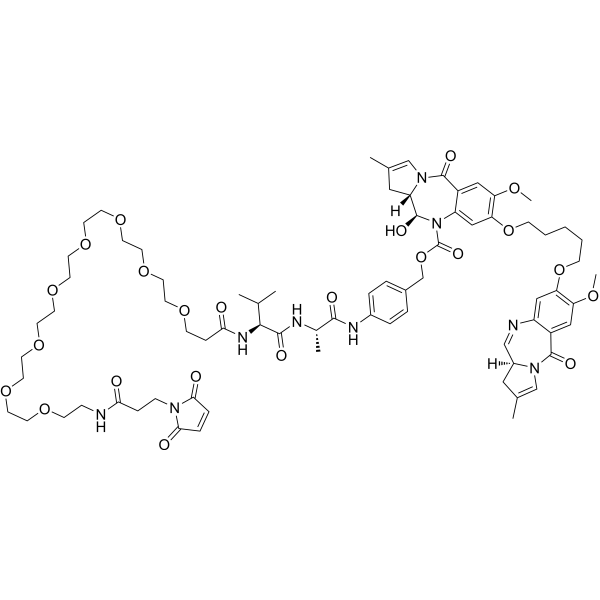
    Tesirine
    5+ Cited Publications

    SG3249

    Drug-Linker Conjugates for ADC DNA Alkylator/Crosslinker Cancer
    Tesirine (SG3249) is an antibody-drug conjugate (ADC) pyrrolobenzodiazepine (PBD) dimer payload. Tesirine combines potent antitumor activity with desirable physicochemical properties such as favorable hydrophobicity and improved conjugation characteristics. SG3199 (HY-101161) is the released warhead component of the ADC payload Tesirine. SG3199 retains picomolar activity in a panel of cancer cell lines. PBD dimers are highly efficient DNA minor groove cross-linking agents with potent cytotoxicity .
    Tesirine
  • HY-132180A

    ADC Payload DNA/RNA Synthesis Inflammation/Immunology Cancer
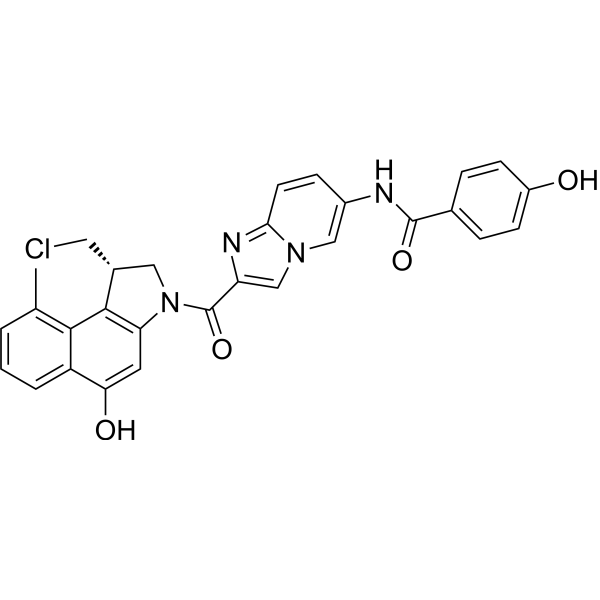
    Seco-DUBA hydrochloride is a DNA-targeting cytotoxic agent. Seco-DUBA hydrochloride binds to the minor groove of A-T-rich DNA regions, alkylates the adenine N3 residue, and undergoes spontaneous spirocyclization to generate active DUBA (HY-160969). Seco-DUBA hydrochloride exerts cytotoxic activity against human cancer cells. The reduced hydrophobicity of Seco-DUBA hydrochloride supports the development of antibody-drug conjugates .
    Seco-DUBA
  • HY-146248B

    Poly(ADP-ribose) Glycohydrolase (PARG) SARS-CoV Protease Activated Receptor (PAR) Metabolic Disease
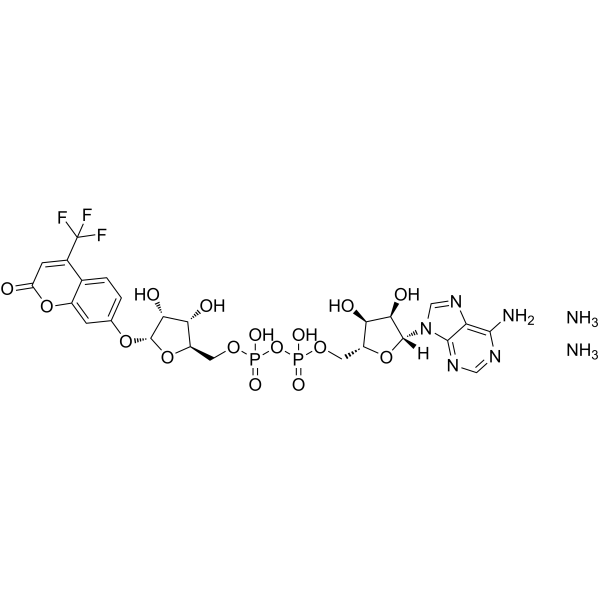
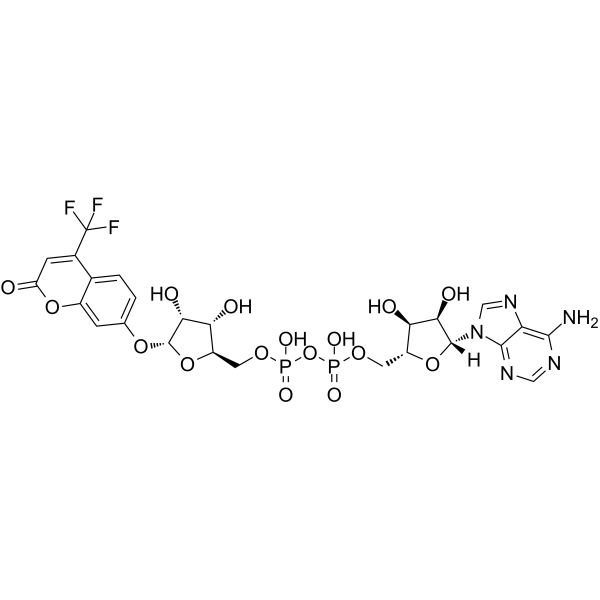
    TFMU-ADPr diammonium is a selective reporter substrate of SARS-CoV-2 Macro1 (IC50=0.59 μM), with an excitation wavelength (λEx) of 385 nm, and an emission wavelength (λEm) of 502 nm (or 495 nm). TFMU-ADPr diammonium can also undergo enzymatic hydrolysis with Poly(ADP-ribose) Glycohydrolase (PARG) sourced from human, Tetrahymena thermophila and ADP-ribosylhydrolase 3 from human to release fluorophores, thereby directly reporting total poly (ADP-ribose) hydrolase activity. TFMU-ADPr diammonium binds to the ADPr-binding site of SARS-CoV-2 Macro1, and its TFMU moiety inserts into the narrow hydrophobic groove of this protein. TFMU-ADPr diammonium can thus be used to evaluate small-molecule inhibitors targeting PAR hydrolases under in vitro conditions, to investigate the regulatory mechanisms of ADP-ribosyl catabolic enzymes, or to detect PAR hydrolase activity in whole-cell lysate assays. TFMU-ADPr diammonium is also applicable to COVID-19-related research .
    TFMU-ADPr diammonium
  • HY-146248

    SARS-CoV Poly(ADP-ribose) Glycohydrolase (PARG) Protease Activated Receptor (PAR) Infection
    TFMU-ADPr is a selective reporter substrate of SARS-CoV-2 Macro1 (IC50=0.59 μM), with an excitation wavelength (λEx) of 385 nm, and an emission wavelength (λEm) of 502 nm (or 495 nm). TFMU-ADPr can also undergo enzymatic hydrolysis with Poly(ADP-ribose) Glycohydrolase (PARG) sourced from human, Tetrahymena thermophila and ADP-ribosylhydrolase 3 from human to release fluorophores, thereby directly reporting total poly (ADP-ribose) hydrolase activity. TFMU-ADPr binds to the ADPr-binding site of SARS-CoV-2 Macro1, and its TFMU moiety inserts into the narrow hydrophobic groove of this protein. TFMU-ADPr can thus be used to evaluate small-molecule inhibitors targeting PAR hydrolases under in vitro conditions, to investigate the regulatory mechanisms of ADP-ribosyl catabolic enzymes, or to detect PAR hydrolase activity in whole-cell lysate assays. TFMU-ADPr is also applicable to COVID-19-related research .
    TFMU-ADPr
  • HY-146248A

    Poly(ADP-ribose) Glycohydrolase (PARG) SARS-CoV Protease Activated Receptor (PAR) Others
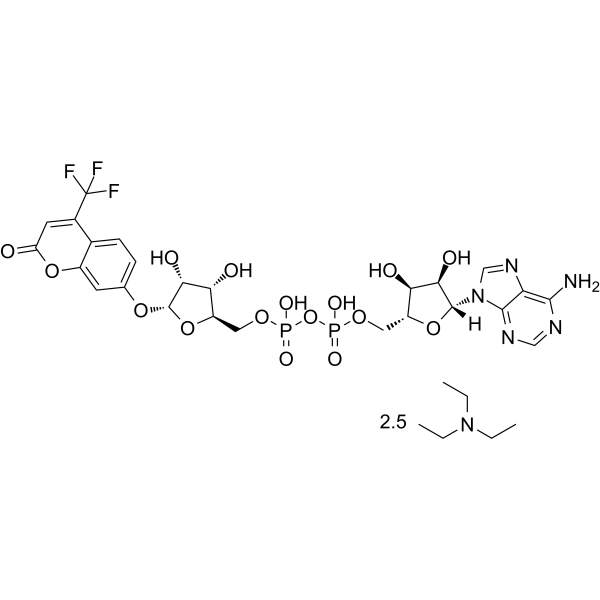
    TFMU-ADPr triethylamine is a selective reporter substrate of SARS-CoV-2 Macro1 (IC50=0.59 μM), with an excitation wavelength (λEx) of 385 nm, and an emission wavelength (λEm) of 502 nm (or 495 nm). TFMU-ADPr triethylamine can also undergo enzymatic hydrolysis with Poly(ADP-ribose) Glycohydrolase (PARG) sourced from human, Tetrahymena thermophila and ADP-ribosylhydrolase 3 from human to release fluorophores, thereby directly reporting total poly (ADP-ribose) hydrolase activity. TFMU-ADPr triethylamine binds to the ADPr-binding site of SARS-CoV-2 Macro1, and its TFMU moiety inserts into the narrow hydrophobic groove of this protein. TFMU-ADPr triethylamine can thus be used to evaluate small-molecule inhibitors targeting PAR hydrolases under in vitro conditions, to investigate the regulatory mechanisms of ADP-ribosyl catabolic enzymes, or to detect PAR hydrolase activity in whole-cell lysate assays. TFMU-ADPr triethylamine is also applicable to COVID-19-related research .
    TFMU-ADPr triethylamine
  • HY-128952G

    SG3249

    Drug-Linker Conjugates for ADC DNA Alkylator/Crosslinker Cancer
    Tesirine (GMP) (SG3249 (GMP)) is Tesirine (HY-128952) produced by using GMP guidelines. GMP small molecules works appropriately as an auxiliary reagent for cell therapy manufacture. Tesirine (SG3249) is an antibody-drug conjugate (ADC) pyrrolobenzodiazepine (PBD) dimer payload. Tesirine combines potent antitumor activity with desirable physicochemical properties such as favorable hydrophobicity and improved conjugation characteristics. SG3199 (HY-101161) is the released warhead component of the ADC payload Tesirine. SG3199 retains picomolar activity in a panel of cancer cell lines. PBD dimers are highly efficient DNA minor groove cross-linking agents with potent cytotoxicity .
    Tesirine
  • HY-117585

    Bcl-2 Family Drug Derivative Cancer
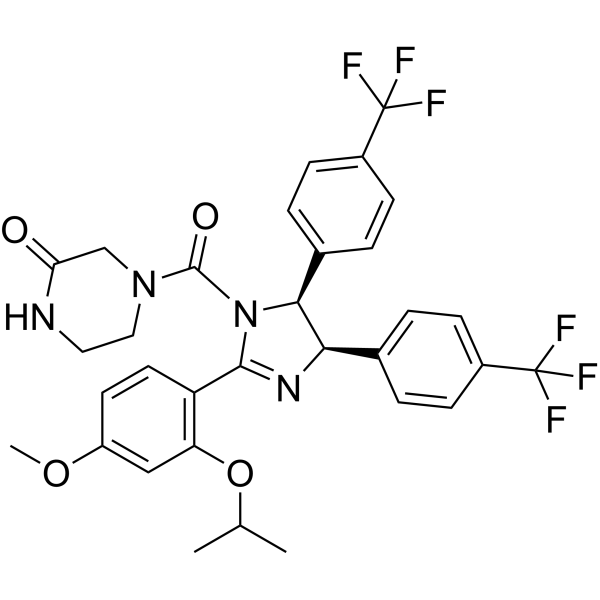
    Caylin-2 is a Bcl-XL binder and analog of Nutlin-3 (HY-50696). Caylin-2 interacts with the hydrophobic groove of Bcl-XL, with binding diminished by steric collision from its trifluoromethyl groups. Caylin-2 can be used for cancer research .
    Caylin-2
  • HY-156921

    24-Bromofusidic acid; TD-1414

    Drug Derivative Others
    Zibrofusidic acid (24-Bromofusidic acid; TD-1414) is a brominated derivative of Fusidic acid (HY-B1350). Zibrofusidic acid can be combined within the hydrophobic groove formed by the transmembrane helix 1 (TM1) and the transmembrane helix 2 (TM2) of the AcrB protein. Zibrofusidic acid can be used for the research of multidrug efflux pump .
    Zibrofusidic acid

Inquiry Online

Your information is safe with us. * Required Fields.

Salutation


Country or Region *

Applicant Name *


Organization Name *

Department *


Email Address *


Product Name *

Cat. No.


Requested quantity *

Phone Number *


Remarks

Inquiry Online

Inquiry Information

Product Name:
Cat. No.:
Quantity:
MCE Japan Authorized Agent:

