



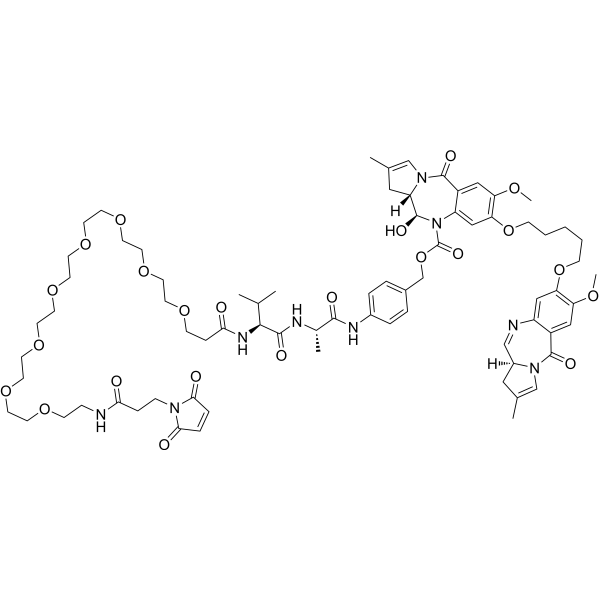
Tesirine (GMP) (SG3249 (GMP)) is Tesirine (HY-128952) produced by using GMP guidelines. GMP small molecules works appropriately as an auxiliary reagent for cell therapy manufacture. Tesirine (SG3249) is an antibody-drug conjugate (ADC) pyrrolobenzodiazepine (PBD) dimer payload. Tesirine combines potent antitumor activity with desirable physicochemical properties such as favorable hydrophobicity and improved conjugation characteristics. SG3199 (HY-101161) is the released warhead component of the ADC payload Tesirine. SG3199 retains picomolar activity in a panel of cancer cell lines. PBD dimers are highly efficient DNA minor groove cross-linking agents with potent cytotoxicity.
For research use only. We do not sell to patients.
- CAS No.: 1595275-62-9
- Formula: C75H101N9O23
- Molecular Weight:1496.65
-
Storage:
Please store the product under the recommended conditions in the Certificate of Analysis.


To place orders, for customer services and technical support, please contact: MedChemExpress USA
Tel: 609-228-6898 E-mail: [email protected] [email protected]


-
 Biological Activity
-
Chemical Information
- Protocols
- Purity & Documentation
- References
-
 Help & FAQs


-
HY-34477
2-IodoacetamideAlkylating Agent -
HY-128952
TesirineDrug-Linker Conjugates for ADC -
HY-34758
N-Nitroso-N-methylureaCarcinogen Agent -

HY-34477R
2-Iodoacetamide (Standard)Alkylating Agent -
HY-16293
LurbinectedinDNA Minor Groove Binder -
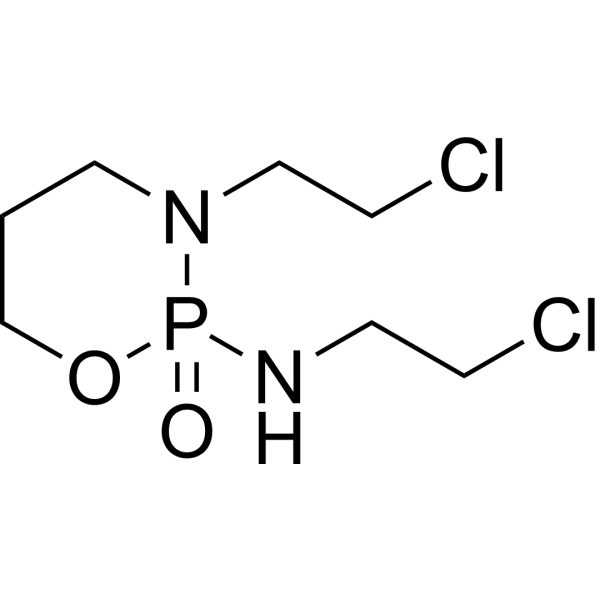
HY-17419
IfosfamideDNA Alkylator/Crosslinker -
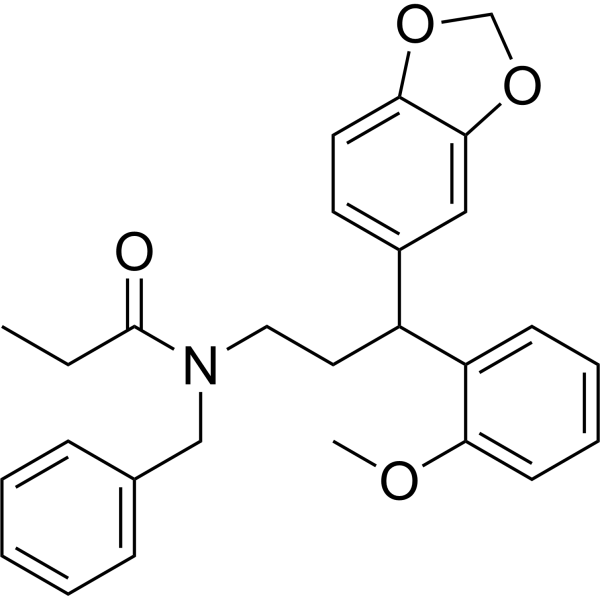
HY-129241
AGX51ID Protein Antagonist -
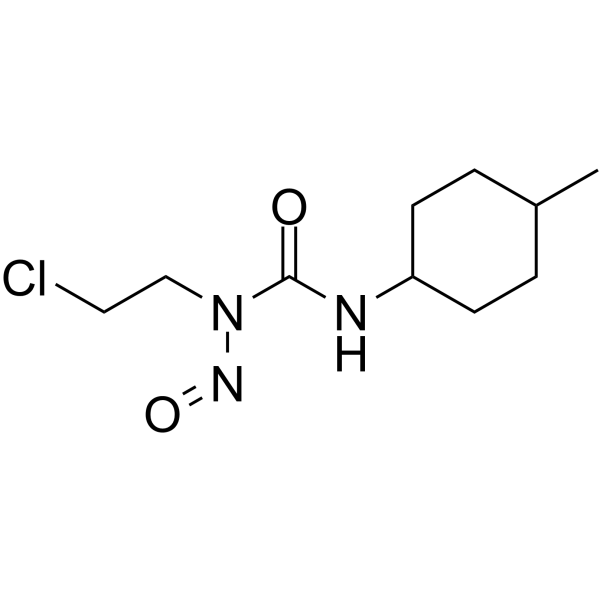
HY-13747
SemustineAntitumor Alkylating Agent -
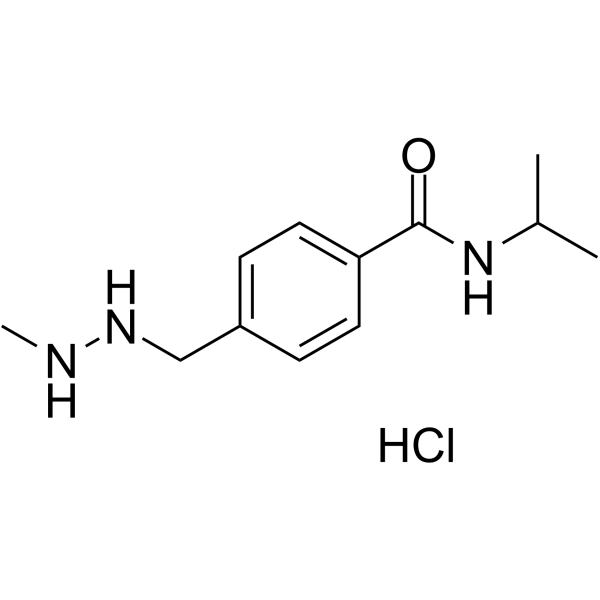
HY-13733
Procarbazine HydrochlorideAlkylating Agent -
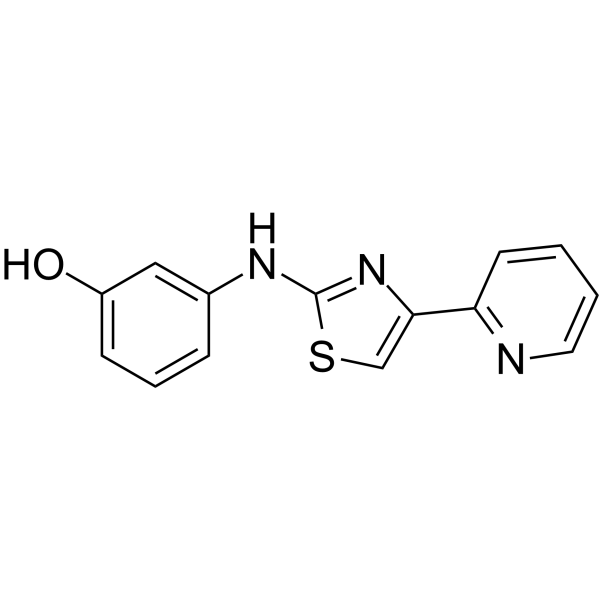
HY-131031
KCC-07MBD2 Inhibitor -
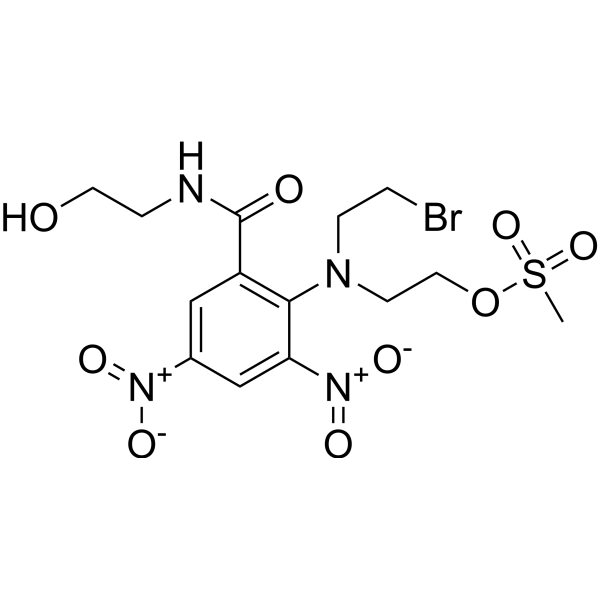
HY-14572
PR-104ADNA Cross-linking Agent -
![N-Succinimidyl 4-[4-maleimidophenyl]butyrate](https://file.medchemexpress.com/product_pic/hy-w011123.gif)
HY-W011123
N-Succinimidyl 4-[4-maleimidophenyl]butyrateCrosslinking Agent
All Drug-Linker Conjugates for ADC Isoforms
More

Biological Activity
Description
IC50 & Target
[1]|
Pyrrolobenzodiazepines |
In Vitro
Tesirine (SG3199) is the released warhead component of the ADC payload Tesirine. Tesirine inhibits K562, NCIN87, BT474, and SKBR3 cancer cells with IC50s of 150 pM, 20 pM, 1 nM and 320 pM[1].
MedChemExpress (MCE) has not independently confirmed the accuracy of these methods. They are for reference only. Further protocols information, click here.
Clinical Trial
| NCT Number | Sponsor | Condition | Start Date |
Phase

|
|---|---|---|---|---|
| NCT01329991 | Plexxikon| | 2011-05 | PHASE1 |


Chemical Information
-
CAS No. 1595275-62-9
-
Molecular Weight 1496.65
-
Formula C75H101N9O23
-
SMILES
O=C(NC1=CC=C(COC(N2[C@@H](O)[C@@](CC(C)=C3)([H])N3C(C4=CC(OC)=C(OCCCCCOC5=C(OC)C=C6C(N7[C@](CC(C)=C7)([H])C=NC6=C5)=O)C=C42)=O)=O)C=C1)[C@H](C)NC([C@H](C(C)C)NC(CCOCCOCCOCCOCCOCCOCCOCCOCCNC(CCN8C(C=CC8=O)=O)=O)=O)=O
-
Synonyms
SG3249 (GMP)
-
Shipping
Room temperature in continental US; may vary elsewhere.
-
Storage
Please store the product under the recommended conditions in the Certificate of Analysis.

Protocols
-
Cell Cytotoxicity Assay
Cytotoxicity assays are usually based on the assessment of cell membrane damage, which can also be indirectly detected by measuring cell viability. Detection methods include MTT assay, CKK-8 assay, LDH assay and ATP assay, etc.
-
Mammalian live/dead viability and cytotoxicity staining
Live/dead viability and cytotoxicity staining assays are based on the simultaneous detection of intracellular esterase activity in metabolically active (viable) cells and membrane integrity loss in non-viable cells. In commonly used dual-staining approaches, membrane-permeant fluorogenic substrates are converted by intracellular esterases into fluorescent products in live cells, while impermeant DNA-binding dyes selectively enter cells with compromised plasma membranes and label nucleic acids in dead or dying cells, enabling discrimination between viable and non-viable populations by fluorescence microscopy or flow cytometry.
-
Subcutaneous Cell-Line-Derived Xenograft
Subcutaneous cell-line-derived xenograft (CDX) models are established by implanting cultured human cancer cell lines into immunodeficient mice, where the injected cells form localized tumors that can be monitored in vivo as a measure of tumorigenic potential, growth kinetics, and treatment response. These models are widely used in oncology research because they allow reproducible tumor formation and enable comparative assessment of tumor growth between different cell lines or genetic manipulations in a controlled in vivo microenvironment. Subcutaneous implantation of cancer cells in immunodeficient mice is a standard approach for evaluating tumor growth behavior and therapeutic response across multiple cancer types, including prostate, esophageal, pancreatic, and colon cancer models.
-
Cell Viability Determination by MTT Colorimetric Assay
The following protocol uses the MTT colorimetric assay as a classic literature-established method for assessing cell viability/metabolic activity in cultured mammalian cells. MTT[3-(4,5-dimethylthiazol-2-yl)-2,5-diphenyltetrazolium bromide] is reduced by metabolically active cells to a colored formazan product; the amount of formazan is quantified spectrophotometrically and provides an indirect measure of metabolically active viable cells. Importantly, MTT reduction reflects cellular oxidoreductase/metabolic activity rather than an absolute direct count of living cells, so changes in cellular metabolism can alter the signal independently of cell number.


Purity & Documentation
References
[1]. Tiberghien AC, et al. Design and Synthesis of Tesirine, a Clinical Antibody-Drug Conjugate Pyrrolobenzodiazepine Dimer Payload. ACS Med Chem Lett. 2016;7(11):983-987. Published 2016 May 24. [Content Brief]
[2]. Hartley JA, et al. Pre-clinical pharmacology and mechanism of action of SG3199, the pyrrolobenzodiazepine (PBD) dimer warhead component of antibody-drug conjugate (ADC) payload tesirine. Sci Rep. 2018;8(1):10479. Published 2018 Jul 11. [Content Brief]

Calculators
Concentration (start) × Volume (start) = Concentration (final) × Volume (final)


Tesirine (GMP) Related Classifications
HY-128952G Related Classifications
 Powered by Bioz