Search Result
Results for "
organic substance
" in MedChemExpress (MCE) Product Catalog:
-
- HY-W051271
-
|
Titanium dioxide
|
Environmental Pollutants
Reactive Oxygen Species (ROS)
Photosensitizer
|
Others
|
|
Titanium(IV) oxide is a photosensitizer and photocatalyst. Titanium(IV) oxide can be used as a pharmaceutical excipient such as a flow aid, coating agent, sunscreen, colorant, etc. Pharmaceutical excipients or pharmaceutical excipients refer to other chemical substances used in the pharmaceutical process other than the drug ingredients. Pharmaceutical excipients generally refer to inactive ingredients in pharmaceutical preparations that can improve the stability, solubility and processability of pharmaceutical preparations. Pharmaceutical excipients also affect the absorption, distribution, metabolism and elimination (ADME) process of co-administered drugs. Titanium(IV) oxide can use light energy to generate electron-hole pairs to degrade pollutants. Photons excite electrons in TiO2 to generate active oxygen species (such as ·OH and ·O2 -), thereby oxidizing and mineralizing pollutants such as organic compounds and heavy metals. TiO2 can be used in the research of environmental remediation fields such as water treatment, air purification and self-cleaning materials .
|
-
-
- HY-W007599
-
|
|
Drug Derivative
|
Cancer
|
|
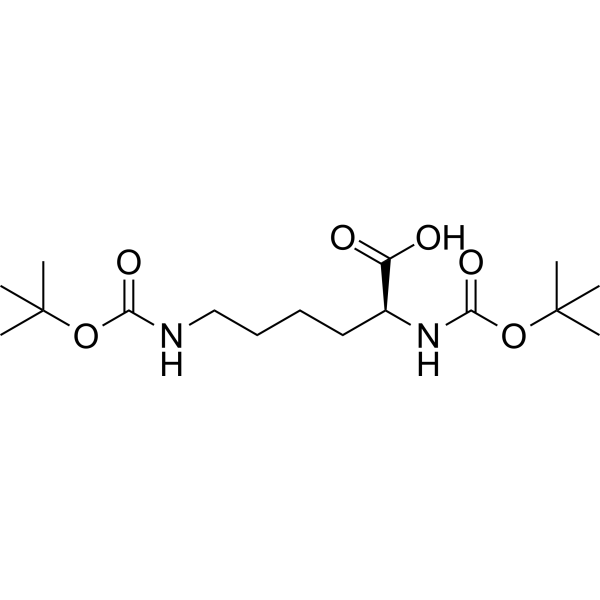
(S)-2,6-Bis((tert-butoxycarbonyl)amino)hexanoic acid is a polypeptide derivative, can be used to synthesis multifunctional amphiphilic peptide dendrimer for non-viral gene delivery in cancer research. (S)-2,6-Bis((tert-butoxycarbonyl)amino)hexanoic acid can be used in the preparation of organic substances that enhance the luminescence intensity of alkaline phosphatase substrates .
|
-
-
- HY-N1442
-
|
Orange II; D&C Orange NO. 4
|
Environmental Pollutants
Biochemical Assay Reagents
|
Others
|
|
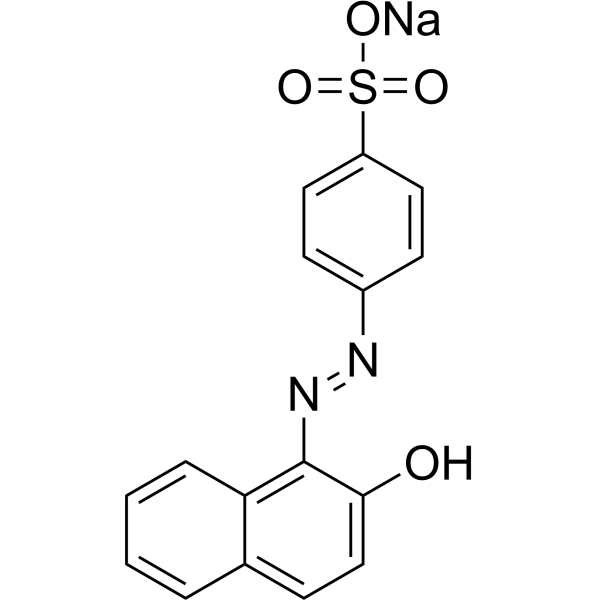
Acid Orange 7 (Orange II; D&C Orange NO. 4) is an azo dye widely used in the textile, food and cosmetic industries. Acid Orange 7 is mainly used as a colorant by combining with fibers and other substances through azo bonds. Acid Orange 7 has a maximum absorption wavelength at 484-485 nm, and the concentration is measured using a UV-visible spectrophotometer. Acid Orange 7 is difficult to degrade and has a certain degree of toxicity. It is often used to study various sewage treatment technologies and photocatalytic degradation reactions, and to evaluate the removal effects of different treatment methods on organic pollutants .
|
-
-
- HY-W099580S1
-
|
n-Hexadecane-d34; Cetane-d34
|
Isotope-Labeled Compounds
Bacterial
|
Others
|
|
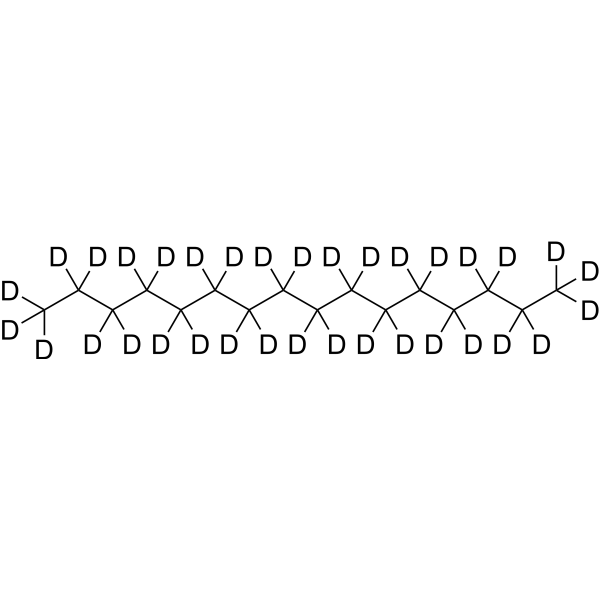
Hexadecane-d34 (n-Hexadecane-d34) is the deuterium labeled Hexadecane (HY-W099580). Hexadecane (n-Hexadecane) is a saturated hydrocarbon of alkanes or paraffins and can be used as an organic solvent. Hexadecane is a component of petroleum, belongs to hydrophobic substrates, and is a model substance for studying bacterial degradation of hydrophobic compounds .
|
-
-
- HY-W014971
-
|
|
Biochemical Assay Reagents
|
Others
|
|
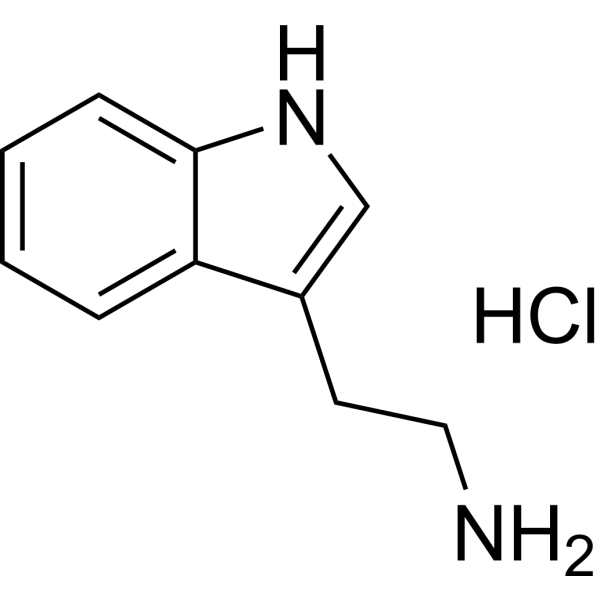
Tryptamine hydrochloride belongs to the class of indole alkaloids and is a derivative of the amino acid tryptophan. Tryptamine hydrochloride is psychoactive and acts as a neurotransmitter in the body, affecting mood, perception and cognition. In its hydrochloride form, Tryptamine hydrochloride hydrochloride, it is commonly used as a research chemical and as a starting material for the synthesis of other organic compounds. It can also occur naturally in certain plants and animals, including fungi and mammals. Due to the psychoactive properties of Tryptamine hydrochloride and its derivatives, its use and possession are controlled substances in many countries.
|
-
-
- HY-W099547
-
|
|
Liposome
|
Others
|
|
Dihexadecyl hydrogen phosphateIt is an organic compound belonging to phospholipids. It's often used as an emulsifier, which means it helps mix two substances together that don't usually mix well, such as oil and water. Dihexadecyl hydrogen phosphateIt has several applications in the food industry, especially in the production of processed foods where it improves texture and stability. Additionally, it has applications in the pharmaceutical industry where it can be used ain the generation of micelles, liposomes, and other types of artificial membranes.
|
-

-
- HY-W778240
-
|
Naphthalene-2-carboxylic acid-13C6
|
Isotope-Labeled Compounds
Biochemical Assay Reagents
|
Others
|
|
2-Naphthoic acid- 13C6 (Naphthalene-2-carboxylic acid- 13C6) is the 13C-labeled 2-Naphthoic acid (HY-W007437). 2-Naphthoic acid is an organic compound commonly used as a raw material for dyes and the production of other chemicals. It can form dyes with other organic substances and is widely used in textile, printing and manufacturing fields. In addition, the compound is also used as a photosensitive material and a lubricant.
|
-

-
- HY-21195
-
|
Perfluorohexanesulphonyl fluoride
|
Biochemical Assay Reagents
|
Others
|
|
Perfluorohexylsulfonyl fluoride (Perfluorohexanesulphonyl fluoride) is a perfluoroalkyl and polyfluoroalkyl substances, that is defined as persistant organic pollutant by 2022 Stockholm Convention. Perfluorohexylsulfonyl fluoride can be used for drug modification .
|
-

-
- HY-W007437
-
|
Naphthalene-2-carboxylic acid
|
Biochemical Assay Reagents
|
Others
|
|
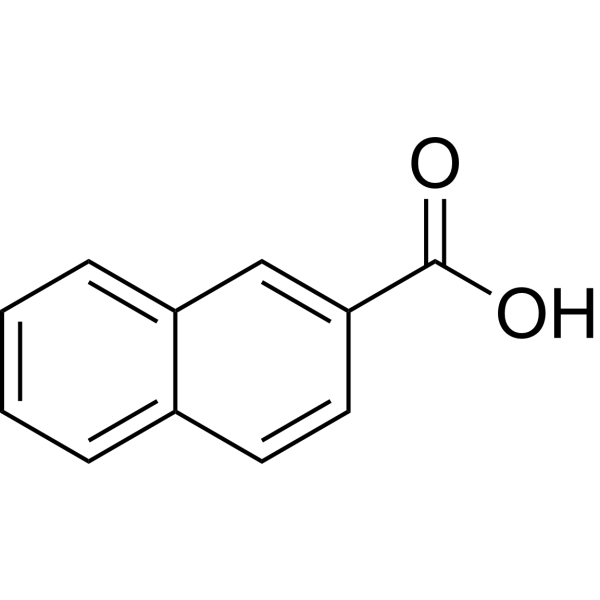
2-Naphthoic acid is an organic compound commonly used as a raw material for dyes and the production of other chemicals. It can form dyes with other organic substances and is widely used in textile, printing and manufacturing fields. In addition, the compound is also used as a photosensitive material and a lubricant.
|
-
-
- HY-W588249
-
|
|
Bacterial
Endogenous Metabolite
|
Infection
|
|
Sabinene hydrate is a volatile organic compound of a bicyclic monoterpene alcohol. Sabinene hydrate, as a plant secondary metabolite, is naturally present in various plants and their essential oils. Sabinene hydrate exhibits broad-spectrum but varying-intensity antibacterial activity, with the greatest sensitivity to Gram-positive bacteria, especially Bacillus subtilis (MIC = 0.0312 mg/mL) and Staphylococcus aureus (MIC = 0.0625 mg/mL). Sabinene hydrate also shows certain sensitivity to Escherichia coli and Candida albicans, with MIC values of 0.125 mg/mL for both. Sabinene hydrate can be used in the research of the ecological functions of plant defense substances .
|
-

-
- HY-D0898
-
|
|
Biochemical Assay Reagents
|
Others
|
|
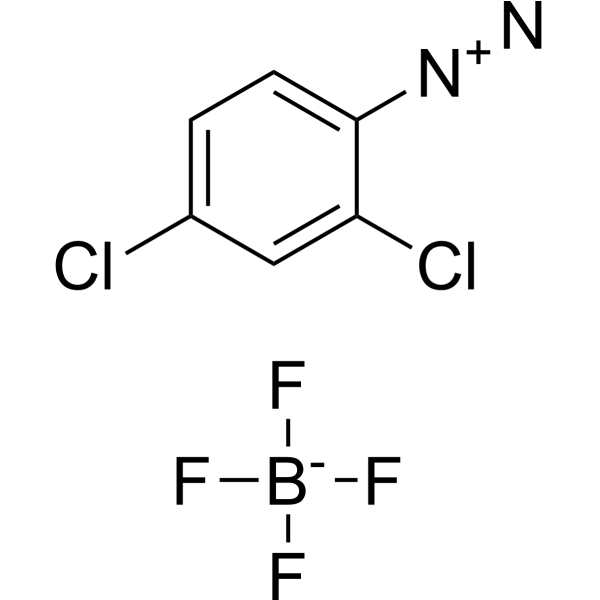
2,4-Dichlorobenzenediazonium tetrafluoroborate is an organic compound commonly used in organic synthesis and dye preparation reactions. It can be used as an azotating agent to form azo dyes with other organic substances, and can be used in coatings, pigments and paints and other industries. In addition, the compound is widely used in certain chemical analysis and detection methods, such as in scientific instruments such as electron microscopes and mass spectrometers. Although the compound has no direct medical applications, it plays an important role in chemical research and laboratory studies.
|
-
-
- HY-W099580R
-
|
n-Hexadecane (Standard); Cetane (Standard)
|
Reference Standards
Biochemical Assay Reagents
|
Others
|
|
Hexadecane (Standard) (n-Hexadecane (Standard)) is the analytical standard of Hexadecane (HY-W099580). This product is intended for research and analytical applications. Hexadecane (n-Hexadecane) is a saturated hydrocarbon of alkanes or paraffins and can be used as an organic solvent. Hexadecane is a component of petroleum, belongs to hydrophobic substrates, and is a model substance for studying bacterial degradation of hydrophobic compounds .
|
-

-
- HY-W099580S
-
|
n-Hexadecane-1,2-13C2; Cetane-1,2-13C2
|
Isotope-Labeled Compounds
Bacterial
|
Others
|
|
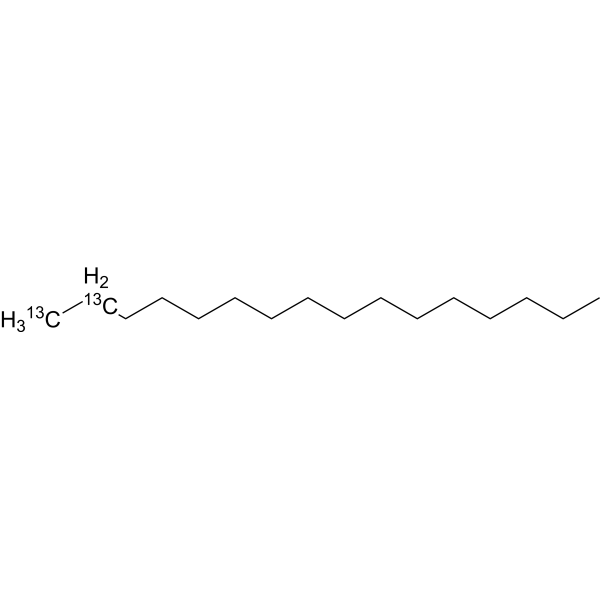
Hexadecane-1,2- 13C2 (n-Hexadecane-1,2- 13C2) is the 13C labeled Hexadecane (HY-W099580). Hexadecane (n-Hexadecane) is a saturated hydrocarbon of alkanes or paraffins and can be used as an organic solvent. Hexadecane is a component of petroleum, belongs to hydrophobic substrates, and is a model substance for studying bacterial degradation of hydrophobic compounds .
|
-
-
- HY-W750212
-
|
Orange II-13C6; D&C Orange NO. 4-13C6
|
Isotope-Labeled Compounds
Biochemical Assay Reagents
|
Others
|
|
Acid Orange 7- 13C6 (Orange II- 13C6) is the 13C-labeled Acid orange 7 (HY-N1442). Acid Orange 7 (Orange II; D&C Orange NO. 4) is an azo dye widely used in the textile, food and cosmetic industries. Acid Orange 7 is mainly used as a colorant by combining with fibers and other substances through azo bonds. Acid Orange 7 has a maximum absorption wavelength at 484-485 nm, and the concentration is measured using a UV-visible spectrophotometer. Acid Orange 7 is difficult to degrade and has a certain degree of toxicity. It is often used to study various sewage treatment technologies and photocatalytic degradation reactions, and to evaluate the removal effects of different treatment methods on organic pollutants .
|
-

-
- HY-N1442R
-
|
Orange II (Standard); D&C Orange NO. 4 (Standard)
|
Biochemical Assay Reagents
Reference Standards
|
Others
|
|
Acid orange 7 (Standard) is the analytical standard of Acid orange 7 (HY-1442). This product is intended for research and analytical applications. Acid Orange 7 (Orange II; D&C Orange NO. 4) is an azo dye widely used in the textile, food and cosmetic industries. Acid Orange 7 is mainly used as a colorant by combining with fibers and other substances through azo bonds. Acid Orange 7 has a maximum absorption wavelength at 484-485 nm, and the concentration is measured using a UV-visible spectrophotometer. Acid Orange 7 is difficult to degrade and has a certain degree of toxicity. Acid Orange 7 is often used to study various sewage treatment technologies and photocatalytic degradation reactions, and to evaluate the removal effects of different treatment methods on organic pollutants .
|
-

-
- HY-W029164
-
|
|
Drug Intermediate
|
Others
|
|
N-Benzylphthalimide is an organic chemical substance. N-Benzylphthalimide can be used in compound synthesis .
|
-

-
- HY-W014971S
-
|
|
Isotope-Labeled Compounds
Biochemical Assay Reagents
|
Others
|
|
Tryptamine-d2-1 hydrochloride is the deuterium labeled Tryptamine hydrochloride (HY-W014971). Tryptamine hydrochloride belongs to the class of indole alkaloids and is a derivative of the amino acid tryptophan. Tryptamine hydrochloride is psychoactive and acts as a neurotransmitter in the body, affecting mood, perception and cognition. In its hydrochloride form, Tryptamine hydrochloride hydrochloride, it is commonly used as a research chemical and as a starting material for the synthesis of other organic compounds. It can also occur naturally in certain plants and animals, including fungi and mammals. Due to the psychoactive properties of Tryptamine hydrochloride and its derivatives, its use and possession are controlled substances in many countries.
|
-

-
- HY-L0096V
-
|
|
1,400,000 compounds
|
|
Vitas-M Screening Compounds Library (stock) contains about 1,400,000 chemical substances. They are synthetic small molecule organic compounds for biological screening and lead optimization. Select any number of items as a "cherry pick".
|
-
- HY-N1442
-
|
Orange II; D&C Orange NO. 4
|
蛍光色素
|
|
Acid Orange 7 (Orange II; D&C Orange NO. 4) is an azo dye widely used in the textile, food and cosmetic industries. Acid Orange 7 is mainly used as a colorant by combining with fibers and other substances through azo bonds. Acid Orange 7 has a maximum absorption wavelength at 484-485 nm, and the concentration is measured using a UV-visible spectrophotometer. Acid Orange 7 is difficult to degrade and has a certain degree of toxicity. It is often used to study various sewage treatment technologies and photocatalytic degradation reactions, and to evaluate the removal effects of different treatment methods on organic pollutants .
|
-
- HY-N1442R
-
|
Orange II (Standard); D&C Orange NO. 4 (Standard)
|
蛍光色素
|
|
Acid orange 7 (Standard) is the analytical standard of Acid orange 7 (HY-1442). This product is intended for research and analytical applications. Acid Orange 7 (Orange II; D&C Orange NO. 4) is an azo dye widely used in the textile, food and cosmetic industries. Acid Orange 7 is mainly used as a colorant by combining with fibers and other substances through azo bonds. Acid Orange 7 has a maximum absorption wavelength at 484-485 nm, and the concentration is measured using a UV-visible spectrophotometer. Acid Orange 7 is difficult to degrade and has a certain degree of toxicity. Acid Orange 7 is often used to study various sewage treatment technologies and photocatalytic degradation reactions, and to evaluate the removal effects of different treatment methods on organic pollutants .
|
-
- HY-W014971
-
|
|
生化学アッセイ試薬
|
|
Tryptamine hydrochloride belongs to the class of indole alkaloids and is a derivative of the amino acid tryptophan. Tryptamine hydrochloride is psychoactive and acts as a neurotransmitter in the body, affecting mood, perception and cognition. In its hydrochloride form, Tryptamine hydrochloride hydrochloride, it is commonly used as a research chemical and as a starting material for the synthesis of other organic compounds. It can also occur naturally in certain plants and animals, including fungi and mammals. Due to the psychoactive properties of Tryptamine hydrochloride and its derivatives, its use and possession are controlled substances in many countries.
|
-
- HY-W099547
-
|
|
生化学アッセイ試薬
|
|
Dihexadecyl hydrogen phosphateIt is an organic compound belonging to phospholipids. It's often used as an emulsifier, which means it helps mix two substances together that don't usually mix well, such as oil and water. Dihexadecyl hydrogen phosphateIt has several applications in the food industry, especially in the production of processed foods where it improves texture and stability. Additionally, it has applications in the pharmaceutical industry where it can be used ain the generation of micelles, liposomes, and other types of artificial membranes.
|
-
- HY-W007437
-
|
Naphthalene-2-carboxylic acid
|
生化学アッセイ試薬
|
|
2-Naphthoic acid is an organic compound commonly used as a raw material for dyes and the production of other chemicals. It can form dyes with other organic substances and is widely used in textile, printing and manufacturing fields. In addition, the compound is also used as a photosensitive material and a lubricant.
|
-
- HY-D0898
-
|
|
生化学アッセイ試薬
|
|
2,4-Dichlorobenzenediazonium tetrafluoroborate is an organic compound commonly used in organic synthesis and dye preparation reactions. It can be used as an azotating agent to form azo dyes with other organic substances, and can be used in coatings, pigments and paints and other industries. In addition, the compound is widely used in certain chemical analysis and detection methods, such as in scientific instruments such as electron microscopes and mass spectrometers. Although the compound has no direct medical applications, it plays an important role in chemical research and laboratory studies.
|
-
- HY-W099580R
-
|
n-Hexadecane (Standard); Cetane (Standard)
|
生化学アッセイ試薬
|
|
Hexadecane (Standard) (n-Hexadecane (Standard)) is the analytical standard of Hexadecane (HY-W099580). This product is intended for research and analytical applications. Hexadecane (n-Hexadecane) is a saturated hydrocarbon of alkanes or paraffins and can be used as an organic solvent. Hexadecane is a component of petroleum, belongs to hydrophobic substrates, and is a model substance for studying bacterial degradation of hydrophobic compounds .
|
-
- HY-W007599
-
|
|
Drug Derivative
|
Cancer
|
|
(S)-2,6-Bis((tert-butoxycarbonyl)amino)hexanoic acid is a polypeptide derivative, can be used to synthesis multifunctional amphiphilic peptide dendrimer for non-viral gene delivery in cancer research. (S)-2,6-Bis((tert-butoxycarbonyl)amino)hexanoic acid can be used in the preparation of organic substances that enhance the luminescence intensity of alkaline phosphatase substrates .
|
| 製品番号 |
製品名 |
Category |
Target |
構造式 |
-
- HY-W588249
-
|
|
Structural Classification
Other Monoterpenes
Juniperus communis L.
Cupressaceae
Terpenoids
Plants
Source Classification
|
Bacterial
Endogenous Metabolite
|
|
Sabinene hydrate is a volatile organic compound of a bicyclic monoterpene alcohol. Sabinene hydrate, as a plant secondary metabolite, is naturally present in various plants and their essential oils. Sabinene hydrate exhibits broad-spectrum but varying-intensity antibacterial activity, with the greatest sensitivity to Gram-positive bacteria, especially Bacillus subtilis (MIC = 0.0312 mg/mL) and Staphylococcus aureus (MIC = 0.0625 mg/mL). Sabinene hydrate also shows certain sensitivity to Escherichia coli and Candida albicans, with MIC values of 0.125 mg/mL for both. Sabinene hydrate can be used in the research of the ecological functions of plant defense substances .
|
-
-
- HY-W099580S1
-
|
|
|
Hexadecane-d34 (n-Hexadecane-d34) is the deuterium labeled Hexadecane (HY-W099580). Hexadecane (n-Hexadecane) is a saturated hydrocarbon of alkanes or paraffins and can be used as an organic solvent. Hexadecane is a component of petroleum, belongs to hydrophobic substrates, and is a model substance for studying bacterial degradation of hydrophobic compounds .
|
-
-
- HY-W778240
-
|
|
|
2-Naphthoic acid- 13C6 (Naphthalene-2-carboxylic acid- 13C6) is the 13C-labeled 2-Naphthoic acid (HY-W007437). 2-Naphthoic acid is an organic compound commonly used as a raw material for dyes and the production of other chemicals. It can form dyes with other organic substances and is widely used in textile, printing and manufacturing fields. In addition, the compound is also used as a photosensitive material and a lubricant.
|
-
-
- HY-W099580S
-
|
|
|
Hexadecane-1,2- 13C2 (n-Hexadecane-1,2- 13C2) is the 13C labeled Hexadecane (HY-W099580). Hexadecane (n-Hexadecane) is a saturated hydrocarbon of alkanes or paraffins and can be used as an organic solvent. Hexadecane is a component of petroleum, belongs to hydrophobic substrates, and is a model substance for studying bacterial degradation of hydrophobic compounds .
|
-
-
- HY-W750212
-
|
|
|
Acid Orange 7- 13C6 (Orange II- 13C6) is the 13C-labeled Acid orange 7 (HY-N1442). Acid Orange 7 (Orange II; D&C Orange NO. 4) is an azo dye widely used in the textile, food and cosmetic industries. Acid Orange 7 is mainly used as a colorant by combining with fibers and other substances through azo bonds. Acid Orange 7 has a maximum absorption wavelength at 484-485 nm, and the concentration is measured using a UV-visible spectrophotometer. Acid Orange 7 is difficult to degrade and has a certain degree of toxicity. It is often used to study various sewage treatment technologies and photocatalytic degradation reactions, and to evaluate the removal effects of different treatment methods on organic pollutants .
|
-
-
- HY-W014971S
-
|
|
|
Tryptamine-d2-1 hydrochloride is the deuterium labeled Tryptamine hydrochloride (HY-W014971). Tryptamine hydrochloride belongs to the class of indole alkaloids and is a derivative of the amino acid tryptophan. Tryptamine hydrochloride is psychoactive and acts as a neurotransmitter in the body, affecting mood, perception and cognition. In its hydrochloride form, Tryptamine hydrochloride hydrochloride, it is commonly used as a research chemical and as a starting material for the synthesis of other organic compounds. It can also occur naturally in certain plants and animals, including fungi and mammals. Due to the psychoactive properties of Tryptamine hydrochloride and its derivatives, its use and possession are controlled substances in many countries.
|
-
-
- HY-W099547
-
|
|
|
Phospholipids
|
|
Dihexadecyl hydrogen phosphateIt is an organic compound belonging to phospholipids. It's often used as an emulsifier, which means it helps mix two substances together that don't usually mix well, such as oil and water. Dihexadecyl hydrogen phosphateIt has several applications in the food industry, especially in the production of processed foods where it improves texture and stability. Additionally, it has applications in the pharmaceutical industry where it can be used ain the generation of micelles, liposomes, and other types of artificial membranes.
|
入力情報は安全に管理されます. ※ 必須入力項目.
Inquiry Information
- 製品名:
- 製品番号:
- 数量:
- MCE 日本正規代理店:





