



Photosensitizer
Photosensitizers are light absorbers that alter the course of a photochemical reaction. They usually are catalysts. Photosensitizers have been used as light-responsive drugs with their imaging capabilities, easy synthesis, tunable energy levels, and biocompatibility, which make them an innovative tool for therapeutic approaches in treatment of various cancers. Among different methods for cancer therapy, photodynamic therapy (PDT) using a photosensitizer can take advantage of penetrated light into a targeted tissue for improving tumor control. The PDT comprises of three major components; photosensitizer, oxygen, and light source of appropriate wavelength, which when act together, generate a photochemical reaction. Depending on the part of the body being treated, the photosensitizing agent is either administered into the bloodstream through a vein or placed directly on the skin. By irradiation light on the targeted area, the excited photosensitizer emits energy in the form of heat and exhibits intersystem crossing (ISC), leading to the formation of reactive oxygen species (ROS) in triplet state.
Photosensitizers can function by many mechanisms, sometimes they donate an electron to the substrate, sometimes they abstract a hydrogen atom from the substrate. At the end of this process, the photosensitizer returns to its ground state, where it remains chemically intact, poised to absorb more light. One branch of chemistry which frequently utilizes photosensitizers is polymer chemistry, using photosensitizers in reactions such as photopolymerization, photocrosslinking, and photodegradation. Photosensitizers are also used to generate prolonged excited electronic states in organic molecules with uses in photocatalysis, photon upconversion and photodynamic therapy. Generally, photosensitizers absorb electromagnetic radiation consisting of infrared radiation, visible light radiation, and ultraviolet radiation and transfer absorbed energy into neighboring molecules[1][2].
Photosensitizers can function by many mechanisms, sometimes they donate an electron to the substrate, sometimes they abstract a hydrogen atom from the substrate. At the end of this process, the photosensitizer returns to its ground state, where it remains chemically intact, poised to absorb more light. One branch of chemistry which frequently utilizes photosensitizers is polymer chemistry, using photosensitizers in reactions such as photopolymerization, photocrosslinking, and photodegradation. Photosensitizers are also used to generate prolonged excited electronic states in organic molecules with uses in photocatalysis, photon upconversion and photodynamic therapy. Generally, photosensitizers absorb electromagnetic radiation consisting of infrared radiation, visible light radiation, and ultraviolet radiation and transfer absorbed energy into neighboring molecules[1][2].
References:
- [1]. Kwiatkowski S, et, al. Photodynamic therapy - mechanisms, photosensitizers and combinations. Biomed Pharmacother. 2018 Oct:106:1098-1107. [Content Brief]
- [2]. Dash BS, et, al. Photosensitizer-Functionalized Nanocomposites for Light-Activated Cancer Theranostics. Int J Mol Sci. 2021 Jun 22;22(13):6658. [Content Brief]
All Product Categories
-
Photosensitizer Related Products (79)
Related Products (79)

-
Verteporfin
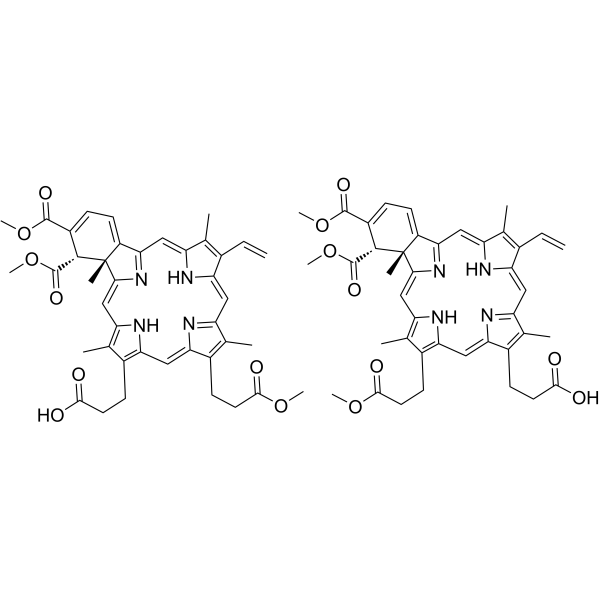 0 ImagesSynonyms: CL 318952Verteporfin (CL 318952) is a photosensitizer for photodynamic therapy to eliminate the abnormal blood vessels in the eye associated with conditions such as age-related macular degeneration. Verteporfin is a YAP inhibitor which disrupts YAP-TEAD interactions. Verteporfin induces cell apoptosis. Verteporfinis an autophagy inhibitor that blocks autophagy at an early stage by inhibiting autophagosome formation.
-
Acid Red 94 sodium
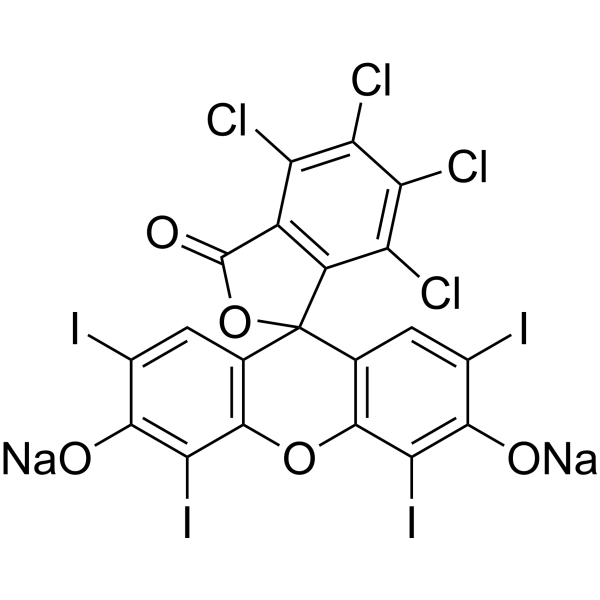 0 ImagesAcid Red 94 sodium, a synthetic fluorescein derivative, is a deep red dye primarily composed of 4,5,6,7-tetrachloro-2,4,5,7-tetraiodo fluorescein. It is widely used as an ophthalmic diagnostic agent to detect dry or damaged cells on the ocular surface. Acid Red 94 sodium exhibits antitumor activity and can inhibit Friend Leukemia Virus (FLV) infection through photodynamic action. Additionally, Acid Red 94 sodium can inhibit Aβ aggregation through light irradiation. Acid Red 94 sodium holds potential for use in cancer, viral infections, and neurodegenerative disease research.
-
Benzophenone
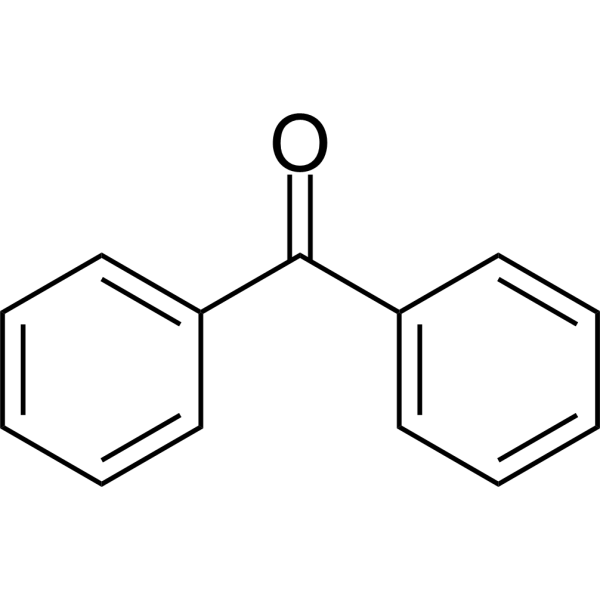 0 ImagesBenzophenone is an endogenous metabolite. Benzophenone is a photosensitizer, that absorbs UV light, transfers its energy to DNA, and triggers DNA damage. Benzophenone can be used as the fragrance enhancer, ultraviolet curing agent, additive in plastics, or the flavor ingredient. Benzophenone can also be used in the manufacturing of insecticides, agricultural chemicals, hypnotics, antihistamines, and other pharmaceuticals. Benzophenone exhibits certain carcinogenicity in mouse/rat models under long term exposure. Benzophenone exhibits estrogenic activity.
-
Talaporfin sodium
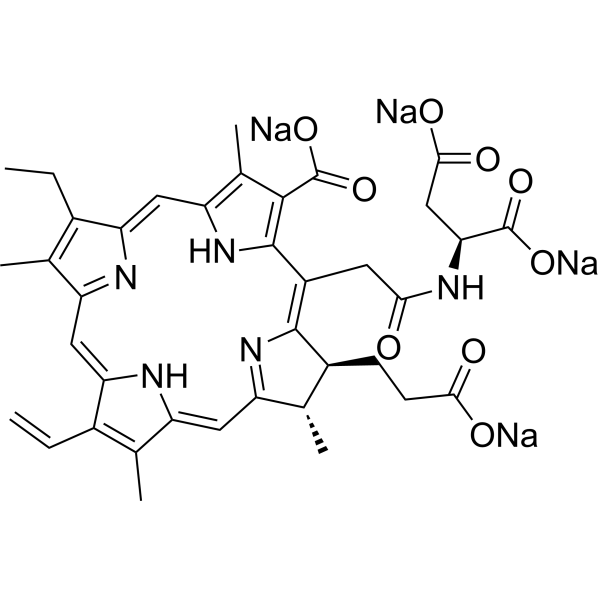 0 ImagesCat. No.: HY-16477CAS No.: 220201-34-3Synonyms: ME2906; Mono-L-aspartyl chlorin e6; NPe6Talaporfin (ME2906) sodium is a chlorin based photosensitizer. Talaporfin sodium can be used for the research of various cancers by using photodynamic therapy (PDT).
-
Chlorin e6 trisodium
 0 ImagesSynonyms: Ce6 trisodiumChlorin e6 Ce6 (trisodium) is a water-soluble derivative of chlorophyll, belonging to the chlorin class of photosensitizers with an absorption wavelength range of 600-670 nm. Chlorin e6 trisodium emits characteristic red fluorescence upon light excitation, enabling real-time identification of tumor boundaries and progression. Chlorin e6 trisodium can be used for the study of photodynamic therapy (PDT) of cancers (bladder cancer) and fluorescence diagnosis of neoplastic lesions.
-
IR-775 chloride
 0 ImagesCat. No.: HY-W248590CAS No.: 199444-11-6IR-775 chloride is a cyanine dye with near-infrared absorption (Ex/Em = 775/795 nm). IR-775 chloride acts as a photosensitizer or photothermal agent, and induces apoptosis via generating ROS or exerting photothermal effects upon irradiation; its combination with 2-methoxyestradiol (HY-12033) inhibits SOD2 to enhance photodynamic therapy (PDT) efficacy, and its liposomal encapsulation enables phytotherapy-photothermal therapy (PTT) synergy. IR-775 chloride is applicable for investigating PDT/PTT and near-infrared fluorescence imaging in ovarian cancer and breast cancer.
-
Antitumor agent-218
 0 ImagesCat. No.: HY-183797CAS No.: 3094774-72-5Antitumor agent-218 is an aggregation-induced emission (AIE)-based photosensitizer. Antitumor agent-218 selectively accumulates in the endoplasmic reticulum, and generates ROS within the endoplasmic reticulum upon irradiation to induce necroptosis of tumor cells. Antitumor agent-218 can be used in cancer-related research.
-
Antitumor photosensitizer-11
 0 ImagesCat. No.: HY-183570CAS No.: 2813319-14-9Antitumor photosensitizer-11 is a type-I carbazole/benzindolium photosensitizer with antitumor activity. Antitumor photosensitizer-11 induces ROS generation via a type-I pathway, forming superoxide anions and hydroxyl radicals. Antitumor photosensitizer-11 triggers immunogenic cell death in cancer cells via enhanced oxidative stress. Antitumor photosensitizer-11 exhibits antiproliferative activity in normoxic and hypoxic environments, inhibits breast cancer tumor growth in vivo, and promotes dendritic cell maturation and T cell infiltration. Antitumor photosensitizer-11 can be used for the research of cancer, such as breast cancer.
-
Phthalocyanine
 0 ImagesPhthalocyanine is a type of pigment and Photosensitizer. Upon irradiation, Phthalocyanine generates ROS or converts light energy into heat, inducing oxidative damage, cytotoxicity, and photodynamic killing of bacterial biofilms. Phthalocyanine produces chemiluminescence when oxidized. It can be used in studies related to cancer, bacterial infections, and photodynamic approaches.
-
3-Hydroxypyridine
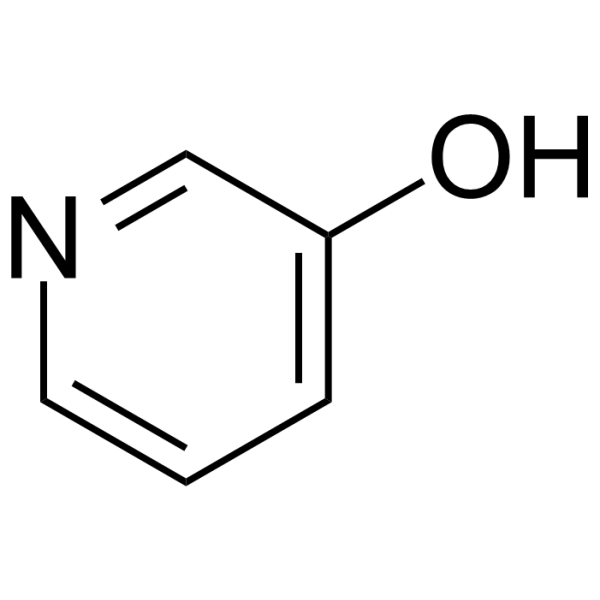 0 Images3-Hydroxypyridine is a compound that can be isolated from bamboo grass. As an endogenous photosensitizer present in human skin, 3-hydroxypyridine can mediate oxidative stress, proliferation inhibition and apoptosis of skin cells through UVA/UVB excitation.
-
Methyl aminolevulinate hydrochloride
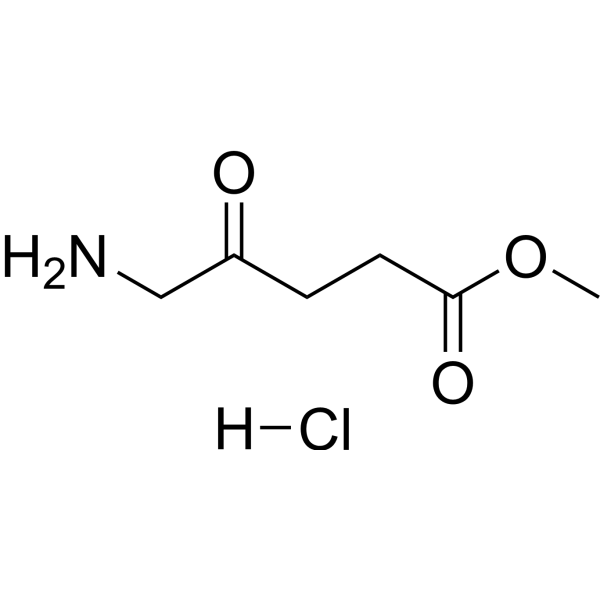 0 ImagesMethyl aminolevulinate hydrochloride is a sensitizer used in photodynamic therapy (PDT). Methyl aminolevulinate hydrochloride penetrates the skin and induces the production of photoactive porphyrins including protoporphyrin IX in cells; upon exposure to appropriate light, it generates ROS, which triggers cellular oxidation and cell death. Methyl aminolevulinate hydrochloride acts as a photo-damage reversing agent through epidermal reconstruction, cytokine-mediated activation of dermal fibroblasts, elastin breakdown, new collagen formation, and compression of dilated capillaries. Methyl aminolevulinate hydrochloride reduces the expression of the proliferation marker Ki-67 and the early skin carcinogenesis marker TP53. Methyl aminolevulinate hydrochloride delays the onset of ultraviolet-induced skin tumors and reduces tumor burden in hairless mice. Methyl aminolevulinate hydrochloride is applicable to research related to actinic keratosis and basal cell carcinoma.
-
Titanium(IV) oxide
 0 ImagesSynonyms: Titanium dioxideTitanium(IV) oxide is a photosensitizer and photocatalyst. Titanium(IV) oxide can be used as a pharmaceutical excipient such as a flow aid, coating agent, sunscreen, colorant, etc. Pharmaceutical excipients or pharmaceutical excipients refer to other chemical substances used in the pharmaceutical process other than the drug ingredients. Pharmaceutical excipients generally refer to inactive ingredients in pharmaceutical preparations that can improve the stability, solubility and processability of pharmaceutical preparations. Pharmaceutical excipients also affect the absorption, distribution, metabolism and elimination (ADME) process of co-administered drugs. Titanium(IV) oxide can use light energy to generate electron-hole pairs to degrade pollutants. Photons excite electrons in TiO2 to generate active oxygen species (such as ·OH and ·O2-), thereby oxidizing and mineralizing pollutants such as organic compounds and heavy metals. TiO2 can be used in the research of environmental remediation fields such as water treatment, air purification and self-cleaning materials.
-
Nuclear Fast Red
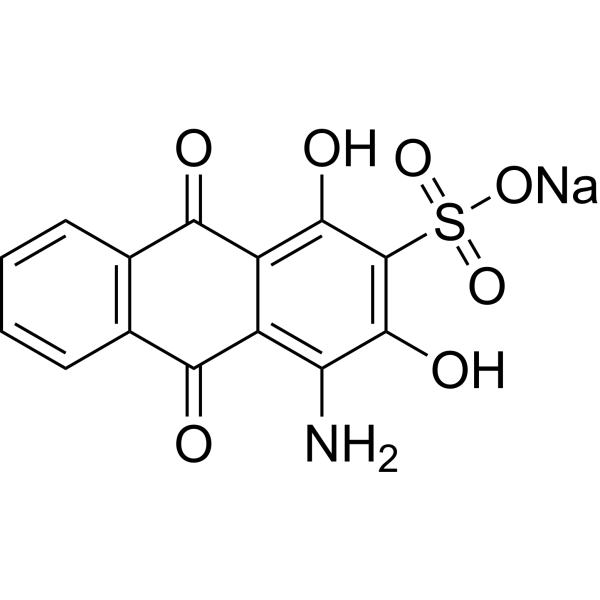 0 ImagesNuclear Fast Red, an anthraquinone dye, is commonly used in conjunction with an excess of aluminum ions as a red nuclear counterstain. Nuclear fast red has been used as a histochemical and colorimetric reagent for calcium. Nuclear fast red as highly sensitive "off/on" fluorescent probe for detecting guanine.
-
4-Benzoylbenzoic acid
 0 ImagesSynonyms: Benzoylbenzoicacid4-(Phenylcarbonyl)benzoic acid is a photooxidant. Upon light activation, 4-(Phenylcarbonyl)benzoic acid forms an electrophilic aromatic ketone that acts as an oxidant in organic synthesis or biological systems. 4-(Phenylcarbonyl)benzoic acid has been used in the study of amino acid oxidation, as well as the synthesis of photoactivated antibacterial and antiviral compounds123.
-
Benzophenone-d10
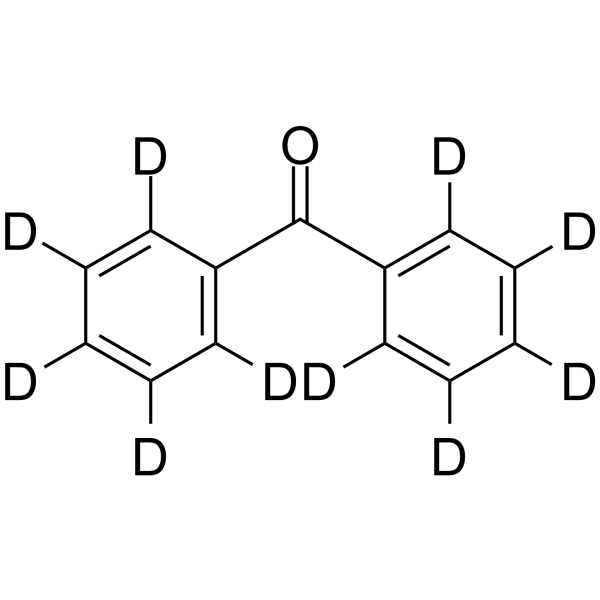 0 ImagesBenzophenone-d10 is the deuterium labeled Benzophenone (HY-Y0546). Benzophenone is an endogenous metabolite. Benzophenone is a photosensitizer, that absorbs UV light, transfers its energy to DNA, and triggers DNA damage. Benzophenone can be used as the fragrance enhancer, ultraviolet curing agent, additive in plastics, or the flavor ingredient. Benzophenone can also be used in the manufacturing of insecticides, agricultural chemicals, hypnotics, antihistamines, and other pharmaceuticals. Benzophenone exhibits certain carcinogenicity in mouse/rat models under long term exposure. Benzophenone exhibits estrogenic activity.
-
NPN12830
 0 ImagesCat. No.: HY-W035135CAS No.: 22112-83-0NPN12830 is a dye compound. NPN12830 can be used in various photodynamic therapy research.
-
Methyl pheophorbide a
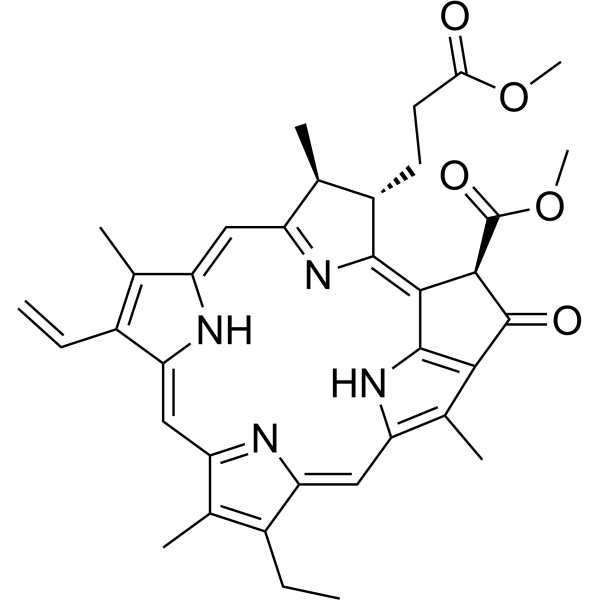 0 ImagesMethyl pheophorbide a is a natural product, one of the chlorophyll-a derivatives. Methyl pheophorbide a is a photosensitizer that produces singlet oxygen and reactive oxygen species (ROS) under light of specific wavelength, thereby leading to cell death.
-
Benzanthrone
 0 ImagesBenzanthrone is an immunotoxic, pro-inflammatory Photosensitizer. Benzanthrone upregulates iNOS, COX-2 and inflammatory cytokines; activates ERK1/2, p38, JNK, AP-1 and NF-κB; inhibits Nrf2; and induces oxidative stress and DNA damage. Upon radiation exposure, Benzanthrone generates singlet oxygen and superoxide anion radicals, induces photohemolysis and lipid peroxidation, and alters the levels of skin xenobiotic enzymes. Benzanthrone exhibits differential genotoxicity in different cell lines. Benzanthrone possesses skin tumor-initiating and promoting activities. Benzanthrone can be used in skin tumor-related studies.
-
trans-Caffeic acid (Standard)
 0 Imagestrans-Caffeic acid (Standard) is the analytical standard of trans-Caffeic acid (HY-121231). This product is intended for research and analytical applications. trans-Caffeic acid is a hydroxycinnamic acid widely distributed in coffee, propolis, and Lamiaceae herbs. trans-Caffeic acid exhibits significant antioxidant and photoprotective activities, and can be used in cancer-related research. trans-Caffeic acid readily undergoes reversible isomerization to form its cis-isomer in protic solvents, under high temperature, ultraviolet radiation, and stress conditions. Binding of trans-Caffeic acid with aluminum, lead, or copper ions attenuates isomerization and inhibits the formation of vinylcatechol, while complexation with lead or copper ions also promotes the formation of aesculetin.
-
10-(3,5-Di-OMe-Ph)-9-mesityl-(1,3,6,8-tetra-OMe-acridinium) tetrafluoroborate
 0 ImagesCat. No.: HY-W072496CAS No.: 1965330-59-910-(3,5-Di-OMe-Ph)-9-mesityl-(1,3,6,8-tetra-OMe-acridinium) tetrafluoroborate is a photocatalyst with the activity of enhancing the efficiency of organic reactions. 10-(3,5-Di-OMe-Ph)-9-mesityl-(1,3,6,8-tetra-OMe-acridinium) tetrafluoroborate is widely used in the synthesis of complex molecules and compounds. 10-(3,5-Di-OMe-Ph)-9-mesityl-(1,3,6,8-tetra-OMe-acridinium) tetrafluoroborate also exhibits excellent performance in photosensitization reactions.



