



Photosensitizer
Photosensitizers are light absorbers that alter the course of a photochemical reaction. They usually are catalysts. Photosensitizers have been used as light-responsive drugs with their imaging capabilities, easy synthesis, tunable energy levels, and biocompatibility, which make them an innovative tool for therapeutic approaches in treatment of various cancers. Among different methods for cancer therapy, photodynamic therapy (PDT) using a photosensitizer can take advantage of penetrated light into a targeted tissue for improving tumor control. The PDT comprises of three major components; photosensitizer, oxygen, and light source of appropriate wavelength, which when act together, generate a photochemical reaction. Depending on the part of the body being treated, the photosensitizing agent is either administered into the bloodstream through a vein or placed directly on the skin. By irradiation light on the targeted area, the excited photosensitizer emits energy in the form of heat and exhibits intersystem crossing (ISC), leading to the formation of reactive oxygen species (ROS) in triplet state.
Photosensitizers can function by many mechanisms, sometimes they donate an electron to the substrate, sometimes they abstract a hydrogen atom from the substrate. At the end of this process, the photosensitizer returns to its ground state, where it remains chemically intact, poised to absorb more light. One branch of chemistry which frequently utilizes photosensitizers is polymer chemistry, using photosensitizers in reactions such as photopolymerization, photocrosslinking, and photodegradation. Photosensitizers are also used to generate prolonged excited electronic states in organic molecules with uses in photocatalysis, photon upconversion and photodynamic therapy. Generally, photosensitizers absorb electromagnetic radiation consisting of infrared radiation, visible light radiation, and ultraviolet radiation and transfer absorbed energy into neighboring molecules[1][2].
Photosensitizers can function by many mechanisms, sometimes they donate an electron to the substrate, sometimes they abstract a hydrogen atom from the substrate. At the end of this process, the photosensitizer returns to its ground state, where it remains chemically intact, poised to absorb more light. One branch of chemistry which frequently utilizes photosensitizers is polymer chemistry, using photosensitizers in reactions such as photopolymerization, photocrosslinking, and photodegradation. Photosensitizers are also used to generate prolonged excited electronic states in organic molecules with uses in photocatalysis, photon upconversion and photodynamic therapy. Generally, photosensitizers absorb electromagnetic radiation consisting of infrared radiation, visible light radiation, and ultraviolet radiation and transfer absorbed energy into neighboring molecules[1][2].
References:
- [1]. Kwiatkowski S, et, al. Photodynamic therapy - mechanisms, photosensitizers and combinations. Biomed Pharmacother. 2018 Oct:106:1098-1107. [Content Brief]
- [2]. Dash BS, et, al. Photosensitizer-Functionalized Nanocomposites for Light-Activated Cancer Theranostics. Int J Mol Sci. 2021 Jun 22;22(13):6658. [Content Brief]
All Product Categories
-
Photosensitizer Related Products (80)
Related Products (80)

-
TBD–anchor
 0 ImagesCat. No.: HY-D2986CAS No.: 2634719-04-1TBD–anchor is a water-soluble, positively charged AIE photosensitizer. TBD–anchor can specifically bind to bacterial membranes and efficiently produce 1O2. TBD–anchor has bactericidal activity against various bacteria and good biocompatibility. TBD–anchor can be used for research on bacterial infections.
-
Deuteroporphyrin IX dihydrochloride
 0 ImagesCat. No.: HY-W504836CAS No.: 68929-05-5Deuteroporphyrin IX (dihydrochloride) is a photosensitizer with high lipophilicity and amphiphilicity, capable of providing photosensitivity for cell membrane systems. Deuteroporphyrin IX (dihydrochloride) can induce irreversible discharge elimination in individual neurons.
-
BSS-Et
 0 ImagesCat. No.: HY-184451CAS No.: 2825003-94-7BSS-Et is a near-infrared phototheranostic agent that serves as one of the two release units of hypoxia-responsive prodrug BNNC, responsible for generating photodynamic therapy (PDT) and photothermal therapy (PTT) effects at tumor sites. BSS-Et produces reactive oxygen species and singlet oxygen upon irradiation, inducing oxidative stress and DNA damage. When combined with (R)-CR8 (HY-18340), BSS-Et enhances DNA damage and apoptosis in breast cancer cells. BSS-Et can be used in breast cancer-related research.
-
Type-I/-II Photosensitizer-1
 0 ImagesCat. No.: HY-170883Type-I/-II Photosensitizer-1 (compound 8b) is a photosensitizer with anticancer activity. Type-I/-II Photosensitizer-1 exhibits significant phototoxicity against both A549 and 4T1 tumor cells. Type-I/-II Photosensitizer-1 shows a strong oxygen-independent antitumor effect under laser irradiation (IC50=1.50-1.76 μM).
-
TPAPyN
 0 ImagesCat. No.: HY-175163TPAPyN is a nitroreductase(NTR)-responsive type I photosensitizer. TPAPyN facilitates the imaging of hypoxic cancer cells and image-guided photodynamic therapy (PDT). TPAPyN does not emit fluorescence in the aqueous environment, but restores when NTR cleaves the nitrofuran quencher with aggregation-induced emission. TPAPyN can be used as a fluorescent probe for specific imaging of hypoxic cancer.
-
ZnPcPs
 0 ImagesCat. No.: HY-176725ZnPcPs is a photosensitizer that generates ROS. ZnPcPs can be used to synthesize the photo-activated BRD4 degrader pZnPc-O3-JQ1 (HY-176724).
-
CAR-2
 0 ImagesCat. No.: HY-D2620CAS No.: 3030055-40-1CAR-2 is a BODIPY-based photosensitizer that induces ferroptosis in photodynamic therapy (PDT) by targeting the endoplasmic reticulum (ER) and lipid droplets (LDs). CAR-2 exhibits phototoxicity in breast cancer cells with IC50 of 0.01-0.02 μM. CAR-2 exhibits antitumor efficacy in 4T1 xenograft mouse models.
-
TPP-Ce6
 0 ImagesCat. No.: HY-158189CAS No.: 3030629-73-0TPP-Ce6 is a mitochondria-targeted photosensitizer formed by the ester bond conjugation of chlorophyll e6 (Ce6) with triphenylphosphine (TPP). Under light irradiation or ultrasound exposure, TPP-Ce6 generates reactive oxygen species, induces cell apoptosis, and triggers immunogenic cell death. TPP-Ce6 can serve as a component of carrier-free co-delivery systems, undergo enzyme-induced self-assembly within tumors, and modulate tumor hypoxia. TPP-Ce6 is applicable to research on breast cancer and glioblastoma.
-
Methyl aminolevulinate hydrochloride (Standard)
 0 ImagesMethyl aminolevulinate hydrochloride (Standard) is the analytical standard of Methyl aminolevulinate hydrochloride. This product is intended for research and analytical applications. Methyl aminolevulinate hydrochloride is a sensitizer used in photodynamic therapy (PDT). Methyl aminolevulinate hydrochloride penetrates the skin and induces the production of photoactive porphyrins including protoporphyrin IX in cells; upon exposure to appropriate light, it generates ROS, which triggers cellular oxidation and cell death. Methyl aminolevulinate hydrochloride acts as a photo-damage reversing agent through epidermal reconstruction, cytokine-mediated activation of dermal fibroblasts, elastin breakdown, new collagen formation, and compression of dilated capillaries. Methyl aminolevulinate hydrochloride reduces the expression of the proliferation marker Ki-67 and the early skin carcinogenesis marker TP53. Methyl aminolevulinate hydrochloride delays the onset of ultraviolet-induced skin tumors and reduces tumor burden in hairless mice. Methyl aminolevulinate hydrochloride is applicable to research related to actinic keratosis and basal cell carcinoma.
-
3-Acetylbenzophenone
 0 Images3-Acetylbenzophenone (Compound 2) is the photolysis product of Ketoprofen (HY-B0227). 3-Acetylbenzophenone promotes the photoperoxidation reaction of Linoleic acid (HY-N0729), exhibits free radical scavenging and photosensitizing activity.
-
Benzo[f]tetraphene
![Benzo[f]tetraphene](https://file.medchemexpress.com/product_pic/hy-w011577.gif "Click to View Benzo[f]tetraphene Product Detail") 0 ImagesCat. No.: HY-W011577CAS No.: 215-58-7Synonyms: Dibenz[a,c]anthraceneBenzo[f]tetraphene (Dibenz[a,c]anthracene) is a polycyclic aromatic hydrocarbon with significant antitumor activity. Benzo[f]tetraphene is used as a luminescent probe in cell biology research and can effectively detect reactive oxygen species in biological systems. Benzo[f]tetraphene can also be used as a potential photosensitizer and shows good application prospects in photodynamic inhibition.
0 ImagesCat. No.: HY-W011577CAS No.: 215-58-7Synonyms: Dibenz[a,c]anthraceneBenzo[f]tetraphene (Dibenz[a,c]anthracene) is a polycyclic aromatic hydrocarbon with significant antitumor activity. Benzo[f]tetraphene is used as a luminescent probe in cell biology research and can effectively detect reactive oxygen species in biological systems. Benzo[f]tetraphene can also be used as a potential photosensitizer and shows good application prospects in photodynamic inhibition.
-
Meso-tetraphenylchlorin
 0 ImagesCat. No.: HY-W010713CAS No.: 2669-65-0Synonyms: Fimaporfin free baseMeso-tetraphenylchlorin (TPCS2a) is a photosensitizer with poor water solubility, which limits its use in the blood circulation. However, TPCS2a@NPs nanoparticles can be prepared based on polylactic-co-polyethylene glycol acid (PLGA) polymer core loaded with TPCS2. Such nanoparticles can be coated with mesenchymal stem cell-derived plasma membranes (mMSCs) to form mMSC-TPCS2a@NPs, which prolongs blood circulation time and improves tumor targeting ability. Compared with uncoated TPCS2a@NPs, mMSC-TPCS2a@NPs can reduce macrophage uptake by 54% to 70% under different conditions. Both nanoparticle forms are effectively accumulated in MCF7 and MDA-MB-231 breast cancer cells, while uptake in normal breast epithelial cells MCF10A is significantly lower.
-
5,10,15,20-Tetrakis(4-chlorophenyl)porphyrin
 0 ImagesCat. No.: HY-W094745CAS No.: 22112-77-25,10,15,20-Tetrakis(4-chlorophenyl)porphyrin (Compound 5) is a photosensitizer. 5,10,15,20-Tetrakis(4-chlorophenyl)porphyrin shows no significant photodynamic cytotoxicity. 5,10,15,20-Tetrakis(4-chlorophenyl)porphyrin is mainly used for the optimization of photosensitizer structure in photodynamic therapy (PDT) for psoriasis.
-
Benzophenone (Standard)
 0 ImagesBenzophenone (Standard) is the analytical standard of Benzophenone. This product is intended for research and analytical applications. Benzophenone standard is a photosensitizer, that absorbs UV light, transfers its energy to DNA, and triggers DNA damage. Benzophenone standard can be used as the fragrance enhancer, ultraviolet curing agent, additive in plastics, or the flavor ingredient. Benzophenone standard can also be used in the manufacturing of insecticides, agricultural chemicals, hypnotics, antihistamines, and other pharmaceuticals. Benzophenone standard exhibits certain carcinogenicity in mouse/rat models under long term exposure. Benzophenone standard exhibits estrogenic activity.
-
Acid Red 94 sodium (80%)
 0 ImagesAcid Red 94 sodium (80%), a synthetic fluorescein derivative, is a deep red dye primarily composed of 4,5,6,7-tetrachloro-2,4,5,7-tetraiodo fluorescein. Acid Red 94 sodium (80%) is widely used as an ophthalmic diagnostic agent to detect dry or damaged cells on the ocular surface. Acid Red 94 sodium (80%) exhibits antitumor activity and can inhibit Friend Leukemia Virus (FLV) infection through photodynamic action. Additionally, Acid Red 94 sodium (80%) can inhibit Aβ aggregation through light irradiation. Acid Red 94 sodium (80%) holds potential for use in cancer, viral infections, and neurodegenerative disease research.
-
Dibenzo[a,c]anthracene-13C6
![Dibenzo[a,c]anthracene-13C6](https://file.medchemexpress.com/product_pic/hy-w011577s1.gif "Click to View Dibenzo[a,c]anthracene-13C6 Product Detail") 0 ImagesCat. No.: HY-W011577S1Synonyms: 2,3-Benzotriphenylene-13C6Dibenzo[a,c]anthracene-13C6 (2,3-Benzotriphenylene-13C6) is 13C labeled Benzo[f]tetraphene. Benzo[f]tetraphene (Dibenz[a,c]anthracene) is a polycyclic aromatic hydrocarbon with significant antitumor activity. Benzo[f]tetraphene is used as a luminescent probe in cell biology research and can effectively detect reactive oxygen species in biological systems. Benzo[f]tetraphene can also be used as a potential photosensitizer and shows good application prospects in photodynamic inhibition.
0 ImagesCat. No.: HY-W011577S1Synonyms: 2,3-Benzotriphenylene-13C6Dibenzo[a,c]anthracene-13C6 (2,3-Benzotriphenylene-13C6) is 13C labeled Benzo[f]tetraphene. Benzo[f]tetraphene (Dibenz[a,c]anthracene) is a polycyclic aromatic hydrocarbon with significant antitumor activity. Benzo[f]tetraphene is used as a luminescent probe in cell biology research and can effectively detect reactive oxygen species in biological systems. Benzo[f]tetraphene can also be used as a potential photosensitizer and shows good application prospects in photodynamic inhibition.
-
Photosensitizer-3
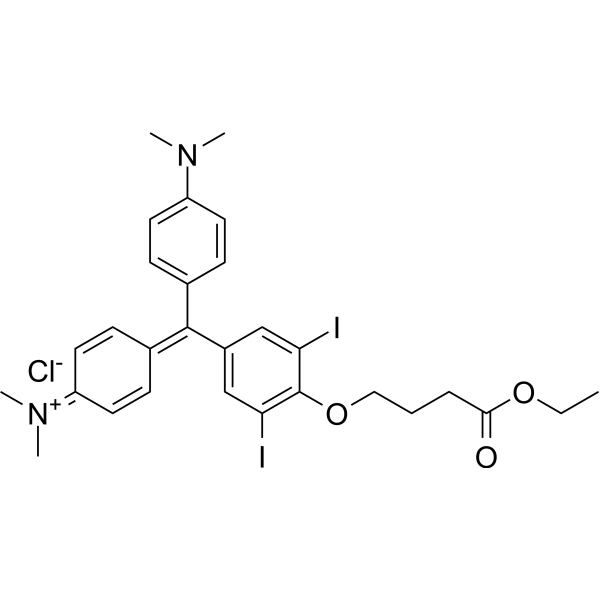 0 ImagesCat. No.: HY-157503CAS No.: 1928742-39-5Photosensitizer-3 is a photosensitizer that exhibits powerful selective killing effects on transfected HEK cells and affibody-targeted A431 cancer cells when exposed to near-infrared light excitation.
-
Atraton
 0 ImagesAtraton is a 1,3,5-triazine Herbicide and photodegradable substrate. Atraton undergoes photodegradation under the action of the photosensitizer acetone.
-
Aceanthrenequinone
 0 ImagesAceanthrenequinone is a polycyclic aromatic hydrocarbon quinone organic compound that belongs to the category of free radical photoinitiators. Aceanthrenequinone serves as an intermediate for dyes and pigments, and also acts as a substrate for organic synthesis and polymer materials. Aceanthrenequinone activates the Aryl Hydrocarbon Receptor pathway, induces the expression of CYP1A protein in the vascular system of zebrafish embryos, and causes the death of embryos at 120 hpf. Aceanthrenequinone is applicable to research related to industrial or biomedical applications.
-
[Ru(DIP)2TAP]Cl2
![[Ru(DIP)2TAP]Cl2](https://file.medchemexpress.com/product_pic/hy-157051.gif "Click to View [Ru(DIP)2TAP]Cl2 Product Detail") 0 ImagesCat. No.: HY-157051[Ru(DIP)2TAP]Cl2, Ruthenium(II) polypyridyl compound, is a photosensitizer. [Ru(DIP)2TAP]Cl2 can be used for the research of photodynamic therapy (PDT).
0 ImagesCat. No.: HY-157051[Ru(DIP)2TAP]Cl2, Ruthenium(II) polypyridyl compound, is a photosensitizer. [Ru(DIP)2TAP]Cl2 can be used for the research of photodynamic therapy (PDT).



