



Photosensitizer
Photosensitizers are light absorbers that alter the course of a photochemical reaction. They usually are catalysts. Photosensitizers have been used as light-responsive drugs with their imaging capabilities, easy synthesis, tunable energy levels, and biocompatibility, which make them an innovative tool for therapeutic approaches in treatment of various cancers. Among different methods for cancer therapy, photodynamic therapy (PDT) using a photosensitizer can take advantage of penetrated light into a targeted tissue for improving tumor control. The PDT comprises of three major components; photosensitizer, oxygen, and light source of appropriate wavelength, which when act together, generate a photochemical reaction. Depending on the part of the body being treated, the photosensitizing agent is either administered into the bloodstream through a vein or placed directly on the skin. By irradiation light on the targeted area, the excited photosensitizer emits energy in the form of heat and exhibits intersystem crossing (ISC), leading to the formation of reactive oxygen species (ROS) in triplet state.
Photosensitizers can function by many mechanisms, sometimes they donate an electron to the substrate, sometimes they abstract a hydrogen atom from the substrate. At the end of this process, the photosensitizer returns to its ground state, where it remains chemically intact, poised to absorb more light. One branch of chemistry which frequently utilizes photosensitizers is polymer chemistry, using photosensitizers in reactions such as photopolymerization, photocrosslinking, and photodegradation. Photosensitizers are also used to generate prolonged excited electronic states in organic molecules with uses in photocatalysis, photon upconversion and photodynamic therapy. Generally, photosensitizers absorb electromagnetic radiation consisting of infrared radiation, visible light radiation, and ultraviolet radiation and transfer absorbed energy into neighboring molecules[1][2].
Photosensitizers can function by many mechanisms, sometimes they donate an electron to the substrate, sometimes they abstract a hydrogen atom from the substrate. At the end of this process, the photosensitizer returns to its ground state, where it remains chemically intact, poised to absorb more light. One branch of chemistry which frequently utilizes photosensitizers is polymer chemistry, using photosensitizers in reactions such as photopolymerization, photocrosslinking, and photodegradation. Photosensitizers are also used to generate prolonged excited electronic states in organic molecules with uses in photocatalysis, photon upconversion and photodynamic therapy. Generally, photosensitizers absorb electromagnetic radiation consisting of infrared radiation, visible light radiation, and ultraviolet radiation and transfer absorbed energy into neighboring molecules[1][2].
References:
- [1]. Kwiatkowski S, et, al. Photodynamic therapy - mechanisms, photosensitizers and combinations. Biomed Pharmacother. 2018 Oct:106:1098-1107. [Content Brief]
- [2]. Dash BS, et, al. Photosensitizer-Functionalized Nanocomposites for Light-Activated Cancer Theranostics. Int J Mol Sci. 2021 Jun 22;22(13):6658. [Content Brief]
All Product Categories
-
Photosensitizer Related Products (79)
Related Products (79)

-
Antitumor photosensitizer-11
 0 ImagesCat. No.: HY-183570CAS No.: 2813319-14-9Antitumor photosensitizer-11 is a type-I carbazole/benzindolium photosensitizer with antitumor activity. Antitumor photosensitizer-11 induces ROS generation via a type-I pathway, forming superoxide anions and hydroxyl radicals. Antitumor photosensitizer-11 triggers immunogenic cell death in cancer cells via enhanced oxidative stress. Antitumor photosensitizer-11 exhibits antiproliferative activity in normoxic and hypoxic environments, inhibits breast cancer tumor growth in vivo, and promotes dendritic cell maturation and T cell infiltration. Antitumor photosensitizer-11 can be used for the research of cancer, such as breast cancer.
-
Photosensitizer-8
 0 ImagesCat. No.: HY-180169CAS No.: 3106369-28-9Photosensitizer-8 (Compound 4), 2-anthrol derivative, is an alkaline phosphatase (ALP)-activatable photosensitizer. Photosensitizer-8 undergoes a phosphate ester hydrolysis reaction in the presence of ALP, rapidly converting into the active photosensitizer 2-anthrol. Photosensitizer-8 exhibits cytotoxicity against ALP-overexpressing cancer cells (HeLa, A549, HCT116) after light exposure, with IC50 values of 14.3 μM, 21.6 μM and 17.5 μM, respectively, while showing no significant cytotoxicity against normal lung fibroblasts (WI-38) (IC50 ≥ 30 μM). Photosensitizer-8 can be used in photodynamic therapy research for ALP-overexpression-related cancers.
-
Antitumor photosensitizer-7
 0 ImagesCat. No.: HY-162825Antitumor photosensitizer-7 (compound 15) is a photosensitizer with anti-cancer activity. Antitumor photosensitizer-7 exhibits significant cytotoxicity against the G361 melanoma cell line under 414 nm blue light irradiation.
-
Antitumor agent-131
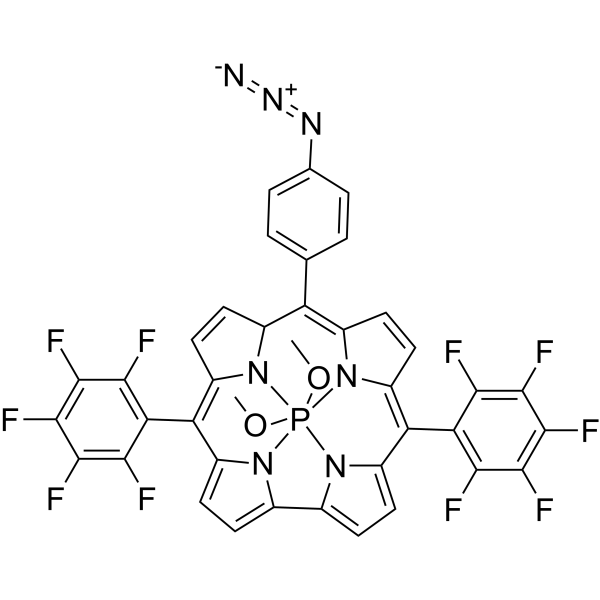 0 ImagesCat. No.: HY-162129Antitumor agent-131 (Compound 2-p) is an ER fluorescent probe with an IC50 value of 23 nM for HepG2 tumor cells. Antitumor agent-131 can be used as a photosensitizer for the study of cancer photodynamics.
-
3-Hydroxypyridine-d5
 0 ImagesCat. No.: HY-W7462953-Hydroxypyridine-d5 is the deuterium labeled 3-Hydroxypyridine (HY-Y1129). 3-Hydroxypyridine is a compound that can be isolated from bamboo grass. As an endogenous photosensitizer present in human skin, 3-hydroxypyridine can mediate oxidative stress, proliferation inhibition and apoptosis of skin cells through UVA/UVB excitation.
-
Anticancer agent 17
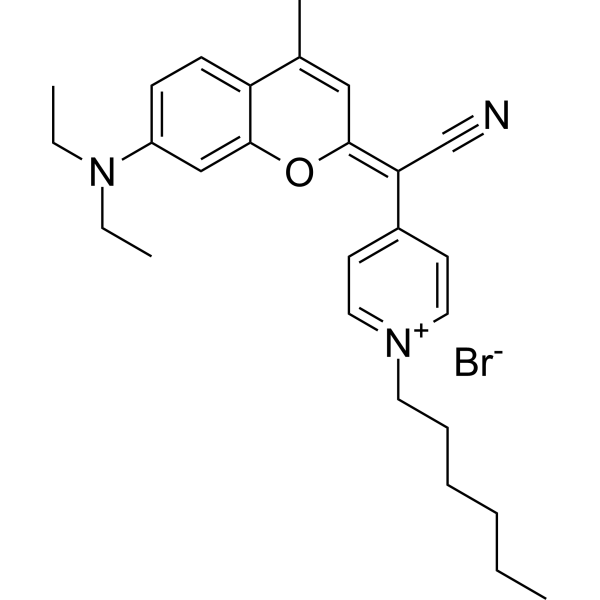 0 ImagesCat. No.: HY-141861CAS No.: 3031370-98-3Anticancer agent 17 displays potent anticancer activities against HeLa and A2780 cells with IC50 values of 0.19 μM and 0.09 μM, respectively.
-
Biguanidinium-porphyrin
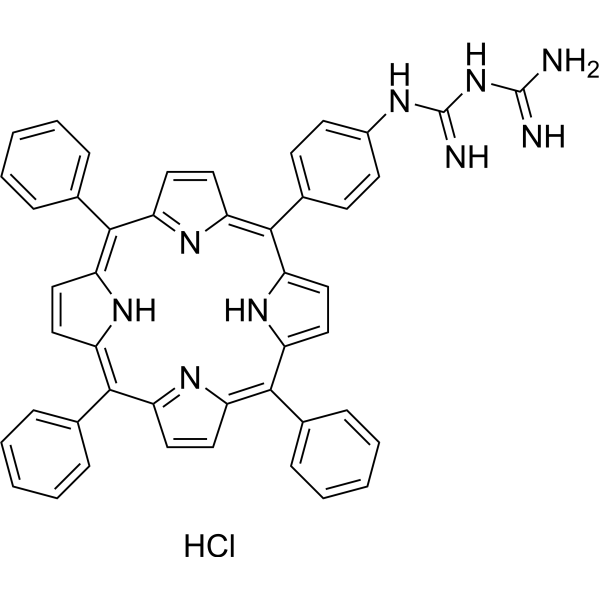 0 ImagesCat. No.: HY-128419CAS No.: 1014978-87-0Biguanidinium-porphyrin is a mitochondria-targeting photosensitizer. Biguanidinium-porphyrin distributes within cell membranes with a large component in vesicles that correlated to some extent with the lysosomes and, upon longer exposures, in mitochondria and the cytosolic membrane.
-
Lemuteporfin
 0 ImagesCat. No.: HY-13663CAS No.: 215808-49-4Synonyms: QLT-0074; DRM-05; EA 6Lemuteporfin (QLT-0074) is a benzoporphyrin derivative, diethylene glycol functionalized chlorin-type photosensitizer. Lemuteporfin rapidly sensitizes cells to photodynamic therapy. Lemuteporfin has anticancer activity against acute lymphoblastic leukemia.
-
Antitumor photosensitizer-9
 0 ImagesCat. No.: HY-175214Antitumor photosensitizer-9 is a near-infrared Photosensitizer (PS) with a high singlet oxygen production rate (relative rate = 1.79). Antitumor photosensitizer-9 exhibits strong phototoxicity against various cancer cells and induces ROS generation under light irradiation. Antitumor photosensitizer-9 inhibits tumor growth in vivo and exhibits excellent anticancer photodynamic therapy (PDT) efficacy at low drug and light doses. Antitumor photosensitizer-9 can be used in photodynamic therapy research.
-
Antitumor photosensitizer-1
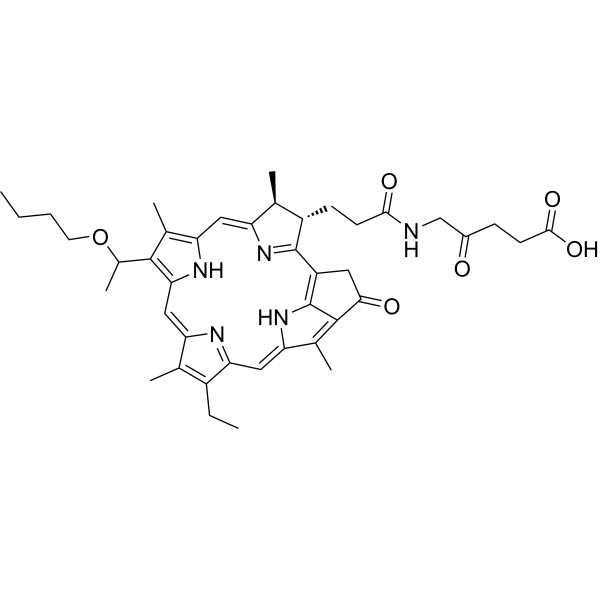 0 ImagesCat. No.: HY-146414CAS No.: 2344751-89-7Antitumor photosensitizer-1 (Compound 8) is a potent photosensitizer. Antitumor photosensitizer-1 has outstanding photodynamic anti-tumor effects without obvious skin photo-toxicity, and can act as new agent candidates for photodynamic research.
-
OBADC-TPA
 0 ImagesCat. No.: HY-D2979CAS No.: 3055116-00-9OBADC-TPA is a new type of photosensitizer. OBADC-TPA is commonly used to modify nanoparticles. OBADC-TPA can be used for precise optical imaging and research of lymphoma.
-
Photosensitizer-10
 0 ImagesCat. No.: HY-182785Photosensitizer-10 is a glutathione (GSH)-activatable photosensitizer. Photosensitizer-10 shows minimal photoactivity in the absence of glutathione, and generates a highly active species upon reaction with glutathione to induce photo-cytotoxicity. Photosensitizer-10 exhibits selective photo-cytotoxicity toward cancer cells with elevated intracellular glutathione levels while sparing normal cells. Photosensitizer-10 can be used for the research of cancer, such as lung carcinoma and skin carcinoma.
-
LY219703
 0 ImagesCat. No.: HY-125600CAS No.: 156281-08-2LY219703 is a photoactivatable analogue of the antitumor diarylsulfonylurea sulofenur. LY219703 are distributed mainly in membranes, particularly those of organelles such as mitochondria.
-
TBC-1
 0 ImagesCat. No.: HY-168854CAS No.: 2522115-48-4TBC-1 is a chlorophyll-a derivative, is a photosensitizer that can be used in photodynamic therapy (PDT). TBC-1 efficiently generats Type-I ROS and endoplasmic reticulum targeting ability. TBC-1 shows biocompatibility and PDT efficiency in vitro under both normoxia and hypoxia.
-
β-Glucuronidase responsive conjugate 1
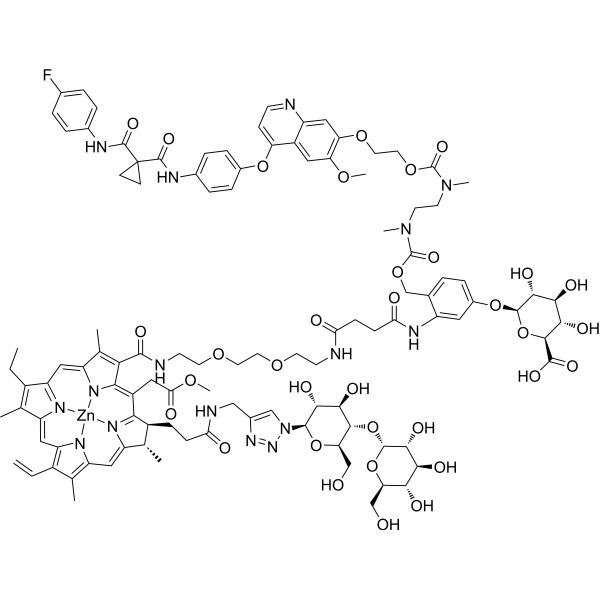 0 ImagesCat. No.: HY-161341β-Glucuronidase responsive conjugate 1 (compound 3) is a well-balanced photosensitizer which has photodynamic activity. β-Glucuronidase responsive conjugate 1 inhibits T-24 cell viability and growth with an IC50 of 0.2 μM. β-Glucuronidase responsive conjugate 1 can used to study bladder cancers.
-
Silicon naphthalocyanine dichloride
 0 ImagesCat. No.: HY-W738979CAS No.: 92396-91-3Silicon naphthalocyanine dichloride is a photosensitizer with potential anti-tumor activity. Silicon naphthalocyanine dichloride is used as a cancer-inhibiting compound in photodynamic therapy. Silicon naphthalocyanine dichloride can effectively absorb light energy of a specific wavelength, thereby generating oxygen free radicals that help destroy cancer cells. The biocompatibility of Silicon naphthalocyanine dichloride makes it show good prospects in medical applications.
-
Talaporfin-13C4,15N
 0 ImagesCat. No.: HY-W769206Synonyms: ME2906 free acid-13C4,15N; Mono-L-aspartyl chlorin e6 free acid-13C4,15N; NPe6 free acid-13C4,15NTalaporfin-13C4,15N (ME2906 (free acid)-13C4,15N) is the 13C- and 15N-labeled Talaporfin (HY-16477A). Talaporfin sodium, can be used in intraoperative photodynamic therapy (PDT) with a 664-nm semiconductor laser, was evaluated for efficacy and safety in treating primary malignant parenchymal brain tumors.
-
NFh-NMe-2
 0 ImagesCat. No.: HY-170436NFh-NMe-2 is a photosensitizer, that interacts with nitroreductase, generates singlet oxygen in tumor cells, exhibits cytotoxicity in cancer cells, and induces apoptosis. NFh-NMe-2 exhibits antitumor efficacy in mouse models.
-
TBD–anchor
 0 ImagesCat. No.: HY-D2986CAS No.: 2634719-04-1TBD–anchor is a water-soluble, positively charged AIE photosensitizer. TBD–anchor can specifically bind to bacterial membranes and efficiently produce 1O2. TBD–anchor has bactericidal activity against various bacteria and good biocompatibility. TBD–anchor can be used for research on bacterial infections.



