



Benzophenone
Based on 1 publication(s) in Google Scholar
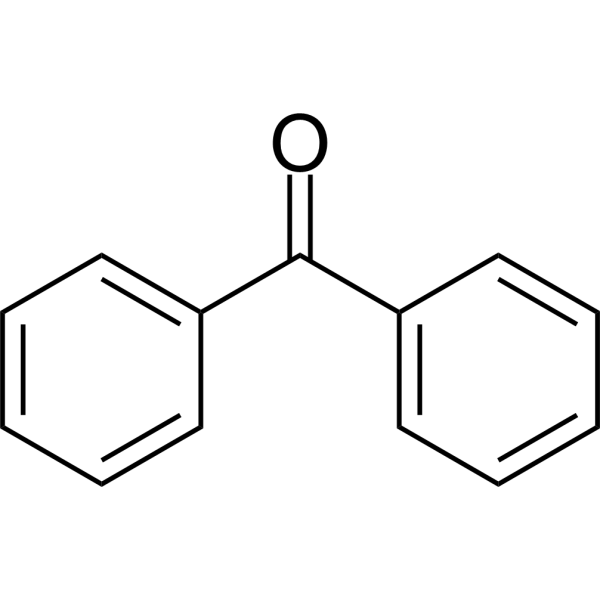
Benzophenone is an endogenous metabolite. Benzophenone is a photosensitizer, that absorbs UV light, transfers its energy to DNA, and triggers DNA damage. Benzophenone can be used as the fragrance enhancer, ultraviolet curing agent, additive in plastics, or the flavor ingredient. Benzophenone can also be used in the manufacturing of insecticides, agricultural chemicals, hypnotics, antihistamines, and other pharmaceuticals. Benzophenone exhibits certain carcinogenicity in mouse/rat models under long term exposure. Benzophenone exhibits estrogenic activity.
연구목적의 판매만을 진행합니다. 환자를 대상으로 한 판매는 하지 않습니다.
- Purity : 99.99%
- CAS No.: 119-61-9
- 화학식: C13H10O
- 분자량:182.22
-
보관:Powder -20°C, 3 years , 4°C, 2 years ; In solvent -80°C, 6 months , -20°C, 1 month

To place orders, for customer services and technical support, please contact: MedChemExpress USA
Tel: 609-228-6898 E-mail: [email protected] [email protected]


-
 Biological Activity
-
Chemical Information
-
용액&용해도
- Protocol
- 순도&문서
- References
-
 Help & FAQs


-

HY-Y0546R
Benzophenone (Standard)Photosensitizer -
HY-W009169
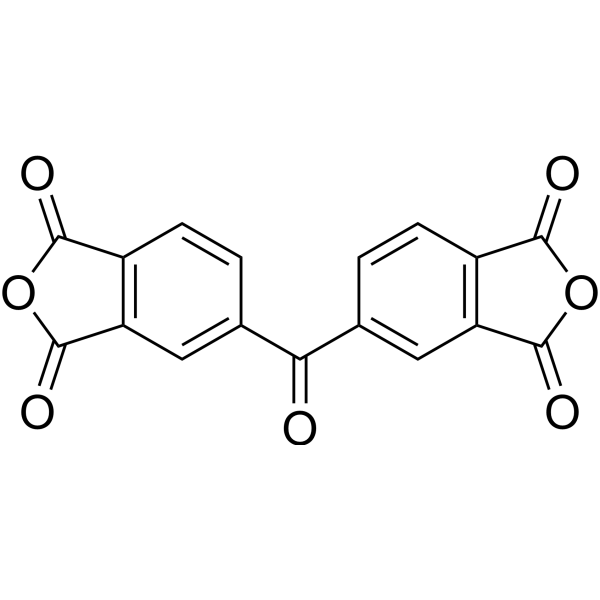
Benzophenonetetracarboxylic dianhydridePrecursor -
HY-D1005
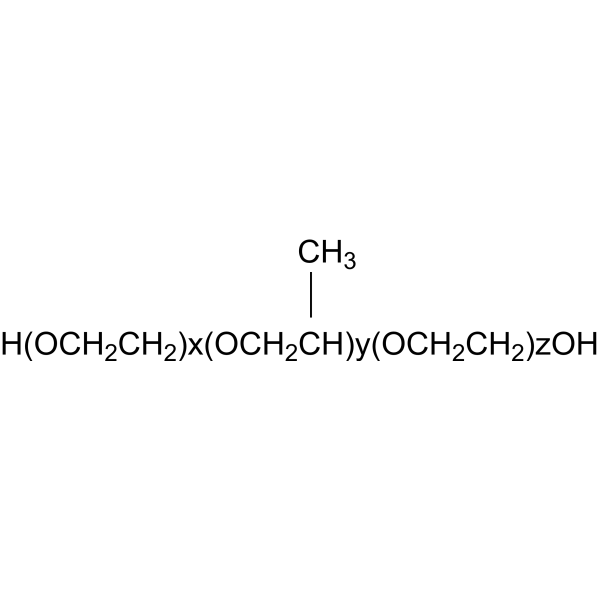
Poloxamer 407 (F127)LPL Receptor Inhibitor -
HY-Y0989
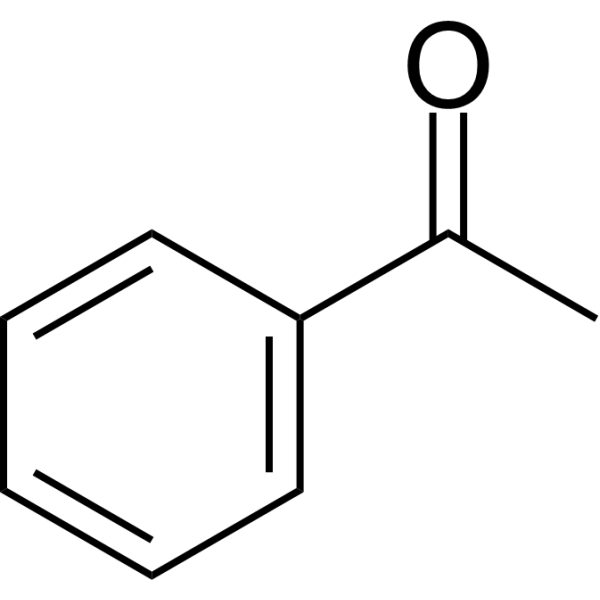
AcetophenoneOrganic Compound -

HY-W014937
4-HydroxybenzophenoneBenzophenone Metabolite -
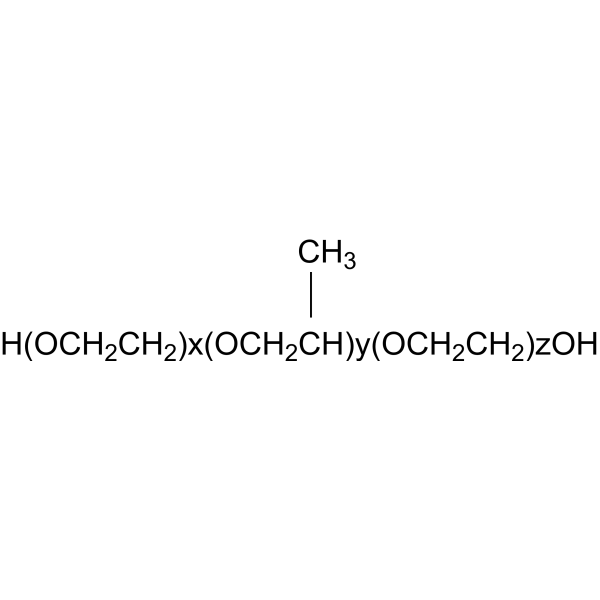
HY-D1005A
Poloxamer 188Linear Copolymer -

HY-Y0344D
Sodium chloride, for cell cultureBiochemical Assay Reagent -
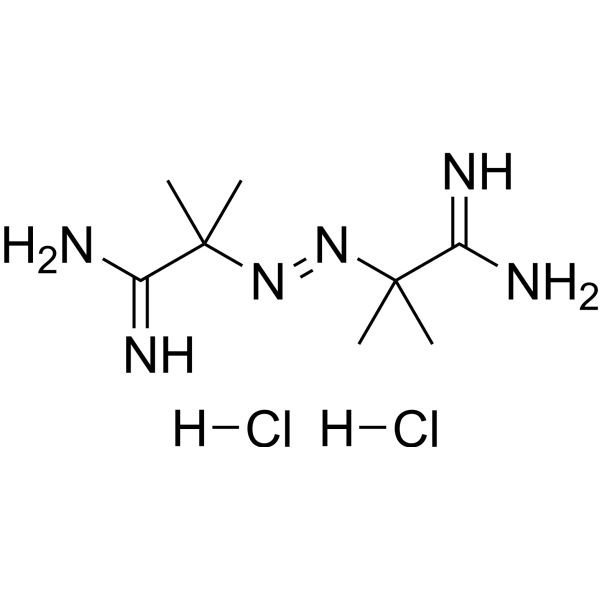
HY-Y0525
AAPHRadical Generator -
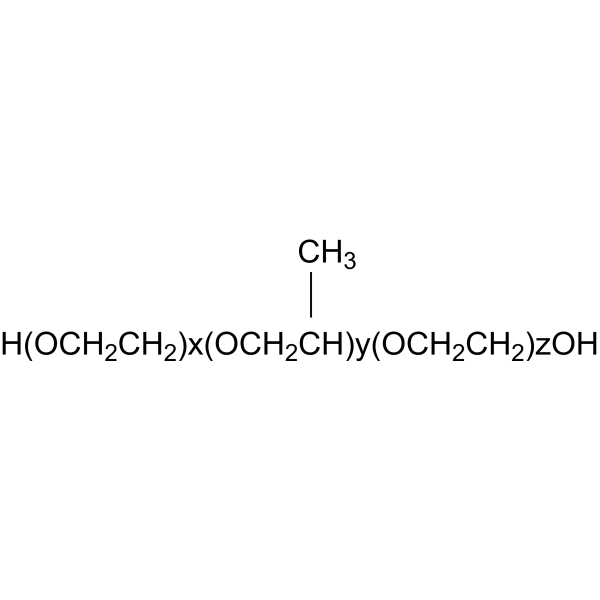
HY-D1005H
Poloxamer 188 (F68)Nonionic Linear Copolymer -

HY-Y0338
Ethylene glycol,98%Biochemical Assay Reagent -
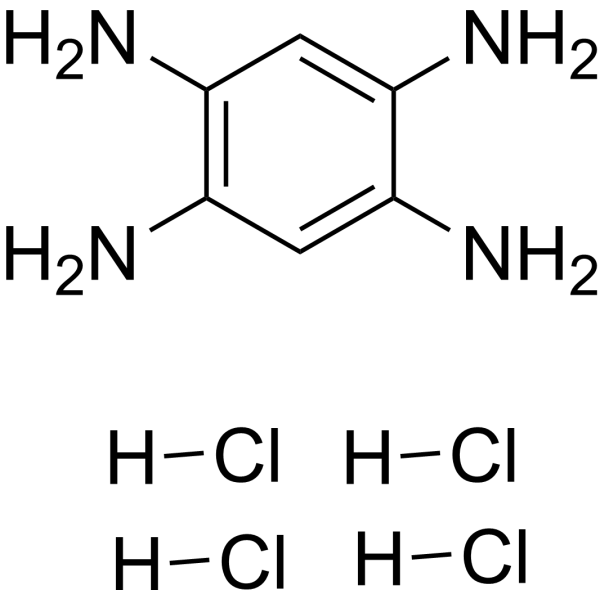
HY-12444
Y15FAK Inhibitor -
HY-Y1282
Sodium tetraborate decahydrateBiochemical Reagent
Publications Citing Use of MedChemExpress (MCE) Benzophenone
MoreAll Endogenous Metabolite Isoforms
More

Biological Activity
제품 설명
In Vivo
Benzophenone (0-160 mg/kg, po for 105 weeks) exhibits potential carcinogenic risks in rat and mouse models under long-term exposure, especially in the kidney and liver[2].
MedChemExpress (MCE) has not independently confirmed the accuracy of these methods. They are for reference only.
-
Animal Model:Sprague-Dawley rats models[1]
-
Dosage:100-400 mg/kg
-
Administration:po for 3 days
-
Result:Increased uterine weight, endometrial height and stromal cells, keratinized the vaginal epithelial cell layer.
-
Animal Model:F344/N rats and B6C3F1 mouse models[2]
-
Dosage:15-60 mg/kg for rats, 40-160 mg/kg for mice
-
Administration:po for 105 weeks
-
Result:Increased the incidence of tumorigenesis.


Chemical Information
-
CAS No. 119-61-9
-
Appearance Solid
-
분자량 182.22
-
화학식 C13H10O
-
Color White to off-white
-
SMILES
O=C(C1=CC=CC=C1)C2=CC=CC=C2
-
Structure Classification
-
Initial Source
-
선적
Room temperature in continental US; may vary elsewhere.
-
보관
Powder -20°C 3 years 4°C 2 years In solvent -80°C 6 months -20°C 1 month


Publications (1)
-
Journal Impact Factor
-
Most Recent
-
Vet Microbiol
The Chinese medicine monomer Schisandrin C inhibits PRRSV infection by regulating the OGT-PI3K/AKT/mTOR signaling pathway. [Abstract]2026 May:316:110992. PMID: 41865607


용액&용해도
In Vitro:
DMSO : 100 mg/mL (548.79 mM; Need ultrasonic; Hygroscopic DMSO has a significant impact on the solubility of product, please use newly opened DMSO)
Please refer to the solubility information to select the appropriate solvent. Once prepared, please aliquot and store the solution to prevent product inactivation from repeated freeze-thaw cycles.
Storage method and period of stock solution: -80°C, 6 months; -20°C, 1 month. When stored at -80°C, please use it within 6 months. When stored at -20°C, please use it within 1 month.
Please refer to the solubility information to select the appropriate solvent. Once prepared, please aliquot and store the solution to prevent product inactivation from repeated freeze-thaw cycles.
Storage method and period of stock solution: -80°C, 6 months; -20°C, 1 month. When stored at -80°C, please use it within 6 months. When stored at -20°C, please use it within 1 month.
Concentration (start) × Volume (start) = Concentration (final) × Volume (final)
In Vivo:
Select the appropriate dissolution method based on your experimental animal and administration route.
- For the following dissolution methods, please ensure to first prepare a clear stock solution using an In Vitro approach and then sequentially add co-solvents:
- To ensure reliable experimental results, the clarified stock solution can be appropriately stored based on storage conditions. As for the working solution for In Vivo experiments, it is recommended to prepare freshly and use it on the same day.
- The percentages shown for the solvents indicate their volumetric ratio in the final prepared solution. If precipitation or phase separation occurs during preparation, heat and/or sonication can be used to aid dissolution.
Add each solvent one by one: 10% DMSO 40% PEG300 5% Tween-80 45% Saline
Solubility: ≥ 2.5 mg/mL (13.72 mM); Clear solution
This protocol yields a clear solution of ≥ 2.5 mg/mL (saturation unknown).
Taking 1 mL working solution as an example, add 100 μL DMSO stock solution (25.0 mg/mL) to 400 μL PEG300, and mix evenly; then add 50 μL Tween-80 and mix evenly; then add 450 μL Saline to adjust the volume to 1 mL.
Preparation of Saline: Dissolve 0.9 g sodium chloride in ddH₂O and dilute to 100 mL to obtain a clear Saline solution.
Add each solvent one by one: 10% DMSO 90% (20% SBE-β-CD in Saline)
Solubility: ≥ 2.5 mg/mL (13.72 mM); Clear solution
This protocol yields a clear solution of ≥ 2.5 mg/mL (saturation unknown).
Taking 1 mL working solution as an example, add 100 μL DMSO stock solution (25.0 mg/mL) to 900 μL 20% SBE-β-CD in Saline, and mix evenly.
Preparation of 20% SBE-β-CD in Saline (4°C, storage for one week): 2 g SBE-β-CD powder is dissolved in 10 mL Saline, completely dissolve until clear.
In Vivo Dissolution Calculator
Please enter the basic information of animal experiments:
-
-
-
-
Recommended: Prepare an additional quantity of animals to account for potential losses during experiments.
Please enter your animal formula composition:
-
%DMSO +
Recommended: Keep the proportion of DMSO in working solution below 2% if your animal is weak.
-
%+
-
+%Tween-80 + +
-
%Saline +
The co-solvents required include: DMSO, . All of co-solvents are available by MedChemExpress (MCE). , Tween 80. All of co-solvents are available by MedChemExpress (MCE).
Working solution concentration: 0.22 mg/mL
Method for preparing stock solution: mg drug dissolved in μL DMSO. Stock solution concentration: mg/mL.
1. Take μL DMSO stock solution;
2. Add μL .
μL , mix evenly;
3. Then add μL Tween 80, mix evenly;
4. Then add μL
Please ensure that the stock solution in the first step is dissolved to a clear state, and add co-solvents in sequence. You can use ultrasonic heating (ultrasonic cleaner, recommended frequency 20-40 kHz), vortexing, etc. to assist dissolution.


순도&문서
-
Data Sheet (287 KB)
-
SDS (479 KB)
- English - EN (479 KB)
- Français - FR (479 KB)
- Deutsch - DE (479 KB)
- Norwegian - NO (479 KB)
- Español - ES (479 KB)
- Swedish - SV (479 KB)
- Italian - IT (479 KB)
- Korean - KR (479 KB)
- Portuguese - PT (479 KB)
-
Handling Instructions (2659 KB)
References
[1]. EFSA Panel on Food Contact Materials, Enzymes, Flavourings and Processing Aids (CEF); Silano V, et al., Safety of benzophenone to be used as flavouring. EFSA J. 2017 Nov 14;15(11):e05013. [Content Brief]
[2]. Rhodes MC, et al., Carcinogenesis studies of benzophenone in rats and mice. Food Chem Toxicol. 2007 May;45(5):843-51. [Content Brief]


Complete Stock Solution Preparation Table
Please refer to the solubility information to select the appropriate solvent. Once prepared, please aliquot and store the solution to prevent product inactivation from repeated freeze-thaw cycles.
Storage method and period of stock solution: -80°C, 6 months; -20°C, 1 month. When stored at -80°C, please use it within 6 months. When stored at -20°C, please use it within 1 month.
| Optional Solvent | Concentration Solvent Mass | 1 mg | 5 mg | 10 mg | 25 mg |
|---|---|---|---|---|---|
| DMSO | 1 mM | 5.4879 mL | 27.4394 mL | 54.8787 mL | 137.1968 mL |
| 5 mM | 1.0976 mL | 5.4879 mL | 10.9757 mL | 27.4394 mL | |
| 10 mM | 0.5488 mL | 2.7439 mL | 5.4879 mL | 13.7197 mL | |
| 15 mM | 0.3659 mL | 1.8293 mL | 3.6586 mL | 9.1465 mL | |
| 20 mM | 0.2744 mL | 1.3720 mL | 2.7439 mL | 6.8598 mL | |
| 25 mM | 0.2195 mL | 1.0976 mL | 2.1951 mL | 5.4879 mL | |
| 30 mM | 0.1829 mL | 0.9146 mL | 1.8293 mL | 4.5732 mL | |
| 40 mM | 0.1372 mL | 0.6860 mL | 1.3720 mL | 3.4299 mL | |
| 50 mM | 0.1098 mL | 0.5488 mL | 1.0976 mL | 2.7439 mL | |
| 60 mM | 0.0915 mL | 0.4573 mL | 0.9146 mL | 2.2866 mL | |
| 80 mM | 0.0686 mL | 0.3430 mL | 0.6860 mL | 1.7150 mL | |
| 100 mM | 0.0549 mL | 0.2744 mL | 0.5488 mL | 1.3720 mL |


Benzophenone Related Classifications
HY-Y0546 Related Classifications
 Powered by Bioz