
1. Search Result
Search Result
Pathways Recommended: MAPK/ERK Pathway
Results for "

salvage pathway

" in MedChemExpress (MCE) Product Catalog:

12

Inhibitors & Agonists

1

MCE Kits

3

Natural
Products

Cat. No. Product Name Target Research Areas Chemical Structure
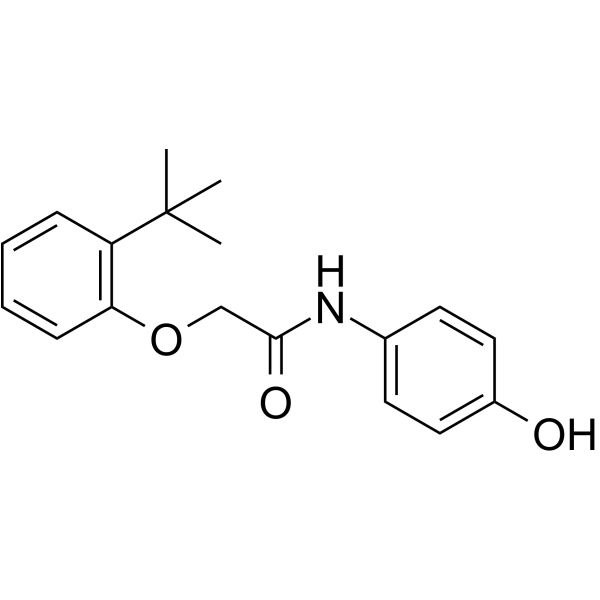
  • HY-144776
    NAT
    4 Publications Verification

    NAMPT Cancer
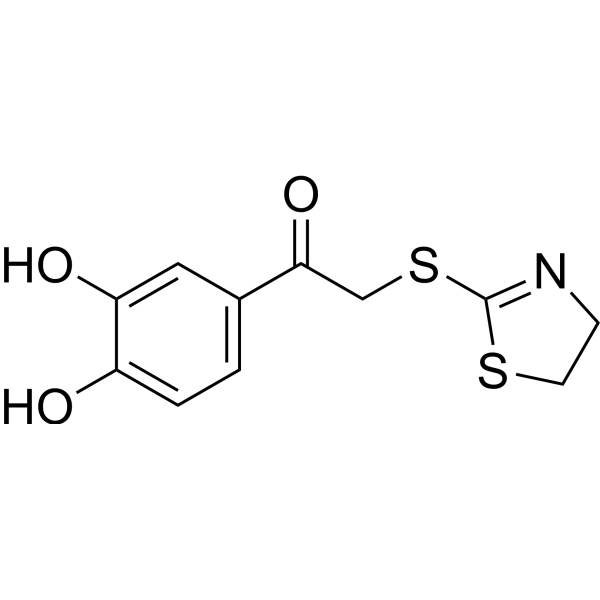
    NAT is an initial hit of NAMPT activator with an EC50 of 5.7 μM and a KD of 379 nM. NAMPT is the rate-limiting enzyme in the NAD salvage pathway, which makes it an attractive target for the research of many diseases associated with NAD exhaustion such as neurodegenerative diseases .
    NAT
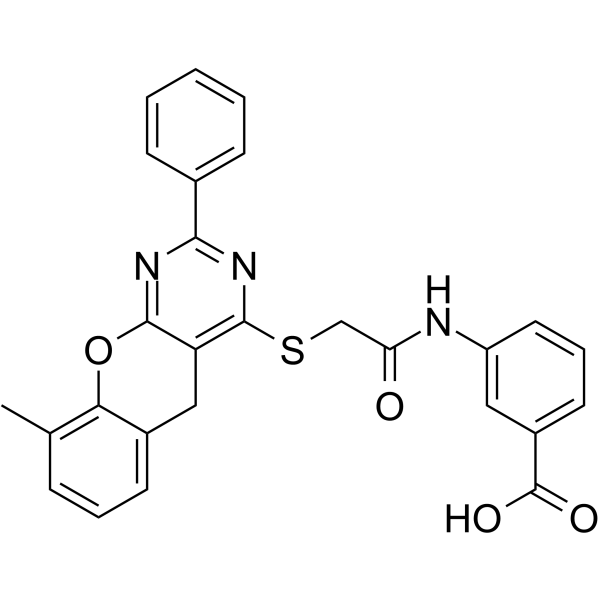
  • HY-148394
    UCK2 Inhibitor-1
    2 Publications Verification

    DNA/RNA Synthesis Cancer
    UCK2 Inhibitor-1 (Compound 20874830-2) is a non-competitive UCK2 inhibitor with an IC50 of 4.7 μM. UCK2 Inhibitor-1 acts as a non-competitive inhibitor against uridine and ATP, and functionally inhibits the enzymatic activity of UCK2. UCK2 Inhibitor-1 suppresses the uridine salvage pathway. UCK2 Inhibitor-1 can be used in chronic myeloid leukemia research .
    UCK2 Inhibitor-1
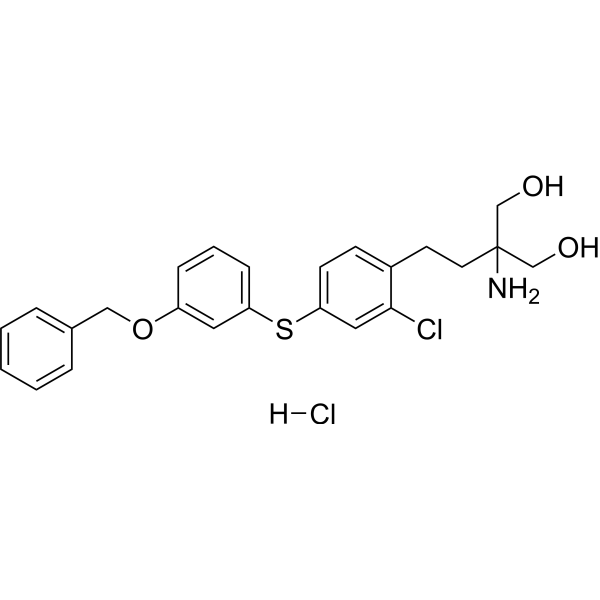
  • HY-13660
    Mocravimod hydrochloride
    2 Publications Verification

    KRP-203

    LPL Receptor Reactive Oxygen Species (ROS) Akt GSK-3 JAK STAT Metabolic Disease Inflammation/Immunology Cancer
    Mocravimod (hydrochloride) is an orally active sphingosine-1-phosphate receptor (S1PR) modulator that blocks the signal required by T cells to egress from lymph nodes and other lymphoid organs. Mocravimod (hydrochloride) preferentially binds to S1PR1 over S1PR2 and S1PR3 in cardiomyocytes. Mocravimod (hydrochloride) significantly lowered the concentration of reactive oxygen species (ROS), prevented mitochondrial permeability transition pore opening, boosted mitochondrial membrane potential (MMP), and increased phosphorylation of AKT, EKR, GSK-3β, JAK2, and STAT3. Mocravimod (hydrochloride) retains T cell effector function. Mocravimod (hydrochloride) can be used for the study of acute myelogenous leukemia, diabetes and Myocardial Ischemia-Reperfusion Injury (MIRI) .
    Mocravimod hydrochloride
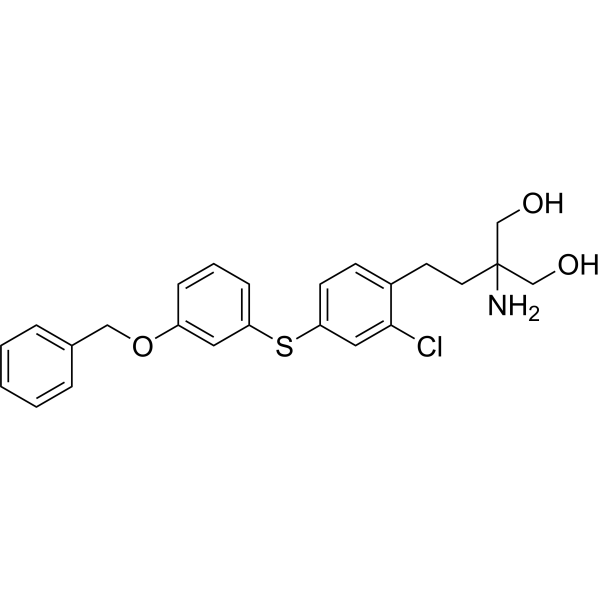
  • HY-109038
    Mocravimod
    2 Publications Verification

    KRP-203 free base

    LPL Receptor Reactive Oxygen Species (ROS) Mitochondrial Metabolism Akt GSK-3 JAK STAT Cardiovascular Disease Metabolic Disease Inflammation/Immunology Cancer
    Mocravimod (KRP-203 free base) is a sphingosine-1-phosphate receptor (S1PR) modulator that blocks the signal required by T cells to egress from lymph nodes and other lymphoid organs. Mocravimod preferentially binds to S1PR1 over S1PR2 and S1PR3 in cardiomyocytes. Mocravimod significantly lowered the concentration of reactive oxygen species (ROS), prevented mitochondrial permeability transition pore opening, boosted mitochondrial membrane potential (MMP), and increased phosphorylation of AKT, EKR, GSK-3β, JAK2, and STAT3. Mocravimod retains T cell effector function. Mocravimod can be used for the study of acute myelogenous leukemia, diabetes and Myocardial Ischemia-Reperfusion Injury (MIRI) .
    Mocravimod
  • HY-E70066

    Others Others
    UDP-sugar pyrophosphorylase (AtUSP) is a broad substrate enzyme that synthesizes nucleotide sugars. UDP-sugar pyrophosphorylase catalyzes the conversion of various monosaccharide 1-phosphates to the respective UDP-sugars in the salvage pathway .
    UDP-sugar pyrophosphorylase (AtUSP)
  • HY-126967A

    1-P-GPA

    Liposome Cardiovascular Disease
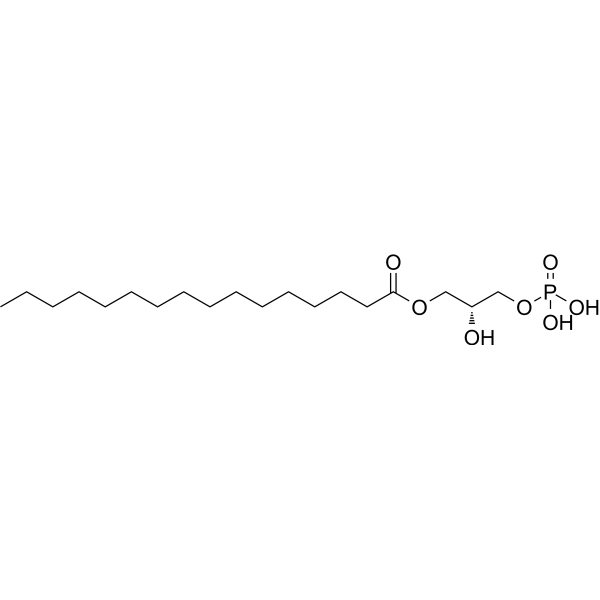
    1-Palmitoyl-sn-glycerol 3-phosphate (1-P-GPA) is a phospholipid and lipid membrane precursor. 1-Palmitoyl-sn-glycerol 3-phosphate integrates into POPC liposomes, causing significant changes in membrane curvature. 1-Palmitoyl-sn-glycerol 3-phosphate induces platelet aggregation, but its activity is 30-fold lower than that of 1-hexadecyl-sn-glyceryl-3-phosphate .
    1-Palmitoyl-sn-glycerol 3-phosphate
  • HY-P2865

    Guanylate Cyclase Metabolic Disease
    Guanylate kinase is a central enzyme in the guanine salvage pathway. Guanylate kinase catalyses the reversible Mg 2+-dependent transfer of the terminal phosphoryl group from ATP to GMP, or dGMP .
    Guanylate kinase
  • HY-134529

    Ribose 1-phosphate

    Endogenous Metabolite Others
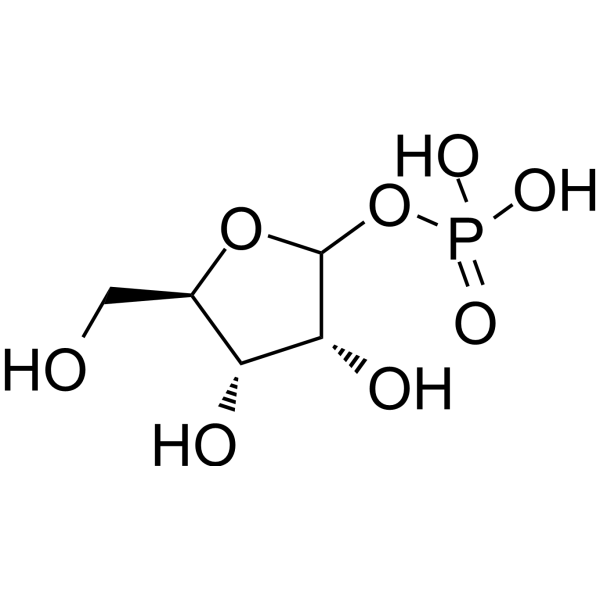
    D-Ribofuranose 1-dihydrogenphosphate (Ribose 1-phosphate) dicyclohexanamine is a pentose phosphate and serves as a key intermediate metabolite in the salvage synthesis pathway of purine and pyrimidine nucleotides. In nucleotide salvage synthesis, D-Ribofuranose 1-dihydrogenphosphate dicyclohexanamine directly "transfers" the ribosyl group from purine nucleosides to pyrimidine bases, acting as a hub molecule linking nucleoside/base metabolism with pentose phosphate metabolism .
    D-Ribofuranose1-dihydrogenphosphate
  • HY-P2724A

    PNP, Bacillus sp.

    Endogenous Metabolite Metabolic Disease
    Purine nucleoside phosphorylase, Bacillus sp. is a key enzyme in purine metabolism, involved in the purine salvage pathway. A deficiency in Purine nucleoside phosphorylase, Bacillus sp. can lead to impaired T-cell function. In the presence of inorganic phosphate as a second substrate, Purine nucleoside phosphorylase, Bacillus sp. catalyzes the cleavage of the glycosidic bond of ribonucleosides and deoxyribonucleosides, producing purine bases and ribose (or deoxyribose)-1-phosphate. Purine nucleoside phosphorylase, Bacillus sp. can be used for the determination of inorganic phosphate .
    Purine nucleoside phosphorylase, Bacillus sp.
  • HY-P2916

    Phosphorylase Cardiovascular Disease Neurological Disease Cancer
    Thymidine phosphorylase is a nucleoside metabolism enzyme that plays an important role in the pyrimidine salvage pathway. Thymidine phosphorylase catalyzes the conversion of thymidine to thymine and 2-deoxy-α-D-ribose-1-phosphate (dRib-1-P). Thymidine phosphorylase plays an important role in platelet activation in vitro and thrombosis in vivo by participating in multiple signaling pathways. Thymidine phosphorylase can be used for the study of myocardial infarction, stroke, pulmonary embolism and cancer .
    Thymidine phosphorylase
  • HY-23964

    MTOB

    Ornithine decarboxylase (ODC) Cancer
    4-Methylthio-2-oxobutanoic acid (MTOB) is an ornithine decarboxylase inhibitor. 4-Methylthio-2-oxobutanoic acid reduces ornithine decarboxylase protein levels and enzymatic activity. 4-Methylthio-2-oxobutanoic acid is formed in cells in the Met salvage pathway from methylthioadenosine. 4-Methylthio-2-oxobutanoic acid inhibits cancer cells growth. 4-Methylthio-2-oxobutanoic acid can be used for the research of cancer .
    4-Methylthio-2-oxobutanoic acid
  • HY-181911

    Drug-Linker Conjugates for ADC NAMPT Neurological Disease
    L2-FK866 is an ADC payload-linker conjugate (Drug-linker conjugate for ADC). L2-FK866 contains the ADC linker (Val-Cit-p-aminobenzyl) and the NAMPT inhibitor FK866 (HY-50876). L2-FK866 can be conjugated with Dinutuximab (HY-P9933) to form an ADC. L2-FK866 is applicable to neuroblastoma research .
    L2-FK866

Inquiry Online

Your information is safe with us. * Required Fields.

Salutation


Country or Region *

Applicant Name *


Organization Name *

Department *


Email Address *


Product Name *

Cat. No.


Requested quantity *

Phone Number *


Remarks

Inquiry Online

Inquiry Information

Product Name:
Cat. No.:
Quantity:
MCE Japan Authorized Agent:

