18 Results for "

tonic seizure

" in MedChemExpress (MCE) Product Catalog:
Products (18)

18 Results for "tonic seizure" in MCE Product Catalog:

1
1 Cited Publications
Cat. No.: HY-B1376
CAS No.: 77-41-8
Synonyms: Mesuximide; Celontin
Target:  

Cytochrome P450

Research Areas:  

Neurological Disease

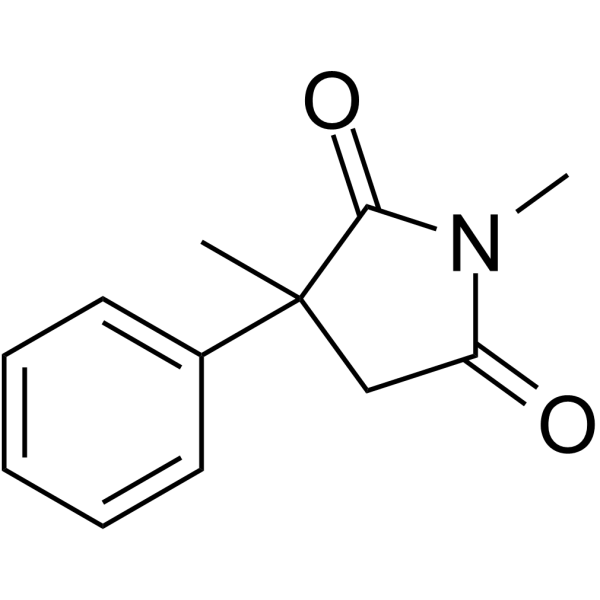
Methsuximide (Mesuximide) is an orally active succinimide-derived antiepileptic agent. Methsuximide interacts with cytochrome P-450, increases the level of hepatic microsomal cytochrome P-450, and inhibits or competes with the cytochrome P-450 CYP 2C9/10 subtype. Methsuximide can be used in epilepsy-related research .
loading...
    loading...
Cat. No.: HY-W017500
CAS No.: 17833-53-3
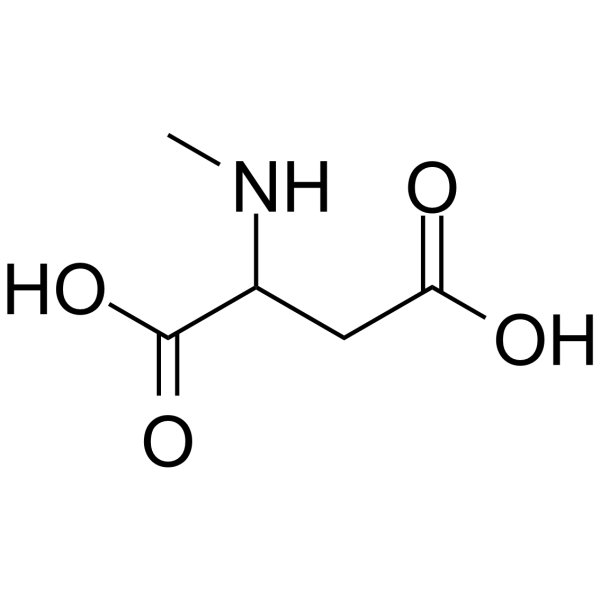
N-Methyl-DL-aspartic acid acts as an agonist for N-methyl-D-aspartic acid receptors and D-isomer-specific aspartate receptors. N-Methyl-DL-aspartic acid activates hypothalamic neurons that regulate gonadotropin-releasing hormone secretion, and stimulates prepubertal male rhesus monkeys to produce sustained intermittent gonadotropin-releasing hormone secretion and pulsatile luteinizing hormone secretion. N-Methyl-DL-aspartic acid activates excitatory effects mediated by N-methyl-D-aspartic acid receptors. N-Methyl-DL-aspartic acid exhibits convulsant effects, inducing clonic convulsions with loss of righting reflex, generalized tonic-clonic seizures or persistent clonic seizures. N-Methyl-DL-aspartic acid causes precocious puberty. N-Methyl-DL-aspartic acid can be used in studies related to convulsions and seizures .
loading...
    loading...
Cat. No.: HY-W101673
CAS No.: 2416-95-7
Dipropofol is a dimeric derivative of Propofol (HY-B0649) with antioxidant and antibacterial activities. Dipropofol terminates free radical chain reactions, scavenges DPPH free radicals and inhibits lipid peroxidation. Dipropofol protects cells from death induced by glutamate, Aβ(25-35) and buthionine sulfoximine, and increases the survival rate of mice exposed to oxygen. Dipropofol selectively activates tonic GABAA currents, hyperpolarizes resting membrane potential, reduces action potential firing, and alleviates the severity of seizures induced by Kainic acid. Dipropofol can be used in the research of Gram-positive bacterial infections, Alzheimer's disease, cerebral ischemia-related neuronal injury, oxygen toxicity and temporal lobe epilepsy .
loading...
    loading...
Cat. No.: HY-P2707
CAS No.: 74504-53-3
Synonyms: α-DTX
Research Areas:  

Neurological Disease

α-Dendrotoxin (α-DTX) is a voltage-gated K + channel blocker and an acid-sensing ion channel (ASIC) inhibitor. α-Dendrotoxin blocks Kv1.1, Kv1.2, Kv1.6 and D-type (ID) voltage-gated K + channels, and reversibly inhibits slowly inactivating potassium currents. α-Dendrotoxin induces epilepsy-related behaviors in mice. α-Dendrotoxin can be used in studies related to tonic-clonic seizures .
loading...
    loading...
Cat. No.: HY-W415953
CAS No.: 21056-52-0
Periplanetin is a peptide of the insect lipomotor hormone family (AKH family) that can be isolated from the secretion of the cervical organ of Periplaneta americana L. and Blatta orientalis L. The periplanetin peptide has potential analgesic activity and lowers the threshold of tonic seizures .
loading...
    loading...
Cat. No.: HY-108327
CAS No.: 1354712-92-7
Target:  

Potassium Channel

Research Areas:  

Neurological Disease

PF-05020182 is an orally active opener for Kv7 channel, that activates human Kv7.2/7.3, Kv7.4 and Kv7.3/7.5 with EC50 of 334, 625 and 588 nM, respectively. PF-05020182 exhibits anticonvulsant activity in rats corneal electric shock-induced tonic seizure (MES) models. PF-05020182 is blood-brain barrier (BBB) penetrable .
loading...
    loading...
Cat. No.: HY-101708
CAS No.: 97627-24-2
Purity:  99.73%
Research Areas:  

Neurological Disease

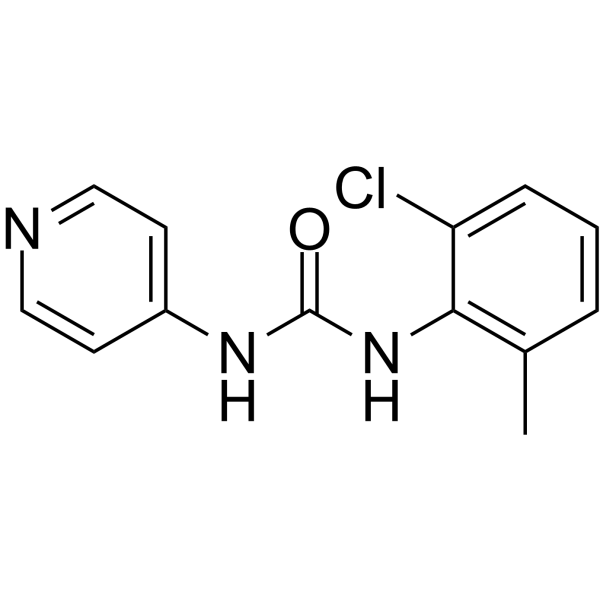
N-(2-Chloro-6-methylphenyl)-N'-4-pyridinylurea is an anticonvulsant agent with potential for the treatment of generalized tonic-clonic and partial seizures.
loading...
    loading...
Cat. No.: HY-123681
CAS No.: 98164-11-5
Target:  

Others

Research Areas:  

Neurological Disease

R 57720 is an antiepileptic agent that exhibits dose-dependent anticonvulsant activity across multiple postnatal rat age groups. R 57720 inhibits severe generalized tonic-clonic seizures induced by Pentylenetetrazol. R 57720 can be used for epilepsy research .
loading...
    loading...
Cat. No.: HY-10420
CAS No.: 89592-45-0
Target:  

Drug Derivative

Research Areas:  

Neurological Disease

ZK-93426 is a benzodiazepine receptor antagonist. ZK-93426 does not alter the dogs' motility but induces generalized myoclonic jerks and tonic-clonic seizures. ZK-93426 can be used to study the mechanism of withdrawal reactions in the state of benzodiazepine dependence .
loading...
    loading...
Cat. No.: HY-105059
CAS No.: 73931-96-1
Denzimol is an orally active anticonvulsant agent. Denzimol inhibits cytochrome P450, and interacts with benzodiazepine receptors. Denzimol selectively antagonizes tonic components of Metrazol-induced seizures in rats and mice. Denzimol can be used for the research of epilepsy and convulsions .
loading...
    loading...
Cat. No.: HY-178016
CAS No.: 3097193-89-7
Target:  

Histamine Receptor

Research Areas:  

Neurological Disease

H3R antagonist 8 is a selective nonimidazole histamine H3 receptor antagonist (IC50 = 0.35 μM). H3R antagonist 8 exhibits hERG channel blockade activity (IC50 = 0.67 μM). H3R antagonist 8 inhibits seizures by antagonizing H3 receptor. H3R antagonist 8 reduces tonic hind limb extension (THLE) in mice in the maximal electroshock seizure (MES) model (ED50 = 20.21 mg/kg) and and shortens pentylenetetrazol (PTZ)-induced total movement distance in AB strain zebrafish larvae. H3R antagonist 8 can be used for the study of epilepsy .
loading...
    loading...
Cat. No.: HY-W101673R
CAS No.: 2416-95-7
Research Areas:  

Others

Dipropofol (Standard) is the analytical standard of Dipropofol. This product is intended for research and analytical applications. Dipropofol is a dimeric derivative of Propofol (HY-B0649) with antioxidant and antibacterial activities. Dipropofol terminates free radical chain reactions, scavenges DPPH free radicals and inhibits lipid peroxidation. Dipropofol protects cells from death induced by glutamate, Aβ(25-35) and buthionine sulfoximine, and increases the survival rate of mice exposed to oxygen. Dipropofol selectively activates tonic GABAA currents, hyperpolarizes resting membrane potential, reduces action potential firing, and alleviates the severity of seizures induced by Kainic acid. Dipropofol can be used in the research of Gram-positive bacterial infections, Alzheimer's disease, cerebral ischemia-related neuronal injury, oxygen toxicity and temporal lobe epilepsy .
loading...
    loading...
Cat. No.: HY-132399S
CAS No.: 1189980-63-9
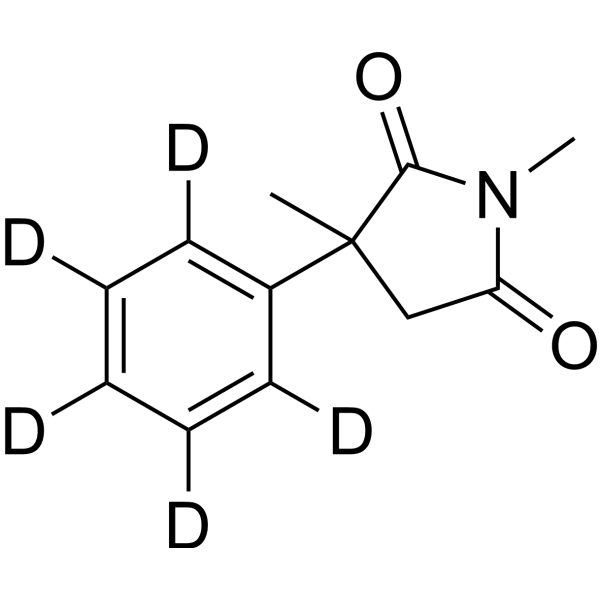
Methsuximide-d5 is the deuterated-labeled Methsuximide (HY-B1376). Methsuximide (Mesuximide) is an orally active succinimide-derived antiepileptic agent. Methsuximide interacts with cytochrome P-450, increases the level of hepatic microsomal cytochrome P-450, and inhibits or competes with the cytochrome P-450 CYP 2C9/10 subtype. Methsuximide can be used in epilepsy-related research .
loading...
    loading...
Cat. No.: HY-B1376R
CAS No.: 77-41-8
Synonyms: Mesuximide (Standard); Celontin (Standard)
Research Areas:  

Neurological Disease

Methsuximide (Standard) (Mesuximide (Standard); Celontin (Standard)) is the analytical standard of Methsuximide (HY-B1376). This product is intended for research and analytical applications. Methsuximide (Mesuximide) is an orally active succinimide-derived antiepileptic agent. Methsuximide interacts with cytochrome P-450, increases the level of hepatic microsomal cytochrome P-450, and inhibits or competes with the cytochrome P-450 CYP 2C9/10 subtype. Methsuximide can be used in epilepsy-related research .
loading...
    loading...
Cat. No.: HY-105059A
CAS No.: 77234-90-3
Denzimol hydrochloride is an orally active anticonvulsant agent. Denzimol hydrochloride inhibits cytochrome P450, and interacts with benzodiazepine receptors. Denzimol hydrochloride selectively antagonizes tonic components of Metrazol-induced seizures in rats and mice. Denzimol hydrochloride can be used for the research of epilepsy and convulsions .
loading...
    loading...
Cat. No.: HY-171182
CAS No.: 130403-18-8
Target:  

Endogenous Metabolite

Research Areas:  

Neurological Disease

D3017 is the main metabolite of D2624, which has oral bioactivity and anti-convulsant effects. D3017 ED50 value is 1.5 mg/kg in mice, and it can be used for research on severe generalized tonic-clonic seizures (grand mal) and complex partial epilepsy .
loading...
    loading...
Cat. No.: HY-118018
CAS No.: 202914-21-4
Target:  

GABA Receptor

Research Areas:  

Neurological Disease

CHF-2993 is an orally active anticonvulsant. CHF-2993 antagonizes Bicuculline (HY-N0219)- and Picrotoxin (HY-101391)-induced tonic convulsions in mice, shows no activity against Pentylenetetrazole-induced clonic convulsions in mice, and partially reduces Veratridine (HY-N6691)-induced aspartate efflux in rat cortical synaptosomes. CHF-2993 can be used in the research of epilepsy .
loading...
    loading...
Cat. No.: HY-W744266
CAS No.: 56687-60-6
Target:  

Drug Metabolite

Research Areas:  

Neurological Disease

9α,10α-Epoxyhexahydrocannabinol is an active metabolite of delta 9-tetrahydrocannabinol. 9α,10α-Epoxyhexahydrocannabinol has anti-convulsant activity. 9α,10α-Epoxyhexahydrocannabinol reduces body temperature, prolongs pentobarbital-induced sleep, and exerts anticonvulsant activity against pentylenetetrazol-induced seizures in mice .
loading...
    loading...
  • 1

