1. Others
  2. Fluorescent Dye
  3. Tris(4,7-diphenyl-1,10-phenanthroline)ruthenium(II) dichloride

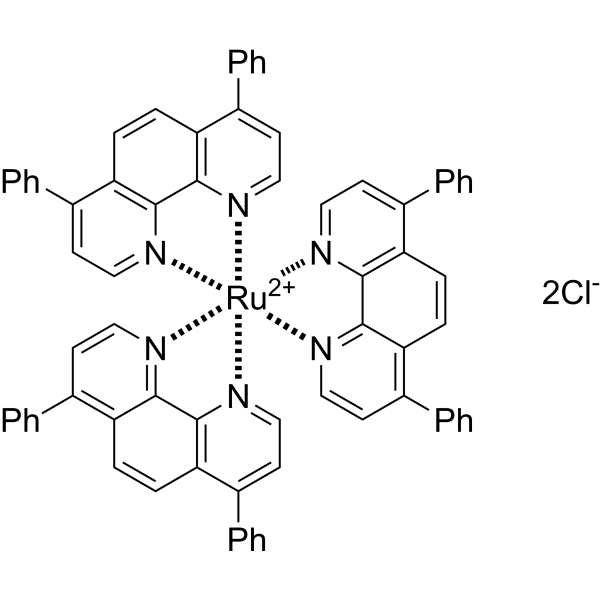
Tris(4,7-diphenyl-1,10-phenanthroline)ruthenium(II) dichloride  (Synonyms: [Ru(DPP)3]Cl2)

製品番号: HY-W074143 純度: 99.78%
COA 取扱説明書 Technical Support

Tris(4,7-diphenyl-1,10-phenanthroline)ruthenium(II) dichloride ([Ru(dpp)3]2+) is an electrochemiluminescent (ECL) probe and oxygen-sensitive sensor. Tris(4,7-diphenyl-1,10-phenanthroline)ruthenium(II) dichloride can be used to modify electrode surfaces for the detection of sulfates (S2O82-) and oxalates, based on electrochemical reactions that generate excited-state species, releasing photons through irreversible redox reactions. Tris(4,7-diphenyl-1,10-phenanthroline)ruthenium(II) dichloride utilizes the oxygen quenching of fluorescence mechanism, where fluorescence intensity reflects the metabolic rate of living microorganisms or oxygen levels within cells/tumors, allowing for real-time detection. Tris(4,7-diphenyl-1,10-phenanthroline)ruthenium(II) dichloride's main applications include microbial detection, antibacterial activity studies, and tumor microenvironment research.

商品は「研究用試薬」です。人や動物の医療用・臨床診断用・食品用の製品ではありません。
研究用途以外に使用した場合、当社は一切の責任を負いかねます。

CAS 番号 : 36309-88-3

容量 価格(税別) 在庫状況 数量
>無料サンプル (0.1 - 0.2 mg)   今すぐ申し込む  
Solid + Solvent (Highly Recommended)
10 mM * 1 mL in DMSO
ready for reconstitution
USD 33 在庫あり
Solution
10 mM * 1 mL in DMSO USD 33 在庫あり
Solid
250 mg $30 在庫あり
1 g $118 在庫あり
5 g $356 在庫あり
10 g   お問い合わせ  
50 g   お問い合わせ  

* アイテムを追加する前、数量をご選択ください

This product is a controlled substance and not for sale in your territory.

カスタマーレビュー

Based on 10 publication(s) in Google Scholar

Top Publications Citing Use of Products

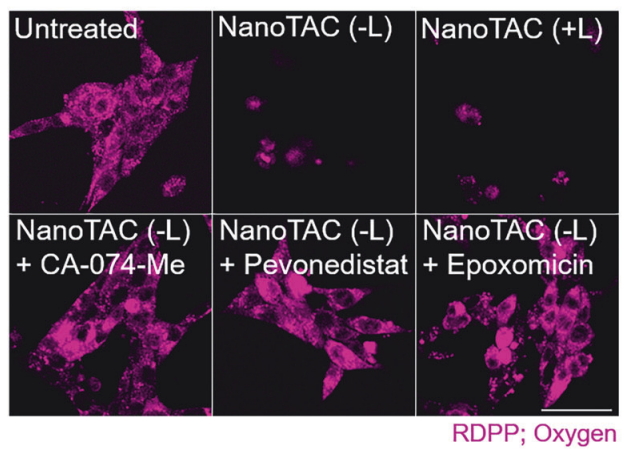
    Tris(4,7-diphenyl-1,10-phenanthroline)ruthenium(II) dichloride purchased from MedChemExpress. Usage Cited in: Signal Transduct Target Ther. 2025 Sep 26;10(1):310.  [Abstract]

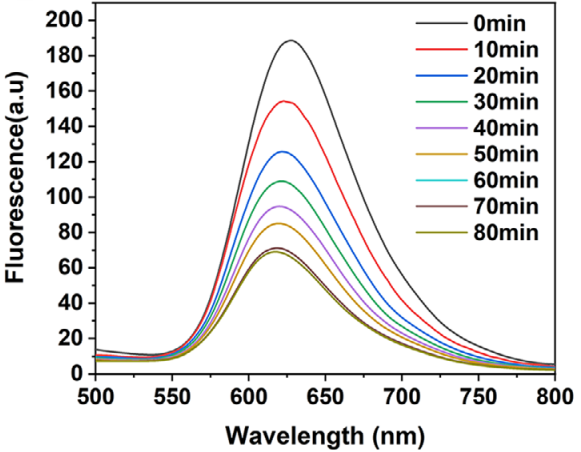
    Oxygen consumption was minimized in 4T1 tumor cells treated with NanoTAC (-L or +L), as indicated by the quenched fluorescence signals of [Ru(dpp)3]Cl2 (RDPP) due to sufficient intracellular oxygen compared with other conditions.

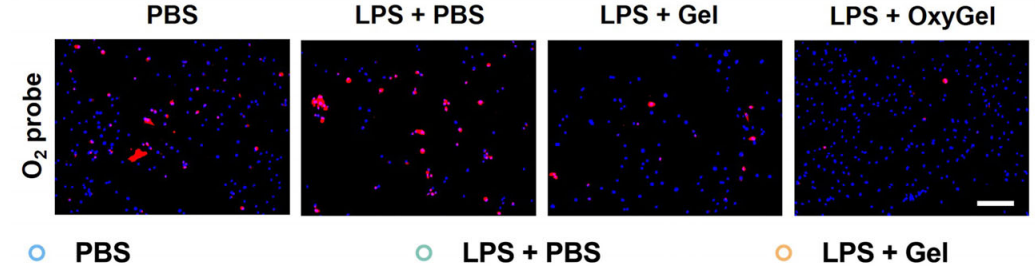
    Tris(4,7-diphenyl-1,10-phenanthroline)ruthenium(II) dichloride purchased from MedChemExpress. Usage Cited in: Adv Mater. 2025 Jun 10:e2504829.  [Abstract]

    O2-generation function measured by an O2 probe [Ru(dpp)3Cl2]. Red Ru(dpp)3Cl2 fluorescence is quenched by O2.

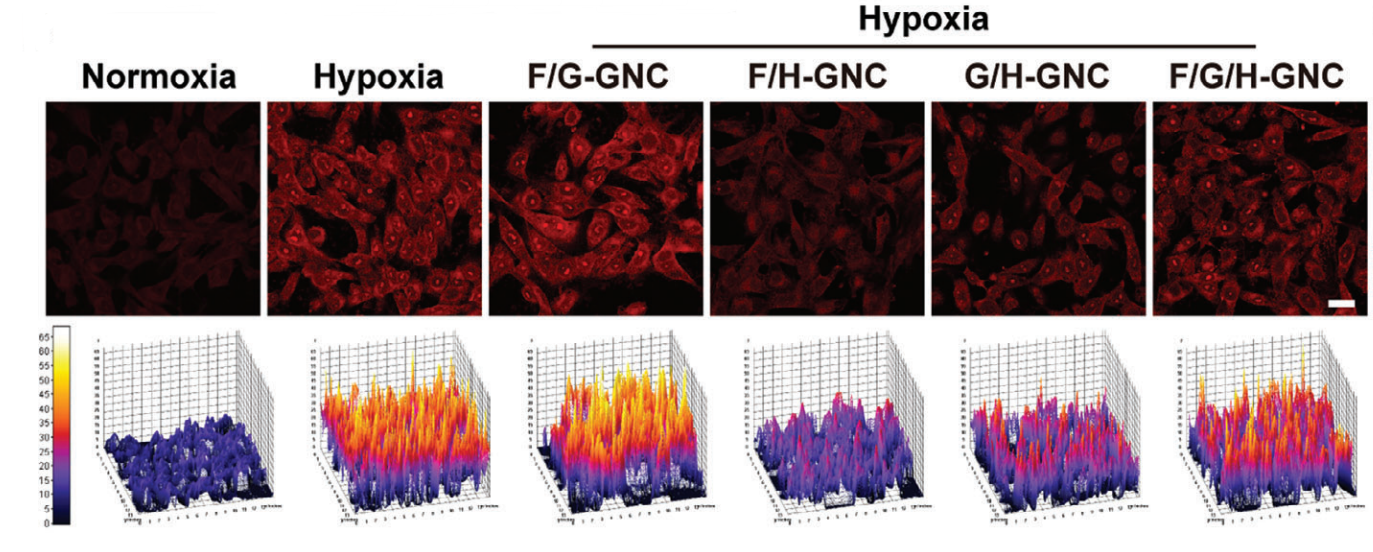
    Tris(4,7-diphenyl-1,10-phenanthroline)ruthenium(II) dichloride purchased from MedChemExpress. Usage Cited in: Adv Mater. 2025 Jan 10:e2415030.  [Abstract]

    CLSM images of [Ru(dpp)3]Cl2 (Tris(4,7-diphenyl-1,10-phenanthroline)ruthenium(II) dichloride,10 μg/mL, 6 h)-stained 4T1 cells after different treatments.

    Tris(4,7-diphenyl-1,10-phenanthroline)ruthenium(II) dichloride purchased from MedChemExpress. Usage Cited in: Adv Sci (Weinh). 2025 Sep 8:e08636.  [Abstract]

    Ru(dpp)3Cl2 (fluorescence quenching O2 probe) detected the catalytic activity of catalase of MMDA hunter. The glucose concentration was 7.80 mM and the emission wavelength was 613 nm.

    Tris(4,7-diphenyl-1,10-phenanthroline)ruthenium(II) dichloride purchased from MedChemExpress. Usage Cited in: Biomaterials. 2025 Aug:319:123203.

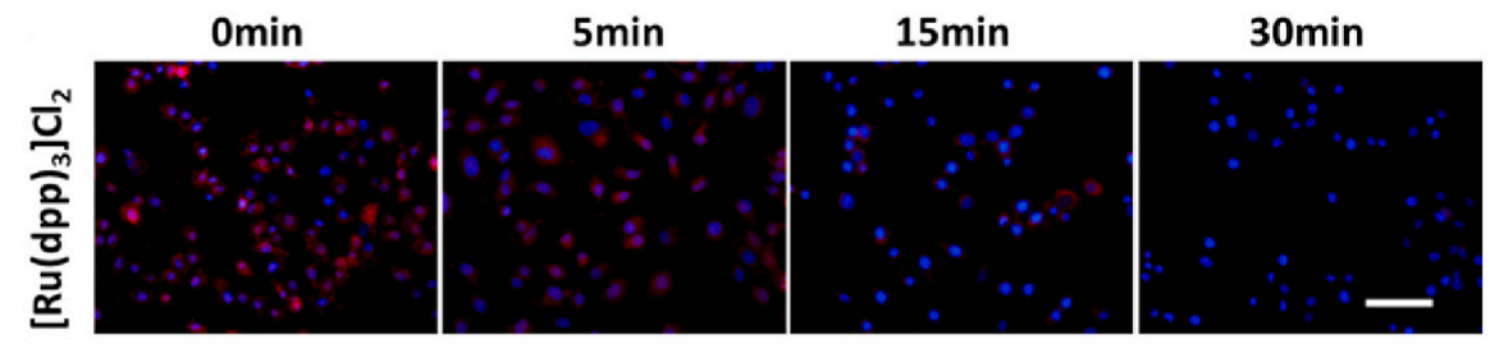
    MCF-7 cells were stained with [Ru(dpp)3Cl2 (50 μM) as O2 probes and subsequently treated with Zn-UCMB for different incubation times (0, 5, 15, 30 min). Scale bars:100 μm.
    • 生物活性

    • 純度とドキュメンテーション

    • 参考文献

    • カスタマーレビュー

    製品説明

    Tris(4,7-diphenyl-1,10-phenanthroline)ruthenium(II) dichloride ([Ru(dpp)3]2+) is an electrochemiluminescent (ECL) probe and oxygen-sensitive sensor. Tris(4,7-diphenyl-1,10-phenanthroline)ruthenium(II) dichloride can be used to modify electrode surfaces for the detection of sulfates (S2O82-) and oxalates, based on electrochemical reactions that generate excited-state species, releasing photons through irreversible redox reactions. Tris(4,7-diphenyl-1,10-phenanthroline)ruthenium(II) dichloride utilizes the oxygen quenching of fluorescence mechanism, where fluorescence intensity reflects the metabolic rate of living microorganisms or oxygen levels within cells/tumors, allowing for real-time detection. Tris(4,7-diphenyl-1,10-phenanthroline)ruthenium(II) dichloride's main applications include microbial detection, antibacterial activity studies, and tumor microenvironment research[1][2].

    体外実験

    Guidelines (the following is our recommended protocol; this protocol is provided for guidance only and should be modified according to your specific needs).
    Tris (4,7-diphenyl-1,10-phenanthroline)ruthenium (II) dichloride ([Ru (DPP)3]Cl2) can be applied in the construction of regenerative ECL sensors. As a cathodic detector for persulfate, it can avoid interference from hydrogen evolution, while the anode response to oxalate exhibits a wide linear range.
    I. Experimental Procedure for Fluorescence Optical Respirometry (FOR)[1]:
    1. Mix Tris (4,7-diphenyl-1,10-phenanthroline)ruthenium (II) dichloride ([Ru (DPP)3]Cl2) with silica gel, embed it in 2% w/w silicone rubber, add 2 drops into a 96-well plate, and incubate in a humidified chamber at 37°C for 2-3 days before use.
    2. Culture target microorganisms in vitro (such as Staphylococcus aureus, Escherichia coli, etc.) at 37°C under aerobic conditions for 48 hours, then dilute to 105-106 CFU/mL; prepare test drugs and dilute to the designated concentrations (such as DMSO 2%-40%, medicinal plant extracts 0.08 mg/mL-166 mg/mL).
    3. Add 80 μL of drug samples or diluted drug formulations (diluted at ratios of 1:10, 1:100, and 1:1000) into each well of the 96-well plate coated with [Ru (DPP)3]Cl2, followed by 80 μL of microbial suspension, then cover the surface with 60 μL mineral oil; use a Tecan Infinite 200PRO or another fluorescence microplate reader to monitor changes in relative fluorescence intensity over time. Perform the experiment in triplicate and record the time required to reach half-maximal fluorescence intensity and the MIC value.
    4. Use the serial dilution method and agar plate colony counting method as controls to verify the consistency of FOR detection results, while also evaluating the interference of drug components on the fluorescence signal of [Ru (DPP)3]Cl2.

    II. In Vitro Experimental Procedure for Intratumoral Oxygen Imaging[2]:
    1. Preparation of nanosensors (Ru-ONPS): Embed [Ru (DPP)3]Cl2 dye into F-127 polymer, crosslink with urea and paraformaldehyde, and prepare nanosensors with a particle size of approximately 64 nm.
    2. Preparation of cells and co-culture spheroids: Culture tumor cells (such as HCT-8 cells) and normal cells (such as NIH3T3 cells) in vitro and passage them routinely until the logarithmic growth phase; construct tumor cell co-culture spheroids and culture them for designated periods (such as 48 h, 120 h, and 216 h) for oxygen gradient monitoring.
    3. Imaging and oxygen level detection: Co-incubate Ru-ONPS with tumor cells or co-culture spheroids, observe cellular uptake of the sensors and intratumoral distribution through confocal microscopy; based on the Stern-Volmer equation, quantitatively detect oxygen levels using changes in the fluorescence signal of the sensors. The detection dynamic range is 0-23 mg/L with a detection limit of 10 μg/mL. Record oxygen content data of cells and co-culture spheroids at different time points (such as 72 h).

    MedChemExpress (MCE) has not independently confirmed the accuracy of these methods. They are for reference only.

    分子量

    1169.17

    分子式

    C72H48Cl2N6Ru

    Emission (Em)

    613

    Excitation (Ex)

    455

    CAS 番号
    Appearance

    Solid

    Color

    Orange to red

    SMILES

    C1(C2=C(C=CC3=C4[N]([Ru+2]567([N]8=C9C%10=C(C(C%11=CC=CC=C%11)=CC=[N]7%10)C=CC9=C(C%12=CC=CC=C%12)C=C8)[N]%13=C%14C%15=C(C(C%16=CC=CC=C%16)=CC=[N]6%15)C=CC%14=C(C%17=CC=CC=C%17)C=C%13)=CC=C3C%18=CC=CC=C%18)C4=[N]5C=C2)=CC=CC=C1.[Cl-].[Cl-]

    輸送条件

    Room temperature in continental US; may vary elsewhere.

    保管条件

    4°C, protect from light, stored under nitrogen

    *In solvent : -80°C, 6 months; -20°C, 1 month (protect from light, stored under nitrogen)

    溶剤 & 溶解度
    体外: 

    DMSO : 25 mg/mL (21.38 mM; Need ultrasonic; Hygroscopic DMSO has a significant impact on the solubility of product, please use newly opened DMSO)

    Ethanol : 8.33 mg/mL (7.12 mM; ultrasonic and warming and heat to 60°C)

    Preparing
    Stock Solutions
    Concentration Solvent Mass 1 mg 5 mg 10 mg
    1 mM 0.8553 mL 4.2765 mL 8.5531 mL
    5 mM 0.1711 mL 0.8553 mL 1.7106 mL
    10 mM 0.0855 mL 0.4277 mL 0.8553 mL
    View the Complete Stock Solution Preparation Table

    * Please refer to the solubility information to select the appropriate solvent. Once prepared, please aliquot and store the solution to prevent product inactivation from repeated freeze-thaw cycles.
    Storage method and period of stock solution: -80°C, 6 months; -20°C, 1 month (protect from light, stored under nitrogen). When stored at -80°C, please use it within 6 months. When stored at -20°C, please use it within 1 month.

    • Molarity Calculator

    • Dilution Calculator

    Mass (g) = Concentration (mol/L) × Volume (L) × Molecular Weight (g/mol)

    Mass
    =
    Concentration
    ×
    Volume
    ×
    Molecular Weight *

    Concentration (start) × Volume (start) = Concentration (final) × Volume (final)

    一般には略語で表示されます:C1V1 = C2V2

    濃度 (開始)

    C1

    ×
    体積 (開始)

    V1

    =
    濃度 (終了)

    C2

    ×
    体積 (終了)

    V2

    In Vivo Dissolution Calculator
    Please enter the basic information of animal experiments:

    Dosage

    mg/kg

    Animal weight
    (per animal)

    g

    Dosing volume
    (per animal)

    μL

    Number of animals

    Recommended: Prepare an additional quantity of animals to account for potential losses during experiments.
    Calculation results:
    Working solution concentration: mg/mL
    純度とドキュメンテーション

    純度: 99.78%

    参考文献

    Complete Stock Solution Preparation Table

    * Please refer to the solubility information to select the appropriate solvent. Once prepared, please aliquot and store the solution to prevent product inactivation from repeated freeze-thaw cycles.
    Storage method and period of stock solution: -80°C, 6 months; -20°C, 1 month (protect from light, stored under nitrogen). When stored at -80°C, please use it within 6 months. When stored at -20°C, please use it within 1 month.

    Optional Solvent Concentration Solvent Mass 1 mg 5 mg 10 mg 25 mg
    Ethanol / DMSO 1 mM 0.8553 mL 4.2765 mL 8.5531 mL 21.3827 mL
    5 mM 0.1711 mL 0.8553 mL 1.7106 mL 4.2765 mL
    DMSO 10 mM 0.0855 mL 0.4277 mL 0.8553 mL 2.1383 mL
    15 mM 0.0570 mL 0.2851 mL 0.5702 mL 1.4255 mL
    20 mM 0.0428 mL 0.2138 mL 0.4277 mL 1.0691 mL
    • No file chosen (Maximum size is: 1024 Kb)
    • If you have published this work, please enter the PubMed ID.
    • Your name will appear on the site.
    • Molarity Calculator

    • Dilution Calculator

    The molarity calculator equation

    Mass (g) = Concentration (mol/L) × Volume (L) × Molecular Weight (g/mol)

    質量   濃度   体積   分子量 *
    = × ×

    The dilution calculator equation

    Concentration (start) × Volume (start) = Concentration (final) × Volume (final)

    一般には略語で表示されます:C1V1 = C2V2

    濃度 (開始) × 体積 (開始) = 濃度 (終了) × 体積 (終了)
    × = ×
    C1   V1   C2   V2
    Help & FAQs
    • Do most proteins show cross-species activity?

      Species cross-reactivity must be investigated individually for each product. Many human cytokines will produce a nice response in mouse cell lines, and many mouse proteins will show activity on human cells. Other proteins may have a lower specific activity when used in the opposite species.

    最近チェックした製品:

    オンラインお問い合わせ

    Your information is safe with us. * Required Fields.

    製品名


    カスタマ需要量 *

    お名前 *


    タイトル

    メールアドレス *


    電話番号 *

    デパートメント


    組纖名 *

    市区町村

    都道府県

    国或いは地域 *


    必ず会社名を記載ください。個人への返信は行いません。

    備考

    バルクお問い合わせ

    Inquiry Information

    製品名:
    Tris(4,7-diphenyl-1,10-phenanthroline)ruthenium(II) dichloride
    製品番号:
    HY-W074143
    数量:
    MCE 日本正規代理店: