



Zinc Pyrithione
Based on 13 publication(s) in Google Scholar
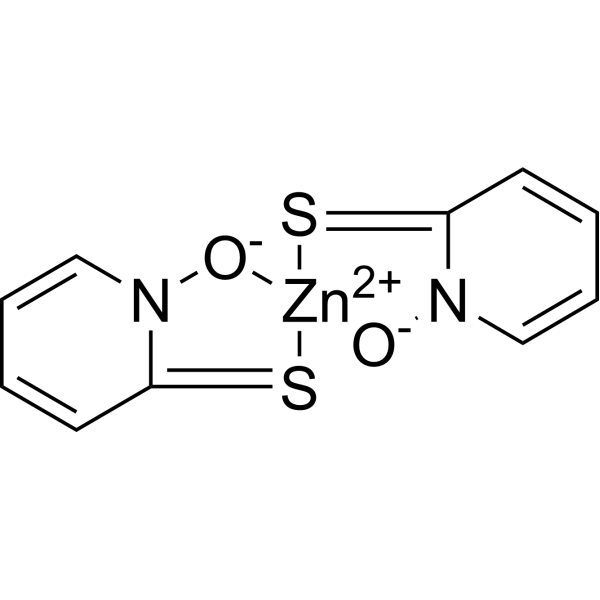
Zinc Pyrithione is an antifungal and antibacterial agent disrupting membrane transport by blocking the proton pump. Zinc Pyrithione is also a copper ionophore that delivers copper into cells and is a useful tool for studying cuproptosis.
For research use only. We do not sell to patients.
- Purity : 98.21%
- CAS No.: 13463-41-7
- Formula: C10H8N2O2S2Zn
- Molecular Weight:317.69
-
Storage:Powder -20°C, 3 years , 4°C, 2 years ; In solvent -80°C, 6 months , -20°C, 1 month

To place orders, for customer services and technical support, please contact: MedChemExpress USA
Tel: 609-228-6898 E-mail: [email protected] [email protected]


-
 Biological Activity
-
Chemical Information
-
Solvent & Solubility
- Protocols
- Purity & Documentation
- References
-
 Help & FAQs


-
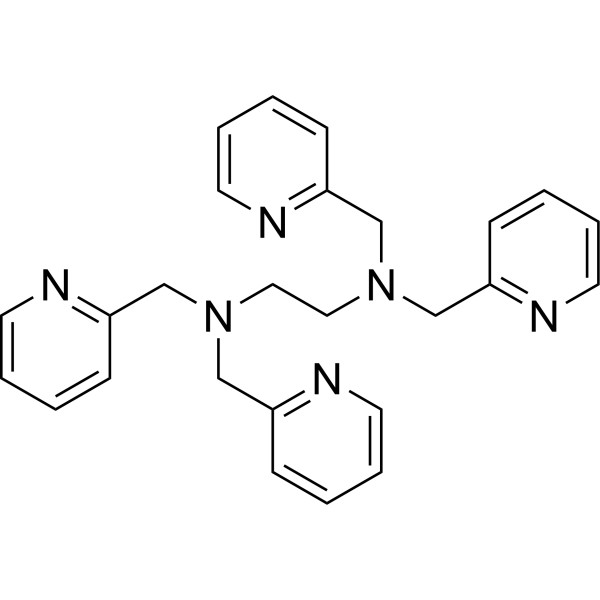
HY-100202
TPENHeavy Metal Chelator -
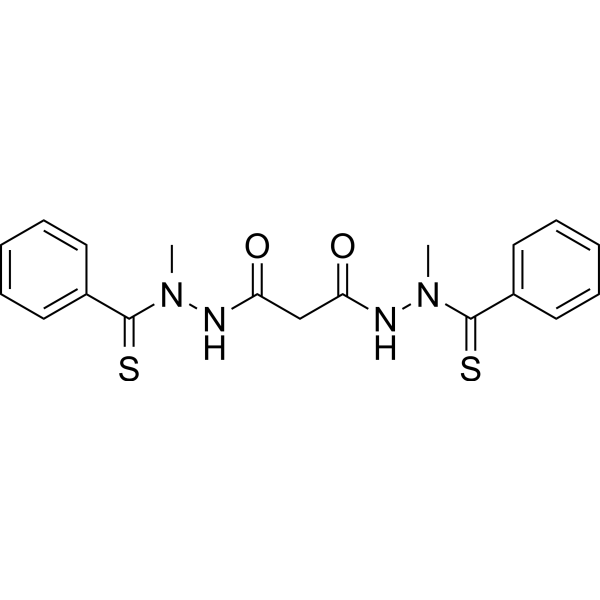
HY-12040
ElesclomolCuproptosis Inducer -
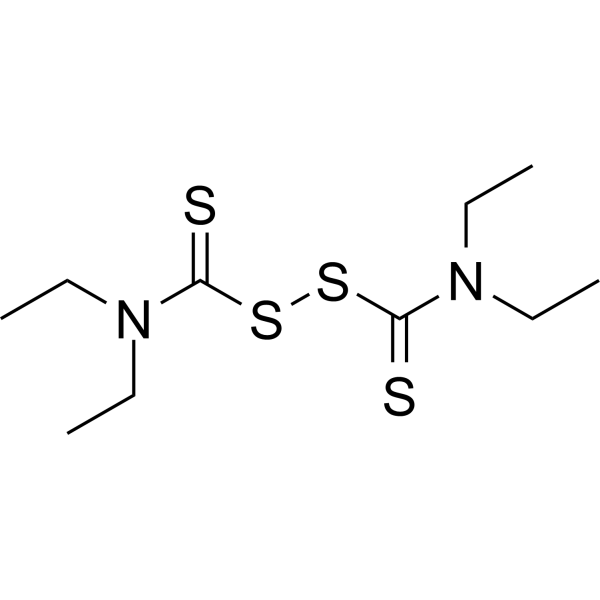
HY-B0240
DisulfiramALDH1 Inhibitor -
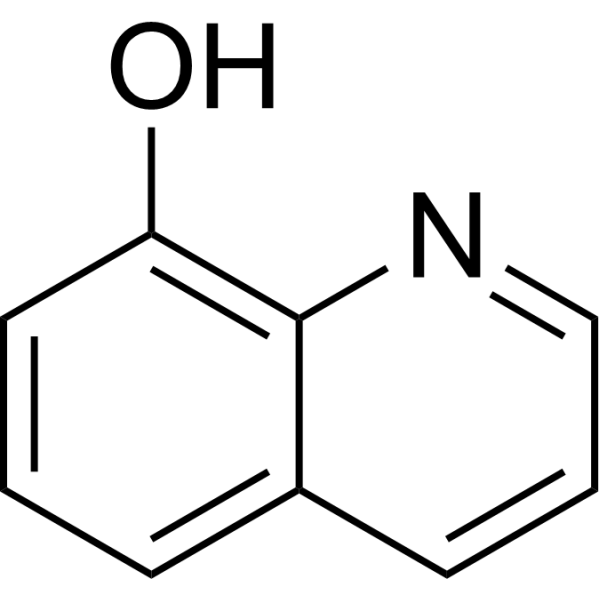
HY-B1005
8-HydroxyquinolineFungicide -
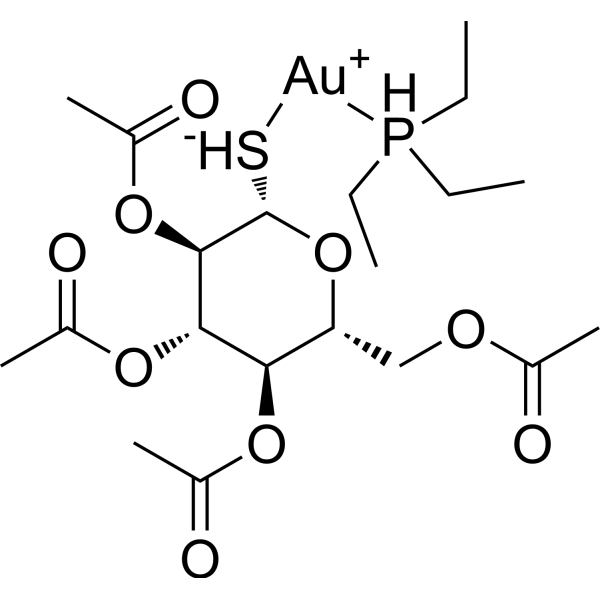
HY-B1123
AuranofinBacterial Inhibitor -

HY-114118
SemaglutideGLP-1R Agonist -
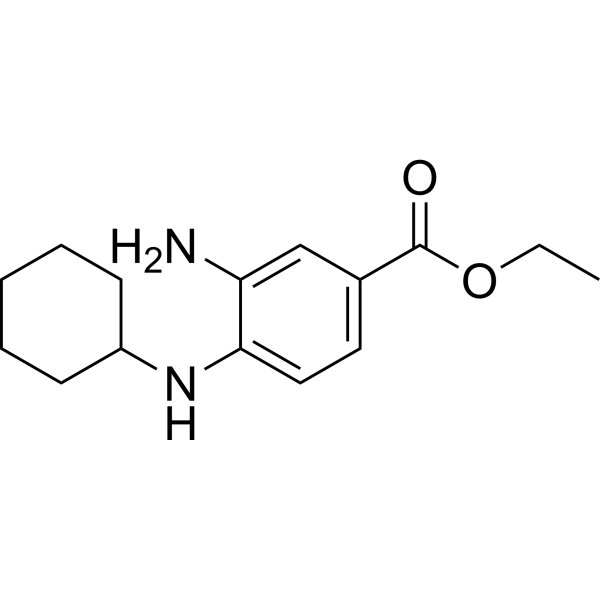
HY-100579
Ferrostatin-1Ferroptosis Inhibitor -
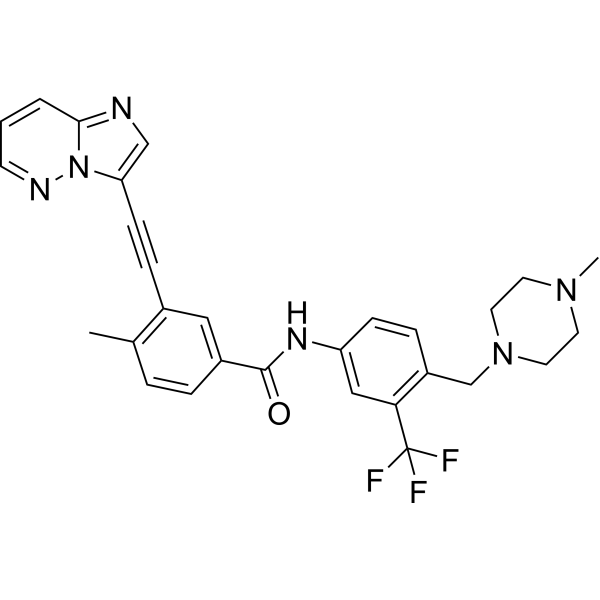
HY-12047
PonatinibMulti-targeted Kinase Inhibitor -

HY-B0572R
Zinc Pyrithione (Standard)Antimicrobial Agent -
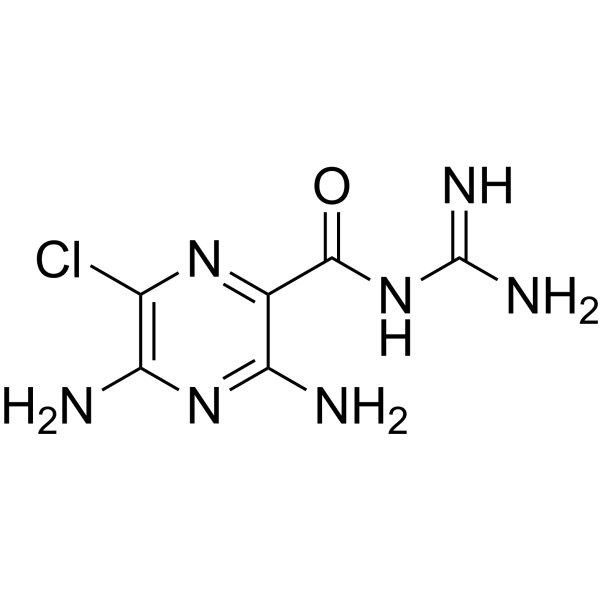
HY-B0285
AmilorideApoptosis Inducer -
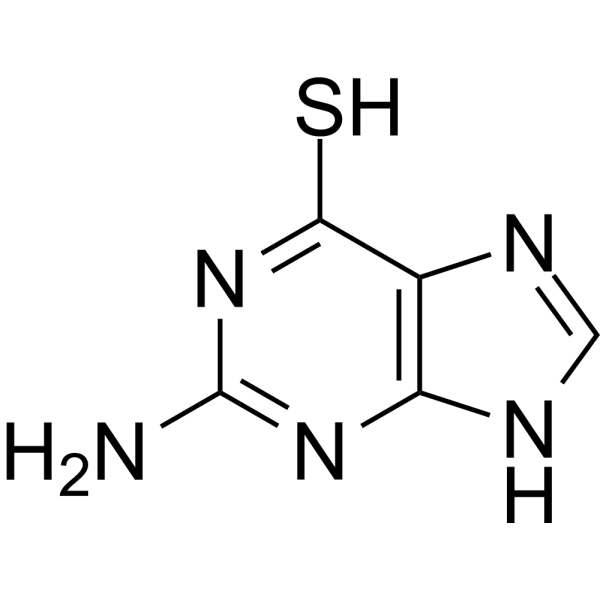
HY-13765
6-ThioguanineImmunosuppressant Agent -
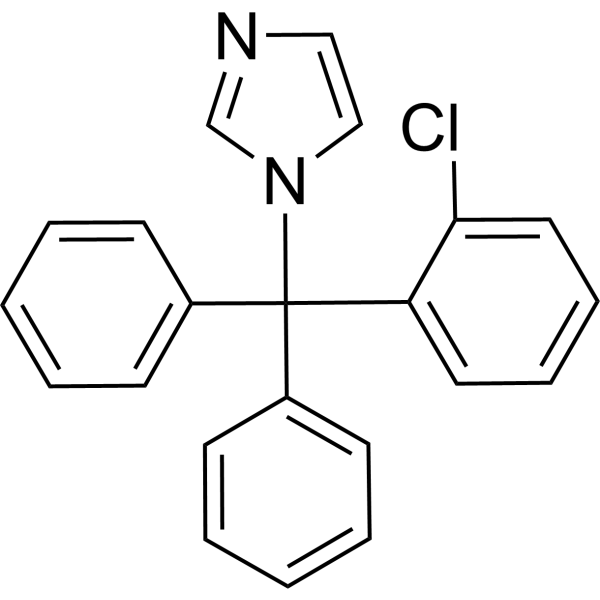
HY-10882
ClotrimazoleAutophagy Inhibitor
Publications Citing Use of MedChemExpress (MCE) Zinc Pyrithione
More- Cell. 2026 Sep 14:S0092-8674(26)01003-2.
- Acta Pharmacol Sin. 2025 Oct 17. [Abstract]
- Ecotoxicol Environ Saf. 2022 Apr 1:234:113393. [Abstract]
- Cancer Gene Ther. 2024 May;31(5):755-765. [Abstract]
- Anal Chim Acta. 2025 Aug 15:1363:344202. [Abstract]
- Commun Biol. 2025 Jul 29;8(1):1127. [Abstract]
- Int Immunopharmacol. 2024 Jun 15:134:112159. [Abstract]
- Int J Mol Sci. 2023 Jan 14;24(2):1667. [Abstract]
- Sci Rep. 2026 Feb 5;16(1):7439. [Abstract]
- PLoS Pathog. 2024 Aug 22;20(8):e1012444. [Abstract]
- J Neurochem. 2021 Dec;159(6):1016-1027. [Abstract]
- BMC Cancer. 2025 May 28;25(1):956. [Abstract]
- bioRxiv. 2023 Oct 15.
 Customer Validation & Images

-
Flow Cytometry
-
RT-PCR
-
Cell Imaging/Staining
-
WB
-
IF


Biological Activity
Description
In Vitro
Zinc pyrithione is considered as a coordination complex of zinc. The pyrithione ligands, which are formally monoanions, are chelated to Zn 2+ via oxygen and sulfur centers. In the crystalline state, zinc pyrithione exists as a centrosymmetric dimer, where each zinc is bonded to two sulfur and three oxygen centers. In solution, however, the dimers dissociate via scission of one Zn-O bond. Zinc pyrithione, which is a dimer but is probably biologically active as a monomer, induces plasma membrane depolarization with half-maximal effect (K1/2) of about 0.3 mM[1].
Zinc Pyrithione (10 nM-10 μM; 72 hours) significantly induces cell death in AAVS1 cells[2].
MedChemExpress (MCE) has not independently confirmed the accuracy of these methods. They are for reference only.


Chemical Information
-
CAS No. 13463-41-7
-
Appearance Solid
-
Molecular Weight 317.69
-
Formula C10H8N2O2S2Zn
-
Color White to off-white
-
SMILES
N12[O-][Zn+2]3([S]=C1C=CC=C2)[O-]N(C=CC=C4)C4=[S]3
-
Shipping
Room temperature in continental US; may vary elsewhere.
-
Storage
Powder -20°C 3 years 4°C 2 years In solvent -80°C 6 months -20°C 1 month


Publications (13)
-
Journal Impact Factor
-
Most Recent
-
-
Acta Pharmacol Sin
Zinc pyrithione functions as a small-molecule STING agonist to exert antitumor immunotherapy effects. [Abstract]2025 Oct 17. PMID: 41107405 -
Ecotoxicol Environ Saf
Zinc pyrithione exposure compromises oocyte maturation through involving in spindle assembly and zinc accumulation. [Abstract]2022 Apr 1:234:113393. PMID: 35278989
Zinc Pyrithione purchased from MedChemExpress. Usage Cited in: Ecotoxicol Environ Saf. 2022 Apr 1:234:113393. [Abstract]
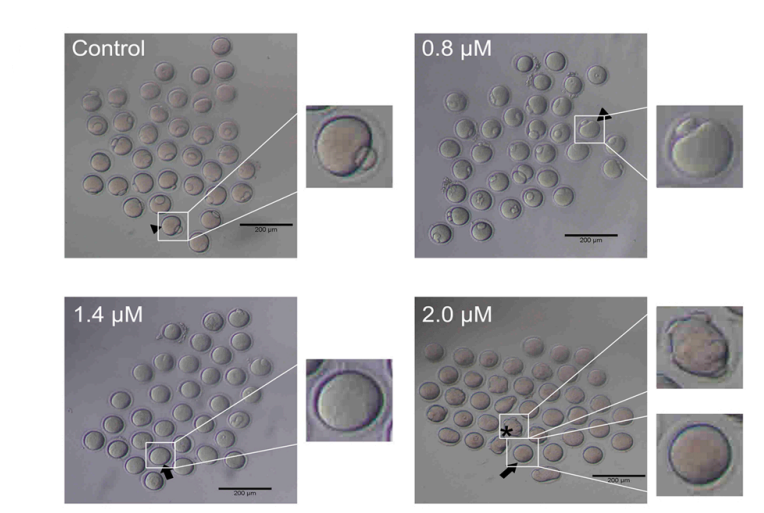
Fully mature GV stage oocytes were co-cultured with different concentrations (0, 0.8, 1.4, 2.0 µM) of ZPT for 14 hours. Most oocytes in the control group and the 0.8 µM ZPT (Zinc Pyrithione) treatment group reached maturity and formed the first polar body (a representative oocyte marked with a triangle).
Zinc Pyrithione purchased from MedChemExpress. Usage Cited in: Ecotoxicol Environ Saf. 2022 Apr 1:234:113393. [Abstract]
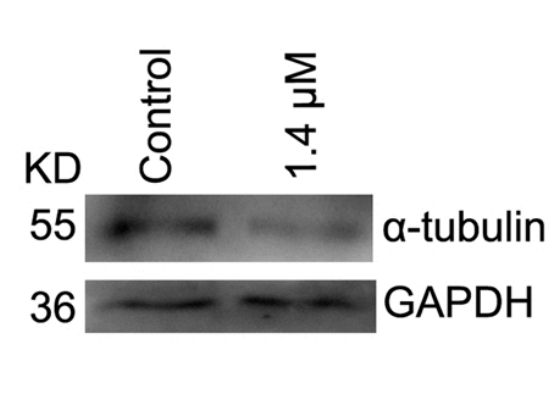
Expression of α-tubulin in oocytes of the control group and the ZPT (Zinc Pyrithione) treatment group. Oocytes from both groups were lysed after 8 hours of culture and subjected to Western blot analysis. GAPDH was used as an internal control.
Zinc Pyrithione purchased from MedChemExpress. Usage Cited in: Ecotoxicol Environ Saf. 2022 Apr 1:234:113393. [Abstract]
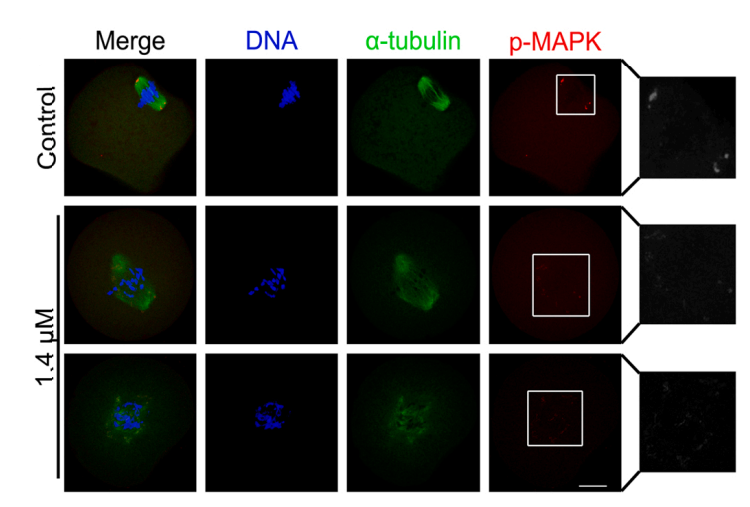
ZPT (Zinc Pyrithione) exposure impairs p-MAPK activity during meiosis in mice. Images show the localization and expression of p-MAPK in oocytes of the control and ZPT-treated groups.
-
Cancer Gene Ther
SDCBP modulates tumor microenvironment, tumor progression and anti-PD1 efficacy in colorectal cancer. [Abstract]2024 May;31(5):755-765. PMID: 38555398 -
Anal Chim Acta
A novel Zn2+ probe for fluorescent monitoring of drug and E6/E7 protein interaction in living cells. [Abstract]2025 Aug 15:1363:344202. PMID: 40480729 -
Commun Biol
Pantothenic acid ameliorates hepatic fibrosis by targeting IGFBP6 to regulate the TGF-β/SMADs pathway. [Abstract]2025 Jul 29;8(1):1127. PMID: 40730679 -
Int Immunopharmacol
Disulfiram mediated anti-tumour effect in pituitary neuroendocrine tumours by inducing cuproptosis. [Abstract]2024 Jun 15:134:112159. PMID: 38692018 -
Int J Mol Sci
ATF3/SPI1/SLC31A1 Signaling Promotes Cuproptosis Induced by Advanced Glycosylation End Products in Diabetic Myocardial Injury. [Abstract]2023 Jan 14;24(2):1667. PMID: 36675183 -
Sci Rep
Oxidative stress-mediated impairment of human trophoblast cell proliferation by zinc pyrithione exposure. [Abstract]2026 Feb 5;16(1):7439. PMID: 41644693 -
PLoS Pathog
Genome-wide CRISPR/Cas9 screen identifies SLC39A9 and PIK3C3 as crucial entry factors for Ebola virus infection. [Abstract]2024 Aug 22;20(8):e1012444. PMID: 39173055
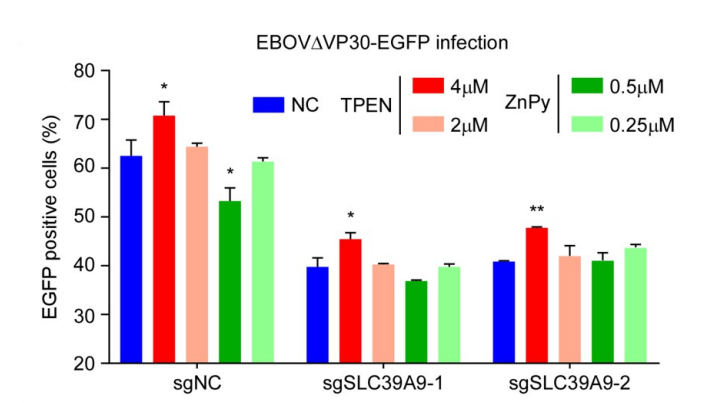
Zinc Pyrithione purchased from MedChemExpress. Usage Cited in: PLoS Pathog. 2024 Aug 22;20(8):e1012444. [Abstract]
WT or KO Huh7.5.1-VP30 cells were infected with EBOVΔVP30-EGFP (MOI = 1) in the presence of TPEN or (Zinc Pyrithione) ZnPy for 2 days. EGFP was quantified by flow cytometry to determine the inhibitory effect.
Zinc Pyrithione purchased from MedChemExpress. Usage Cited in: PLoS Pathog. 2024 Aug 22;20(8):e1012444. [Abstract]
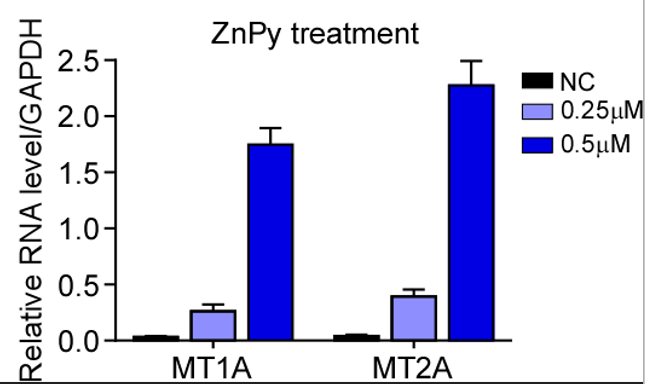
Huh7.5.1-VP30 cells were treated with (Zinc Pyrithione) ZnPy for 4h or 2d at indicated concentrations before RNA extraction. MT1A and MT2A mRNA level were then quantified by RT-qPCR. mRNA level was represented as normalization to GAPDH.
-
J Neurochem
Zinc induces reactive astrogliosis through ERK-dependent activation of Stat3 and promotes synaptic degeneration. [Abstract]2021 Dec;159(6):1016-1027. PMID: 34699606 -
BMC Cancer
TRPM2 channels mediate ROS-induced actin remodeling and cell migration of prostate cancer cells. [Abstract]2025 May 28;25(1):956. PMID: 40437388 -


Solvent & Solubility
In Vitro:
DMSO : 33.33 mg/mL (104.91 mM; Need ultrasonic; Hygroscopic DMSO has a significant impact on the solubility of product, please use newly opened DMSO)
H2O : < 0.1 mg/mL (insoluble)
Please refer to the solubility information to select the appropriate solvent. Once prepared, please aliquot and store the solution to prevent product inactivation from repeated freeze-thaw cycles.
Storage method and period of stock solution: -80°C, 6 months; -20°C, 1 month. When stored at -80°C, please use it within 6 months. When stored at -20°C, please use it within 1 month.
Please refer to the solubility information to select the appropriate solvent. Once prepared, please aliquot and store the solution to prevent product inactivation from repeated freeze-thaw cycles.
Storage method and period of stock solution: -80°C, 6 months; -20°C, 1 month. When stored at -80°C, please use it within 6 months. When stored at -20°C, please use it within 1 month.
Concentration (start) × Volume (start) = Concentration (final) × Volume (final)
In Vivo:
Select the appropriate dissolution method based on your experimental animal and administration route.
- For the following dissolution methods, please ensure to first prepare a clear stock solution using an In Vitro approach and then sequentially add co-solvents:
- To ensure reliable experimental results, the clarified stock solution can be appropriately stored based on storage conditions. As for the working solution for In Vivo experiments, it is recommended to prepare freshly and use it on the same day.
- The percentages shown for the solvents indicate their volumetric ratio in the final prepared solution. If precipitation or phase separation occurs during preparation, heat and/or sonication can be used to aid dissolution.
In Vivo Dissolution Calculator
Please enter the basic information of animal experiments:
-
-
-
-
Recommended: Prepare an additional quantity of animals to account for potential losses during experiments.
Please enter your animal formula composition:
-
%DMSO +
Recommended: Keep the proportion of DMSO in working solution below 2% if your animal is weak.
-
%+
-
+%Tween-80 + +
-
%Saline +
The co-solvents required include: DMSO, . All of co-solvents are available by MedChemExpress (MCE). , Tween 80. All of co-solvents are available by MedChemExpress (MCE).
Working solution concentration: 0.22 mg/mL
Method for preparing stock solution: mg drug dissolved in μL DMSO. Stock solution concentration: mg/mL.
1. Take μL DMSO stock solution;
2. Add μL .
μL , mix evenly;
3. Then add μL Tween 80, mix evenly;
4. Then add μL
Please ensure that the stock solution in the first step is dissolved to a clear state, and add co-solvents in sequence. You can use ultrasonic heating (ultrasonic cleaner, recommended frequency 20-40 kHz), vortexing, etc. to assist dissolution.


Purity & Documentation
-
Data Sheet (275 KB)
-
SDS (785 KB)
- English - EN (785 KB)
- Français - FR (785 KB)
- Deutsch - DE (785 KB)
- Norwegian - NO (785 KB)
- Español - ES (785 KB)
- Swedish - SV (785 KB)
- Italian - IT (785 KB)
- Korean - KR (785 KB)
- Portuguese - PT (785 KB)
-
Handling Instructions (2659 KB)
References
[1]. Ermolayeva, E. and D. Sanders, Mechanism of pyrithione-induced membrane depolarization in Neurospora crassa. Appl Environ Microbiol, 1995. 61(9): p. 3385-90. [Content Brief]
[2]. Peter Tsvetkov, et al. Copper induces cell death by targeting lipoylated TCA cycle proteins. Science. 2022 Mar 18;375(6586):1254-1261. [Content Brief]


Complete Stock Solution Preparation Table
Please refer to the solubility information to select the appropriate solvent. Once prepared, please aliquot and store the solution to prevent product inactivation from repeated freeze-thaw cycles.
Storage method and period of stock solution: -80°C, 6 months; -20°C, 1 month. When stored at -80°C, please use it within 6 months. When stored at -20°C, please use it within 1 month.
| Optional Solvent | Concentration Solvent Mass | 1 mg | 5 mg | 10 mg | 25 mg |
|---|---|---|---|---|---|
| DMSO | 1 mM | 3.1477 mL | 15.7386 mL | 31.4772 mL | 78.6931 mL |
| 5 mM | 0.6295 mL | 3.1477 mL | 6.2954 mL | 15.7386 mL | |
| 10 mM | 0.3148 mL | 1.5739 mL | 3.1477 mL | 7.8693 mL | |
| 15 mM | 0.2098 mL | 1.0492 mL | 2.0985 mL | 5.2462 mL | |
| 20 mM | 0.1574 mL | 0.7869 mL | 1.5739 mL | 3.9347 mL | |
| 25 mM | 0.1259 mL | 0.6295 mL | 1.2591 mL | 3.1477 mL | |
| 30 mM | 0.1049 mL | 0.5246 mL | 1.0492 mL | 2.6231 mL | |
| 40 mM | 0.0787 mL | 0.3935 mL | 0.7869 mL | 1.9673 mL | |
| 50 mM | 0.0630 mL | 0.3148 mL | 0.6295 mL | 1.5739 mL | |
| 60 mM | 0.0525 mL | 0.2623 mL | 0.5246 mL | 1.3116 mL | |
| 80 mM | 0.0393 mL | 0.1967 mL | 0.3935 mL | 0.9837 mL | |
| 100 mM | 0.0315 mL | 0.1574 mL | 0.3148 mL | 0.7869 mL |


Zinc Pyrithione Related Classifications
HY-B0572 Related Classifications
 Powered by Bioz