Search Result
Results for "
2-acetylamino-2-deoxy-4-o-6-deoxy-
" in MedChemExpress (MCE) Product Catalog:
31
Biochemical Assay Reagents
2
Isotope-Labeled Compounds
| Cat. No. |
Product Name |
Target |
Research Areas |
Chemical Structure |
-
- HY-132591
-
-

-
- HY-132588
-
|
ALN-G01
|
Small Interfering RNA (siRNA)
Glycolate Oxidase
|
Metabolic Disease
|
|
Lumasiran (ALN-G01), a siRNA product, reduces hepatic oxalate production by targeting glycolate oxidase. By silencing the gene encoding glycolate oxidase, Lumasiran depletes glycolate oxidase and thereby inhibits the synthesis of oxalate, which is the toxic metabolite that is directly associated with the clinical manifestations of Primary hyperoxaluria type 1 (PH1) .
|
-

-
- HY-132610
-
|
ALN-AS1
|
Small Interfering RNA (siRNA)
|
Metabolic Disease
|
|
Givosiran (ALN-AS1) is a small interfering RNA that targets hepatic aminolevulinate synthase 1 (ALAS1) messenger RNA. Givosiran downregulates ALAS1 mRNA and prevents accumulation of neurotoxic δ-aminolevulinic acid (ALA) and porphobilinogen (PBG) levels. Givosiran demonstrates potent inhibitory activity against ALAS1 in mouse, rat, and cynomolgus monkey models. Givosiran can be used for the research of acute hepatic porphyria (AHP) .
|
-

-
- HY-132589
-
-

-
- HY-132587
-
|
ALN-AT3SC; SAR439774
|
Factor Xa
Small Interfering RNA (siRNA)
Thrombin
|
Cardiovascular Disease
|
|
Fitusiran (ALN-AT3SC) is a siRNA strategy. Fitusiran delivers siRNA targeting the SERPINC1 gene in hepatocytes to inhibit antithrombin synthesis. Fitusiran enhances thrombin activity and increases Thrombin generation, thereby restoring hemostatic function. Fitusiran can be used in hemophilia-related research .
|
-

-
- HY-148089
-
|
|
Transthyretin (TTR)
|
Neurological Disease
|
|
Eplontersen is a triantennary N-acetyl galactosamine (GalNAc3-7a)-conjugated antisense oligonucleotide targeting transthyretin (TTR) mRNA to inhibit production of both variant and wild-type TTR protein. Misfolded TTR induces amyloid fibrils formation in the heart and peripheral nerves, leads to amyloid TTR (ATTR) amyloidosis diseases .
|
-

-
- HY-132613
-
|
|
Small Interfering RNA (siRNA)
Glycolate Oxidase
|
Metabolic Disease
|
|
Lumasiran sodium, an investigational RNA interference (RNAi) therapeutic agent, reduces hepatic oxalate production by targeting glycolate oxidase. Lumasiran sodium reduces urinary oxalate excretion, the cause of progressive kidney failure in primary hyperoxaluria type 1 (PH1) .
|
-

-
- HY-147425
-
|
SLN360
|
Small Interfering RNA (siRNA)
Apolipoprotein
|
Cardiovascular Disease
|
|
Zerlasiran (SLN360) is a siRNA targeting apolipoprotein A (ApoA). Zerlasiran targets hepatic ApoA synthesis via RNA interference to degrade encoding mRNA. Zerlasiran can be used for the research of atherosclerotic cardiovascular disease and elevated ApoA levels .
|
-

-
- HY-145720
-
|
ALN-CC5
|
Complement System
Small Interfering RNA (siRNA)
|
Metabolic Disease
|
|
Cemdisiran (ALN-CC5) is an N-acetylgalactosamine-conjugated RNAi agent and also a complement component C5 inhibitor. Cemdisiran targets C5 mRNA, cleaves C5 mRNA via the endogenous RNA interference pathway, and inhibits the production of C5 protein in the liver. Cemdisiran exerts a dose-dependent inhibitory effect on total C5 concentrations in cynomolgus monkeys. When used in combination with Pozelimab (HY-P99786) in cynomolgus monkeys, Cemdisiran achieves a more sustained and complete inhibitory effect on complement activity. Cemdisiran can be used in the research of paroxysmal nocturnal hemoglobinuria and other complement-mediated diseases .
|
-

-
- HY-151123
-
-

-
- HY-W341301
-
|
|
Biochemical Assay Reagents
|
Others
|
|
2-(Acetylamino)-2-deoxy-β-D-glucopyranosylamine is a class of biochemical reagents used in glycobiology research. Glycobiology studies the structure, synthesis, biology, and evolution of sugars. It involves carbohydrate chemistry, enzymology of glycan formation and degradation, protein-glycan recognition, and the role of glycans in biological systems. This field is closely related to basic research, biomedicine, and biotechnology .
|
-

-
- HY-147278
-
|
Divesiran; SLN124
|
Ser/Thr Protease
Small Interfering RNA (siRNA)
TMPRSS6
|
Cardiovascular Disease
|
|
Manusiran (Divesiran) is a GalNac-siRNA targeting liver and transmembrane serine protease 6 (Serine protease 6). Manusiran increases hepatic Hepcidin synthesis and plasma levels by silencing TMPRSS6, a negative regulator of hepcidin production, and limits the availability of iron required for erythropoiesis. Combined use of Manusiran with Deferiprone (HY-B0568) reduces ineffective erythropoiesis and hepatic iron overload in a mouse model of β-thalassemia. Manusiran can be used for research on polycythemia vera, type 1 hereditary hemochromatosis, and β-thalassemia .
|
-

-
- HY-132604
-
|
ARO-AAT
|
Small Interfering RNA (siRNA)
|
Metabolic Disease
|
|
Fazirsiran (ARO-AAT) is a second-generation RNAi agent. Fazirsiran consistes of a cholesterol-conjugated RNAi trigger (chol-RNAi) to selectively reduce Alpha1-antitrypsin (AAT) synthesis and a melittin-derived peptide conjugated to N-acetylgalactosamine (NAG) formulated as the excipient EX1 to promote endosomal escape of the chol-RNAi in hepatocytes . Fazirsiran can be used in the study of Alpha-1 Antitrypsin Deficiency (AATD) liver disease. Alpha-1 antitrypsin deficiency (AATD) is caused by mutations in the alpha-1 antitrypsin (SERPINA1) gene.
|
-

-
- HY-147406
-
|
ION-904
|
Angiotensin Receptor
|
Cardiovascular Disease
|
|
Tonlamarsen (ION-904) is a GalNAc-conjugated antisense oligonucleotide and Angiotensinogen synthesis inhibitor. Tonlamarsen specifically reduces the production of Angiotensinogen in the liver and plasma, and exhibits extremely low activity in the kidneys. Tonlamarsen can be used in research related to hypertension and heart failure .
|
-

-
- HY-P5443
-
|
|
Bacterial
|
Others
|
|
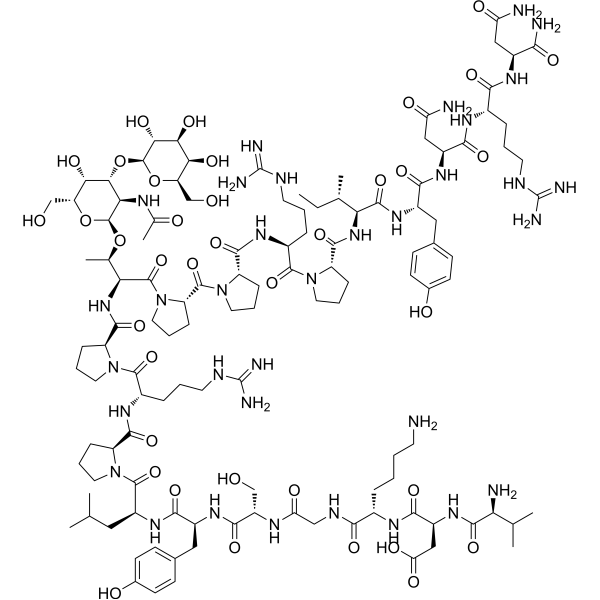
Pyrrhocoricin is a biological active peptide. (Antimicrobial activity against Gram-negative bacteria)
|
-
-
- HY-132600
-
|
Temavirsen
|
MicroRNA
HCV
|
Infection
|
|
RG-101 is a hepatocyte targeted N-acetylgalactosamine conjugated oligonucleotide that antagonises miR-122. miR-122 is an important host factor for hepatitis C virus (HCV) replication .
|
-

-
- HY-W009020
-
|
|
Biochemical Assay Reagents
|
Others
|
|
β-D-Glucopyranose,2-(acetylamino)-2-deoxy,1,3,4,6-tetraacetate is a class of biochemical reagents used in glycobiology research. Glycobiology studies the structure, synthesis, biology, and evolution of sugars. It involves carbohydrate chemistry, enzymology of glycan formation and degradation, protein-glycan recognition, and the role of glycans in biological systems. This field is closely related to basic research, biomedicine, and biotechnology .
|
-

-
- HY-W613261
-
|
|
Biochemical Assay Reagents
|
Others
|
|
α-D-Galactopyranose,2-(acetylamino)-2-deoxy-,1,3,4,6-tetraacetate is a class of biochemical reagents used in glycobiology research. Glycobiology studies the structure, synthesis, biology, and evolution of sugars. It involves carbohydrate chemistry, enzymology of glycan formation and degradation, protein-glycan recognition, and the role of glycans in biological systems. This field is closely related to basic research, biomedicine, and biotechnology .
|
-

-
- HY-147267
-
-

-
- HY-W357150
-
-

-
- HY-166986
-
-
![2-O-[2-(Acetylamino)-2-deoxy-β-D-glucopyranosyl]-D-mannose](//file.medchemexpress.com/product_pic/hy-166986.gif)
-
- HY-W549871
-
|
|
Biochemical Assay Reagents
|
Others
|
|
Methyl 2-(acetylamino)-2-deoxy-D-glucopyranoside is a class of biochemical reagents used in glycobiology research. Glycobiology studies the structure, synthesis, biology, and evolution of sugars. It involves carbohydrate chemistry, enzymology of glycan formation and degradation, protein-glycan recognition, and the role of glycans in biological systems. This field is closely related to basic research, biomedicine, and biotechnology .
|
-

-
- HY-W036388
-
|
|
Biochemical Assay Reagents
|
Others
|
|
Phenylmethyl 2-(acetylamino)-2-deoxy-α-D-glucopyranoside is a class of biochemical reagents used in glycobiology research. Glycobiology studies the structure, synthesis, biology, and evolution of sugars. It involves carbohydrate chemistry, enzymology of glycan formation and degradation, protein-glycan recognition, and the role of glycans in biological systems. This field is closely related to basic research, biomedicine, and biotechnology .
|
-

-
- HY-W101381
-
|
|
Biochemical Assay Reagents
|
Others
|
|
Phenylmethyl 2-(acetylamino)-2-deoxy-4,6-O-(phenylmethylene)-α-D-glucopyranoside is a class of biochemical reagents used in glycobiology research. Glycobiology studies the structure, synthesis, biology, and evolution of sugars. It involves carbohydrate chemistry, enzymology of glycan formation and degradation, protein-glycan recognition, and the role of glycans in biological systems. This field is closely related to basic research, biomedicine, and biotechnology .
|
-

-
- HY-W415811
-
|
|
Biochemical Assay Reagents
|
Others
|
|
4-Aminophenyl 2-(acetylamino)-2-deoxy-β-D-glucopyranoside is a class of biochemical reagents used in glycobiology research. Glycobiology studies the structure, synthesis, biology, and evolution of sugars. It involves carbohydrate chemistry, enzymology of glycan formation and degradation, protein-glycan recognition, and the role of glycans in biological systems. This field is closely related to basic research, biomedicine, and biotechnology .
|
-

-
- HY-W700582
-
|
|
Biochemical Assay Reagents
|
Others
|
|
2-Propen-1-yl 2-(acetylamino)-2-deoxy-3-O-(phenylmethyl)-β-D-glucopyranoside is a class of biochemical reagents used in glycobiology research. Glycobiology studies the structure, synthesis, biology, and evolution of sugars. It involves carbohydrate chemistry, enzymology of glycan formation and degradation, protein-glycan recognition, and the role of glycans in biological systems. This field is closely related to basic research, biomedicine, and biotechnology .
|
-

-
- HY-W698908
-
|
Methyl 3-O-[2-(acetylamino)-2-deoxy-β-D-galactopyranosyl]-α-D-galactopyranoside
|
Biochemical Assay Reagents
|
Others
|
|
GalNAc1-b-3Gal-α-Ome (Methyl 3-O-[2-(acetylamino)-2-deoxy-β-D-galactopyranosyl]-α-D-galactopyranoside) is a class of biochemical reagents used in glycobiology research. Glycobiology studies the structure, synthesis, biology, and evolution of sugars. It involves carbohydrate chemistry, enzymology of glycan formation and degradation, protein-glycan recognition, and the role of glycans in biological systems. This field is closely related to basic research, biomedicine, and biotechnology .
|
-

-
- HY-147252
-
-

-
- HY-W416285
-
-

-
- HY-W701864
-
-

-
- HY-W345036
-
-

-
- HY-W706303
-
-

-
- HY-W416278
-
|
Pentyl 2-acetamido-2-deoxy-β-D-glucopyranoside
|
Biochemical Assay Reagents
|
Others
|
|
Pentyl 2-(acetylamino)-2-deoxy-β-D-glucopyranoside (Pentyl 2-acetamido-2-deoxy-β-D-glucopyranoside) is used in glycobiology research.
|
-

-
- HY-W706302
-
|
|
Biochemical Assay Reagents
|
Others
|
|
D-Glucose,2-(acetylamino)-2-deoxy,3-acetate is a class of biochemical reagents used in glycobiology research. Glycobiology studies the structure, synthesis, biology, and evolution of sugars. It involves carbohydrate chemistry, enzymology of glycan formation and degradation, protein-glycan recognition, and the role of glycans in biological systems. This field is closely related to basic research, biomedicine, and biotechnology .
|
-

-
- HY-W698547
-
-

-
- HY-W353732
-
|
|
Biochemical Assay Reagents
|
Others
|
|
2-(Acetylamino)-2-deoxy-4,6-O-(phenylmethylene)-D-glucopyranose is a class of biochemical reagents used in glycobiology research. Glycobiology studies the structure, synthesis, biology, and evolution of sugars. It involves carbohydrate chemistry, enzymology of glycan formation and degradation, protein-glycan recognition, and the role of glycans in biological systems. This field is closely related to basic research, biomedicine, and biotechnology .
|
-

-
- HY-W698731
-
|
|
Biochemical Assay Reagents
|
Others
|
|
2-(Acetylamino)-2-deoxy-4,6-O-(phenylmethylene)-D-galactose is a class of biochemical reagents used in glycobiology research. Glycobiology studies the structure, synthesis, biology, and evolution of sugars. It involves carbohydrate chemistry, enzymology of glycan formation and degradation, protein-glycan recognition, and the role of glycans in biological systems. This field is closely related to basic research, biomedicine, and biotechnology .
|
-

-
- HY-W699037
-
|
|
Biochemical Assay Reagents
|
Others
|
|
2-(Acetylamino)-2-deoxy-4-O-β-D-mannopyranosyl-D-glucose is a class of biochemical reagents used in glycobiology research. Glycobiology studies the structure, synthesis, biology, and evolution of sugars. It involves carbohydrate chemistry, enzymology of glycan formation and degradation, protein-glycan recognition, and the role of glycans in biological systems. This field is closely related to basic research, biomedicine, and biotechnology .
|
-

-
- HY-W416336
-
|
|
Biochemical Assay Reagents
|
Others
|
|
Phenylmethyl 2-(acetylamino)-2-deoxy-3-O-methyl-α-D-glucopyranoside is a class of biochemical reagents used in glycobiology research. Glycobiology studies the structure, synthesis, biology, and evolution of sugars. It involves carbohydrate chemistry, enzymology of glycan formation and degradation, protein-glycan recognition, and the role of glycans in biological systems. This field is closely related to basic research, biomedicine, and biotechnology .
|
-

-
- HY-W286946
-
|
|
Biochemical Assay Reagents
|
Others
|
|
2-(Acetylamino)-2-deoxy-4,6-O-(1-methylethylidene)-D-glucose is a class of biochemical reagents used in glycobiology research. Glycobiology studies the structure, synthesis, biology, and evolution of sugars. It involves carbohydrate chemistry, enzymology of glycan formation and degradation, protein-glycan recognition, and the role of glycans in biological systems. This field is closely related to basic research, biomedicine, and biotechnology .
|
-

-
- HY-W355093
-
|
Fuc-α-2-4-GlcNAc
|
Biochemical Assay Reagents
|
Others
|
|
2-(Acetylamino)-2-deoxy-4-O-(6-deoxy-α-L-galactopyranosyl)-D-glucose (Fuc-α-2-4-GlcNAc) is a class of biochemical reagents used in glycobiology research. Glycobiology studies the structure, synthesis, biology, and evolution of sugars. It involves carbohydrate chemistry, enzymology of glycan formation and degradation, protein-glycan recognition, and the role of glycans in biological systems. This field is closely related to basic research, biomedicine, and biotechnology .
|
-

-
- HY-W700583
-
|
|
Biochemical Assay Reagents
|
Others
|
|
Allyl 2-(acetylamino)-2-deoxy-4,6-O-(phenylmethylene)-α-D-glucopyranoside is a class of biochemical reagents used in glycobiology research. Glycobiology studies the structure, synthesis, biology, and evolution of sugars. It involves carbohydrate chemistry, enzymology of glycan formation and degradation, protein-glycan recognition, and the role of glycans in biological systems. This field is closely related to basic research, biomedicine, and biotechnology .
|
-

-
- HY-W698426
-
|
|
Biochemical Assay Reagents
|
Others
|
|
D-Galactonic acid,2-(acetylamino)-2-deoxy,γ-lactone is a class of biochemical reagents used in glycobiology research. Glycobiology studies the structure, synthesis, biology, and evolution of sugars. It involves carbohydrate chemistry, enzymology of glycan formation and degradation, protein-glycan recognition, and the role of glycans in biological systems. This field is closely related to basic research, biomedicine, and biotechnology .
|
-

-
- HY-W698427
-
|
|
Biochemical Assay Reagents
|
Others
|
|
D-Mannonic acid,2-(acetylamino)-2-deoxy,γ-lactone is a class of biochemical reagents used in glycobiology research. Glycobiology studies the structure, synthesis, biology, and evolution of sugars. It involves carbohydrate chemistry, enzymology of glycan formation and degradation, protein-glycan recognition, and the role of glycans in biological systems. This field is closely related to basic research, biomedicine, and biotechnology .
|
-

-
- HY-181632S
-
|
|
Isotope-Labeled Compounds
|
Others
|
|
1,1-Dimethylpentyl N-[2-[[2-[7-[[2-(acetylamino)-2-deoxy-α-D-glucopyranosyl]oxy]-2-oxo-2H-1-benzopyran-4-yl]acetyl]amino]ethyl]carbamate-d4 is the deuterium labeled 1,1-Dimethylpentyl N-[2-[[2-[7-[[2-(acetylamino)-2-deoxy-α-D-glucopyranosyl]oxy]-2-oxo-2H-1-benzopyran-4-yl]acetyl]amino]ethyl]carbamate.
|
-
![1,1-Dimethylpentyl N-[2-[[2-[7-[[2-(acetylamino)-2-deoxy-α-D-glucopyranosyl]oxy]-2-oxo-2H-1-benzopyran-4-yl]acetyl]amino]ethyl]carbamate-d4](//file.medchemexpress.com/product_pic/hy-181632s.gif)
-
- HY-181633S
-
|
|
Isotope-Labeled Compounds
|
Others
|
|
1,1-Dimethylbutyl N-[2-[[2-[7-[[2-(acetylamino)-2-deoxy-α-D-glucopyranosyl]oxy]-2-oxo-2H-1-benzopyran-4-yl]acetyl]amino]ethyl]carbamate-d4 is the deuterium labeled 1,1-Dimethylbutyl N-[2-[[2-[7-[[2-(acetylamino)-2-deoxy-α-D-glucopyranosyl]oxy]-2-oxo-2H-1-benzopyran-4-yl]acetyl]amino]ethyl]carbamate.
|
-
![1,1-Dimethylbutyl N-[2-[[2-[7-[[2-(acetylamino)-2-deoxy-α-D-glucopyranosyl]oxy]-2-oxo-2H-1-benzopyran-4-yl]acetyl]amino]ethyl]carbamate-d4](//file.medchemexpress.com/product_pic/hy-181633s.gif)
-
- HY-W699497
-
-

-
- HY-W540784
-
-

-
- HY-W698901
-
-

-
- HY-W700579
-
-

| Cat. No. |
Product Name |
Type |
-
- HY-W341301
-
|
|
Biochemical Assay Reagents
|
|
2-(Acetylamino)-2-deoxy-β-D-glucopyranosylamine is a class of biochemical reagents used in glycobiology research. Glycobiology studies the structure, synthesis, biology, and evolution of sugars. It involves carbohydrate chemistry, enzymology of glycan formation and degradation, protein-glycan recognition, and the role of glycans in biological systems. This field is closely related to basic research, biomedicine, and biotechnology .
|
-
- HY-W009020
-
|
|
Biochemical Assay Reagents
|
|
β-D-Glucopyranose,2-(acetylamino)-2-deoxy,1,3,4,6-tetraacetate is a class of biochemical reagents used in glycobiology research. Glycobiology studies the structure, synthesis, biology, and evolution of sugars. It involves carbohydrate chemistry, enzymology of glycan formation and degradation, protein-glycan recognition, and the role of glycans in biological systems. This field is closely related to basic research, biomedicine, and biotechnology .
|
-
- HY-W613261
-
|
|
Biochemical Assay Reagents
|
|
α-D-Galactopyranose,2-(acetylamino)-2-deoxy-,1,3,4,6-tetraacetate is a class of biochemical reagents used in glycobiology research. Glycobiology studies the structure, synthesis, biology, and evolution of sugars. It involves carbohydrate chemistry, enzymology of glycan formation and degradation, protein-glycan recognition, and the role of glycans in biological systems. This field is closely related to basic research, biomedicine, and biotechnology .
|
-
- HY-W357150
-
-
- HY-166986
-
-
- HY-W549871
-
|
|
Biochemical Assay Reagents
|
|
Methyl 2-(acetylamino)-2-deoxy-D-glucopyranoside is a class of biochemical reagents used in glycobiology research. Glycobiology studies the structure, synthesis, biology, and evolution of sugars. It involves carbohydrate chemistry, enzymology of glycan formation and degradation, protein-glycan recognition, and the role of glycans in biological systems. This field is closely related to basic research, biomedicine, and biotechnology .
|
-
- HY-W036388
-
|
|
Biochemical Assay Reagents
|
|
Phenylmethyl 2-(acetylamino)-2-deoxy-α-D-glucopyranoside is a class of biochemical reagents used in glycobiology research. Glycobiology studies the structure, synthesis, biology, and evolution of sugars. It involves carbohydrate chemistry, enzymology of glycan formation and degradation, protein-glycan recognition, and the role of glycans in biological systems. This field is closely related to basic research, biomedicine, and biotechnology .
|
-
- HY-W101381
-
|
|
Biochemical Assay Reagents
|
|
Phenylmethyl 2-(acetylamino)-2-deoxy-4,6-O-(phenylmethylene)-α-D-glucopyranoside is a class of biochemical reagents used in glycobiology research. Glycobiology studies the structure, synthesis, biology, and evolution of sugars. It involves carbohydrate chemistry, enzymology of glycan formation and degradation, protein-glycan recognition, and the role of glycans in biological systems. This field is closely related to basic research, biomedicine, and biotechnology .
|
-
- HY-W415811
-
|
|
Biochemical Assay Reagents
|
|
4-Aminophenyl 2-(acetylamino)-2-deoxy-β-D-glucopyranoside is a class of biochemical reagents used in glycobiology research. Glycobiology studies the structure, synthesis, biology, and evolution of sugars. It involves carbohydrate chemistry, enzymology of glycan formation and degradation, protein-glycan recognition, and the role of glycans in biological systems. This field is closely related to basic research, biomedicine, and biotechnology .
|
-
- HY-W700582
-
|
|
Biochemical Assay Reagents
|
|
2-Propen-1-yl 2-(acetylamino)-2-deoxy-3-O-(phenylmethyl)-β-D-glucopyranoside is a class of biochemical reagents used in glycobiology research. Glycobiology studies the structure, synthesis, biology, and evolution of sugars. It involves carbohydrate chemistry, enzymology of glycan formation and degradation, protein-glycan recognition, and the role of glycans in biological systems. This field is closely related to basic research, biomedicine, and biotechnology .
|
-
- HY-W698908
-
|
Methyl 3-O-[2-(acetylamino)-2-deoxy-β-D-galactopyranosyl]-α-D-galactopyranoside
|
Biochemical Assay Reagents
|
|
GalNAc1-b-3Gal-α-Ome (Methyl 3-O-[2-(acetylamino)-2-deoxy-β-D-galactopyranosyl]-α-D-galactopyranoside) is a class of biochemical reagents used in glycobiology research. Glycobiology studies the structure, synthesis, biology, and evolution of sugars. It involves carbohydrate chemistry, enzymology of glycan formation and degradation, protein-glycan recognition, and the role of glycans in biological systems. This field is closely related to basic research, biomedicine, and biotechnology .
|
-
- HY-W416285
-
-
- HY-W701864
-
-
- HY-W345036
-
-
- HY-W706303
-
-
- HY-W416278
-
|
Pentyl 2-acetamido-2-deoxy-β-D-glucopyranoside
|
Biochemical Assay Reagents
|
|
Pentyl 2-(acetylamino)-2-deoxy-β-D-glucopyranoside (Pentyl 2-acetamido-2-deoxy-β-D-glucopyranoside) is used in glycobiology research.
|
-
- HY-W706302
-
|
|
Biochemical Assay Reagents
|
|
D-Glucose,2-(acetylamino)-2-deoxy,3-acetate is a class of biochemical reagents used in glycobiology research. Glycobiology studies the structure, synthesis, biology, and evolution of sugars. It involves carbohydrate chemistry, enzymology of glycan formation and degradation, protein-glycan recognition, and the role of glycans in biological systems. This field is closely related to basic research, biomedicine, and biotechnology .
|
-
- HY-W698547
-
|
GalNAcβ1-3Gal
|
Biochemical Assay Reagents
|
|
2-(Acetylamino)-2-deoxy-3-O-α-D-galactopyranosyl-D-galactose (GalNAcβ1-3Gal) is a biochemical assay reagent.
|
-
- HY-W353732
-
|
|
Biochemical Assay Reagents
|
|
2-(Acetylamino)-2-deoxy-4,6-O-(phenylmethylene)-D-glucopyranose is a class of biochemical reagents used in glycobiology research. Glycobiology studies the structure, synthesis, biology, and evolution of sugars. It involves carbohydrate chemistry, enzymology of glycan formation and degradation, protein-glycan recognition, and the role of glycans in biological systems. This field is closely related to basic research, biomedicine, and biotechnology .
|
-
- HY-W698731
-
|
|
Biochemical Assay Reagents
|
|
2-(Acetylamino)-2-deoxy-4,6-O-(phenylmethylene)-D-galactose is a class of biochemical reagents used in glycobiology research. Glycobiology studies the structure, synthesis, biology, and evolution of sugars. It involves carbohydrate chemistry, enzymology of glycan formation and degradation, protein-glycan recognition, and the role of glycans in biological systems. This field is closely related to basic research, biomedicine, and biotechnology .
|
-
- HY-W699037
-
|
|
Biochemical Assay Reagents
|
|
2-(Acetylamino)-2-deoxy-4-O-β-D-mannopyranosyl-D-glucose is a class of biochemical reagents used in glycobiology research. Glycobiology studies the structure, synthesis, biology, and evolution of sugars. It involves carbohydrate chemistry, enzymology of glycan formation and degradation, protein-glycan recognition, and the role of glycans in biological systems. This field is closely related to basic research, biomedicine, and biotechnology .
|
-
- HY-W416336
-
|
|
Biochemical Assay Reagents
|
|
Phenylmethyl 2-(acetylamino)-2-deoxy-3-O-methyl-α-D-glucopyranoside is a class of biochemical reagents used in glycobiology research. Glycobiology studies the structure, synthesis, biology, and evolution of sugars. It involves carbohydrate chemistry, enzymology of glycan formation and degradation, protein-glycan recognition, and the role of glycans in biological systems. This field is closely related to basic research, biomedicine, and biotechnology .
|
-
- HY-W286946
-
|
|
Biochemical Assay Reagents
|
|
2-(Acetylamino)-2-deoxy-4,6-O-(1-methylethylidene)-D-glucose is a class of biochemical reagents used in glycobiology research. Glycobiology studies the structure, synthesis, biology, and evolution of sugars. It involves carbohydrate chemistry, enzymology of glycan formation and degradation, protein-glycan recognition, and the role of glycans in biological systems. This field is closely related to basic research, biomedicine, and biotechnology .
|
-
- HY-W355093
-
|
Fuc-α-2-4-GlcNAc
|
Biochemical Assay Reagents
|
|
2-(Acetylamino)-2-deoxy-4-O-(6-deoxy-α-L-galactopyranosyl)-D-glucose (Fuc-α-2-4-GlcNAc) is a class of biochemical reagents used in glycobiology research. Glycobiology studies the structure, synthesis, biology, and evolution of sugars. It involves carbohydrate chemistry, enzymology of glycan formation and degradation, protein-glycan recognition, and the role of glycans in biological systems. This field is closely related to basic research, biomedicine, and biotechnology .
|
-
- HY-W700583
-
|
|
Biochemical Assay Reagents
|
|
Allyl 2-(acetylamino)-2-deoxy-4,6-O-(phenylmethylene)-α-D-glucopyranoside is a class of biochemical reagents used in glycobiology research. Glycobiology studies the structure, synthesis, biology, and evolution of sugars. It involves carbohydrate chemistry, enzymology of glycan formation and degradation, protein-glycan recognition, and the role of glycans in biological systems. This field is closely related to basic research, biomedicine, and biotechnology .
|
-
- HY-W698426
-
|
|
Biochemical Assay Reagents
|
|
D-Galactonic acid,2-(acetylamino)-2-deoxy,γ-lactone is a class of biochemical reagents used in glycobiology research. Glycobiology studies the structure, synthesis, biology, and evolution of sugars. It involves carbohydrate chemistry, enzymology of glycan formation and degradation, protein-glycan recognition, and the role of glycans in biological systems. This field is closely related to basic research, biomedicine, and biotechnology .
|
-
- HY-W698427
-
|
|
Biochemical Assay Reagents
|
|
D-Mannonic acid,2-(acetylamino)-2-deoxy,γ-lactone is a class of biochemical reagents used in glycobiology research. Glycobiology studies the structure, synthesis, biology, and evolution of sugars. It involves carbohydrate chemistry, enzymology of glycan formation and degradation, protein-glycan recognition, and the role of glycans in biological systems. This field is closely related to basic research, biomedicine, and biotechnology .
|
-
- HY-W699497
-
-
- HY-W540784
-
-
- HY-W698901
-
-
- HY-W700579
-
| Cat. No. |
Product Name |
Target |
Research Area |
-
- HY-P5443
-
|
|
Bacterial
|
Others
|
|
Pyrrhocoricin is a biological active peptide. (Antimicrobial activity against Gram-negative bacteria)
|
| Cat. No. |
Product Name |
Category |
Target |
Chemical Structure |
| Cat. No. |
Product Name |
Chemical Structure |
-
- HY-181632S
-
|
|
|
1,1-Dimethylpentyl N-[2-[[2-[7-[[2-(acetylamino)-2-deoxy-α-D-glucopyranosyl]oxy]-2-oxo-2H-1-benzopyran-4-yl]acetyl]amino]ethyl]carbamate-d4 is the deuterium labeled 1,1-Dimethylpentyl N-[2-[[2-[7-[[2-(acetylamino)-2-deoxy-α-D-glucopyranosyl]oxy]-2-oxo-2H-1-benzopyran-4-yl]acetyl]amino]ethyl]carbamate.
|
-
-
- HY-181633S
-
|
|
|
1,1-Dimethylbutyl N-[2-[[2-[7-[[2-(acetylamino)-2-deoxy-α-D-glucopyranosyl]oxy]-2-oxo-2H-1-benzopyran-4-yl]acetyl]amino]ethyl]carbamate-d4 is the deuterium labeled 1,1-Dimethylbutyl N-[2-[[2-[7-[[2-(acetylamino)-2-deoxy-α-D-glucopyranosyl]oxy]-2-oxo-2H-1-benzopyran-4-yl]acetyl]amino]ethyl]carbamate.
|
-
| Cat. No. |
Product Name |
|
Classification |
-
- HY-132591
-
Inclisiran
Maximum Cited Publications
8 Publications Verification
ALN-PCSsc
|
|
siRNAs
siRNA drugs
|
|
Inclisiran is a double-stranded small interfering RNA (siRNA) molecule. Inclisiran inhibits the transcription of PCSK9. Inclisiran inhibits Pyroptosis, activates PPARγ, and reduces NLRP3, cleaved caspase-1, IL-1β, and IL-18. Inclisiran has anti-inflammatory, lipid-regulating and anti-atherosclerotic activities. Inclisiran can be used in researches of hyperlipidemia and cardiovascular disease (CVD) .
|
-
- HY-132588
-
|
ALN-G01
|
|
siRNAs
siRNA drugs
|
|
Lumasiran (ALN-G01), a siRNA product, reduces hepatic oxalate production by targeting glycolate oxidase. By silencing the gene encoding glycolate oxidase, Lumasiran depletes glycolate oxidase and thereby inhibits the synthesis of oxalate, which is the toxic metabolite that is directly associated with the clinical manifestations of Primary hyperoxaluria type 1 (PH1) .
|
-
- HY-132610
-
|
ALN-AS1
|
|
siRNAs
siRNA drugs
|
|
Givosiran (ALN-AS1) is a small interfering RNA that targets hepatic aminolevulinate synthase 1 (ALAS1) messenger RNA. Givosiran downregulates ALAS1 mRNA and prevents accumulation of neurotoxic δ-aminolevulinic acid (ALA) and porphobilinogen (PBG) levels. Givosiran demonstrates potent inhibitory activity against ALAS1 in mouse, rat, and cynomolgus monkey models. Givosiran can be used for the research of acute hepatic porphyria (AHP) .
|
-
- HY-132589
-
|
ALN-TTRsc02
|
|
siRNAs
siRNA drugs
|
|
Vutrisiran (ALN-TTRsc02) is a liver-directed, investigational, small interfering ribonucleic acid (siRNA) agent. Vutrisiran can be used for transthyretin (TTR)-mediated amyloidosis research .
|
-
- HY-132587
-
|
ALN-AT3SC; SAR439774
|
|
siRNAs
siRNA drugs
|
|
Fitusiran (ALN-AT3SC) is a siRNA strategy. Fitusiran delivers siRNA targeting the SERPINC1 gene in hepatocytes to inhibit antithrombin synthesis. Fitusiran enhances thrombin activity and increases Thrombin generation, thereby restoring hemostatic function. Fitusiran can be used in hemophilia-related research .
|
-
- HY-148089
-
|
|
|
Antisense Oligonucleotides
|
|
Eplontersen is a triantennary N-acetyl galactosamine (GalNAc3-7a)-conjugated antisense oligonucleotide targeting transthyretin (TTR) mRNA to inhibit production of both variant and wild-type TTR protein. Misfolded TTR induces amyloid fibrils formation in the heart and peripheral nerves, leads to amyloid TTR (ATTR) amyloidosis diseases .
|
-
- HY-132613
-
|
|
|
siRNAs
siRNA drugs
|
|
Lumasiran sodium, an investigational RNA interference (RNAi) therapeutic agent, reduces hepatic oxalate production by targeting glycolate oxidase. Lumasiran sodium reduces urinary oxalate excretion, the cause of progressive kidney failure in primary hyperoxaluria type 1 (PH1) .
|
-
- HY-147425
-
|
SLN360
|
|
siRNAs
siRNA drugs
|
|
Zerlasiran (SLN360) is a siRNA targeting apolipoprotein A (ApoA). Zerlasiran targets hepatic ApoA synthesis via RNA interference to degrade encoding mRNA. Zerlasiran can be used for the research of atherosclerotic cardiovascular disease and elevated ApoA levels .
|
-
- HY-145720
-
|
ALN-CC5
|
|
siRNAs
siRNA drugs
|
|
Cemdisiran (ALN-CC5) is an N-acetylgalactosamine-conjugated RNAi agent and also a complement component C5 inhibitor. Cemdisiran targets C5 mRNA, cleaves C5 mRNA via the endogenous RNA interference pathway, and inhibits the production of C5 protein in the liver. Cemdisiran exerts a dose-dependent inhibitory effect on total C5 concentrations in cynomolgus monkeys. When used in combination with Pozelimab (HY-P99786) in cynomolgus monkeys, Cemdisiran achieves a more sustained and complete inhibitory effect on complement activity. Cemdisiran can be used in the research of paroxysmal nocturnal hemoglobinuria and other complement-mediated diseases .
|
-
- HY-151123
-
|
AKCEA-APO(a)-LRx; ISIS 681257; TQJ230
|
|
Antisense Oligonucleotides
|
|
Pelacarsen (ISIS 681257) is a GalNAc3-conjugated 2′-MOE-modified antisense oligonucleotide. Pelacarsen reduces apo (a) .
|
-
- HY-147278
-
|
Divesiran; SLN124
|
|
siRNAs
siRNA drugs
|
|
Manusiran (Divesiran) is a GalNac-siRNA targeting liver and transmembrane serine protease 6 (Serine protease 6). Manusiran increases hepatic Hepcidin synthesis and plasma levels by silencing TMPRSS6, a negative regulator of hepcidin production, and limits the availability of iron required for erythropoiesis. Combined use of Manusiran with Deferiprone (HY-B0568) reduces ineffective erythropoiesis and hepatic iron overload in a mouse model of β-thalassemia. Manusiran can be used for research on polycythemia vera, type 1 hereditary hemochromatosis, and β-thalassemia .
|
-
- HY-132604
-
|
ARO-AAT
|
|
siRNAs
siRNA drugs
|
|
Fazirsiran (ARO-AAT) is a second-generation RNAi agent. Fazirsiran consistes of a cholesterol-conjugated RNAi trigger (chol-RNAi) to selectively reduce Alpha1-antitrypsin (AAT) synthesis and a melittin-derived peptide conjugated to N-acetylgalactosamine (NAG) formulated as the excipient EX1 to promote endosomal escape of the chol-RNAi in hepatocytes . Fazirsiran can be used in the study of Alpha-1 Antitrypsin Deficiency (AATD) liver disease. Alpha-1 antitrypsin deficiency (AATD) is caused by mutations in the alpha-1 antitrypsin (SERPINA1) gene.
|
-
- HY-147406
-
|
ION-904
|
|
Antisense Oligonucleotides
|
|
Tonlamarsen (ION-904) is a GalNAc-conjugated antisense oligonucleotide and Angiotensinogen synthesis inhibitor. Tonlamarsen specifically reduces the production of Angiotensinogen in the liver and plasma, and exhibits extremely low activity in the kidneys. Tonlamarsen can be used in research related to hypertension and heart failure .
|
-
- HY-132600
-
|
Temavirsen
|
|
Antisense Oligonucleotides
|
|
RG-101 is a hepatocyte targeted N-acetylgalactosamine conjugated oligonucleotide that antagonises miR-122. miR-122 is an important host factor for hepatitis C virus (HCV) replication .
|
-
- HY-147267
-
|
ISIS-757456
|
|
Antisense Oligonucleotides
|
|
Evazarsen is an angiotensinogen synthesis inhibitor and possesses antihypertensive properties .
|
-
- HY-147252
-
Your information is safe with us. * Required Fields.
Inquiry Information
- Product Name:
- Cat. No.:
- Quantity:
- MCE Japan Authorized Agent:





![2-O-[2-(Acetylamino)-2-deoxy-β-D-glucopyranosyl]-D-mannose](http://file.medchemexpress.com/product_pic/hy-166986.gif)


![1,1-Dimethylpentyl N-[2-[[2-[7-[[2-(acetylamino)-2-deoxy-α-D-glucopyranosyl]oxy]-2-oxo-2H-1-benzopyran-4-yl]acetyl]amino]ethyl]carbamate-d4](http://file.medchemexpress.com/product_pic/hy-181632s.gif)
![1,1-Dimethylbutyl N-[2-[[2-[7-[[2-(acetylamino)-2-deoxy-α-D-glucopyranosyl]oxy]-2-oxo-2H-1-benzopyran-4-yl]acetyl]amino]ethyl]carbamate-d4](http://file.medchemexpress.com/product_pic/hy-181633s.gif)





