



5-Chloro-2'-deoxyuridine
Based on 6 publication(s) in Google Scholar
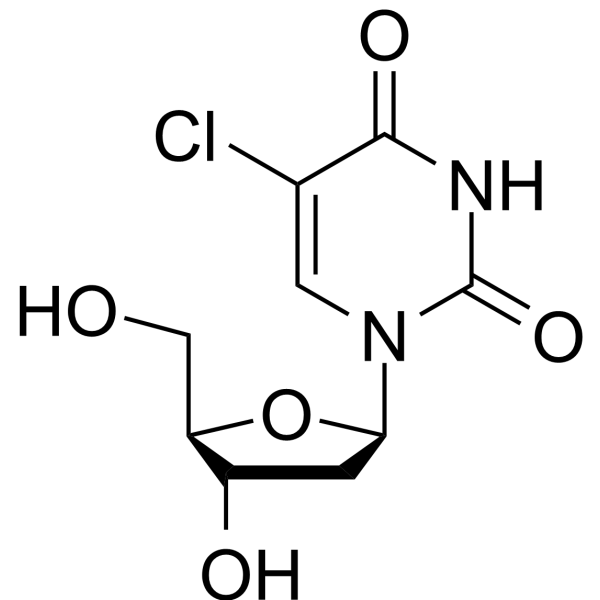
5-Chloro-2'-deoxyuridine, a thymine analog, is to study the potential of hypochlorous acid damage to DNA and DNA precursors.
For research use only. We do not sell to patients.
- Purity : 99.97%
- CAS No.: 50-90-8
- Formula: C9H11ClN2O5
- Molecular Weight:262.65
-
Storage:Powder -20°C, 3 years , 4°C, 2 years ; In solvent -80°C, 6 months , -20°C, 1 month

To place orders, for customer services and technical support, please contact: MedChemExpress USA
Tel: 609-228-6898 E-mail: [email protected] [email protected]


-
 Biological Activity
-
Chemical Information
-
Solvent & Solubility
- Purity & Documentation
- References
-
 Help & FAQs


-
HY-B0307
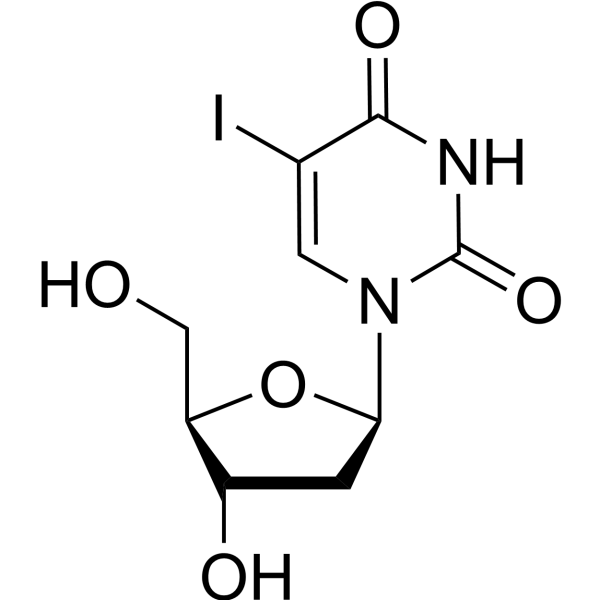
IdoxuridineAntiviral Agent -
HY-B0313
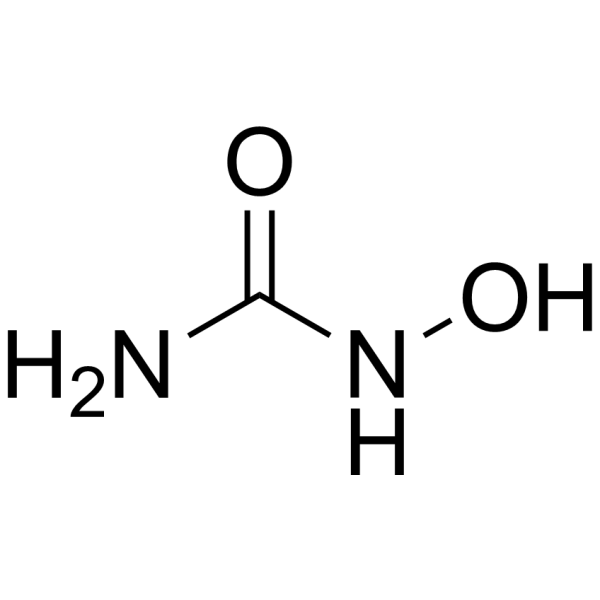
HydroxyureaRNR Inhibitor -

HY-112669R
5-Chloro-2'-deoxyuridine (Standard)Thymine Analog -
HY-15910
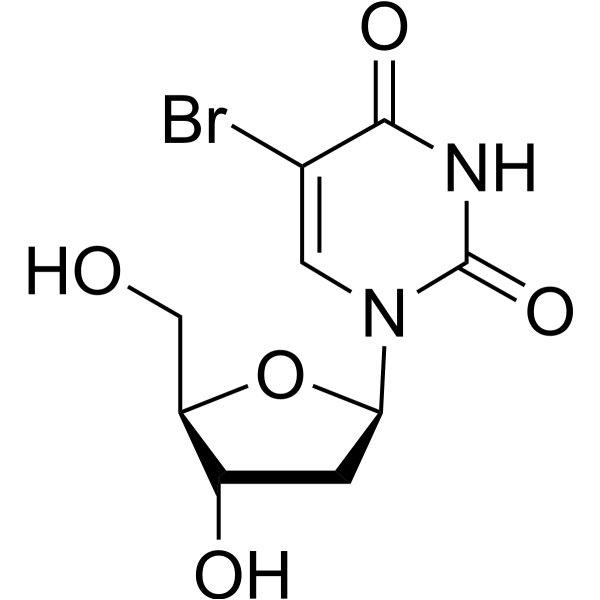
5-BrdUThymidine Analog -
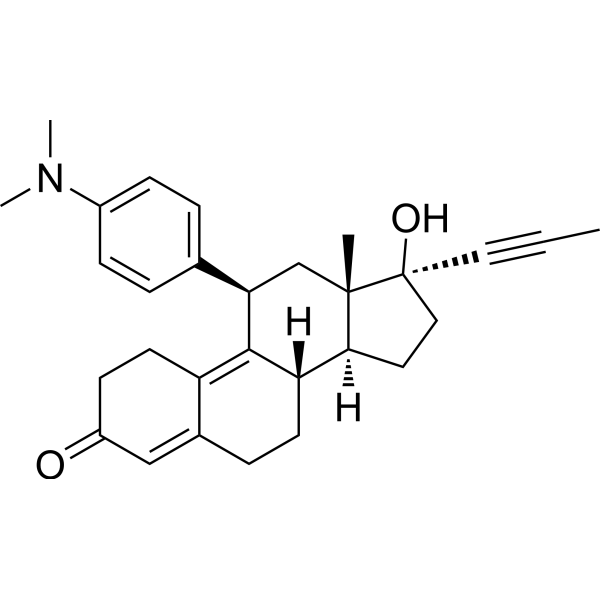
HY-13683
MifepristoneProgesterone Receptor Antagonist -
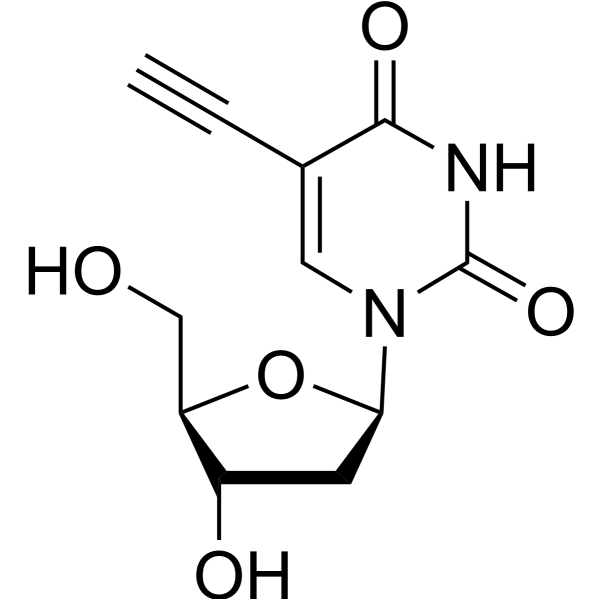
HY-118411
5-Ethynyl-2'-deoxyuridinePROTAC Linkers -
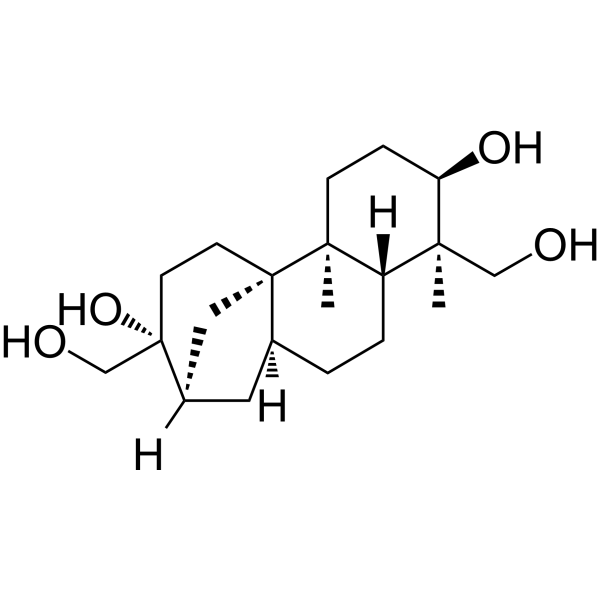
HY-N6733
AphidicolinDNA Polymerase Inhibitor -
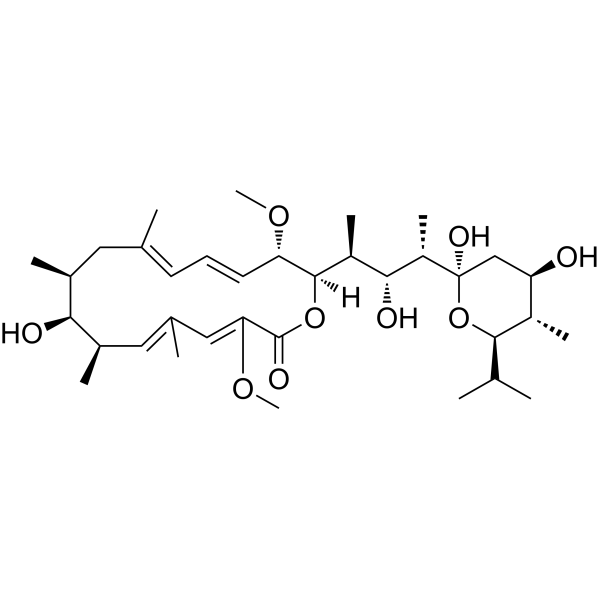
HY-100558
Bafilomycin A1V-ATPase Inhibitor -
HY-Y0873
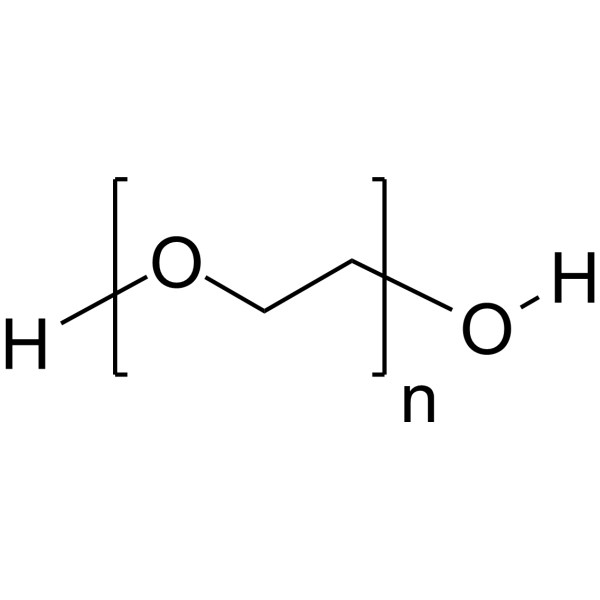
PEG300Neutral Polymer -
HY-18708
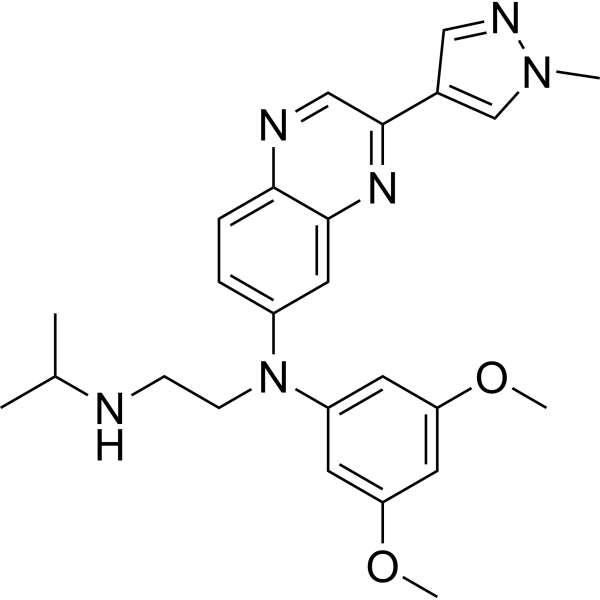
ErdafitinibFGFR Inhibitor -
HY-W009163
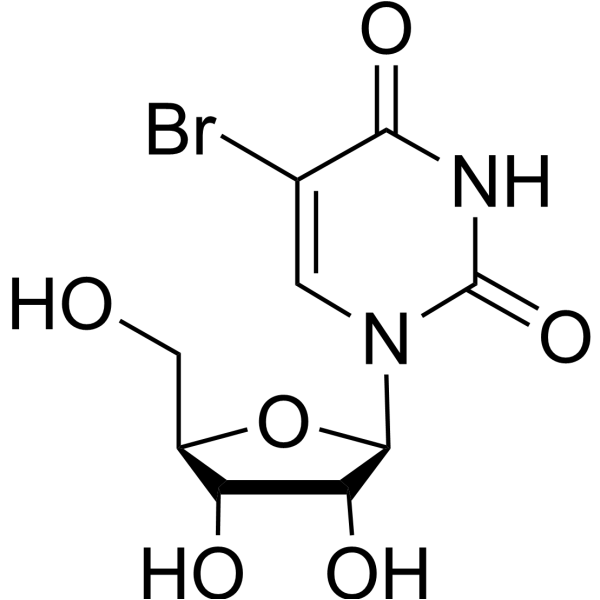
5-BromouridineNucleoside -
HY-17394
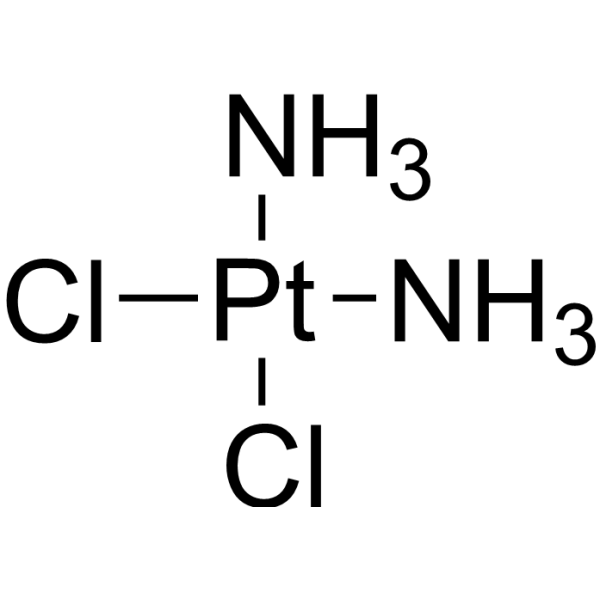
CisplatinDNA Alkylator
Publications Citing Use of MedChemExpress (MCE) 5-Chloro-2'-deoxyuridine
More Customer Validation & Images

-
Cell Imaging/Staining
-
Cell Imaging/Staining


Biological Activity
Description
Cellular Effect
|
Cell Line

|
Type | Value | Description | References |
|---|---|---|---|---|
| L5178Y | IC50 |
12 μM
Compound: CldUrd
|
In vitro growth inhibition of FdUrd resistant L5178Y-Resistant murine leukemia cells
In vitro growth inhibition of FdUrd resistant L5178Y-Resistant murine leukemia cells
|
[PMID: 11101356] |
| L5178Y | IC50 |
16 μM
Compound: CldUrd
|
In vitro growth inhibition of L5178Y-Parental murine leukemia cells by incorporation of [14C]Leu.
In vitro growth inhibition of L5178Y-Parental murine leukemia cells by incorporation of [14C]Leu.
|
[PMID: 11101356] |
| L5178Y | IC50 |
32 μM
Compound: CldUrd
|
In vitro growth inhibition of L5178Y-Parental murine leukemia cells
In vitro growth inhibition of L5178Y-Parental murine leukemia cells
|
[PMID: 11101356] |
| L5178Y | IC50 |
33 μM
Compound: CldUrd
|
In vitro growth inhibition of L5178Y-Parental murine leukemia cells by incorporation of [14C]-Thd.
In vitro growth inhibition of L5178Y-Parental murine leukemia cells by incorporation of [14C]-Thd.
|
[PMID: 11101356] |
In Vitro
When 5-Chloro-2’-deoxyuridine (ClDU) is placed into tissue culture medium, mammalian cells incorporate the analog into DNA. It is observed that 10 μM concentration of 5-Chloro-2’-deoxyuridine in the media does not alter cell division kinetics. Previously it has been shown that 5-Chloro-2’-deoxyuridine is metabolized and incorporated into DNA using antibodies that bind selectively to DNA containing halogenated bases. In the studies reported here, 5-Chloro-2’-deoxyuridine is more similar to BrdU in acting as a T analog. The toxicity of 5-Chloro-2’-deoxyuridine could in part be attributed to inhibition of thymidylate synthase[1].
MedChemExpress (MCE) has not independently confirmed the accuracy of these methods. They are for reference only. .


Chemical Information
-
CAS No. 50-90-8
-
Appearance Solid
-
Molecular Weight 262.65
-
Formula C9H11ClN2O5
-
Color White to off-white
-
SMILES
OC[C@@H]1[C@@H](O)C[C@H](N2C(NC(C(Cl)=C2)=O)=O)O1
-
Synonyms
5-Chlorodeoxyuridine; CldU
-
Shipping
Room temperature in continental US; may vary elsewhere.
-
Storage
Powder -20°C 3 years 4°C 2 years In solvent -80°C 6 months -20°C 1 month


Publications (6)
-
Journal Impact Factor
-
Most Recent
-
-
Adv Sci (Weinh)
DMAP1 Deficiency Suppresses Lung Cancer Progression by Destabilizing Replication Fork and Activating IFN Signaling-Mediated Anti-tumor Immunity. [Abstract]2026 Jun;13(33):e17634. PMID: 41904944 -
Cell Death Dis
PHF20 stabilizes the GAS7-F-actin axis to drive DNA damage repair and chemoresistance in cutaneous squamous cell carcinoma. [Abstract]2026 May 29. PMID: 42215448 -
iScience
Ethanol induces replication fork stalling and membrane stress in immortalized laryngeal cells. [Abstract]2023 Nov 23;26(12):108564. PMID: 38213791
5-Chloro-2'-deoxyuridine purchased from MedChemExpress. Usage Cited in: iScience. 2023 Nov 23;26(12):108564. [Abstract]
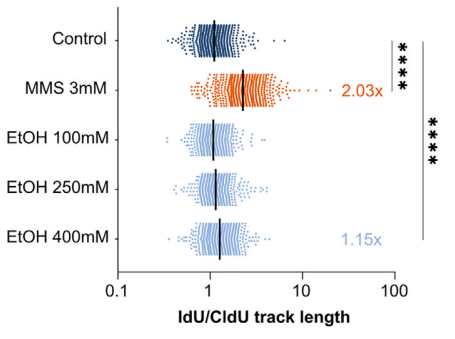
Effect of ethanol (EtOH) or MMS on replication fork progression in HuLa-PC cells assessed by a DNA fiber analysis. DNA labeling scheme for the DNA fiber analysis. Cells were consecutively treated with 5-iodo-2′-deoxyuridine (IdU) and 5-Chloro-2'-deoxyuridine (CldU) (80 μM; 30 min). Both pulses were exactly 30 min and ethanol (EtOH) or MMS was added during the second pulse only. The ratio of IdU/CldU track length is depicted. For each condition, four independent biological replicates were assessed, with a minimum of 150 fibers each. Each dot corresponds to a measurement of an individual DNA fiber, the black bar represents the average IdU/CldU ratio. The fold change with respect to the control is also indicated on the graph. Number of scored fibers: Control = 990; MMS = 520; EtOH 100 mM = 549; EtOH 250 mM = 607; EtOH 400 mM = 616.
-
-
bioRxiv
The RING Finger E3 Ligase RNF25 Protects DNA Replication Forks Independently of its Canonical Roles in Ubiquitin Signaling. [Abstract]2025 Jan 9:2025.01.09.632184. PMID: 39829812
5-Chloro-2'-deoxyuridine purchased from MedChemExpress. Usage Cited in: bioRxiv. 2025 Jan 9:2025.01.09.632184. [Abstract]
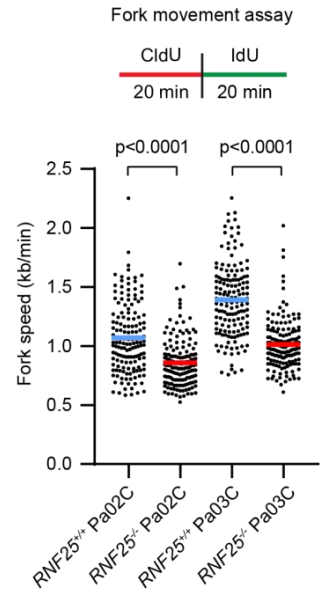
Top: Schematic of fork movement assays. Bottom: RNF25+/+ and RNF25−/− Pa02C and Pa03C cells were labeled with 5-Chloro-2'-deoxyuridine (CldU) (25 μM; 20 min) and IdU and fork speed was calculated by dividing tract lengths by total pulse time.


Solvent & Solubility
In Vitro:
DMSO : 250 mg/mL (951.84 mM; Need ultrasonic; Hygroscopic DMSO has a significant impact on the solubility of product, please use newly opened DMSO)
H2O : 3.33 mg/mL (12.68 mM; ultrasonic and warming and heat to 60°C)
Please refer to the solubility information to select the appropriate solvent. Once prepared, please aliquot and store the solution to prevent product inactivation from repeated freeze-thaw cycles.
Storage method and period of stock solution: -80°C, 6 months; -20°C, 1 month. When stored at -80°C, please use it within 6 months. When stored at -20°C, please use it within 1 month.
* Note: If you choose water as the stock solution, please dilute it to the working solution, then filter and sterilize it with a 0.22 μm filter before use.
Please refer to the solubility information to select the appropriate solvent. Once prepared, please aliquot and store the solution to prevent product inactivation from repeated freeze-thaw cycles.
Storage method and period of stock solution: -80°C, 6 months; -20°C, 1 month. When stored at -80°C, please use it within 6 months. When stored at -20°C, please use it within 1 month.
* Note: If you choose water as the stock solution, please dilute it to the working solution, then filter and sterilize it with a 0.22 μm filter before use.
Concentration (start) × Volume (start) = Concentration (final) × Volume (final)
In Vivo:
Select the appropriate dissolution method based on your experimental animal and administration route.
- For the following dissolution methods, please ensure to first prepare a clear stock solution using an In Vitro approach and then sequentially add co-solvents:
- To ensure reliable experimental results, the clarified stock solution can be appropriately stored based on storage conditions. As for the working solution for In Vivo experiments, it is recommended to prepare freshly and use it on the same day.
- The percentages shown for the solvents indicate their volumetric ratio in the final prepared solution. If precipitation or phase separation occurs during preparation, heat and/or sonication can be used to aid dissolution.
Add each solvent one by one: 10% DMSO 40% PEG300 5% Tween-80 45% Saline
Solubility: ≥ 2.08 mg/mL (7.92 mM); Clear solution
This protocol yields a clear solution of ≥ 2.08 mg/mL (saturation unknown).
Taking 1 mL working solution as an example, add 100 μL DMSO stock solution (20.8 mg/mL) to 400 μL PEG300, and mix evenly; then add 50 μL Tween-80 and mix evenly; then add 450 μL Saline to adjust the volume to 1 mL.
Preparation of Saline: Dissolve 0.9 g sodium chloride in ddH₂O and dilute to 100 mL to obtain a clear Saline solution.
Add each solvent one by one: 10% DMSO 90% (20% SBE-β-CD in Saline)
Solubility: ≥ 2.08 mg/mL (7.92 mM); Clear solution
This protocol yields a clear solution of ≥ 2.08 mg/mL (saturation unknown).
Taking 1 mL working solution as an example, add 100 μL DMSO stock solution (20.8 mg/mL) to 900 μL 20% SBE-β-CD in Saline, and mix evenly.
Preparation of 20% SBE-β-CD in Saline (4°C, storage for one week): 2 g SBE-β-CD powder is dissolved in 10 mL Saline, completely dissolve until clear.
In Vivo Dissolution Calculator
Please enter the basic information of animal experiments:
-
-
-
-
Recommended: Prepare an additional quantity of animals to account for potential losses during experiments.
Please enter your animal formula composition:
-
%DMSO +
Recommended: Keep the proportion of DMSO in working solution below 2% if your animal is weak.
-
%+
-
+%Tween-80 + +
-
%Saline +
The co-solvents required include: DMSO, . All of co-solvents are available by MedChemExpress (MCE). , Tween 80. All of co-solvents are available by MedChemExpress (MCE).
Working solution concentration: 0.22 mg/mL
Method for preparing stock solution: mg drug dissolved in μL DMSO. Stock solution concentration: mg/mL.
1. Take μL DMSO stock solution;
2. Add μL .
μL , mix evenly;
3. Then add μL Tween 80, mix evenly;
4. Then add μL
Please ensure that the stock solution in the first step is dissolved to a clear state, and add co-solvents in sequence. You can use ultrasonic heating (ultrasonic cleaner, recommended frequency 20-40 kHz), vortexing, etc. to assist dissolution.


Purity & Documentation
-
Data Sheet (279 KB)
-
SDS (419 KB)
- English - EN (419 KB)
- Français - FR (419 KB)
- Deutsch - DE (419 KB)
- Norwegian - NO (419 KB)
- Español - ES (419 KB)
- Swedish - SV (419 KB)
- Italian - IT (419 KB)
- Korean - KR (419 KB)
- Portuguese - PT (419 KB)
-
Handling Instructions (2659 KB)
References
[1]. Kim CH, et al. Polymerase incorporation and miscoding properties of 5-chlorouracil. Chem Res Toxicol. 2010 Apr 19;23(4):740-8. [Content Brief]
[2]. Yuan CJ, et al. Extended access methamphetamine decreases immature neurons in the hippocampus which results from loss and altered development of neural progenitors without altered dynamics of the S-phase of the cell cycle. Pharmacol Biochem Behav. 2011 Nov;100(1):98-108. [Content Brief]


Complete Stock Solution Preparation Table
Please refer to the solubility information to select the appropriate solvent. Once prepared, please aliquot and store the solution to prevent product inactivation from repeated freeze-thaw cycles.
Storage method and period of stock solution: -80°C, 6 months; -20°C, 1 month. When stored at -80°C, please use it within 6 months. When stored at -20°C, please use it within 1 month.
| Optional Solvent | Concentration Solvent Mass | 1 mg | 5 mg | 10 mg | 25 mg |
|---|---|---|---|---|---|
| H2O / DMSO | 1 mM | 3.8074 mL | 19.0368 mL | 38.0736 mL | 95.1841 mL |
| 5 mM | 0.7615 mL | 3.8074 mL | 7.6147 mL | 19.0368 mL | |
| 10 mM | 0.3807 mL | 1.9037 mL | 3.8074 mL | 9.5184 mL | |
| DMSO | 15 mM | 0.2538 mL | 1.2691 mL | 2.5382 mL | 6.3456 mL |
| 20 mM | 0.1904 mL | 0.9518 mL | 1.9037 mL | 4.7592 mL | |
| 25 mM | 0.1523 mL | 0.7615 mL | 1.5229 mL | 3.8074 mL | |
| 30 mM | 0.1269 mL | 0.6346 mL | 1.2691 mL | 3.1728 mL | |
| 40 mM | 0.0952 mL | 0.4759 mL | 0.9518 mL | 2.3796 mL | |
| 50 mM | 0.0761 mL | 0.3807 mL | 0.7615 mL | 1.9037 mL | |
| 60 mM | 0.0635 mL | 0.3173 mL | 0.6346 mL | 1.5864 mL | |
| 80 mM | 0.0476 mL | 0.2380 mL | 0.4759 mL | 1.1898 mL | |
| 100 mM | 0.0381 mL | 0.1904 mL | 0.3807 mL | 0.9518 mL |
* Note: If you choose water as the stock solution, please dilute it to the working solution, then filter and sterilize it with a 0.22 μm filter before use.


5-Chloro-2'-deoxyuridine Related Classifications
HY-112669 Related Classifications
 Powered by Bioz