



CRF, bovine
Based on 2 publication(s) in Google Scholar
CRF, bovine is a potent agonist of CRF receptor, and displaces [125I-Tyr]ovine CRF with a Ki of 3.52 nM.
For research use only. We do not sell to patients.
- CAS No.: 92307-52-3
- Formula: C206H340N60O63S
- Molecular Weight:4697.34
-
Storage:
Please store the product under the recommended conditions in the Certificate of Analysis.

To place orders, for customer services and technical support, please contact: MedChemExpress USA
Tel: 609-228-6898 E-mail: [email protected] [email protected]


-
 Biological Activity
-
Chemical Information
- Purity & Documentation
- References
-
 Help & FAQs


-

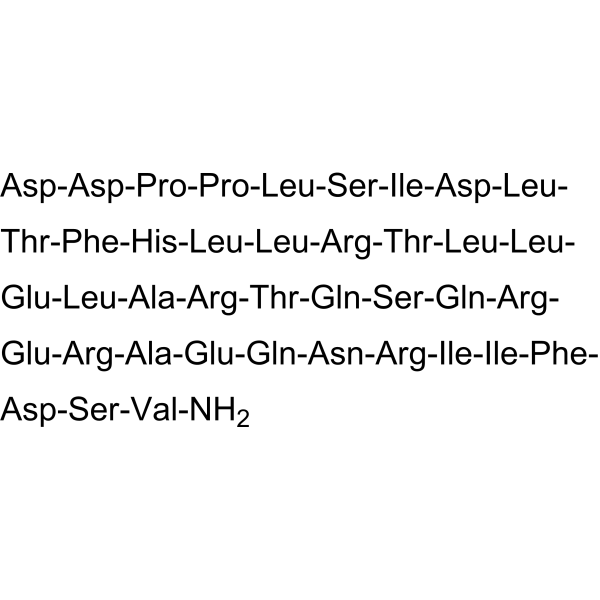
HY-P1295
Urocortin, humanCRF Receptor Agonist -
HY-P1296
Urocortin, ratCRFR Agonist -
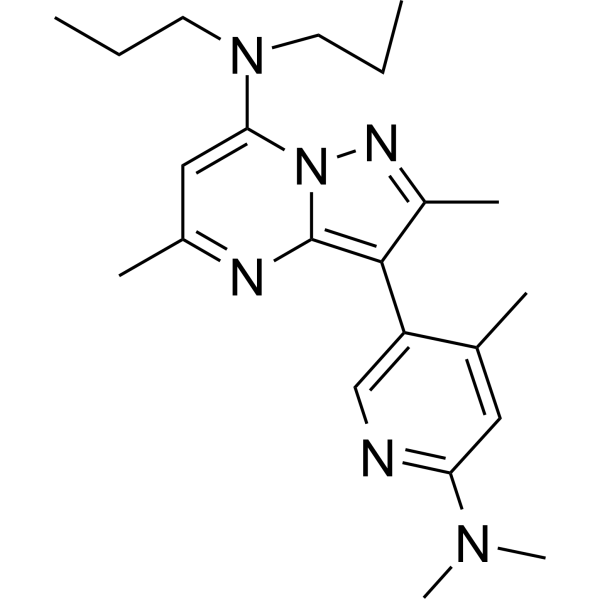
HY-14127
R121919CRF1 Receptor Antagonist -
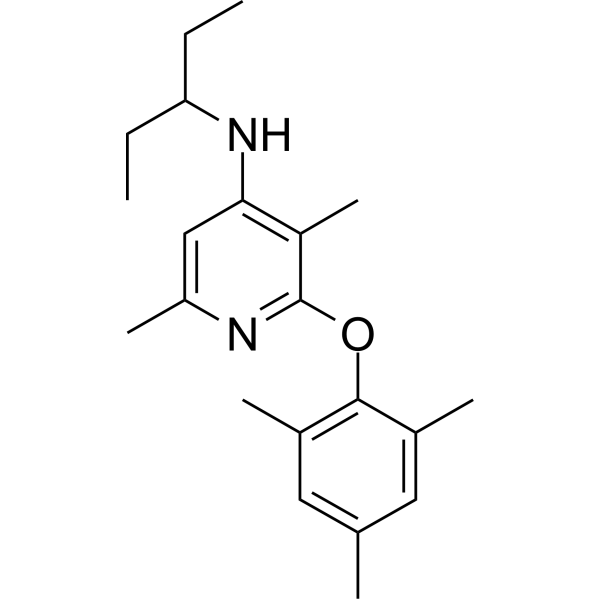
HY-14130
CP 376395CRF1 Receptor Antagonist -
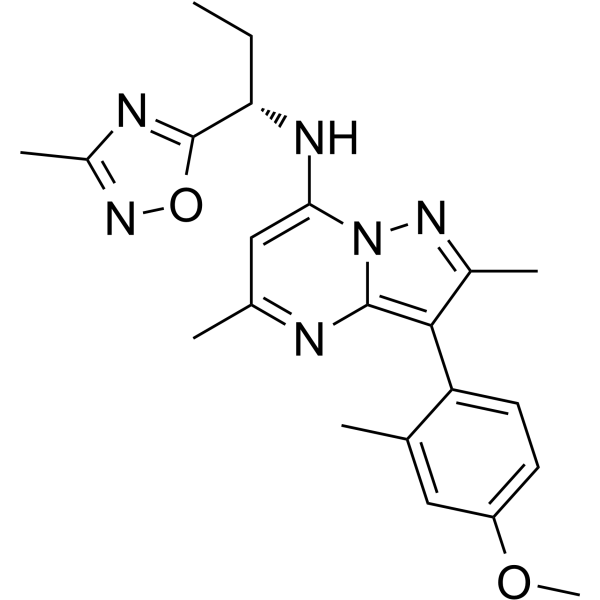
HY-14875
VerucerfontCRFR Antagonist -
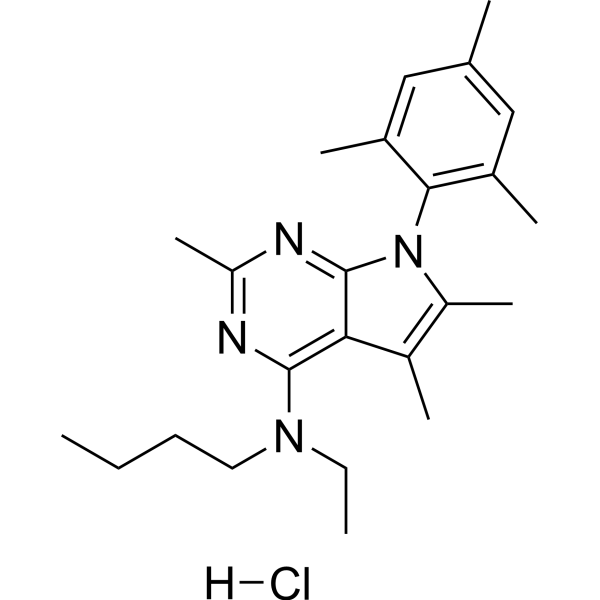
HY-103377
Antalarmin hydrochlorideCRHR1 Antagonist -
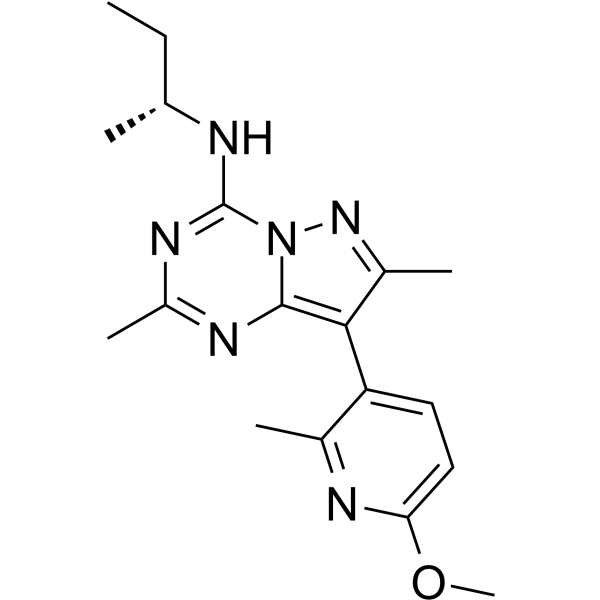
HY-12127
PexacerfontCRFR Antagonist -
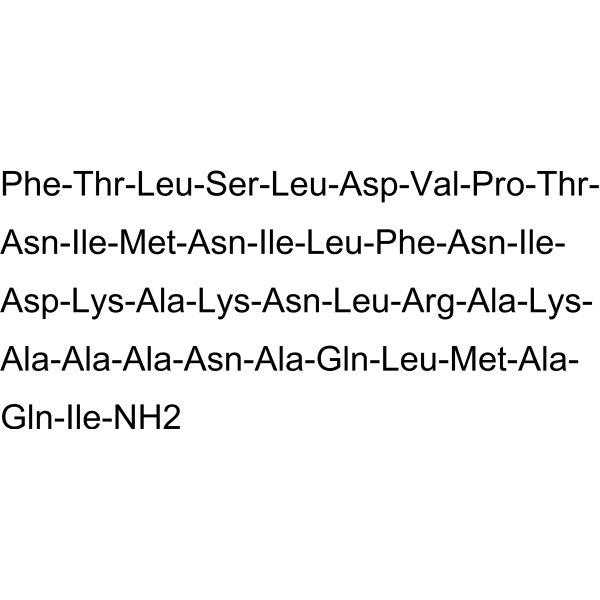
HY-P1858
Urocortin III, mouseCRFR Activator -

HY-P1542
Urotensin ICRF Receptor Agonist -

HY-12129
CP 154526 hydrochlorideCRF1 Antagonist -
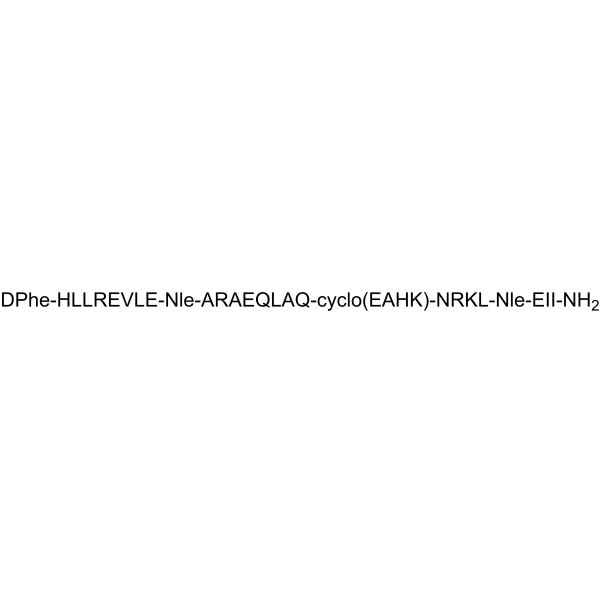
HY-P0257
AstressinCRF Antagonist -
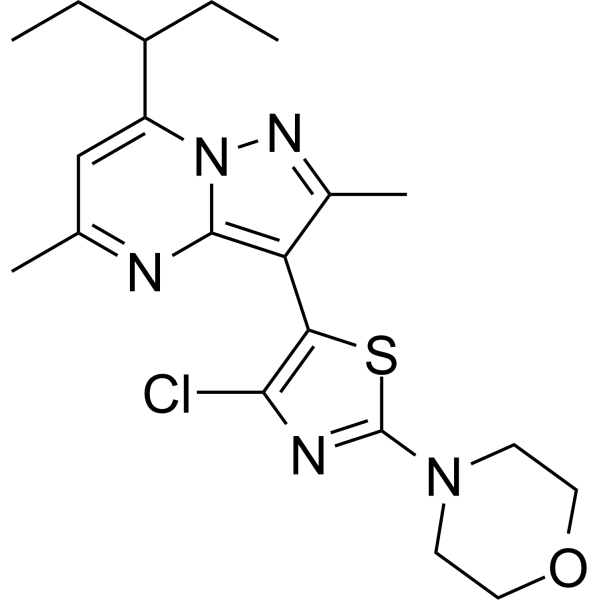
HY-113603
TildacerfontCRF1 Receptor Antagonist
Publications Citing Use of MedChemExpress (MCE) CRF, bovine
More

Biological Activity
Description
IC50 & Target
Ki: 3.52 nM (CRF receptor)[1]
In Vitro
CRF, bovine is a potent agonist of CRF receptor, and displaces [125I-Tyr]ovine CRF with a Ki of 3.52 nM[1]. CRF shows pEC50s of 11.16, 8.53 and 8.70 for human CRF1, human CRF2 and rat CRF2α[2]. CRF is released from hypothalamic-pituitary-adrenal (HPA) axis induced by stress, and leads to production of glucocorticoids which down regulate immune responses. CRF also has proinflammatory effects. CRF affects brain microvessel endothelial cells (BMEC) structure or function, CRF (100 nM) significantly increases cAMP in BMEC[3].
MedChemExpress (MCE) has not independently confirmed the accuracy of these methods. They are for reference only. .


Chemical Information
-
CAS No. 92307-52-3
-
Molecular Weight 4697.34
-
Formula C206H340N60O63S
-
Synonyms
Corticotropin Releasing Factor bovine
-
Sequence
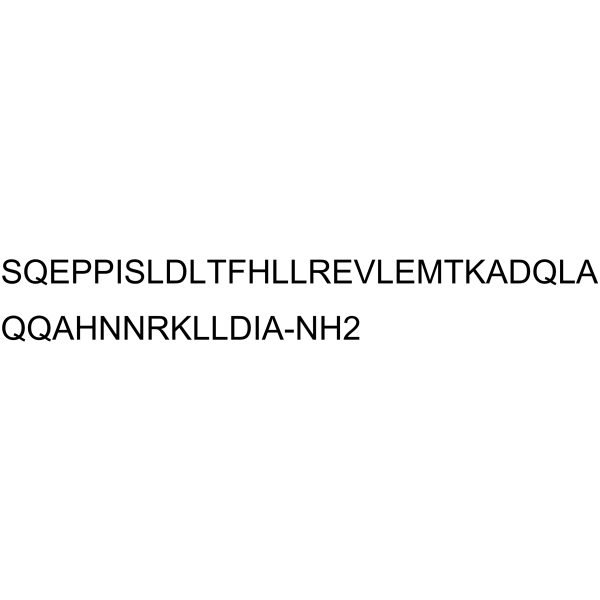
Ser-Gln-Glu-Pro-Pro-Ile-Ser-Leu-Asp-Leu-Thr-Phe-His-Leu-Leu-Arg-Glu-Val-Leu-Glu-Met-Thr-Lys-Ala-Asp-Gln-Leu-Ala-Gln-Gln-Ala-His-Asn-Asn-Arg-Lys-Leu-Leu-Asp-Ile-Ala-NH2
-
Sequence Shortening
SQEPPISLDLTFHLLREVLEMTKADQLAQQAHNNRKLLDIA-NH2
-
Shipping
Room temperature in continental US; may vary elsewhere.
-
Storage
Please store the product under the recommended conditions in the Certificate of Analysis.


Publications (2)
-
Journal Impact Factor
-
Most Recent
-
Sci Adv
Hyperexcitation of ovBNST CRF neurons during stress contributes to female-biased expression of anxiety-like avoidance behaviors. [Abstract]2024 May 10;10(19):eadk7636. PMID: 38728397 -
Pain
Mast cell corticotropin-releasing factor receptor 1 contributes to pancreatic cancer pain via mitogen-activated protein kinase/sphingosine kinases type 1 signaling. [Abstract]2026 Apr 1;167(4):962-975. PMID: 41615309


Purity & Documentation
References
[1]. Hogg JE, et al. The human neuroblastoma cell line, IMR-32, expresses functional corticotropin-releasing factor receptors. Eur J Pharmacol. 1996 Sep 26;312(2):257-61. [Content Brief]
[2]. Smart D, et al. Characterisation using microphysiometry of CRF receptor pharmacology. Eur J Pharmacol. 1999 Aug 27;379(2-3):229-35. [Content Brief]
[3]. Esposito P, et al. Corticotropin-releasing factor (CRF) can directly affect brain microvessel endothelial cells. Brain Res. 2003 Apr 11;968(2):192-8. [Content Brief]

Calculators
Concentration (start) × Volume (start) = Concentration (final) × Volume (final)


CRF, bovine Related Classifications
HY-P1533 Related Classifications
 Powered by Bioz