



CRFR1
CRFR1 (corticotropin-releasing factor receptor 1, CRHR1) is a class B G protein-coupled receptor that binds corticotropin-releasing hormone (CRH) and urocortin, serving as a central regulator of endocrine, autonomic, behavioral, and immune responses to stress[1][2]. Mechanistically, CRFR1 predominantly couples to Gs proteins, activates adenylyl cyclase, increases cAMP production, and engages downstream PKA, PKC, and MAPK signaling pathways that shape tissue-specific stress responses[1][3]. Within the hypothalamic-pituitary-adrenal (HPA) axis, CRFR1 signaling in pituitary corticotrophs promotes ACTH release and coordinates neuroendocrine adaptation to stress exposure[1][4]. In disease-relevant models, genetic deletion or pharmacological inhibition of CRFR1 reduces anxiety-like behavior and blunts stress reactivity, supporting its role in stress-related neuropsychiatric disorders[1][4][5]. CRFR1 also regulates neuronal excitability, fear learning, memory-related processes, and GABAergic transmission in limbic circuits that are frequently disrupted during chronic stress and alcohol dependence[1][5][6]. Compared with the related isoform CRFR2, CRFR1 displays broader forebrain and pituitary expression, higher functional involvement in stress initiation, and distinct ligand selectivity, whereas CRFR2 is more closely associated with stress recovery and peripheral regulation[1][7]. For experimental applications, selective CRFR1 antagonists, including antalarmin, CP-154,526, and DMP-696, are widely used to investigate stress signaling, anxiety phenotypes, and HPA-axis dysregulation in preclinical models[5][8].
References:
- [1]. Hauger RL, et al. International Union of Pharmacology. XXXVI. Current status of the nomenclature for receptors for corticotropin-releasing factor and their ligands. Pharmacol Rev. 2003 Mar;55(1):21-6. [Content Brief]
- [2]. Chen R, et al. Expression cloning of a human corticotropin-releasing-factor receptor. Proc Natl Acad Sci U S A. 1993 Oct 1;90(19):8967-71. [Content Brief]
- [3]. Hillhouse EW, et al. The molecular mechanisms underlying the regulation of the biological activity of corticotropin-releasing hormone receptors: implications for physiology and pathophysiology. Endocr Rev. 2006 May;27(3):260-86. [Content Brief]
- [4]. Kiros M, et al. Trends in HIV-1 pretreatment drug resistance and HIV-1 variant dynamics among antiretroviral therapy-naive Ethiopians from 2003 to 2018: a pooled sequence analysis. Virol J. 2023 Oct 25;20(1):243. [Content Brief]
- [5]. Koob GF, et al. Update on corticotropin-releasing factor pharmacotherapy for psychiatric disorders: a revisionist view. Neuropsychopharmacology. 2012 Jan;37(1):308-9. [Content Brief]
- [6]. Nie Z, et al. Ethanol augments GABAergic transmission in the central amygdala via CRF1 receptors. Science. 2004 Mar 5;303(5663):1512-4. [Content Brief]
- [7]. Piao G, et al. Ion-Enhanced Conversion of CO2 into Formate on Porous Dendritic Bismuth Electrodes with High Efficiency and Durability. ChemSusChem. 2020 Feb 21;13(4):698-706. [Content Brief]
- [8]. Rabezanahary H, et al. Live virus neutralizing antibodies against pre and post Omicron strains in food and retail workers in Québec, Canada. Heliyon. 2024 May 21;10(10):e31026. [Content Brief]
-
CRFR1 Related Products (18)
Related Products (18)

- 1
-
R121919
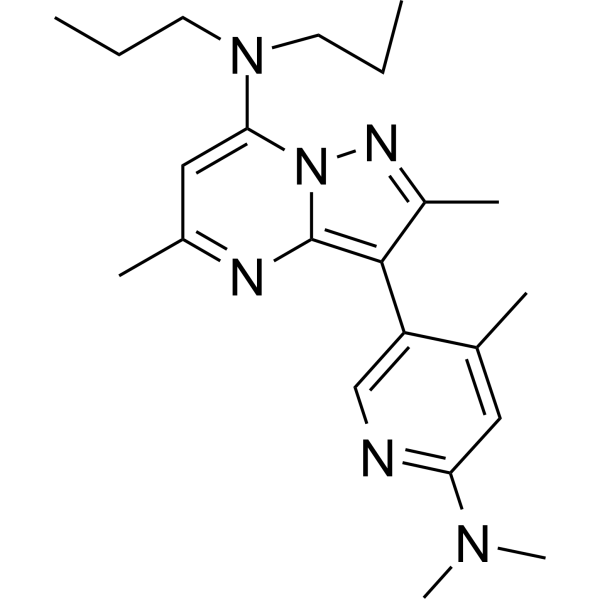 0 ImagesSynonyms: NBI30775R121919 (NBI30775) is a potent and selective CRF1R antagonist with a Ki of 2 to 5 nM. R121919 has antidepressant and anxiolytic effects. R121919 alleviates defensive withdrawal in rats.
-
Urocortin II, mouse
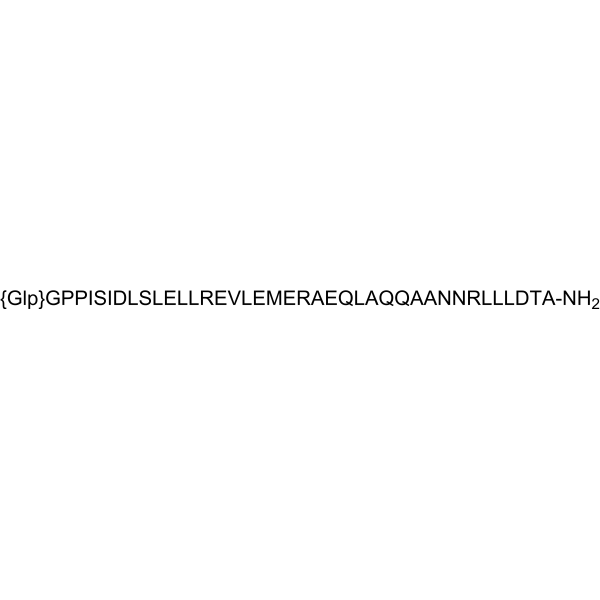
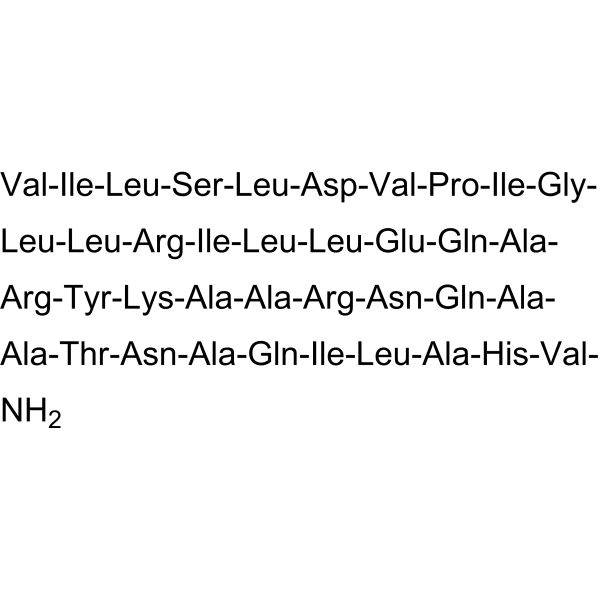 0 ImagesUrocortin II, mouse is a potent and selective endogenous peptide agonist of type-2 corticotropin-releasing factor (CRF2) receptor with Ki values of 0.66 nM and ﹥100 nM for CRFR2 and CRFR1, respectively. Urocortin II, mouse activates CRF2 receptors in a cAMP/PKA- and Ca2+/CaMKII-dependent manner.Urocortin II, mouse is expressed in discrete areas of the central nervous system, and activates central neurons involved in the processing of visceral sensory information, and in modulating autonomic outflow.
-
CP 376395
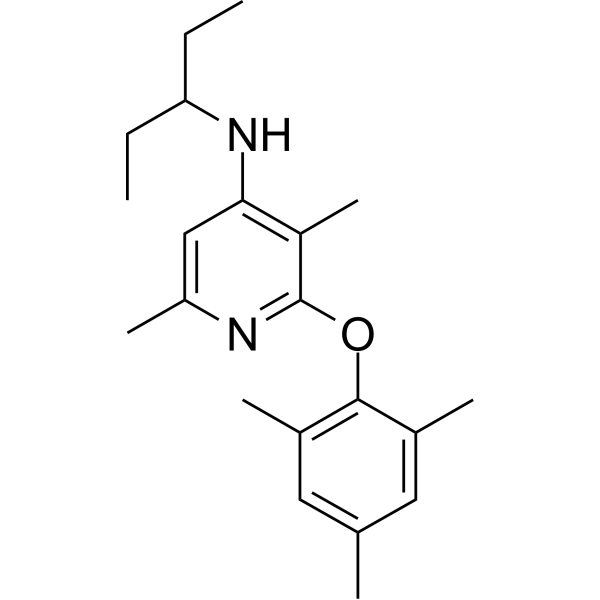 0 ImagesCP 376395 is a potent, selective, and brain-penetrable Corticotropin releasing factor 1 (CRF1) receptor antagonist.
-
Verucerfont
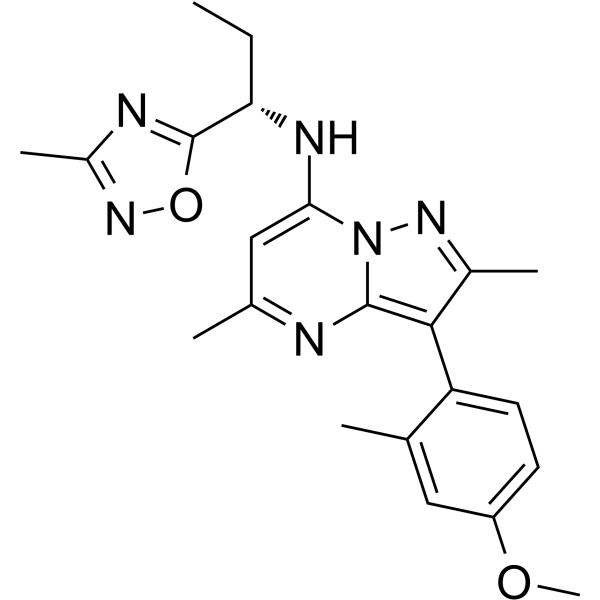 0 ImagesSynonyms: GSK561679Verucerfont is a corticotropin-releasing factor receptor 1 (CRF1) antagonist with IC50s of ~6.1, >1000 and >1000?nM for CRF1, CRF2, and CRF-BP, respectively.
-
CRF1 receptor antagonist-2
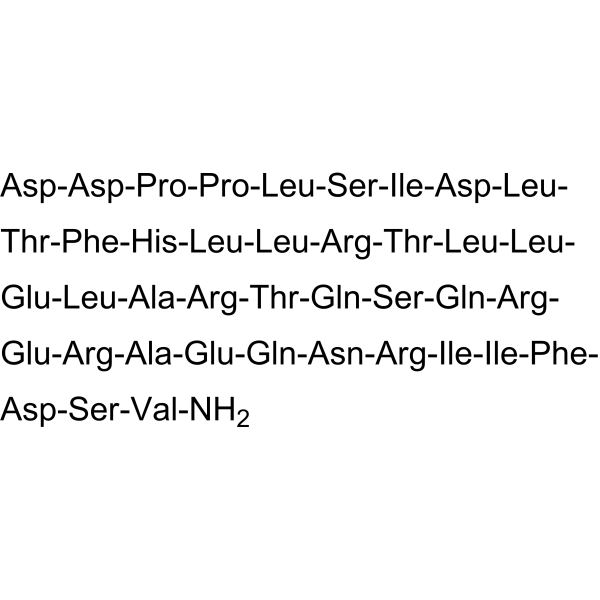
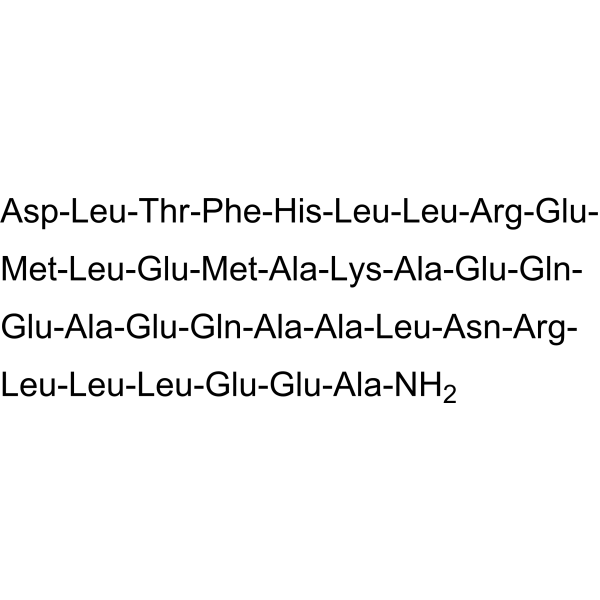
 0 ImagesCat. No.: HY-182645CAS No.: 441060-02-2CRF1 receptor antagonist-2 is an orally active, blood-brain barrier permeable CRF1 receptor antagonist, with an IC50 of 4 nM in CHO-K1 cell membranes and an IC50 of 7 nM in rat brain cell membranes. CRF1 receptor antagonist-2 exerts anxiolytic effects in swim stress-loaded rats. CRF1 receptor antagonist-2 can be used in studies related to stress-induced anxiety.
-
Tildacerfont
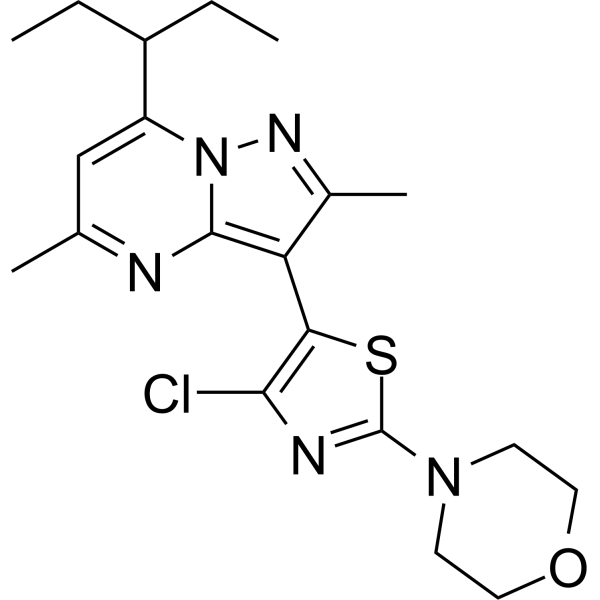 0 ImagesSynonyms: SPR001; LY2371712Tildacerfont (SPR001; LY2371712) is an orally active, blood-brain barrier-penetrant selective corticotropin-releasing factor type 1 (CRF1) receptor antagonist. Tildacerfont selectively blocks CRF1 receptors, thereby inhibiting the release of pituitary adrenocorticotropic hormone (ACTH). Tildacerfont can be used in research related to congenital adrenal hyperplasia.
-
NBI-27914 hydrochloride
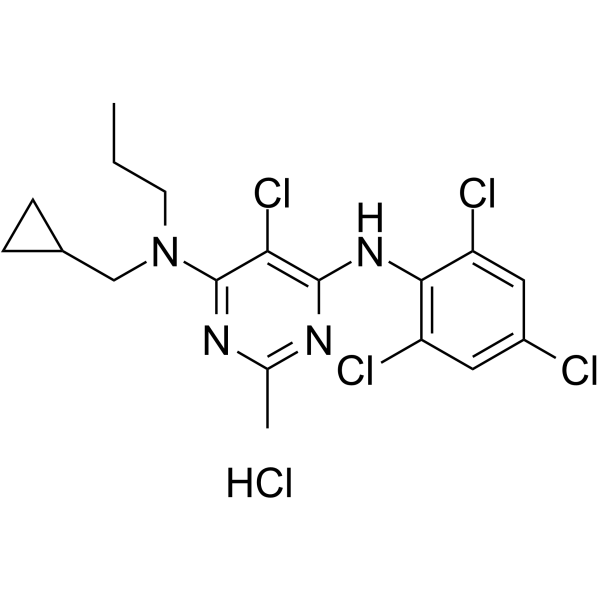 0 ImagesCat. No.: HY-103376CAS No.: 1215766-76-9NBI-27914 (hydrochloride) is a selective Corticotropin-Releasing Factor 1 (CRF1) receptor antagonist with a Ki value of 1.7 nM.
-
NBI 35965 methanesulfonate
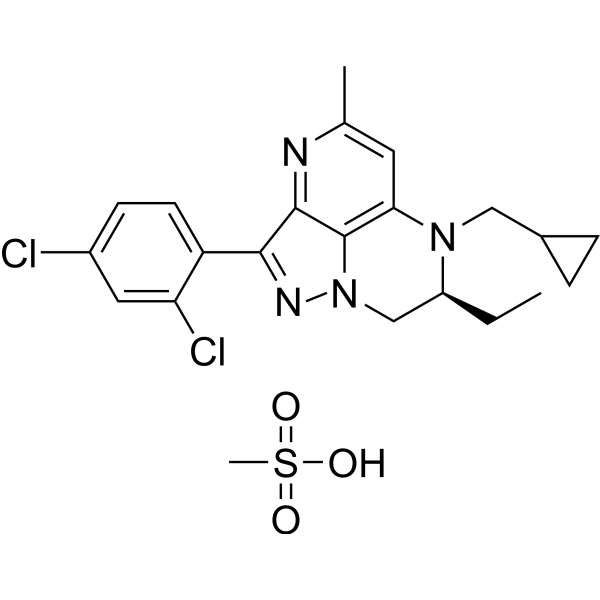 0 ImagesCat. No.: HY-103378CAS No.: 603151-83-3NBI 35965 methanesulfonate is a selective, orally active and brain-penetrant corticotropin-releasing factor receptor 1 (CRF1) antagonist with a Ki value of 4 nM and a pKi value of 8.5. NBI 35965 methanesulfonate does not inhibit CRF2. NBI 35965 methanesulfonate reduces CRF or stress-induced adrenocorticotropic hormone (ACTH) production in vivo with pIC50 values of 7.1 and 6.9, respectively. NBI 35965 methanesulfonate shows anxiolytic effects.
-
R121919 hydrochloride
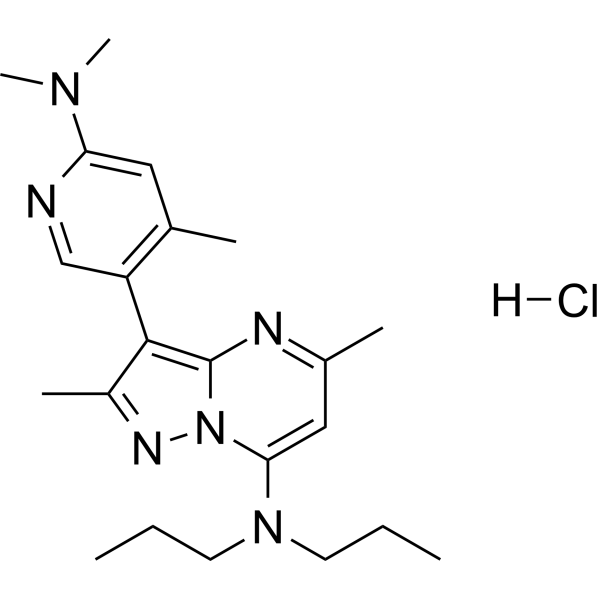 0 ImagesCat. No.: HY-115645CAS No.: 195055-66-4Synonyms: NBI30775 hydrochlorideR121919 (NBI30775) hydrochloride is a potent and selective CRF1R antagonist with a Ki of 2 to 5 nM. R121919 hydrochloride has antidepressant and anxiolytic effects. R121919 hydrochloride alleviates defensive withdrawal in rats.
-
CP 376395 hydrochloride
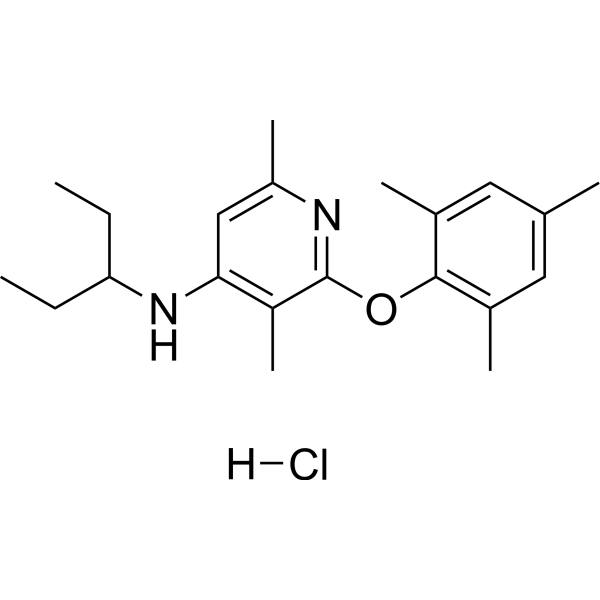 0 ImagesCat. No.: HY-103379CAS No.: 1013933-37-3CP 376395 hydrochloride is a potent, selective, and brain-penetrable Corticotropin releasing factor 1 (CRF1) receptor antagonist.
-
NBI 35965 hydrochloride
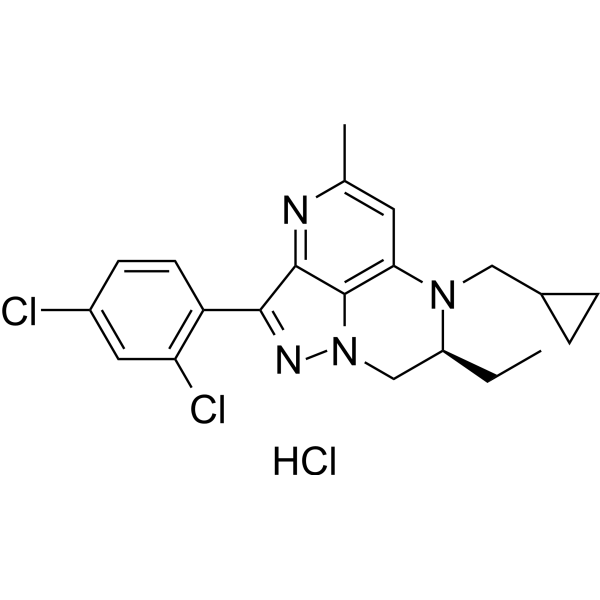 0 ImagesCat. No.: HY-110056CAS No.: 1782228-59-4NBI 35965 hydrochloride is a selective, orally active and brain-penetrant corticotropin-releasing factor receptor 1 (CRF1) antagonist with a Ki value of 4 nM and a pKi value of 8.5. NBI 35965 hydrochloride does not inhibit CRF2. NBI 35965 hydrochloride reduces CRF or stress-induced adrenocorticotropic hormone (ACTH) production in vivo with pIC50 values of 7.1 and 6.9, respectively. NBI 35965 hydrochloride shows anxiolytic effects.
-
(Tyr0)-Urocortin, rat
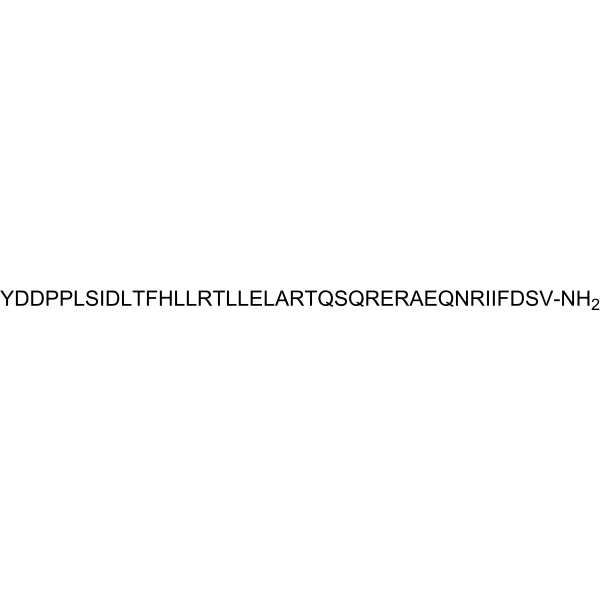 0 ImagesCat. No.: HY-P3959CAS No.: 187111-93-9(Tyr0)-Urocortin, rat is a high-affinity agonist of corticotropin-releasing factor receptor type 1 (CRF-R1) and type 2 (CRF-R2). (Tyr0)-Urocortin, rat shows inhibitory binding constants (Ki) of 1-2 nM.
-
CP 316311
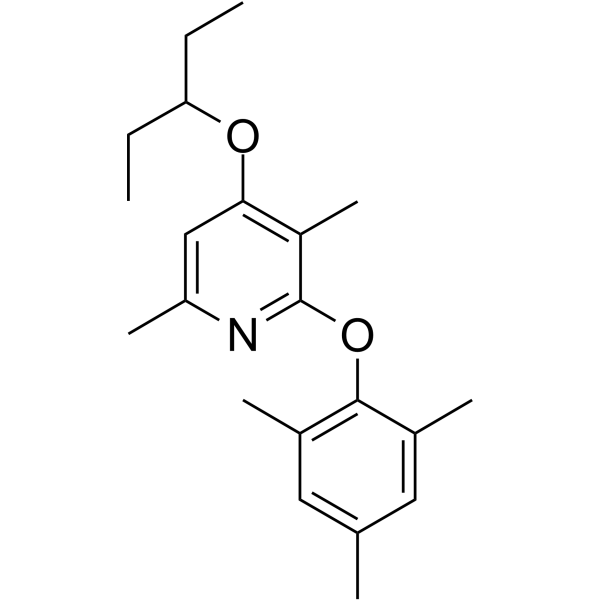 0 ImagesCat. No.: HY-14129CAS No.: 175139-41-0CP 316311 is a potent and selective CRF1 receptor antagonist with an IC50 value of 6.8 nM.
-
NBI-34041
 0 ImagesCat. No.: HY-14128CAS No.: 268545-87-5Synonyms: SB-723620NBI-34041 (SB-723620) is a selective and orally active nonpeptide CRF1 receptor antagonist with an IC50 of 58.9 nM and a Ki of 4.0 nM for human CRF1 receptor. NBI-34041 has no inhibitory effect on the CRF2 receptor. NBI-34041 can be used for depression and anxiety disorders research.
-
NBI-35965
 0 ImagesCat. No.: HY-162872CAS No.: 268546-19-6NBI-35965 is an antagonist of corticotropin-releasing factor receptor 1 (CRF-R1). NBI-35965 can be used in nervous system related research.
- 1



