



CRFR2
CRFR2 (corticotropin-releasing factor receptor 2, CRHR2) is a class B G protein-coupled receptor that mediates adaptive responses to physiological and psychological stress through selective interactions with the urocortin peptide family[1][2]. Mechanistically, CRFR2 regulates stress-recovery signaling, autonomic function, emotional processing, and neuroendocrine homeostasis through downstream G protein-dependent pathways that influence CREB phosphorylation and cellular stress responses[3][4]. In experimental models, genetic deletion of Crhr2 produces enhanced anxiety-like behavior, stress hypersensitivity, and impaired adaptation to environmental challenges, establishing CRFR2 as a key regulator of stress resilience rather than stress initiation[3][4][5]. Compared with the closely related isoform CRFR1, which predominantly promotes anxiogenic and hypothalamic-pituitary-adrenal axis activation, CRFR2 exerts counter-regulatory functions that facilitate recovery from stress exposure and restoration of homeostasis[2][3][5]. The receptor also displays distinct isoform diversity, including CRFR2α, CRFR2β, and CRFR2γ, which differ in N-terminal structure, tissue distribution, and ligand responsiveness, providing additional regulatory specificity for experimental studies of receptor signaling[6][7]. For research applications, the endogenous agonists urocortin II and urocortin III exhibit high selectivity for CRFR2 and are widely used to investigate receptor-dependent stress, cardiovascular, metabolic, and behavioral pathways in vivo and in vitro[1][2].
References:
- [1]. Vuppaladhadiam L, et al. Corticotropin-Releasing Factor Family: A Stress Hormone-Receptor System's Emerging Role in Mediating Sex-Specific Signaling. Cells. 2020 Mar 31;9(4):839. [Content Brief]
- [2]. Database: Guide to pharmacology.
- [3]. Kishimoto T, et al. Deletion of crhr2 reveals an anxiolytic role for corticotropin-releasing hormone receptor-2. Nat Genet. 2000 Apr;24(4):415-9. [Content Brief]
- [4]. Bale TL, et al. Mice deficient for corticotropin-releasing hormone receptor-2 display anxiety-like behaviour and are hypersensitive to stress. Nat Genet. 2000 Apr;24(4):410-4. [Content Brief]
- [5]. Bale TL, et al. Mice deficient for both corticotropin-releasing factor receptor 1 (CRFR1) and CRFR2 have an impaired stress response and display sexually dichotomous anxiety-like behavior. J Neurosci. 2002 Jan 1;22(1):193-9. [Content Brief]
- [6]. Uniprotkb.
- [7]. Sztainberg Y, et al. A novel corticotropin-releasing factor receptor splice variant exhibits dominant negative activity: a putative link to stress-induced heart disease. FASEB J. 2009 Jul;23(7):2186-96. [Content Brief]
-
CRFR2 Related Products (15)
Related Products (15)

- 1
-
Urocortin II, human
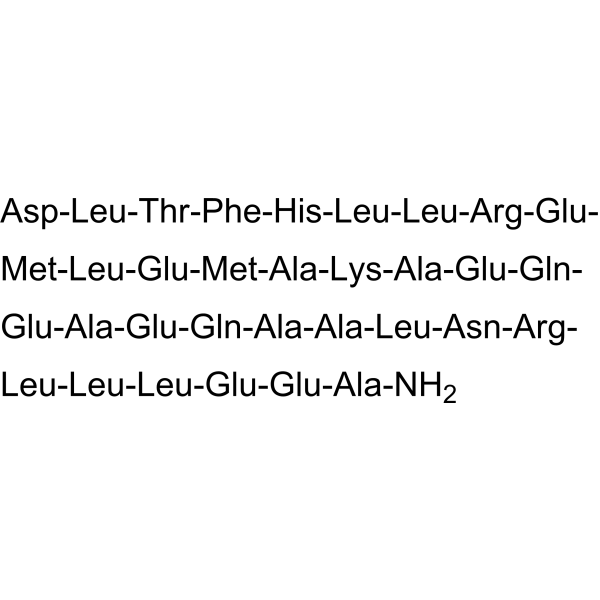
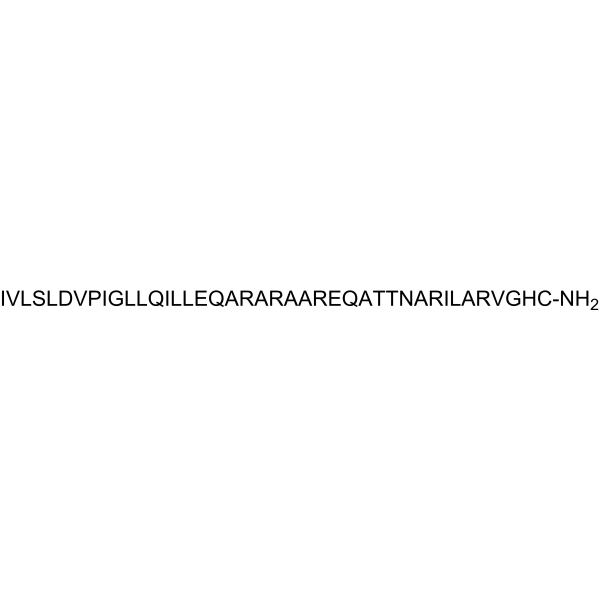 0 ImagesUrocortin II, human is a selective endogenous peptide agonist of type-2 corticotropin-releasing factor (CRF2) receptor. Urocortin II, human has an effect of promoting satiet and neuroprotective effect. Urocortin II, human also has bactericidal, antiparasitic and pro-inflammation activity. Urocortin II, human can activate NF-κB pathway and ERK1/2 MAP kinase. Urocortin II, human can reduce pulmonary arterial hypertension and shows cardiac protection effect. Urocortin II, human can be used for the researches of infection, inflammation, metabolic, neurological and cardiovascular disease.
-
Urocortin II, mouse
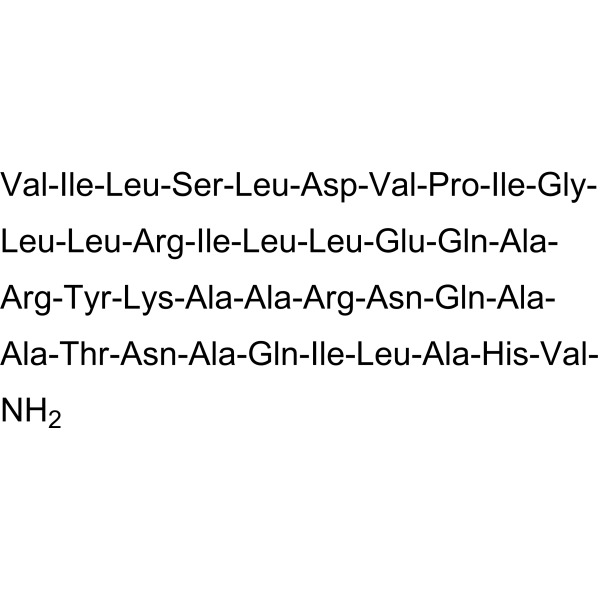 0 ImagesUrocortin II, mouse is a potent and selective endogenous peptide agonist of type-2 corticotropin-releasing factor (CRF2) receptor with Ki values of 0.66 nM and ﹥100 nM for CRFR2 and CRFR1, respectively. Urocortin II, mouse activates CRF2 receptors in a cAMP/PKA- and Ca2+/CaMKII-dependent manner.Urocortin II, mouse is expressed in discrete areas of the central nervous system, and activates central neurons involved in the processing of visceral sensory information, and in modulating autonomic outflow.
-
Astressin 2B TFA
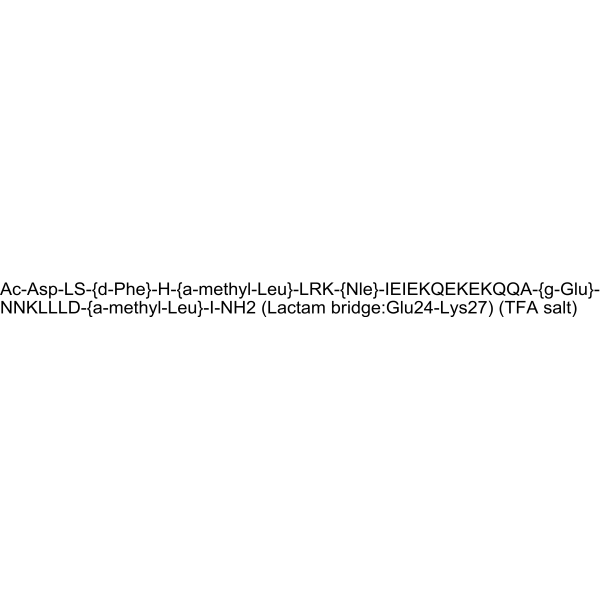 0 ImagesCat. No.: HY-P1108APurity: 99.75%Astressin 2B TFA is a blood-brain barrier-impermeable, highly selective CRFR2 antagonist (rCRFR2, IC50=0.57 nM). Astressin 2B TFA blocks the protective effects mediated by CRFR2, thereby exacerbating indomethacin (HY-14397)-induced hemorrhagic intestinal injury in rats. Astressin 2B TFA reverses the protective effects of Urocortin 1 against intestinal hypermotility, bacterial invasion and upregulation of inflammatory mediators. Astressin 2B TFA also blocks the anxiogenic effect of Urocortin 2 and attenuates stress-induced anxiety-related behaviors. In the Clostridioides difficile toxin A (C. difficile toxin A)-mediated enteritis model, Astressin 2B TFA mimics the phenotype of CRFR2-deficient mice, significantly exacerbating intestinal epithelial damage, edema, neutrophil migration and the expression of multiple proinflammatory cytokines. Astressin 2B TFA is an important tool molecule for investigating the intestinal protective mechanisms of CRFR2.
-
Astressin 2B
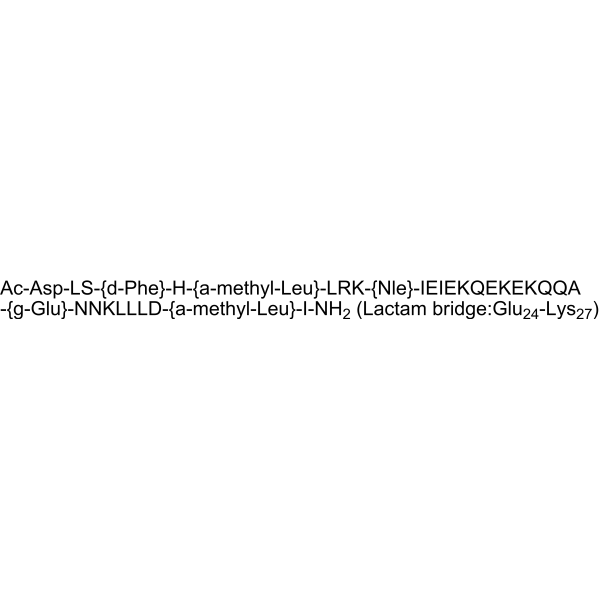 0 ImagesCat. No.: HY-P1108CAS No.: 681260-70-8Astressin 2B is a blood-brain barrier-impermeable, highly selective CRFR2 antagonist (rCRFR2, IC50=0.57 nM). Astressin 2B blocks the protective effects mediated by CRFR2, thereby exacerbating indomethacin (HY-14397)-induced hemorrhagic intestinal injury in rats. Astressin 2B reverses the protective effects of Urocortin 1 against intestinal hypermotility, bacterial invasion and upregulation of inflammatory mediators. Astressin 2B also blocks the anxiogenic effect of Urocortin 2 and attenuates stress-induced anxiety-related behaviors. In the Clostridioides difficile toxin A (C. difficile toxin A)-mediated enteritis model, Astressin 2B mimics the phenotype of CRFR2-deficient mice, significantly exacerbating intestinal epithelial damage, edema, neutrophil migration and the expression of multiple proinflammatory cytokines. Astressin 2B is an important tool molecule for investigating the intestinal protective mechanisms of CRFR2.
-
CP 376395
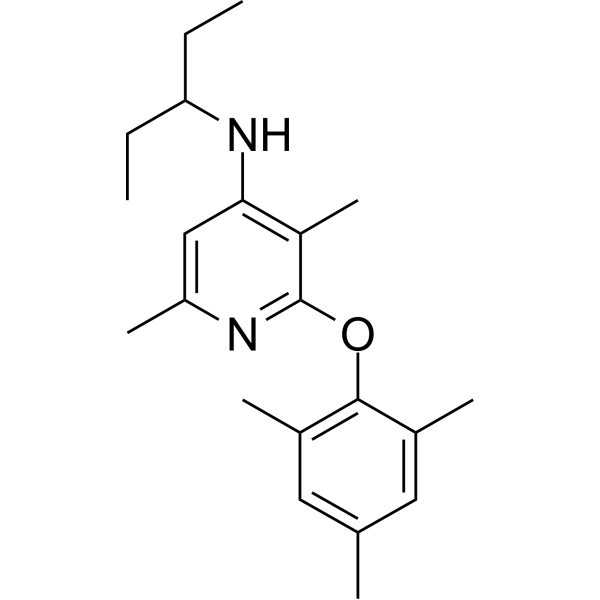 0 ImagesCP 376395 is a potent, selective, and brain-penetrable Corticotropin releasing factor 1 (CRF1) receptor antagonist.
-
Antisauvagine-30
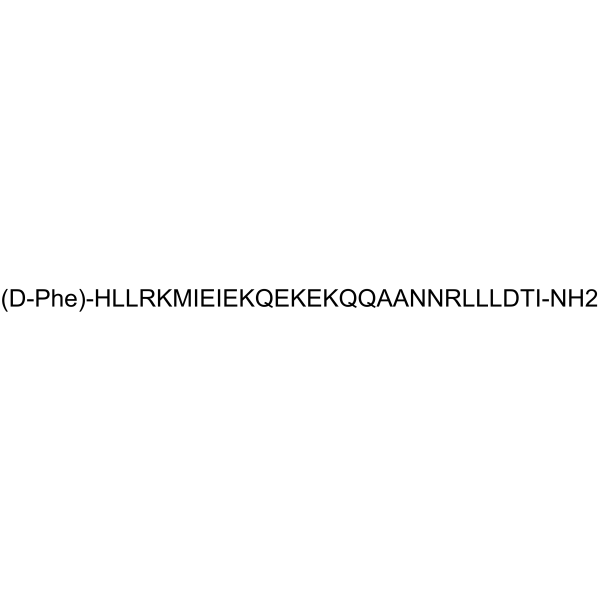 0 ImagesSynonyms: aSvg-30Antisauvagine-30 (aSvg-30) is a selective peptide antagonist of the CRF2 receptor, with an IC50 of 1.1 nM for mouse CRF2. Antisauvagine-30 modulates cAMP signaling, gastric emptying, food intake, fear conditioning, anxiety-like behavior, stress responses, corticosterone levels, c-Fos expression, and CRF expression. Antisauvagine-30 is used in studies of anxiety-related disorders.
-
Antisauvagine-30 TFA
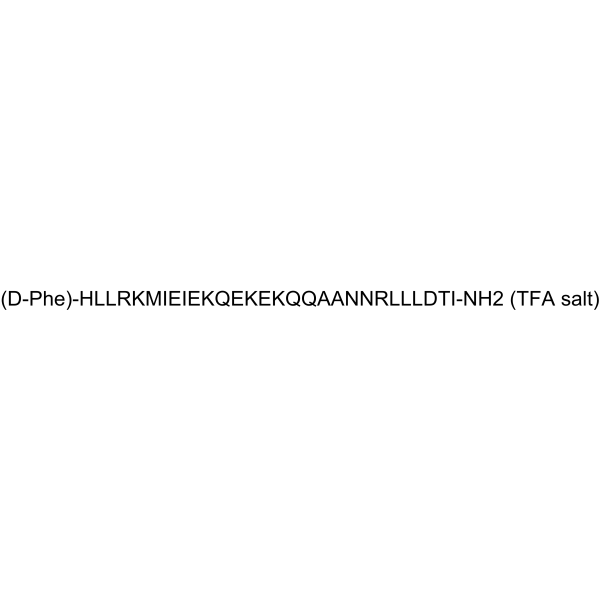 0 ImagesCat. No.: HY-P1107APurity: 99.64%Synonyms: aSvg-30 TFAAntisauvagine-30 TFA (aSvg-30 TFA) is a selective peptide antagonist of the CRF2 receptor, with an IC50 of 1.1 nM for mouse CRF2. Antisauvagine-30 TFA modulates cAMP signaling, gastric emptying, food intake, fear conditioning, anxiety-like behavior, stress responses, corticosterone levels, c-Fos expression, and CRF expression. Antisauvagine-30 TFA is used in studies of anxiety-related disorders.
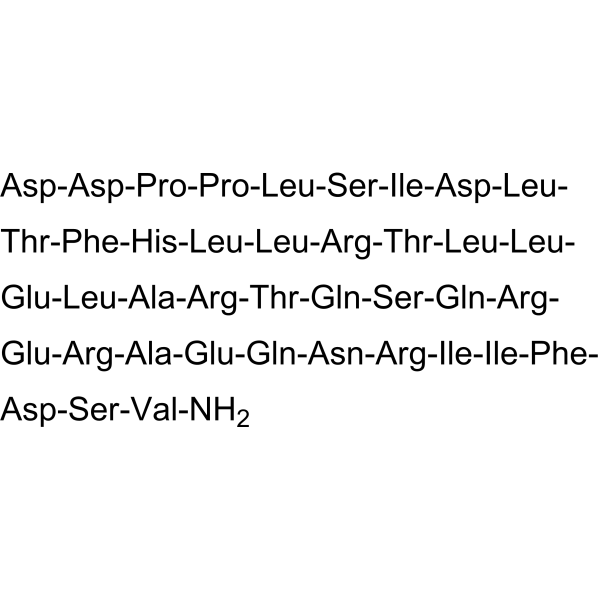
-
Urocortin II, human acetate
 0 ImagesCat. No.: HY-P1752BPurity: 99.50%Urocortin II, human acetate is a selective endogenous peptide agonist of type-2 corticotropin-releasing factor (CRF2) receptor. Urocortin II, human acetate has an effect of promoting satiet and neuroprotective effect. Urocortin II, human acetate also has bactericidal, antiparasitic and pro-inflammation activity. Urocortin II, human acetate can activate NF-κB pathway and ERK1/2 MAP kinase. Urocortin II, human acetate can reduce pulmonary arterial hypertension and shows cardiac protection effect. Urocortin II, human acetate can be used for the researches of infection, inflammation, metabolic, neurological and cardiovascular disease.
-
K41498
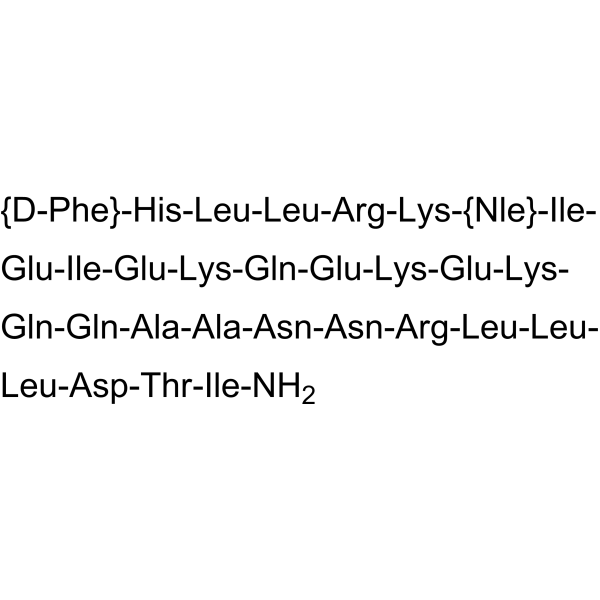 0 ImagesK41498 is a highly selective CRF 2 receptor antagonist, with a Ki of 0.66 nM for human CRF2α receptor and a Ki of 0.62 nM for human CRF2β receptor. K41498 inhibits cAMP accumulation in cells expressing CRF2. K41498 antagonizes the hypotensive response induced by systemic administration of urocortin in conscious rats. K41498 undergoes radioiodination without loss of activity and serves for autoradiographic studies of native CRF2 receptors in rat brain and peripheral tissues.
-
CP 376395 hydrochloride
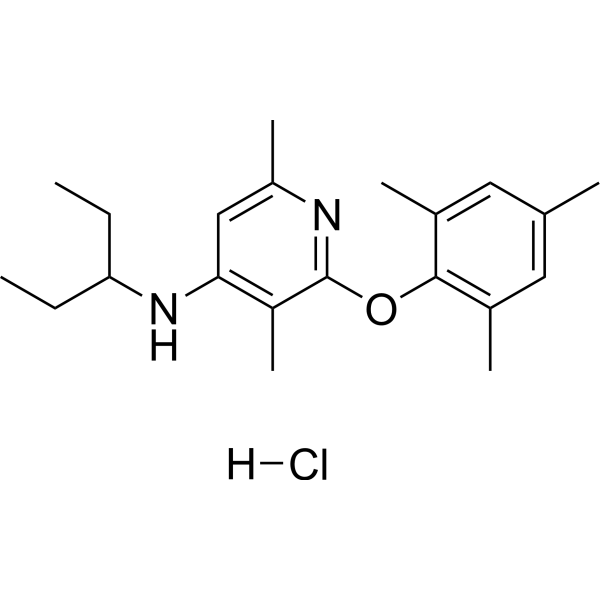 0 ImagesCat. No.: HY-103379CAS No.: 1013933-37-3CP 376395 hydrochloride is a potent, selective, and brain-penetrable Corticotropin releasing factor 1 (CRF1) receptor antagonist.
-
Urocortin II, human TFA
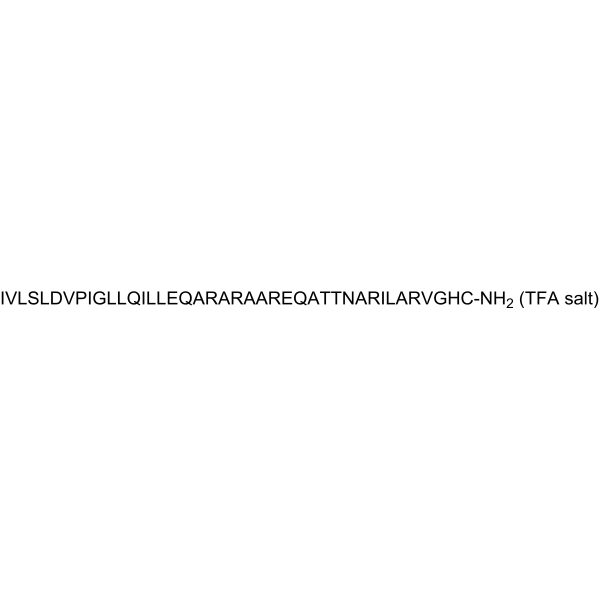 0 ImagesCat. No.: HY-P1752AUrocortin II, human TFA is a selective endogenous peptide agonist of type-2 corticotropin-releasing factor (CRF2) receptor. Urocortin II, human TFA has an effect of promoting satiet and neuroprotective effect. Urocortin II, human TFA also has bactericidal, antiparasitic and pro-inflammation activity. Urocortin II, human TFA can activate NF-κB pathway and ERK1/2 MAP kinase. Urocortin II, human TFA can reduce pulmonary arterial hypertension and shows cardiac protection effect. Urocortin II, human TFA can be used for the researches of infection, inflammation, metabolic, neurological and cardiovascular disease.
-
(Tyr0)-Urocortin, rat
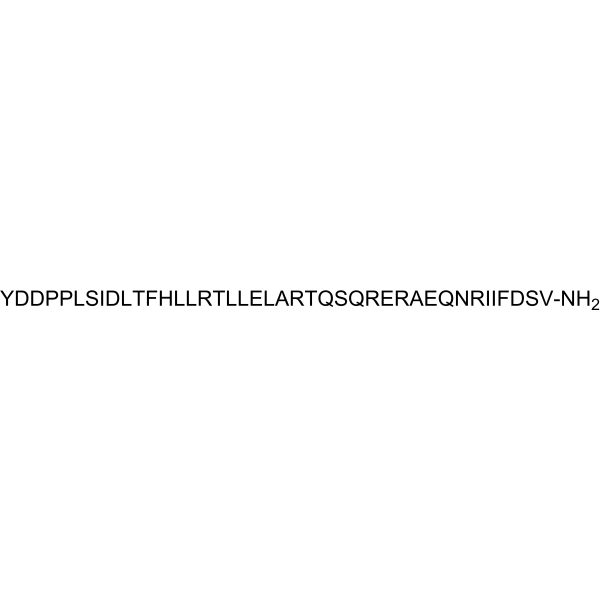 0 ImagesCat. No.: HY-P3959CAS No.: 187111-93-9(Tyr0)-Urocortin, rat is a high-affinity agonist of corticotropin-releasing factor receptor type 1 (CRF-R1) and type 2 (CRF-R2). (Tyr0)-Urocortin, rat shows inhibitory binding constants (Ki) of 1-2 nM.
-
NBI-34041
 0 ImagesCat. No.: HY-14128CAS No.: 268545-87-5Synonyms: SB-723620NBI-34041 (SB-723620) is a selective and orally active nonpeptide CRF1 receptor antagonist with an IC50 of 58.9 nM and a Ki of 4.0 nM for human CRF1 receptor. NBI-34041 has no inhibitory effect on the CRF2 receptor. NBI-34041 can be used for depression and anxiety disorders research.
- 1



