



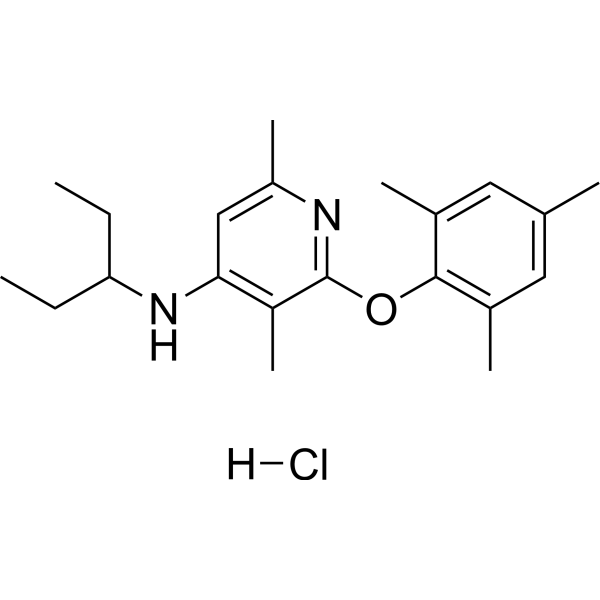
CP 376395 hydrochloride
CP 376395 hydrochloride is a potent, selective, and brain-penetrable Corticotropin releasing factor 1 (CRF1) receptor antagonist.
For research use only. We do not sell to patients.
- CAS No.: 1013933-37-3
- Formula: C21H31ClN2O
- Molecular Weight:362.94
-
Storage:
Please store the product under the recommended conditions in the Certificate of Analysis.

To place orders, for customer services and technical support, please contact: MedChemExpress USA
Tel: 609-228-6898 E-mail: [email protected] [email protected]


-
 Biological Activity
-
Chemical Information
- Purity & Documentation
- References
-
 Help & FAQs


-
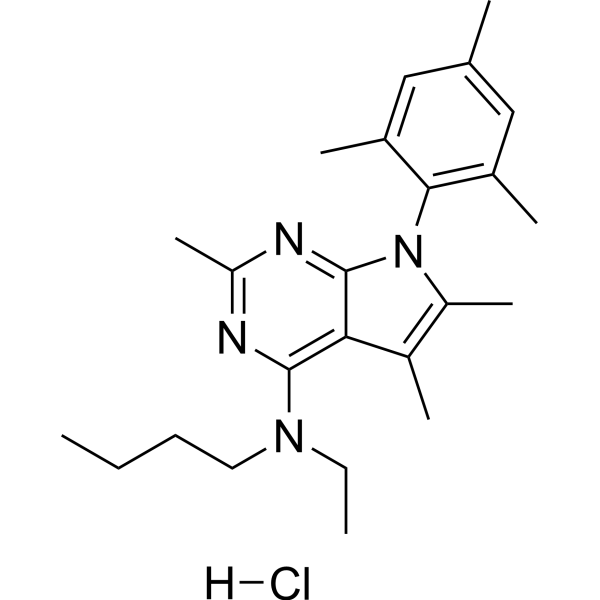
HY-103377
Antalarmin hydrochlorideCRHR1 Antagonist -

HY-12129
CP 154526 hydrochlorideCRF1 Antagonist -
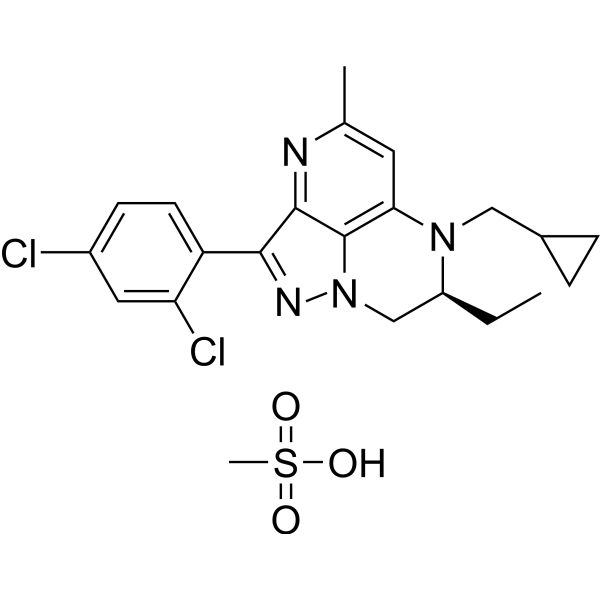
HY-103378
NBI 35965 methanesulfonateCRF1 Antagonist -

HY-P1295
Urocortin, humanCRF Receptor Agonist -

HY-103377R
Antalarmin hydrochloride (Standard)CRHR1 Antagonist -
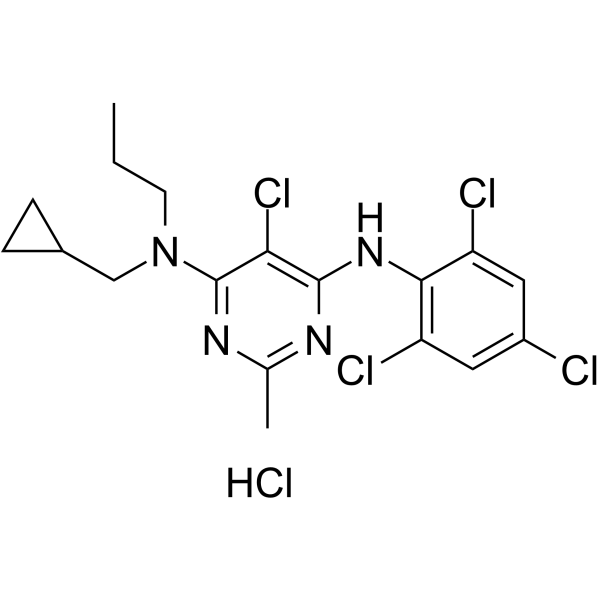
HY-103376
NBI-27914 hydrochlorideCRF1 Receptor Antagonist -
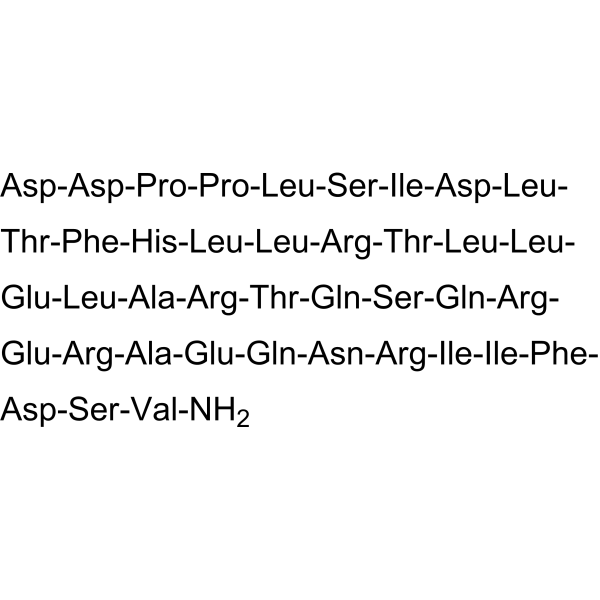
HY-P1296
Urocortin, ratCRFR Agonist -
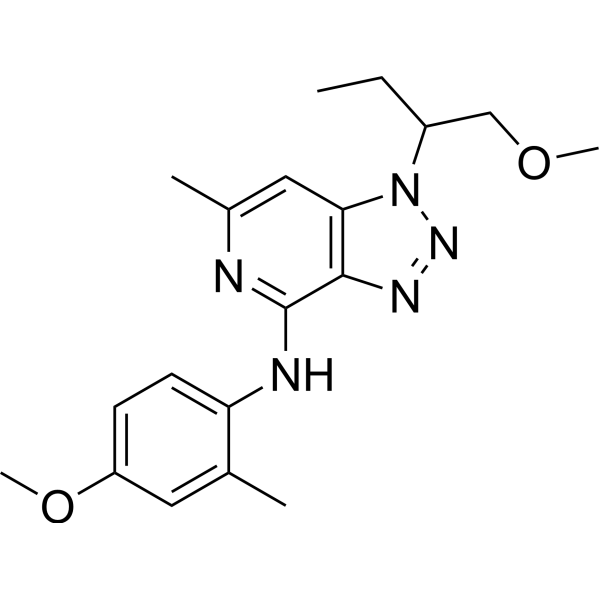
HY-103375
SN003CRFR Reversible Antagonist -
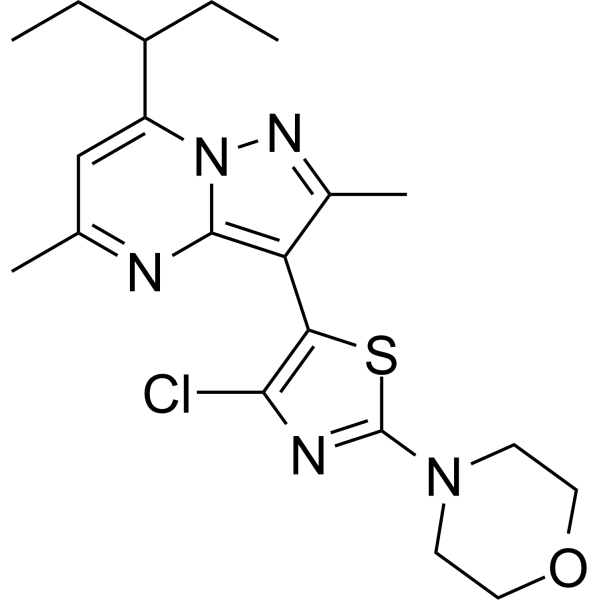
HY-113603
TildacerfontCRF1 Receptor Antagonist -
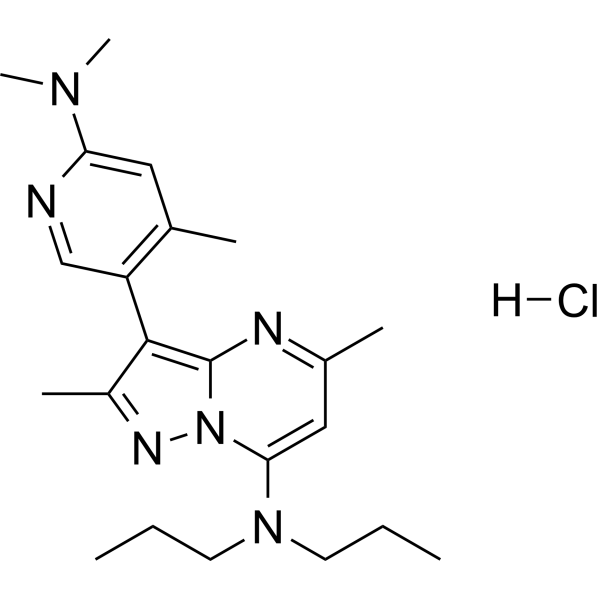
HY-115645
R121919 hydrochlorideCRF1R Antagonist -
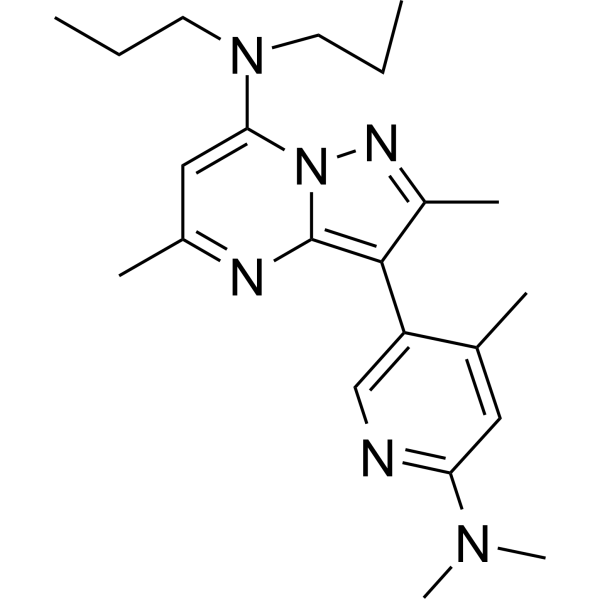
HY-14127
R121919CRF1 Receptor Antagonist -
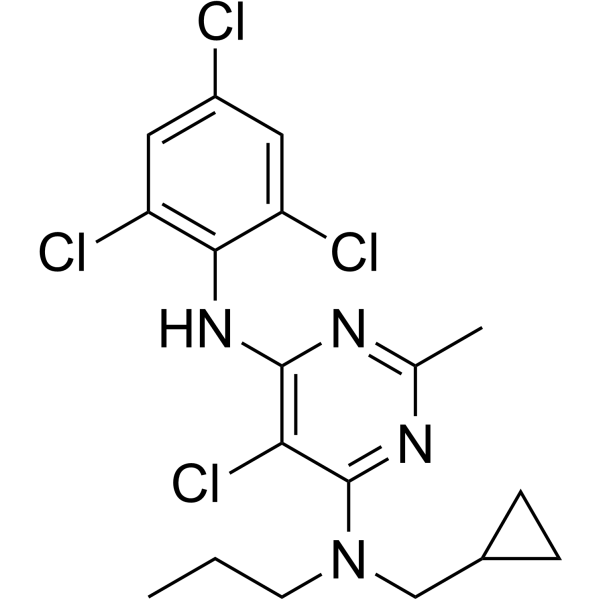
HY-135542
NBI-27914CRFR1 Antagonist


Biological Activity
Description
IC50 & Target
|
CRFR1 |
CRFR2 |
In Vitro
CP 376395 fully antagonizes oCRF-stimulated adenylate cyclase activity in rat cerebral cortex and at human CRF1 receptors with an apparent Ki value of 12 nM, indicating antagonist functional activity. It is highly selective for the human CRF1 receptor subtype; affinity for the CRF2 receptor is >10000 nM. It shows affinities greater than 1 µM against 40 neurotransmitter receptor and ion channels[1].
MedChemExpress (MCE) has not independently confirmed the accuracy of these methods. They are for reference only. .
In Vivo
MedChemExpress (MCE) has not independently confirmed the accuracy of these methods. They are for reference only.
-
Animal Model:Male B6 mice (n=8-9 per group)[2]
-
Dosage:0.0, 10.0, or 20.0 mg/kg
-
Administration:Intraperitoneally
-
Result:Dose-dependently attenuated intake of H2O and food, with H2O intake affected specifically during the first half of the session.


Chemical Information
-
CAS No. 1013933-37-3
-
Molecular Weight 362.94
-
Formula C21H31ClN2O
-
SMILES
CC1=C(OC2=NC(C)=CC(NC(CC)CC)=C2C)C(C)=CC(C)=C1.[H]Cl
-
Shipping
Room temperature in continental US; may vary elsewhere.
-
Storage
Please store the product under the recommended conditions in the Certificate of Analysis.


Purity & Documentation
References
[1]. Chen YL, et al. 2-aryloxy-4-alkylaminopyridines: discovery of novel corticotropin-releasing factor 1 antagonists. J Med Chem. 2008 Mar 13;51(5):1385-92. [Content Brief]
[2]. Giardino WJ, et al. CRF1 receptor signaling regulates food and fluid intake in the drinking-in-the-dark model of binge alcohol consumption. Alcohol Clin Exp Res. 2013 Jul;37(7):1161-70. [Content Brief]

Calculators
Concentration (start) × Volume (start) = Concentration (final) × Volume (final)


CP 376395 hydrochloride Related Classifications
HY-103379 Related Classifications
 Powered by Bioz