



Cinaciguat
Based on 4 publication(s) in Google Scholar
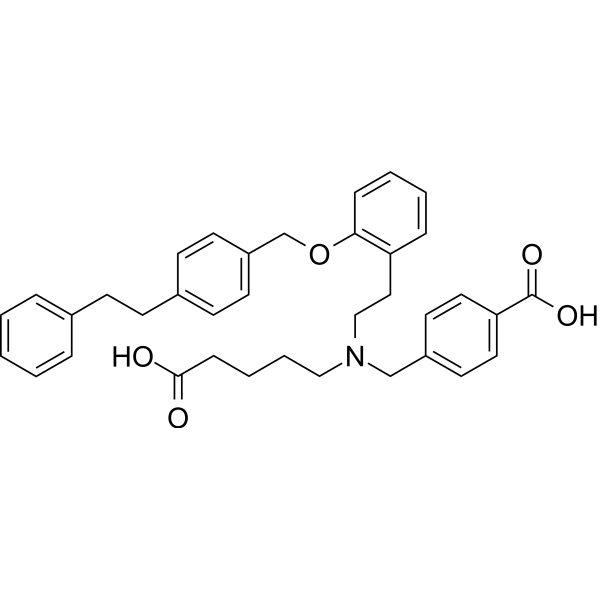
Cinaciguat is an activator of guanylate cyclase (sGC), and used for acute decompensated heart failure.
商品は「研究用試薬」です。人や動物の医療用・臨床診断用・食品用の製品ではありません。
研究用途以外に使用した場合、当社は一切の責任を負いかねます。
- 純度 : 98.30%
- CAS 番号: 329773-35-5
- 分子式: C36H39NO5
- 分子量:565.70
-
保管条件:Powder -20°C, 3 years , 4°C, 2 years ; In solvent -80°C, 2 years , -20°C, 1 year

To place orders, for customer services and technical support, please contact: MedChemExpress USA
Tel: 609-228-6898 E-mail: [email protected] [email protected]


-
 生物活性
生物活性
-
化学情報
-
溶剤 & 溶解度
- プロトコル
- 純度とドキュメンテーション
- 参考文献
-
 Help & FAQs


-
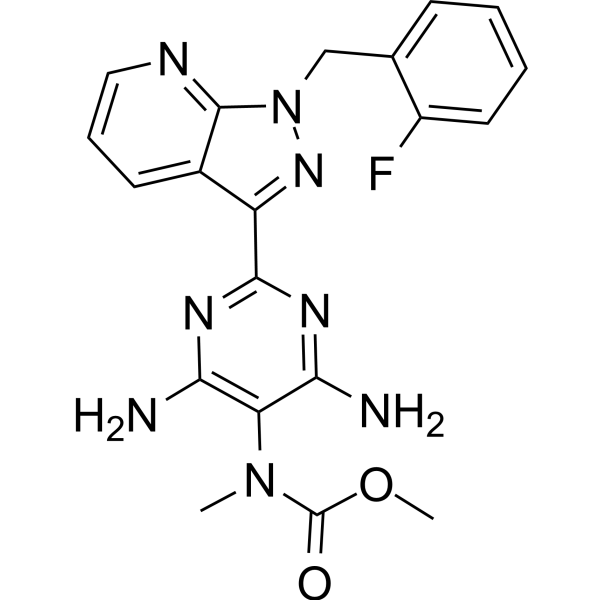
HY-14779
Riociguat -
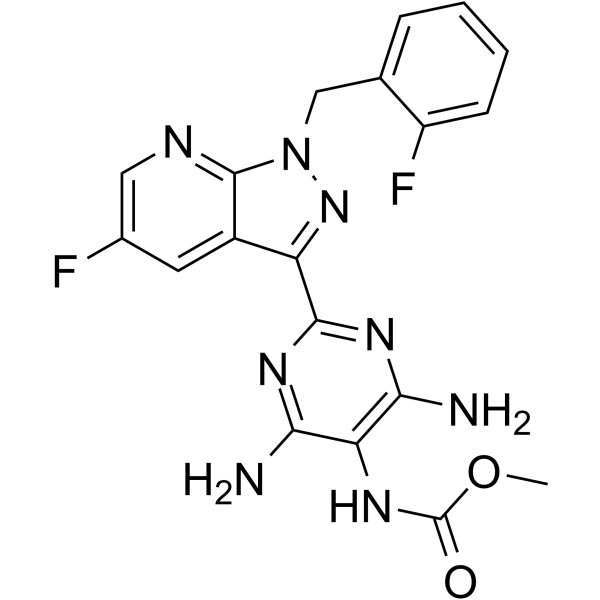
HY-16774
VericiguatsCG Stimulator -
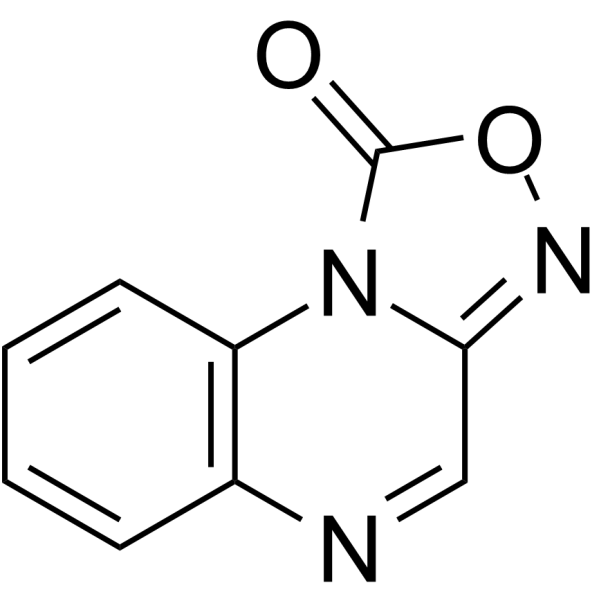
HY-101255
ODQsGC Inhibitor -
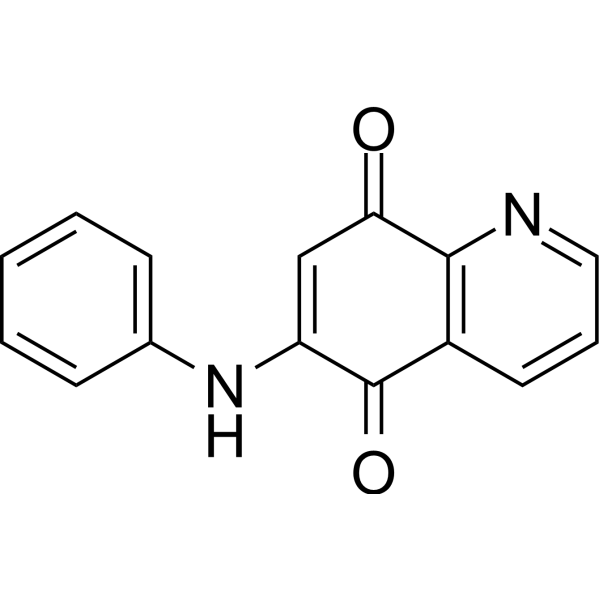
HY-W013386
LY83583sGC Inhibitor -
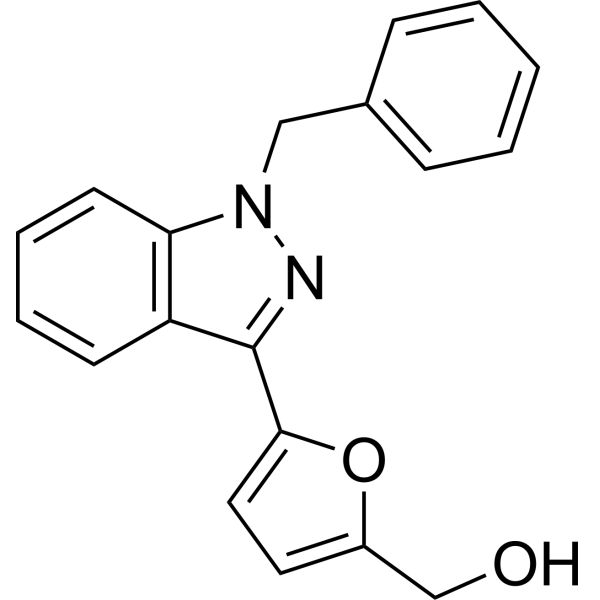
HY-14927
LificiguatsGC Activator -
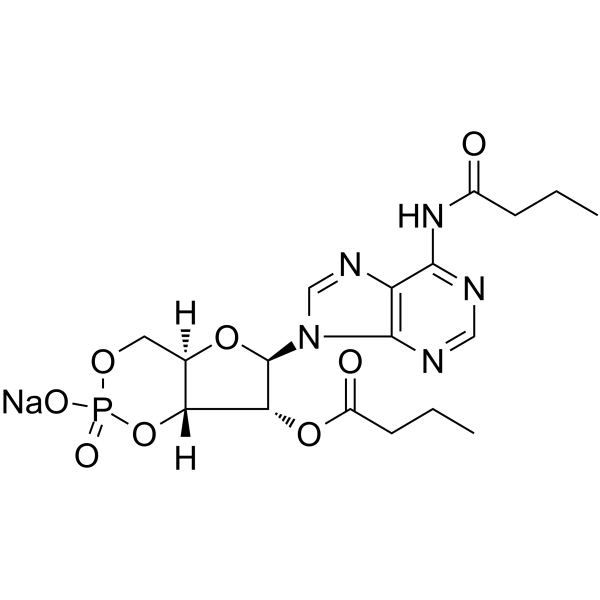
HY-B0764
Bucladesine sodiumcAMP Analog -
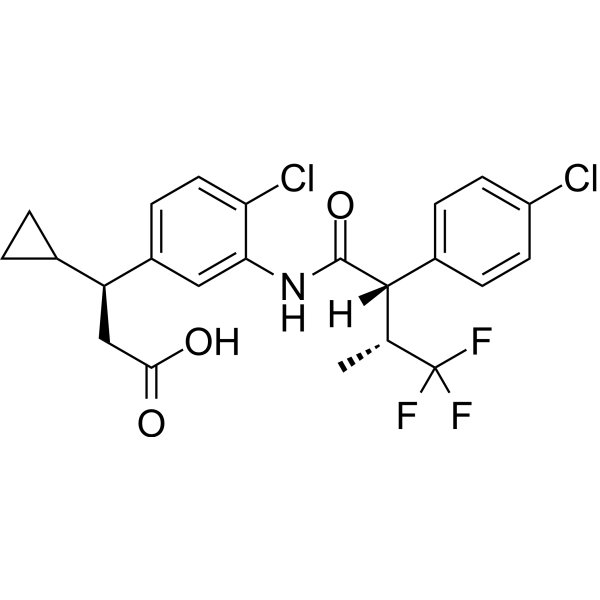
HY-109136
RuncaciguatsGC Activator -
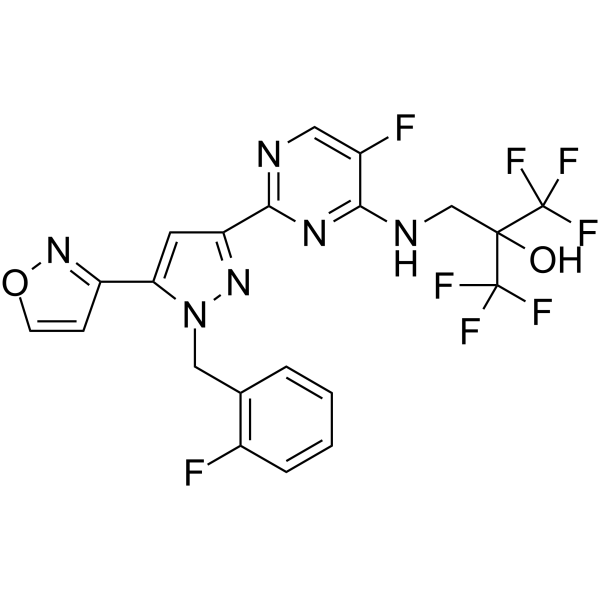
HY-109039
PraliciguatSoluble Guanylate Cyclase Stimulator -
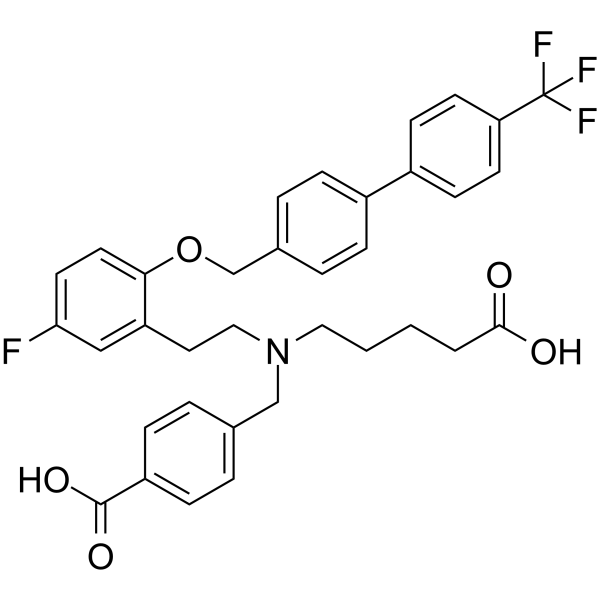
HY-113926
BAY 60-2770sGC Activator -
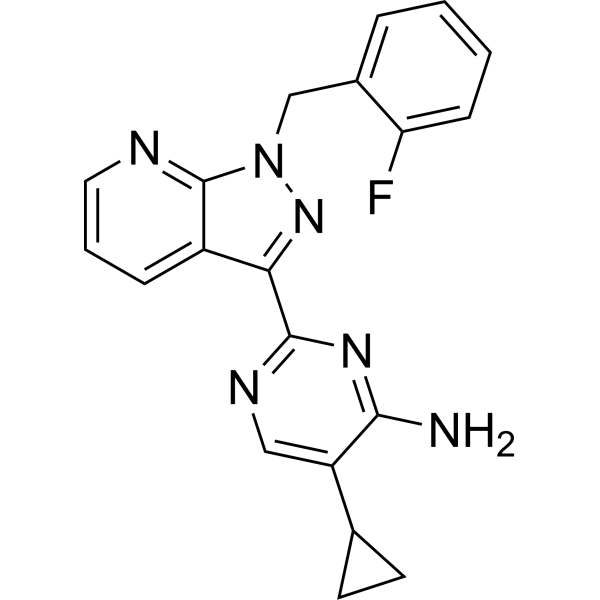
HY-12376
BAY 41-2272Guanylate Cyclase Activator -
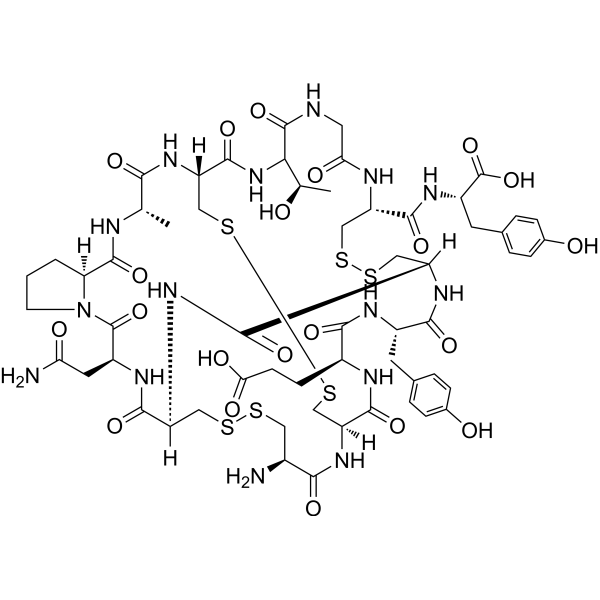
HY-17584
LinaclotideGuanylate Cyclase Agonist -
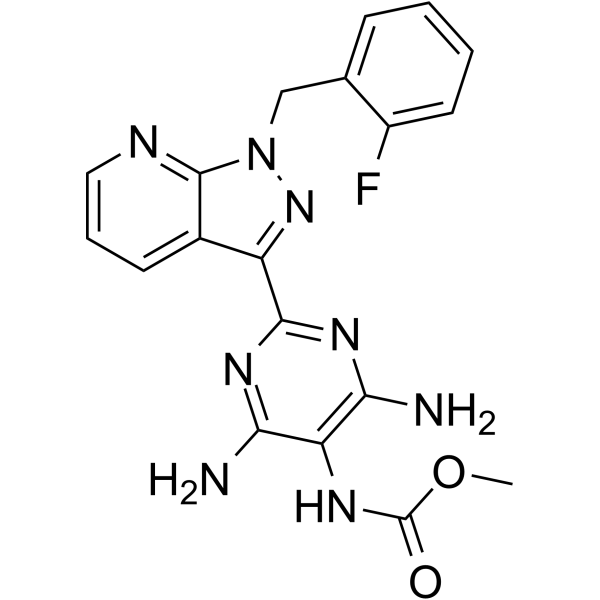
HY-78237
NelociguatGuanylate Cyclase Activator
MedChemExpress(MCE)の使用を引用している文献 Cinaciguat
More

生物活性
製品説明
体外実験
Cinaciguat (10 μM) significantly enhances intracellular cGMP generation. Cinaciguat does not dose-dependent effects on cell contraction and calcium transients[2].
MedChemExpress (MCE) has not independently confirmed the accuracy of these methods. They are for reference only.
体内実験
Cinaciguat (1, 10, 100 nM) induces concentration-dependent relaxations in gastrointestinal smooth muscle strips from both WT and apo-sGC mice, but does not have any effect on phasic activity induced by PGF2α in WT or apo-sGC strips[3].
MedChemExpress (MCE) has not independently confirmed the accuracy of these methods. They are for reference only.


化学情報
-
CAS 番号 329773-35-5
-
性状 Solid
-
分子量 565.70
-
分子式 C36H39NO5
-
Color White to off-white
-
SMILES
OC(C(C=C1)=CC=C1CN(CCCCC(O)=O)CCC(C=CC=C2)=C2OCC(C=C3)=CC=C3CCC4=CC=CC=C4)=O
-
別名
BAY 58-2667
-
輸送条件
Room temperature in continental US; may vary elsewhere.
-
保管条件
Powder -20°C 3 years 4°C 2 years In solvent -80°C 2 years -20°C 1 year


Publications (4)
-
Journal Impact Factor
-
Most Recent
-
Biochem Pharmacol
Differential modulation of the sGC-cGMP pathway by sGC stimulators and activators in human lung cells. [Abstract]2026 Mar 5:248:117866. PMID: 41794266 -
Oxid Med Cell Longev
Pharmic Activation of PKG2 Alleviates Diabetes-Induced Osteoblast Dysfunction by Suppressing PLC β 1-Ca2+-Mediated Endoplasmic Reticulum Stress. [Abstract]2021 Jun 16:2021:5552530. PMID: 34221234 -
Biomed Pharmacother
Cinaciguat in combination with insulin induces a favorable effect on implant osseointegration in type 2 diabetic rats. [Abstract]2019 Oct:118:109216. PMID: 31319371 -


溶剤 & 溶解度
体外:
DMSO : ≥ 50 mg/mL (88.39 mM; Hygroscopic DMSO has a significant impact on the solubility of product, please use newly opened DMSO)
* "≥" means soluble, but saturation unknown.
Please refer to the solubility information to select the appropriate solvent. Once prepared, please aliquot and store the solution to prevent product inactivation from repeated freeze-thaw cycles.
Storage method and period of stock solution: -80°C, 2 years; -20°C, 1 year. When stored at -80°C, please use it within 2 years. When stored at -20°C, please use it within 1 year.
Please refer to the solubility information to select the appropriate solvent. Once prepared, please aliquot and store the solution to prevent product inactivation from repeated freeze-thaw cycles.
Storage method and period of stock solution: -80°C, 2 years; -20°C, 1 year. When stored at -80°C, please use it within 2 years. When stored at -20°C, please use it within 1 year.
濃度 (開始) × 体積 (開始) = 濃度 (終了) × 体積 (終了)
体内:
Select the appropriate dissolution method based on your experimental animal and administration route.
- For the following dissolution methods, please ensure to first prepare a clear stock solution using an In Vitro approach and then sequentially add co-solvents:
- To ensure reliable experimental results, the clarified stock solution can be appropriately stored based on storage conditions. As for the working solution for In Vivo experiments, it is recommended to prepare freshly and use it on the same day.
- The percentages shown for the solvents indicate their volumetric ratio in the final prepared solution. If precipitation or phase separation occurs during preparation, heat and/or sonication can be used to aid dissolution.
Add each solvent one by one: 10% DMSO 90% (20% SBE-β-CD in Saline)
Solubility: 2.5 mg/mL (4.42 mM); Suspended solution; Need ultrasonic
This protocol yields a suspended solution of 2.5 mg/mL. Suspended solution can be used for oral and intraperitoneal injection.
Taking 1 mL working solution as an example, add 100 μL DMSO stock solution (25.0 mg/mL) to 900 μL 20% SBE-β-CD in Saline, and mix evenly.
Preparation of 20% SBE-β-CD in Saline (4°C, storage for one week): 2 g SBE-β-CD powder is dissolved in 10 mL Saline, completely dissolve until clear.
In Vivo Dissolution Calculator
Please enter the basic information of animal experiments:
-
-
-
-
Recommended: Prepare an additional quantity of animals to account for potential losses during experiments.
Please enter your animal formula composition:
-
%DMSO +
Recommended: Keep the proportion of DMSO in working solution below 2% if your animal is weak.
-
%+
-
+%Tween-80 + +
-
%Saline +
The co-solvents required include: DMSO, . All of co-solvents are available by MedChemExpress (MCE). , Tween 80. All of co-solvents are available by MedChemExpress (MCE).
Working solution concentration: 0.22 mg/mL
Method for preparing stock solution: mg drug dissolved in μL DMSO. Stock solution concentration: mg/mL.
1. Take μL DMSO stock solution;
2. Add μL .
μL , mix evenly;
3. Then add μL Tween 80, mix evenly;
4. Then add μL
Please ensure that the stock solution in the first step is dissolved to a clear state, and add co-solvents in sequence. You can use ultrasonic heating (ultrasonic cleaner, recommended frequency 20-40 kHz), vortexing, etc. to assist dissolution.


純度とドキュメンテーション
-
データシート (275 KB)
-
SDS (396 KB)
- English - EN (396 KB)
- Français - FR (396 KB)
- Deutsch - DE (396 KB)
- Norwegian - NO (396 KB)
- Español - ES (396 KB)
- Swedish - SV (396 KB)
- Italian - IT (396 KB)
- Korean - KR (396 KB)
- Portuguese - PT (396 KB)
-
取扱説明書 (2659 KB)
参考文献
[1]. Mátyás C, et al. The soluble guanylate cyclase activator cinaciguat prevents cardiac dysfunction in a rat model of type-1 diabetes mellitus. Cardiovasc Diabetol. 2015 Oct 31;14:145. [Content Brief]
[2]. Reinke Y, et al. The soluble guanylate cyclase stimulator riociguat and the soluble guanylate cyclase activator cinaciguat exert no direct effects on contractility and relaxation of cardiac myocytes from normal rats. Format: AbstractSend to Eur J Pharmaco [Content Brief]
[3]. Cosyns SM, et al. Influence of cinaciguat on gastrointestinal motility in apo-sGC mice. Neurogastroenterol Motil. 2014 Nov;26(11):1573-85. [Content Brief]


Complete Stock Solution Preparation Table
Please refer to the solubility information to select the appropriate solvent. Once prepared, please aliquot and store the solution to prevent product inactivation from repeated freeze-thaw cycles.
Storage method and period of stock solution: -80°C, 2 years; -20°C, 1 year. When stored at -80°C, please use it within 2 years. When stored at -20°C, please use it within 1 year.
| Optional Solvent | Concentration Solvent Mass | 1 mg | 5 mg | 10 mg | 25 mg |
|---|---|---|---|---|---|
| DMSO | 1 mM | 1.7677 mL | 8.8386 mL | 17.6772 mL | 44.1930 mL |
| 5 mM | 0.3535 mL | 1.7677 mL | 3.5354 mL | 8.8386 mL | |
| 10 mM | 0.1768 mL | 0.8839 mL | 1.7677 mL | 4.4193 mL | |
| 15 mM | 0.1178 mL | 0.5892 mL | 1.1785 mL | 2.9462 mL | |
| 20 mM | 0.0884 mL | 0.4419 mL | 0.8839 mL | 2.2097 mL | |
| 25 mM | 0.0707 mL | 0.3535 mL | 0.7071 mL | 1.7677 mL | |
| 30 mM | 0.0589 mL | 0.2946 mL | 0.5892 mL | 1.4731 mL | |
| 40 mM | 0.0442 mL | 0.2210 mL | 0.4419 mL | 1.1048 mL | |
| 50 mM | 0.0354 mL | 0.1768 mL | 0.3535 mL | 0.8839 mL | |
| 60 mM | 0.0295 mL | 0.1473 mL | 0.2946 mL | 0.7366 mL | |
| 80 mM | 0.0221 mL | 0.1105 mL | 0.2210 mL | 0.5524 mL |


Cinaciguat 関連分類
HY-14181 関連分類
 Powered by Bioz