1. Induced Disease Models Products GPCR/G Protein
  2. Nervous System Disease Models Endothelin Receptor
  3. Depression Models
  4. Endothelin 1 (swine, human)

Endothelin 1 (swine, human)  (Synonyms: ET-1 (swine, human))

Cat. No.: HY-P0202 Purity: 98.90%
Handling Instructions Technical Support

Endothelin 1 (swine, human) (ET-1) is a synthetic peptide with the sequence of human and swine Endothelin 1, which is a potent endogenous vasoconstrictor. Endothelin 1 acts through two types of receptors ETA and ETB.

For research use only. We do not sell to patients.

Custom Peptide Synthesis

CAS No. : 117399-94-7

Size Price Stock Quantity
500 μg In-stock
1 mg In-stock
5 mg In-stock
10 mg In-stock
50 mg   Get quote  
100 mg   Get quote  

* Please select Quantity before adding items.

This product is a controlled substance and not for sale in your territory.

Customer Review

Based on 8 publication(s) in Google Scholar

Other Forms of Endothelin 1 (swine, human):

Top Publications Citing Use of Products

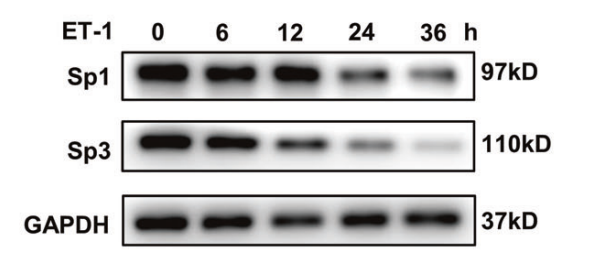
    Endothelin 1 (swine, human) purchased from MedChemExpress. Usage Cited in: Nat Commun. 2023 Sep 21;14(1):5891.  [Abstract]

    Endothelin 1 (ET-1, 100 n mol/L, 6–36 h) markedly decreased Sp1 and Sp3 expression in HUVECs.

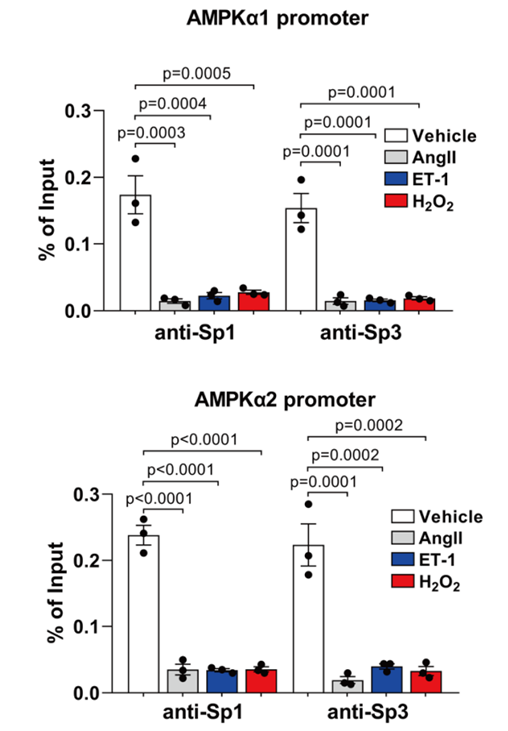
    Endothelin 1 (swine, human) purchased from MedChemExpress. Usage Cited in: Nat Commun. 2023 Sep 21;14(1):5891.  [Abstract]

    Chromatin immunoprecipitation (ChIP) assay showing the binding of Sp1 or Sp3 to the AMPKα1 and AMPKα2 promoter in HUVECs with different treatments. n = 3. The results showed that Endothelin 1 (ET-1,100 nmol/L) reduced the Sp1/Sp3 association with AMPKα1 and AMPKα2 promoters.

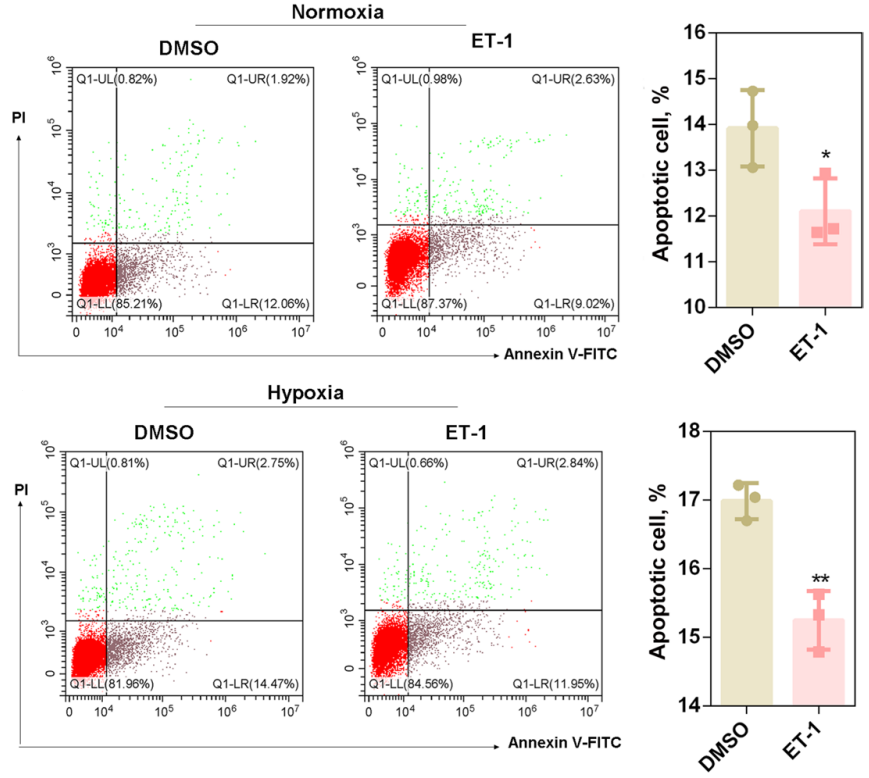
    Endothelin 1 (swine, human) purchased from MedChemExpress. Usage Cited in: Eur J Pharmacol. 2024 Jan 5:962:176236.  [Abstract]

    Endothelin-1 (ET-1, 100 nmol/L; 24 h) significantly decreased the proportion of apoptotic porcine GCs under both normoxic (P < 0.05) (Fig. 6c) and hypoxic conditions (P < 0.01).

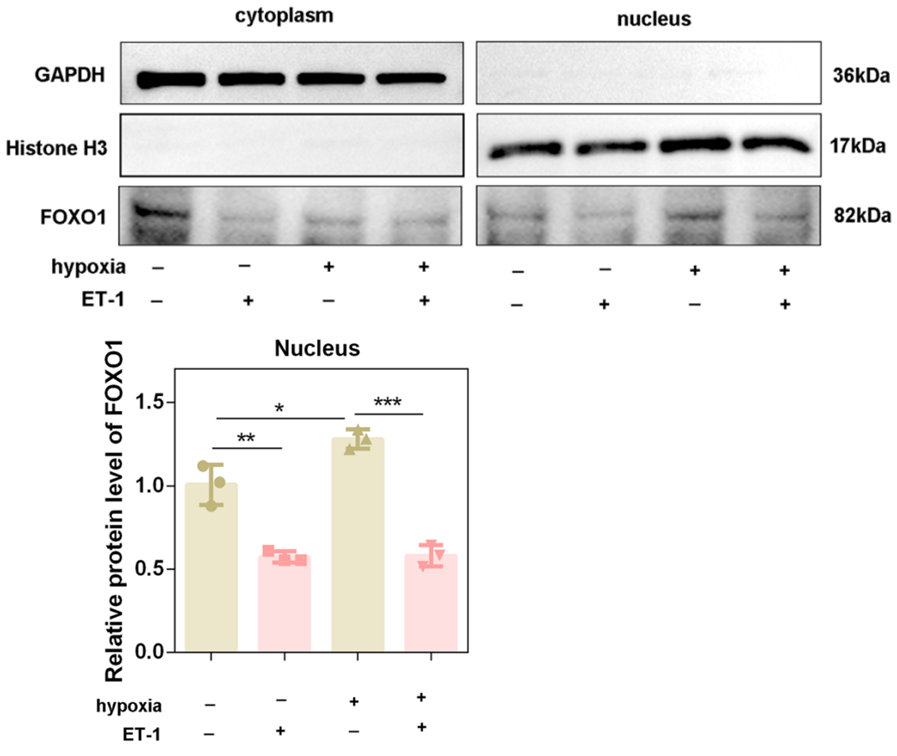
    Endothelin 1 (swine, human) purchased from MedChemExpress. Usage Cited in: Eur J Pharmacol. 2024 Jan 5:962:176236.  [Abstract]

    Nuclear‒cytoplasmic fractionation was performed to analyze FOXO1 expression in the cytoplasm and nucleus after porcine GCs were treated with Endothelin-1 (ET-1, 100 nmol/L) for 24 h. n = 3 biological replicates per group. The results showed that ET-1 significantly reduced nuclear FOXO1 expression under both normoxic (P < 0.01) and hypoxic (P < 0.001) conditions.

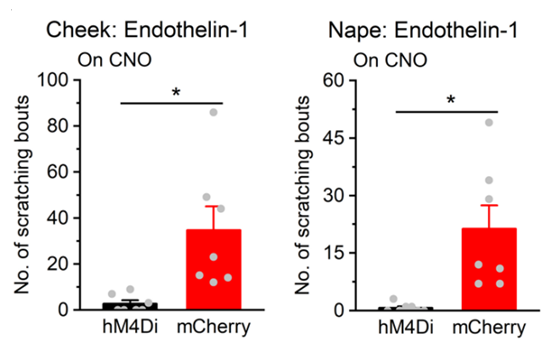
    Endothelin 1 (swine, human) purchased from MedChemExpress. Usage Cited in: Sci Adv. 2022 Jul 29;8(30):eabn4408.  [Abstract]

    Pharmacogenetic suppression of the VLO significantly decreased the number of scratching bouts induced by intradermal injection of Endothelin-1 (cheek; nape) (20.00 μM; unilateral intradermal injection) following CNO administration (4 mg/kg, ip). n = 7 to 8 rats in each group.

    View All Endothelin Receptor Isoform Specific Products:

    • Biological Activity

    • Purity & Documentation

    • References

    • Customer Review

    Description

    Endothelin 1 (swine, human) (ET-1) is a synthetic peptide with the sequence of human and swine Endothelin 1, which is a potent endogenous vasoconstrictor. Endothelin 1 acts through two types of receptors ETA and ETB[1].

    IC50 & Target

    ETA


    ETB


    In Vitro

    Endothelin-1 (ET-1) is a potent endogenous vasoconstrictor, mainly secreted by endothelial cells. It acts through two types of receptors: ETA and ETB. Apart from a vasoconstrictive action, ET-1 causes fibrosis of the vascular cells and stimulates production of reactive oxygen species. It is claimed that ET-1 induces proinflammatory mechanisms, increasing superoxide anion production and cytokine secretion[1].

    MedChemExpress (MCE) has not independently confirmed the accuracy of these methods. They are for reference only.

    In Vivo

    Note:
    Please do not refer to only one article to determine the experimental conditions. It is recommended to determine the optimal experimental conditions (animal strain, age, dosage, frequency and cycle, detection time and indicators, etc.) through preliminary experiments before the formal experiment.

    1. Induction of Post-stroke Depression (PSD)[2][3][4]
    Background
    Unilateral Endothelin-1 injection in the mouse mPFC induces a discrete, reproducible ischemic lesion via acute vasoconstriction and reduced blood flow in the target area, producing a persistent post-stroke depression (PSD) phenotype (anxiety/depression) without sensorimotor deficits[3].
    Specific Modeling Methods
    Mice: C57BL/6J mice • 8-12 weeks • 22-35 g
    Administration: Endothelin 1 (2 mg/mL in 1 μL saline) • microinjected into the unilateral (right) mPFC of mice using stereotaxic coordinates derived from the brain atlas by Paxinos and Watson (Site 1: anterior-posterior (AP): +2.0 mm, medial-lateral (ML): -0.5 mm, dorsoventral (DV): -2.4 mm; Site 2: AP: +1.5 mm, ML: -0.5 mm, DV: -2.6 mm)[2]
    Mice: C57BL/6 mice • 10-11 weeks • 25-28 g
    Administration: Endothelin 1 (2 μg/μL in 1 μL sterile water) • microinjected at two sites within the left mPFC at the following coordinates (in mm) relative to Bregma48. Injection 1, anterior-posterior (AP), 2.0; medial-lateral (ML), +0.5; dorsoventral (DV), -2.4; Injection 2, AP 1.5; ML +0.5; DV -2.6[3].
    Rats: Adult male Sprague-Dawley rats
    Administration: Endothelin 1 (400 pmol in 1 μL) • microinjected at the following coordinates: anterior/posterior +3.0, medial/lateral -1.3, and dorsal/ventral -3.5 (all coordinates relative to bregma)[4]
    Note
    (1) A microsyringe (10 μL) was used to load 1 μL of pre-dissolved Endothelin 1, which was injected at a rate of 100 nL/min over 10 minutes at the designated coordinates[2].
    (2) After the injection, the syringe needle was left in place for 10 minutes to prevent backflow, then withdrawn slowly, and the scalp was sutured[2].
    (3) An infusion pump was used to load 1 μL of pre-dissolved Endothelin 1, which was set at a rate of 0.20 μL/min[3].
    (4) At the end of the infusion, the needle was left in place for 3 min before gradual withdrawal and closure of the incision that was treated with 0.1 ml of 2% transdermal bupivacaine as a topical anesthetic[3].
    (5) Antibiotics were applied to the sutured area to prevent postoperative infection, and the mice were placed on a thermostatic heating pad to maintain body ature until full recovery[2][3].
    Modeling Indicators
    Histology analysis: Focal ischemic lesions at injection site (48 h post-surgery)
    Behavioral changes: Reduced center exploration (open field test, OFT); Decreased time/distance in the open arms (elevated plus-maze, EPM); Increased immobility (forced swimming test, FST; tail suspension test, TST); Reduced sucrose preference (sucrose preference test, SPT); Prolonged latency (novelty-suppressed feeding, NSF); No significant impairment in locomotion/motor coordination (OFT total distance, Rotarod, Cylinder test)

    MedChemExpress (MCE) has not independently confirmed the accuracy of these methods. They are for reference only.

    Molecular Weight

    2491.90

    Formula

    C109H159N25O32S5

    CAS No.
    Appearance

    Solid

    Color

    Off-white to pale purple

    Sequence

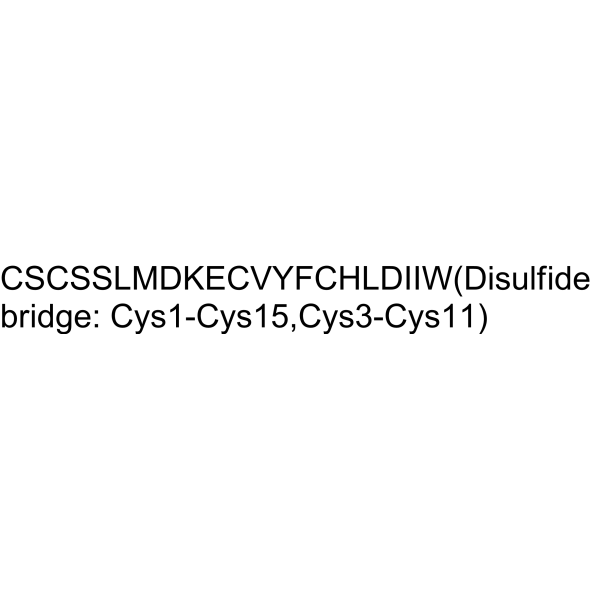
    Cys-Ser-Cys-Ser-Ser-Leu-Met-Asp-Lys-Glu-Cys-Val-Tyr-Phe-Cys-His-Leu-Asp-Ile-Ile-Trp (Disulfide bridge: Cys1-Cys15, Cys3-Cys11)

    Sequence Shortening

    CSCSSLMDKECVYFCHLDIIW (Disulfide bridge: Cys1-Cys15, Cys3-Cys11)

    Shipping

    Room temperature in continental US; may vary elsewhere.

    Storage

    Sealed storage, away from moisture and light, under nitrogen

    Powder -80°C 2 years
    -20°C 1 year

    *In solvent : -80°C, 6 months; -20°C, 1 month (sealed storage, away from moisture and light, under nitrogen)

    Solvent & Solubility
    In Vitro: 

    DMSO : ≥ 50 mg/mL (20.07 mM; Hygroscopic DMSO has a significant impact on the solubility of product, please use newly opened DMSO)

    *"≥" means soluble, but saturation unknown.

    Preparing
    Stock Solutions
    Concentration Solvent Mass 1 mg 5 mg 10 mg
    1 mM 0.4013 mL 2.0065 mL 4.0130 mL
    5 mM 0.0803 mL 0.4013 mL 0.8026 mL
    View the Complete Stock Solution Preparation Table

    * Please refer to the solubility information to select the appropriate solvent. Once prepared, please aliquot and store the solution to prevent product inactivation from repeated freeze-thaw cycles.
    Storage method and period of stock solution: -80°C, 6 months; -20°C, 1 month (sealed storage, away from moisture and light, under nitrogen). When stored at -80°C, please use it within 6 months. When stored at -20°C, please use it within 1 month.

    • Molarity Calculator

    • Dilution Calculator

    Mass (g) = Concentration (mol/L) × Volume (L) × Molecular Weight (g/mol)

    Mass
    =
    Concentration
    ×
    Volume
    ×
    Molecular Weight *

    Concentration (start) × Volume (start) = Concentration (final) × Volume (final)

    This equation is commonly abbreviated as: C1V1 = C2V2

    Concentration (start)

    C1

    ×
    Volume (start)

    V1

    =
    Concentration (final)

    C2

    ×
    Volume (final)

    V2

    In Vivo:

    Select the appropriate dissolution method based on your experimental animal and administration route.

    For the following dissolution methods, please ensure to first prepare a clear stock solution using an In Vitro approach and then sequentially add co-solvents:
    To ensure reliable experimental results, the clarified stock solution can be appropriately stored based on storage conditions. As for the working solution for in vivo experiments, it is recommended to prepare freshly and use it on the same day.
    The percentages shown for the solvents indicate their volumetric ratio in the final prepared solution. If precipitation or phase separation occurs during preparation, heat and/or sonication can be used to aid dissolution.

    • Protocol 1

      Add each solvent one by one:  10% DMSO    40% PEG300    5% Tween-80    45% Saline

      Solubility: ≥ 2.5 mg/mL (1.00 mM); Clear solution

      This protocol yields a clear solution of ≥ 2.5 mg/mL (saturation unknown).

      Taking 1 mL working solution as an example, add 100 μL DMSO stock solution (25.0 mg/mL) to 400 μL PEG300, and mix evenly; then add 50 μL Tween-80 and mix evenly; then add 450 μL Saline to adjust the volume to 1 mL.

      Preparation of Saline: Dissolve 0.9 g sodium chloride in ddH₂O and dilute to 100 mL to obtain a clear Saline solution.
    • Protocol 2

      Add each solvent one by one:  10% DMSO    90% (20% SBE-β-CD in Saline)

      Solubility: ≥ 2.5 mg/mL (1.00 mM); Clear solution

      This protocol yields a clear solution of ≥ 2.5 mg/mL (saturation unknown).

      Taking 1 mL working solution as an example, add 100 μL DMSO stock solution (25.0 mg/mL) to 900 μL 20% SBE-β-CD in Saline, and mix evenly.

      Preparation of 20% SBE-β-CD in Saline (4°C, storage for one week): 2 g SBE-β-CD powder is dissolved in 10 mL Saline, completely dissolve until clear.
    In Vivo Dissolution Calculator
    Please enter the basic information of animal experiments:

    Dosage

    mg/kg

    Animal weight
    (per animal)

    g

    Dosing volume
    (per animal)

    μL

    Number of animals

    Recommended: Prepare an additional quantity of animals to account for potential losses during experiments.
    Please enter your animal formula composition:
    %
    DMSO +
    +
    %
    Tween-80 +
    %
    Saline
    Recommended: Keep the proportion of DMSO in working solution below 2% if your animal is weak.
    The co-solvents required include: DMSO, . All of co-solvents are available by MedChemExpress (MCE). , Tween 80. All of co-solvents are available by MedChemExpress (MCE).
    Calculation results:
    Working solution concentration: mg/mL
    Method for preparing stock solution: mg drug dissolved in μL  DMSO (Stock solution concentration: mg/mL).

    *In solvent : -80°C, 6 months; -20°C, 1 month (sealed storage, away from moisture and light, under nitrogen)

    The concentration of the stock solution you require exceeds the measured solubility. The following solution is for reference only. If necessary, please contact MedChemExpress (MCE).
    Method for preparing in vivo working solution for animal experiments: Take μL DMSO stock solution, add μL . μL , mix evenly, next add μL Tween 80, mix evenly, then add μL Saline.
     If the continuous dosing period exceeds half a month, please choose this protocol carefully.
    Please ensure that the stock solution in the first step is dissolved to a clear state, and add co-solvents in sequence. You can use ultrasonic heating (ultrasonic cleaner, recommended frequency 20-40 kHz), vortexing, etc. to assist dissolution.
    Purity & Documentation

    Purity: 99.12%

    References

    Complete Stock Solution Preparation Table

    * Please refer to the solubility information to select the appropriate solvent. Once prepared, please aliquot and store the solution to prevent product inactivation from repeated freeze-thaw cycles.
    Storage method and period of stock solution: -80°C, 6 months; -20°C, 1 month (sealed storage, away from moisture and light, under nitrogen). When stored at -80°C, please use it within 6 months. When stored at -20°C, please use it within 1 month.

    Optional Solvent Concentration Solvent Mass 1 mg 5 mg 10 mg 25 mg
    DMSO 1 mM 0.4013 mL 2.0065 mL 4.0130 mL 10.0325 mL
    5 mM 0.0803 mL 0.4013 mL 0.8026 mL 2.0065 mL
    10 mM 0.0401 mL 0.2007 mL 0.4013 mL 1.0033 mL
    15 mM 0.0268 mL 0.1338 mL 0.2675 mL 0.6688 mL
    20 mM 0.0201 mL 0.1003 mL 0.2007 mL 0.5016 mL
    • No file chosen (Maximum size is: 1024 Kb)
    • If you have published this work, please enter the PubMed ID.
    • Your name will appear on the site.
    Help & FAQs
    • Do most proteins show cross-species activity?

      Species cross-reactivity must be investigated individually for each product. Many human cytokines will produce a nice response in mouse cell lines, and many mouse proteins will show activity on human cells. Other proteins may have a lower specific activity when used in the opposite species.

    Your Recently Viewed Products:

    Inquiry Online

    Your information is safe with us. * Required Fields.

    Product Name


    Requested Quantity *

    Applicant Name *


    Salutation

    Email Address *


    Phone Number *

    Department


    Organization Name *

    City

    State

    Country or Region *


    Remarks

    Bulk Inquiry

    Inquiry Information

    Product Name:
    Endothelin 1 (swine, human)
    Cat. No.:
    HY-P0202
    Quantity:
    MCE Japan Authorized Agent: