



Gefapixant
Based on 2 publication(s) in Google Scholar
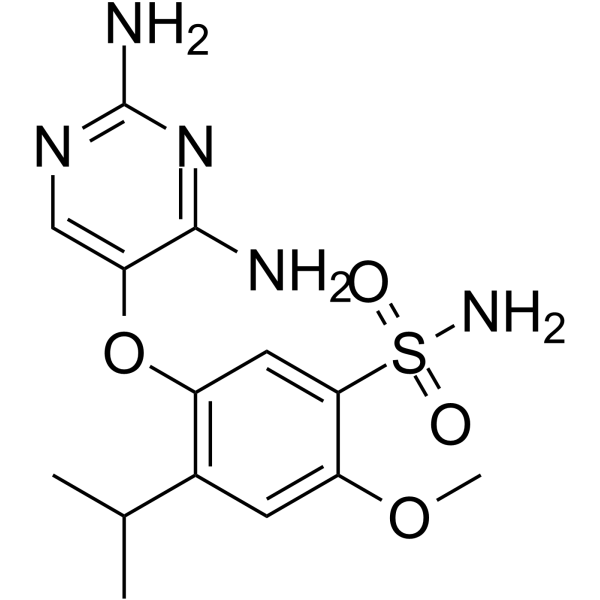
Gefapixant is an orally active and potent purinergic P2X3 receptor (P2X3R) antagonist, with IC50 values of ~30 nM versus recombinant hP2X3 homotrimers and 100-250 nM at hP2X2/3 heterotrimeric receptors. Gefapixant can be used for the research of chronic cough and knee osteoarthritis.
For research use only. We do not sell to patients.
- Purity : 99.93%
- CAS No.: 1015787-98-0
- Formula: C14H19N5O4S
- Molecular Weight:353.40
-
Storage:Powder -20°C, 3 years , 4°C, 2 years ; In solvent -80°C, 2 years , -20°C, 1 year

To place orders, for customer services and technical support, please contact: MedChemExpress USA
Tel: 609-228-6898 E-mail: [email protected] [email protected]


-
 Biological Activity
-
Chemical Information
-
Solvent & Solubility
- Protocols
- Purity & Documentation
- References
-
 Help & FAQs


-
HY-136026
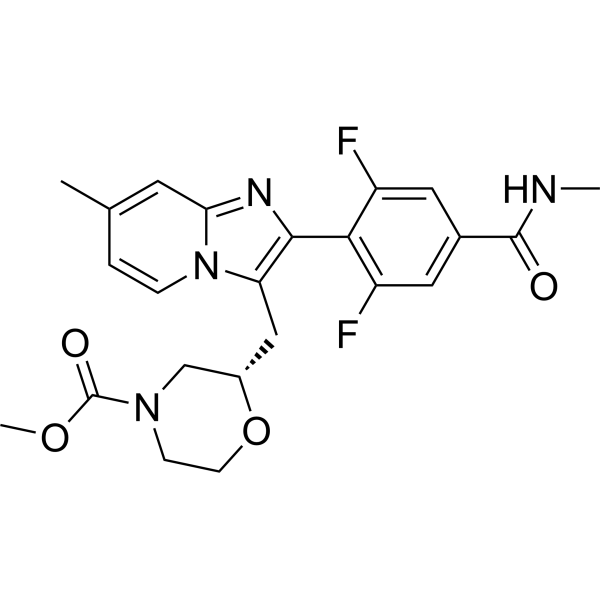
CamlipixantP2X3 Antagonist -
HY-112461A
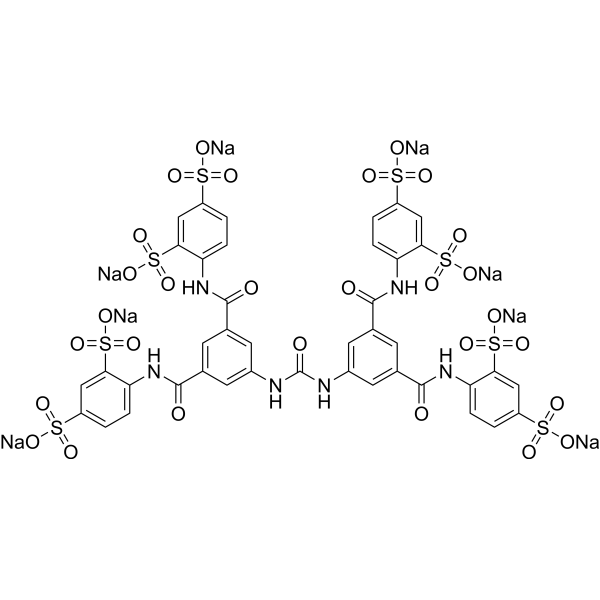
NF449 octasodiumP2X1 Receptor Antagonist -

HY-Y1891
Tween 80 -
HY-115604
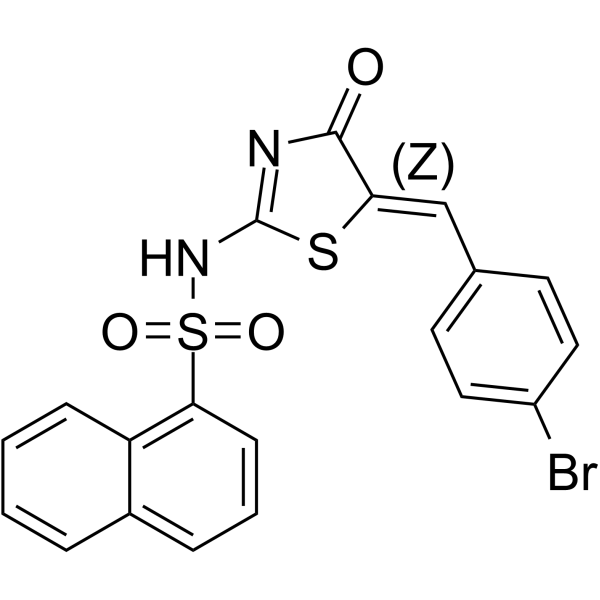
Pitstop 2Clathrin Inhibitor -
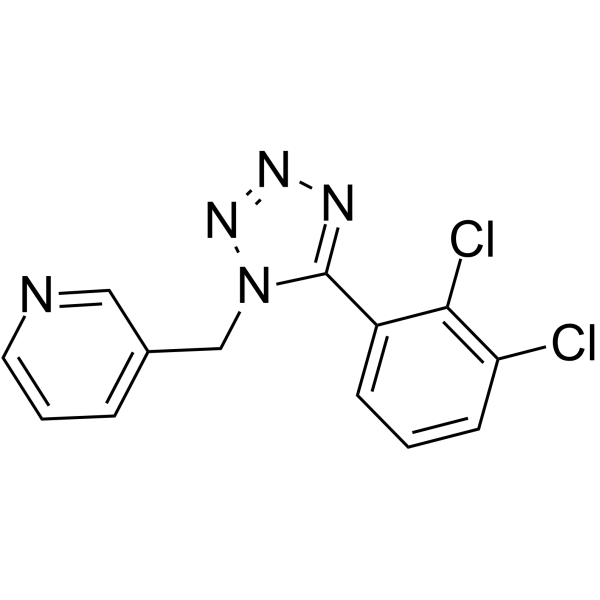
HY-15488
A 438079P2X Receptor Antagonist -
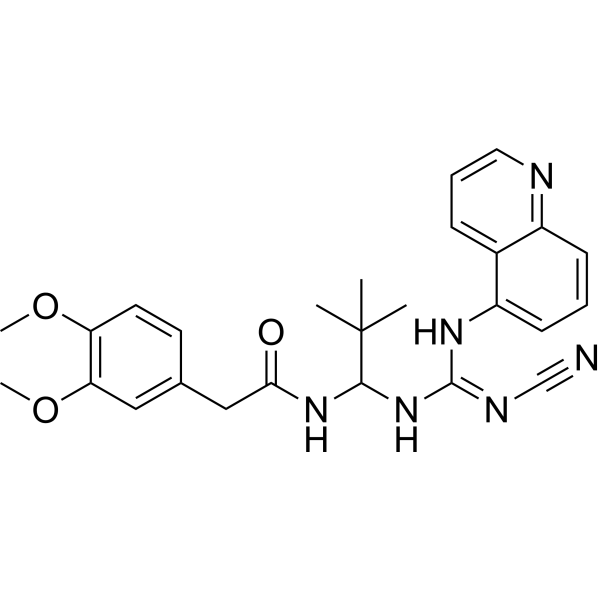
HY-50697
A-740003P2X Receptor Antagonist -
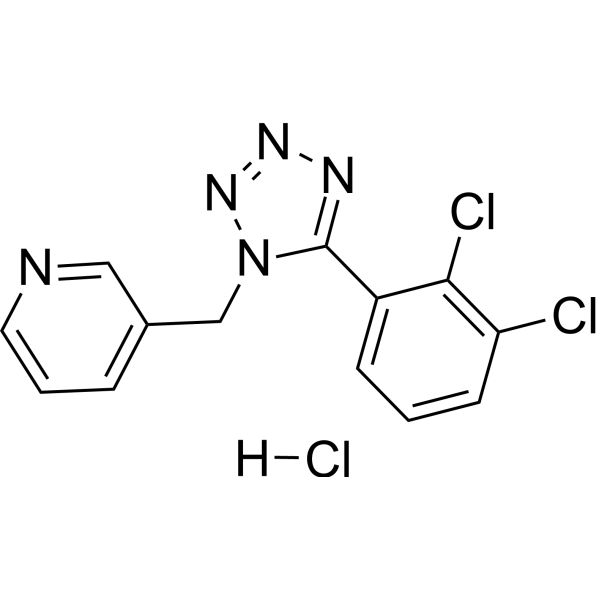
HY-15488A
A 438079 hydrochlorideP2X7 Receptor Antagonist -
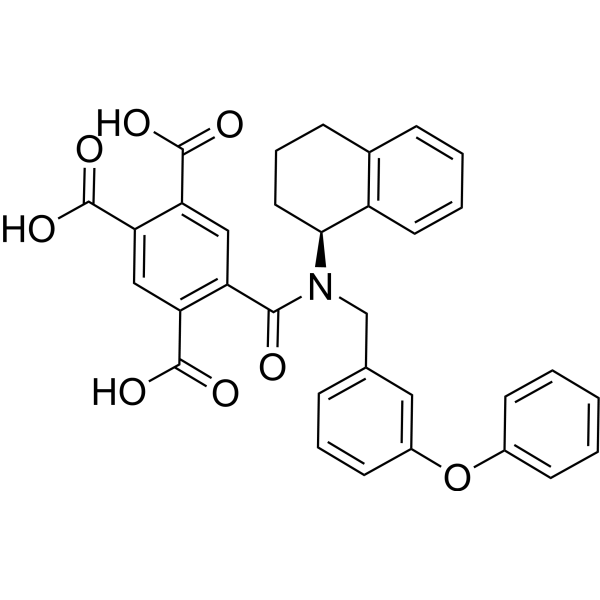
HY-15568
A-317491P2X3/P2X2/3 Antagonist -
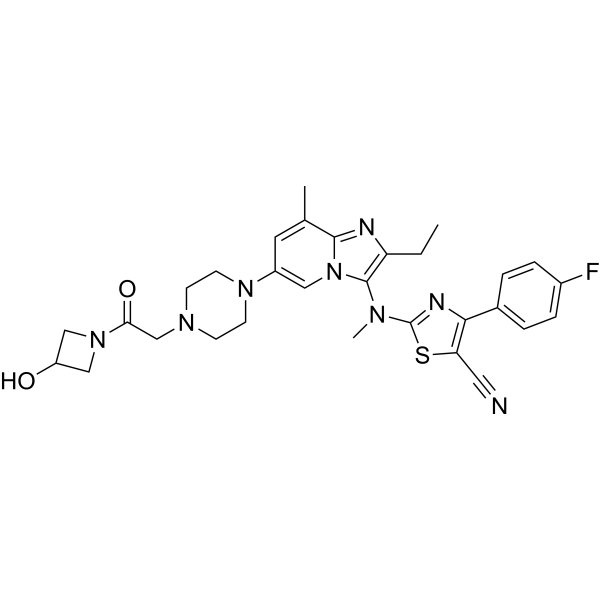
HY-101772
ZiritaxestatAutotaxin Inhibitor -
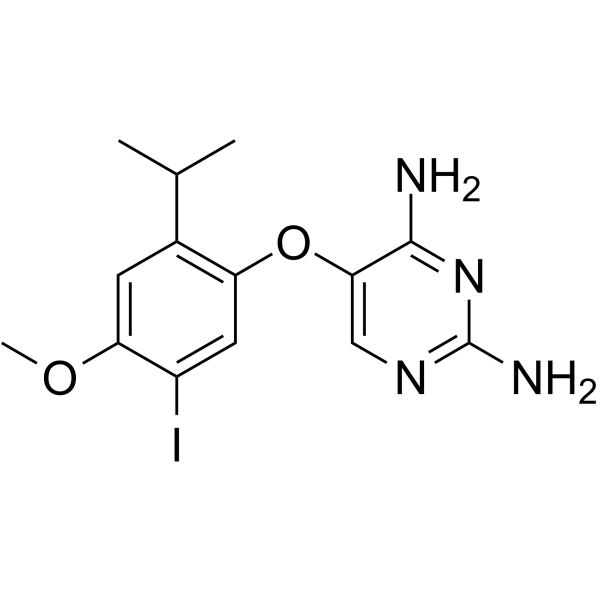
HY-14483
AF-353P2X Receptor Antagonist -

HY-101588R
Gefapixant (Standard)P2X3 Antagonist -
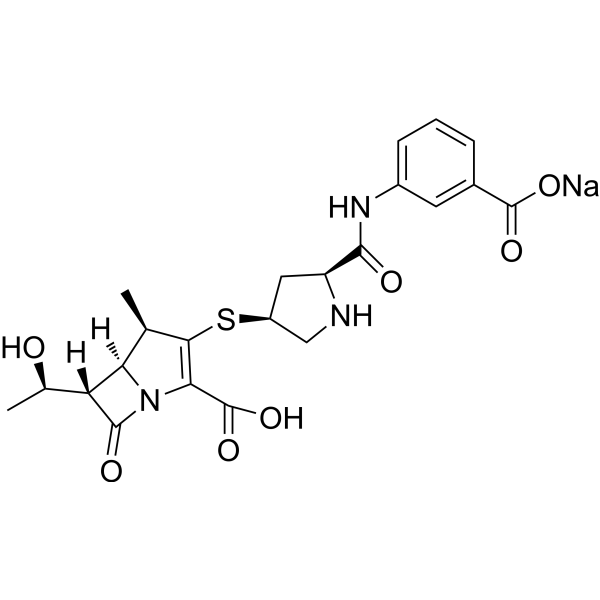
HY-13625
Ertapenem sodiumAntibiotic
Publications Citing Use of MedChemExpress (MCE) Gefapixant
MoreAll P2X Receptor Isoforms
More

Biological Activity
Description
IC50 & Target
|
P2X3 Receptor |
In Vitro
Gefapixant displays no inhibitory impact on any non-P2X3 subunit containing receptors (IC50 values >10,000 nM at recombinant homotrimeric hP2X1, hP2X2, hP2X4, rP2X5 and hP2X7 channels)[1].
MedChemExpress (MCE) has not independently confirmed the accuracy of these methods. They are for reference only. Further protocols information, click here.
In Vivo
MedChemExpress (MCE) has not independently confirmed the accuracy of these methods. They are for reference only.
Clinical Trial
| NCT Number | Sponsor | Condition | Start Date |
Phase

|
|---|---|---|---|---|
| NCT01329991 | Plexxikon| | 2011-05 | PHASE1 |


Chemical Information
-
CAS No. 1015787-98-0
-
Appearance Solid
-
Molecular Weight 353.40
-
Formula C14H19N5O4S
-
Color White to off-white
-
SMILES
O=S(C1=CC(OC2=CN=C(N)N=C2N)=C(C(C)C)C=C1OC)(N)=O
-
Synonyms
MK-7264; AF-219
-
Shipping
Room temperature in continental US; may vary elsewhere.
-
Storage
Powder -20°C 3 years 4°C 2 years In solvent -80°C 2 years -20°C 1 year


Publications (2)
-
Journal Impact Factor
-
Most Recent
-
Mol Ther
2025 Feb 5;33(2):771-785. PMID: 39960544 -
Function (Oxf)
Topical ATP Application in the Peripheral Swallowing-Related Regions Facilitates Triggering of the Swallowing Reflex Involving P2X3 Receptors. [Abstract]2025 Mar 24;6(2):zqaf010. PMID: 40042973


Solvent & Solubility
In Vitro:
DMSO : 29.17 mg/mL (82.54 mM; Need ultrasonic; Hygroscopic DMSO has a significant impact on the solubility of product, please use newly opened DMSO)
Please refer to the solubility information to select the appropriate solvent. Once prepared, please aliquot and store the solution to prevent product inactivation from repeated freeze-thaw cycles.
Storage method and period of stock solution: -80°C, 2 years; -20°C, 1 year. When stored at -80°C, please use it within 2 years. When stored at -20°C, please use it within 1 year.
Please refer to the solubility information to select the appropriate solvent. Once prepared, please aliquot and store the solution to prevent product inactivation from repeated freeze-thaw cycles.
Storage method and period of stock solution: -80°C, 2 years; -20°C, 1 year. When stored at -80°C, please use it within 2 years. When stored at -20°C, please use it within 1 year.
Concentration (start) × Volume (start) = Concentration (final) × Volume (final)
In Vivo:
Select the appropriate dissolution method based on your experimental animal and administration route.
- For the following dissolution methods, please ensure to first prepare a clear stock solution using an In Vitro approach and then sequentially add co-solvents:
- To ensure reliable experimental results, the clarified stock solution can be appropriately stored based on storage conditions. As for the working solution for In Vivo experiments, it is recommended to prepare freshly and use it on the same day.
- The percentages shown for the solvents indicate their volumetric ratio in the final prepared solution. If precipitation or phase separation occurs during preparation, heat and/or sonication can be used to aid dissolution.
Add each solvent one by one: 10% DMSO 90% PBS
Solubility: ≥ 2.5 mg/mL (7.07 mM); Clear solution
Add each solvent one by one: 10% DMSO 40% PEG300 5% Tween-80 45% Saline
Solubility: ≥ 2.08 mg/mL (5.89 mM); Clear solution
This protocol yields a clear solution of ≥ 2.08 mg/mL (saturation unknown).
Taking 1 mL working solution as an example, add 100 μL DMSO stock solution (20.8 mg/mL) to 400 μL PEG300, and mix evenly; then add 50 μL Tween-80 and mix evenly; then add 450 μL Saline to adjust the volume to 1 mL.
Preparation of Saline: Dissolve 0.9 g sodium chloride in ddH₂O and dilute to 100 mL to obtain a clear Saline solution.
Add each solvent one by one: 10% DMSO 90% (20% SBE-β-CD in Saline)
Solubility: ≥ 2.08 mg/mL (5.89 mM); Clear solution
This protocol yields a clear solution of ≥ 2.08 mg/mL (saturation unknown).
Taking 1 mL working solution as an example, add 100 μL DMSO stock solution (20.8 mg/mL) to 900 μL 20% SBE-β-CD in Saline, and mix evenly.
Preparation of 20% SBE-β-CD in Saline (4°C, storage for one week): 2 g SBE-β-CD powder is dissolved in 10 mL Saline, completely dissolve until clear.
In Vivo Dissolution Calculator
Please enter the basic information of animal experiments:
-
-
-
-
Recommended: Prepare an additional quantity of animals to account for potential losses during experiments.
Please enter your animal formula composition:
-
%DMSO +
Recommended: Keep the proportion of DMSO in working solution below 2% if your animal is weak.
-
%+
-
+%Tween-80 + +
-
%Saline +
The co-solvents required include: DMSO, . All of co-solvents are available by MedChemExpress (MCE). , Tween 80. All of co-solvents are available by MedChemExpress (MCE).
Working solution concentration: 0.22 mg/mL
Method for preparing stock solution: mg drug dissolved in μL DMSO. Stock solution concentration: mg/mL.
1. Take μL DMSO stock solution;
2. Add μL .
μL , mix evenly;
3. Then add μL Tween 80, mix evenly;
4. Then add μL
Please ensure that the stock solution in the first step is dissolved to a clear state, and add co-solvents in sequence. You can use ultrasonic heating (ultrasonic cleaner, recommended frequency 20-40 kHz), vortexing, etc. to assist dissolution.

Protocols
-
Cell Cytotoxicity Assay
Cytotoxicity assays are usually based on the assessment of cell membrane damage, which can also be indirectly detected by measuring cell viability. Detection methods include MTT assay, CKK-8 assay, LDH assay and ATP assay, etc.


Purity & Documentation
-
Data Sheet (281 KB)
-
SDS (393 KB)
- English - EN (393 KB)
- Français - FR (393 KB)
- Deutsch - DE (393 KB)
- Norwegian - NO (393 KB)
- Español - ES (393 KB)
- Swedish - SV (393 KB)
- Italian - IT (393 KB)
- Korean - KR (393 KB)
- Portuguese - PT (393 KB)
-
Handling Instructions (2659 KB)
References
[1]. Anthony P. Ford, et al. The therapeutic promise of ATP antagonism at P2X3 receptors in respiratory and urological disorders. Front Cell Neurosci. 2013; 7: 267. [Content Brief]
[2]. Ford AP, In pursuit of P2X3 antagonists: novel therapeutics for chronic pain and afferent sensitization. Purinergic Signal. 2012 Feb;8(Suppl 1):3-26. [Content Brief]
[3]. Martin Nguyen A, et al. Validation of a visual analog scale for assessing cough severity in patients with chronic cough. Ther Adv Respir Dis. 2021 Jan-Dec;15:17534666211049743. [Content Brief]


Complete Stock Solution Preparation Table
Please refer to the solubility information to select the appropriate solvent. Once prepared, please aliquot and store the solution to prevent product inactivation from repeated freeze-thaw cycles.
Storage method and period of stock solution: -80°C, 2 years; -20°C, 1 year. When stored at -80°C, please use it within 2 years. When stored at -20°C, please use it within 1 year.
| Optional Solvent | Concentration Solvent Mass | 1 mg | 5 mg | 10 mg | 25 mg |
|---|---|---|---|---|---|
| DMSO | 1 mM | 2.8297 mL | 14.1483 mL | 28.2965 mL | 70.7414 mL |
| 5 mM | 0.5659 mL | 2.8297 mL | 5.6593 mL | 14.1483 mL | |
| 10 mM | 0.2830 mL | 1.4148 mL | 2.8297 mL | 7.0741 mL | |
| 15 mM | 0.1886 mL | 0.9432 mL | 1.8864 mL | 4.7161 mL | |
| 20 mM | 0.1415 mL | 0.7074 mL | 1.4148 mL | 3.5371 mL | |
| 25 mM | 0.1132 mL | 0.5659 mL | 1.1319 mL | 2.8297 mL | |
| 30 mM | 0.0943 mL | 0.4716 mL | 0.9432 mL | 2.3580 mL | |
| 40 mM | 0.0707 mL | 0.3537 mL | 0.7074 mL | 1.7685 mL | |
| 50 mM | 0.0566 mL | 0.2830 mL | 0.5659 mL | 1.4148 mL | |
| 60 mM | 0.0472 mL | 0.2358 mL | 0.4716 mL | 1.1790 mL | |
| 80 mM | 0.0354 mL | 0.1769 mL | 0.3537 mL | 0.8843 mL |


Gefapixant Related Classifications
HY-101588 Related Classifications
 Powered by Bioz