



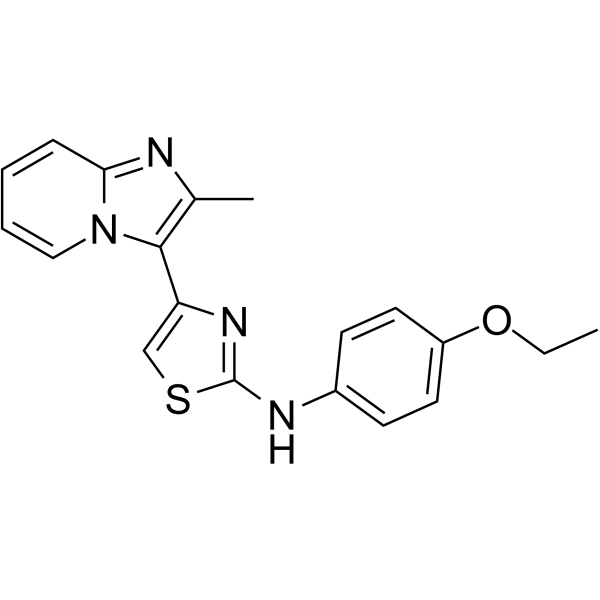
JK184
Based on 2 publication(s) in Google Scholar
JK184 is a potent Hedgehog (Hh) pathway inhibitor with IC50 of 30 nM in mammalian cells.
For research use only. We do not sell to patients.
- Purity : 99.93%
- CAS No.: 315703-52-7
- Formula: C19H18N4OS
- Molecular Weight:350.44
-
Storage:Powder -20°C, 3 years , 4°C, 2 years ; In solvent -80°C, 2 years , -20°C, 1 year

To place orders, for customer services and technical support, please contact: MedChemExpress USA
Tel: 609-228-6898 E-mail: [email protected] [email protected]


-
 Biological Activity
-
Chemical Information
-
Solvent & Solubility
- Purity & Documentation
- References
-
 Help & FAQs


-
HY-17024
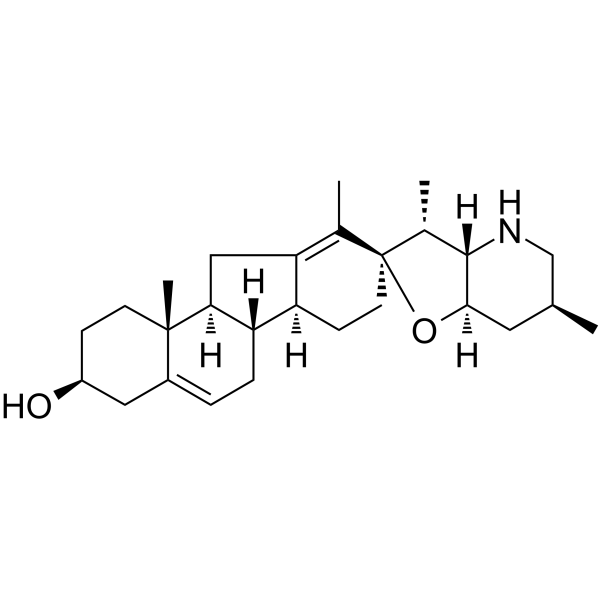
CyclopamineHedgehog Pathway Antagonist -
HY-13901
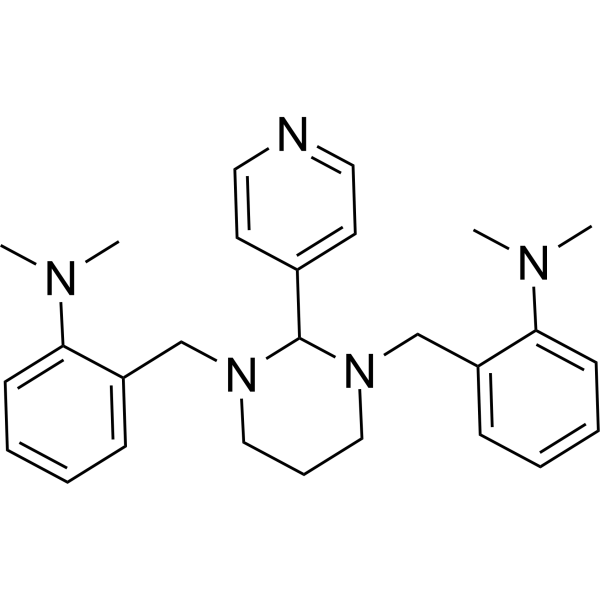
GANT 61Gli1/2 Inhibitor -
HY-10219
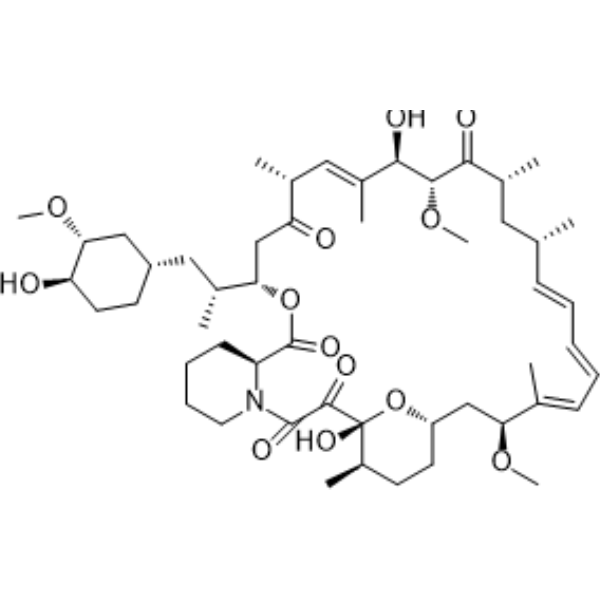
RapamycinmTOR Inhibitor -
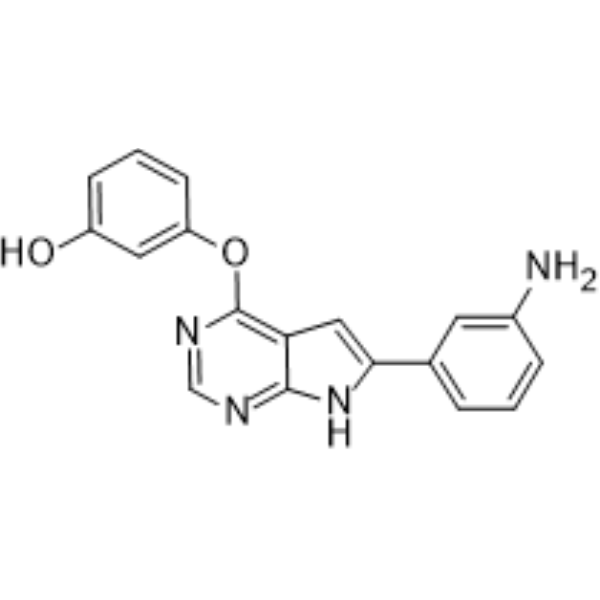
HY-10590
TWS119GSK-3β Inhibitor -
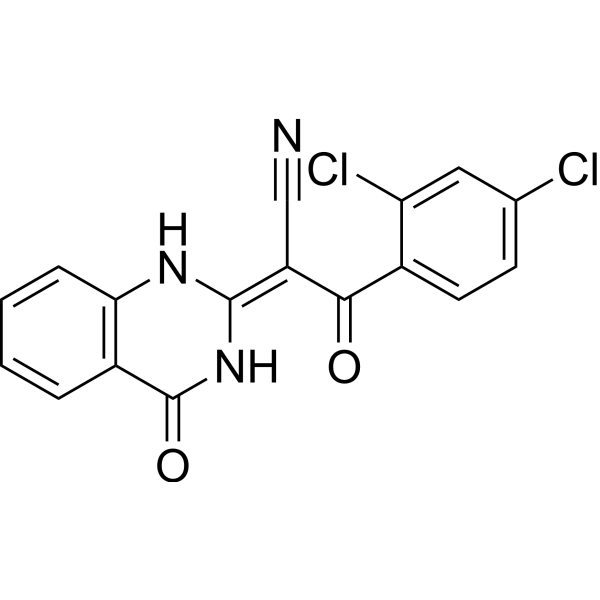
HY-100790
Ciliobrevin AHedgehog Inhibitor -
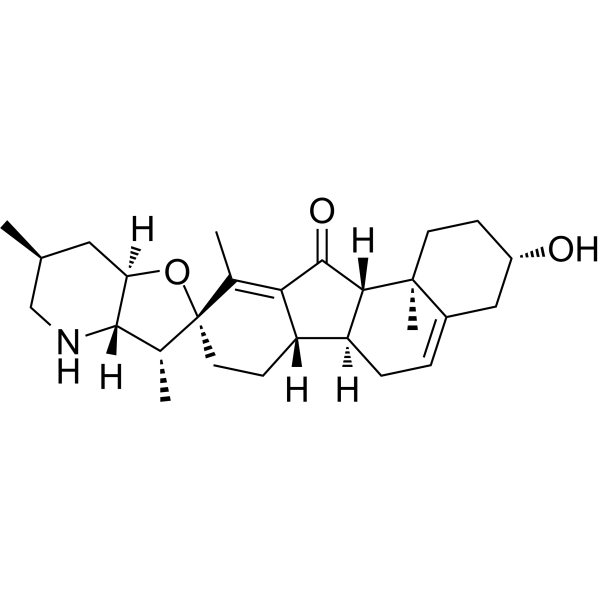
HY-N0836
JervineAnti-cancer Agent -
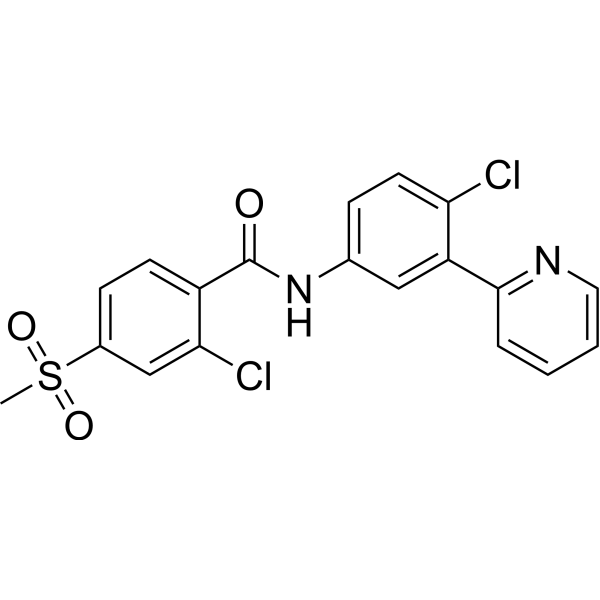
HY-10440
VismodegibHedgehog Inhibitor -
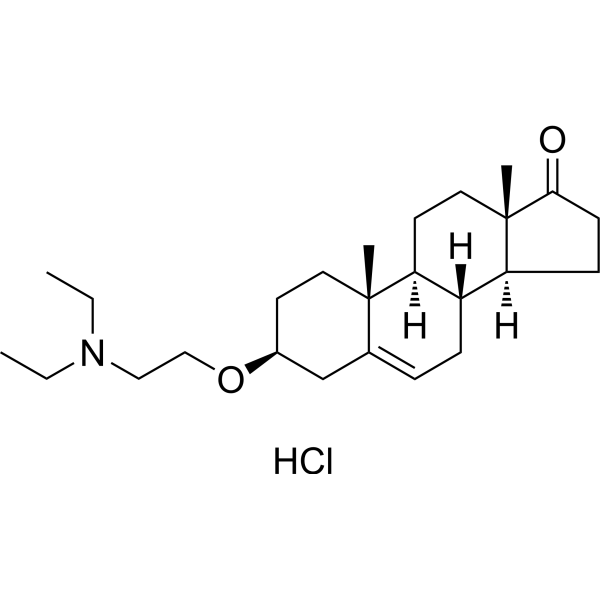
HY-107433
U18666ACholesterol Transport Inhibitor -
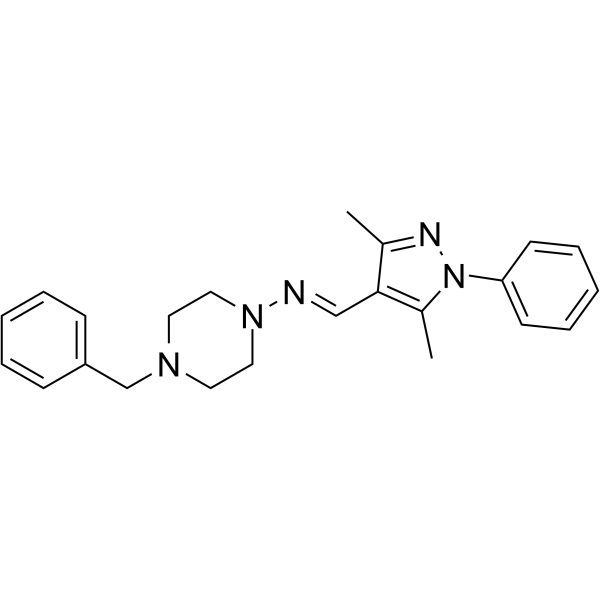
HY-100224
SANT-1Smo Antagonist -
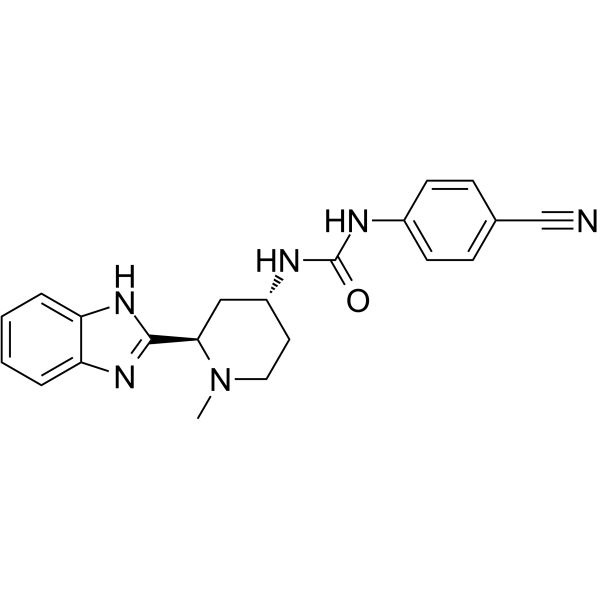
HY-16391
Glasdegib -
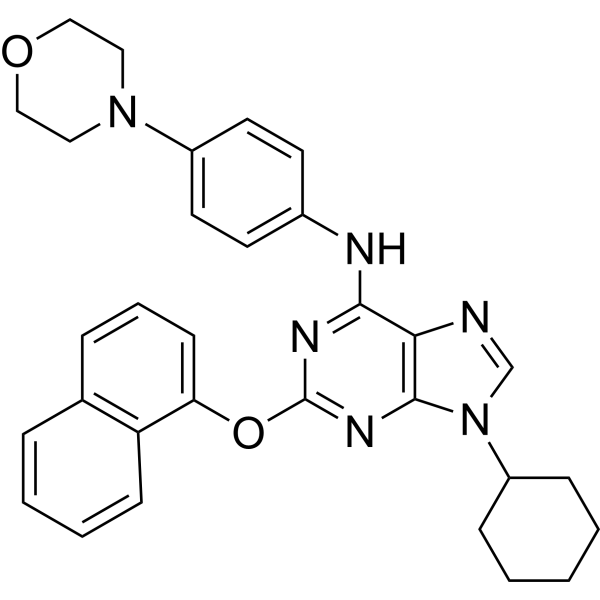
HY-15108
PurmorphamineSmoothened Receptor Agonist -
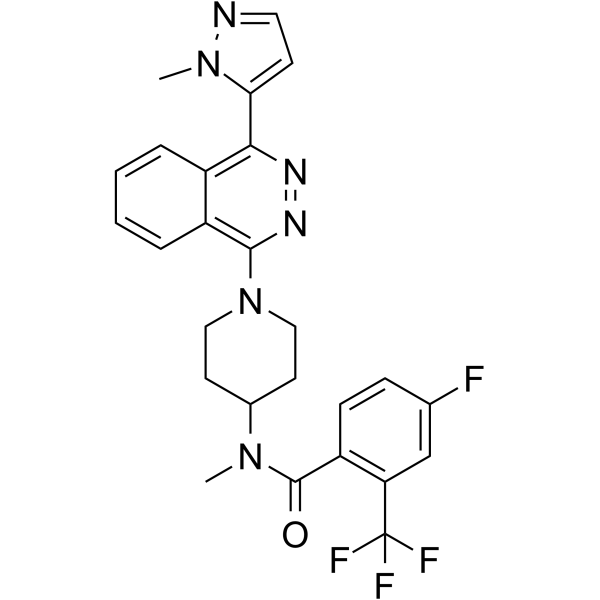
HY-13242
TaladegibSMO Antagonist
Publications Citing Use of MedChemExpress (MCE) JK184
More

Biological Activity
Description
IC50 & Target
IC50: 30 nM (Hedgehog)[1]
Cellular Effect
|
Cell Line

|
Type | Value | Description | References |
|---|---|---|---|---|
| BXPC-3 | GI50 |
3 nM
Compound: 123, JK184
|
Growth inhibition of human BxPC3 cells
Growth inhibition of human BxPC3 cells
|
[PMID: 19309080] |
| D283 Med | GI50 |
3 nM
Compound: 123, JK184
|
Growth inhibition of human D283 MED cells
Growth inhibition of human D283 MED cells
|
[PMID: 19309080] |
| Daoy | GI50 |
3 nM
Compound: 123, JK184
|
Growth inhibition of human DaOY cells
Growth inhibition of human DaOY cells
|
[PMID: 19309080] |
| Shh Light II | IC50 |
30 nM
Compound: 123, JK184
|
Inhibition of SHH in mouse Shh Light2 cells by GLI-responsive firefly luciferase reporter gene assay
Inhibition of SHH in mouse Shh Light2 cells by GLI-responsive firefly luciferase reporter gene assay
|
[PMID: 19309080] |
In Vitro
JK184 is designed to antagonize Hh signaling by inhibiting glioma (Gli)-dependent transcriptional activity in a dose dependent manner. JK184 significantly inhibitts proliferation of HUVECs with IC50 of 6.3 μg/mL after three days incubation. To evaluate anti-tumor effect of JK184, MTT assay is conducted in Panc-1 and BxPC-3 cells after administration with indicated concentrations of compounds, half maximal inhibitory concentration (IC50) of JK184 (23.7 ng/mL in anc-1 and 34.3 ng/mL in BxPC-3)[1]. Claudin-low cell lines are more sensitive to JK184 treatment than are MCF10a, MTSV1-7, or HMLE-shGFP and HMLE-pBP cells, and JK184 induced a dose-dependent decrease in glioma-associated oncogene homolog 1 (GLI1) transcript and protein levels in these cells. Treatment with the IC50 dose of JK184 enhances the proportion of HMLE-shEcad cells that stained with Annexin-V, but are negative for propidium iodide (PI) (P<0.0001, t test)[2].
MedChemExpress (MCE) has not independently confirmed the accuracy of these methods. They are for reference only.
In Vivo
MedChemExpress (MCE) has not independently confirmed the accuracy of these methods. They are for reference only.


Chemical Information
-
CAS No. 315703-52-7
-
Appearance Solid
-
Molecular Weight 350.44
-
Formula C19H18N4OS
-
Color Off-white to pink
-
SMILES
CC1=C(C2=CSC(NC3=CC=C(OCC)C=C3)=N2)N4C=CC=CC4=N1
-
Shipping
Room temperature in continental US; may vary elsewhere.
-
Storage
Powder -20°C 3 years 4°C 2 years In solvent -80°C 2 years -20°C 1 year


Publications (2)
-
Journal Impact Factor
-
Most Recent
-
Aging (Albany NY)
CTCF promotes colorectal cancer cell proliferation and chemotherapy resistance to 5-FU via the P53-Hedgehog axis. [Abstract]2020 Jul 20;12(16):16270-16293. PMID: 32688344 -
J Oncol
Inhibition of JK184-Induced Cytoprotective Autophagy Potentiates JK184 Antitumor Effects in Breast Cancer. [Abstract]2020 Jun 2:2020:1657896. PMID: 32565796


Solvent & Solubility
In Vitro:
DMSO : ≥ 50 mg/mL (142.68 mM; Hygroscopic DMSO has a significant impact on the solubility of product, please use newly opened DMSO)
* "≥" means soluble, but saturation unknown.
Please refer to the solubility information to select the appropriate solvent. Once prepared, please aliquot and store the solution to prevent product inactivation from repeated freeze-thaw cycles.
Storage method and period of stock solution: -80°C, 2 years; -20°C, 1 year. When stored at -80°C, please use it within 2 years. When stored at -20°C, please use it within 1 year.
Please refer to the solubility information to select the appropriate solvent. Once prepared, please aliquot and store the solution to prevent product inactivation from repeated freeze-thaw cycles.
Storage method and period of stock solution: -80°C, 2 years; -20°C, 1 year. When stored at -80°C, please use it within 2 years. When stored at -20°C, please use it within 1 year.
Concentration (start) × Volume (start) = Concentration (final) × Volume (final)
In Vivo:
Select the appropriate dissolution method based on your experimental animal and administration route.
- For the following dissolution methods, please ensure to first prepare a clear stock solution using an In Vitro approach and then sequentially add co-solvents:
- To ensure reliable experimental results, the clarified stock solution can be appropriately stored based on storage conditions. As for the working solution for In Vivo experiments, it is recommended to prepare freshly and use it on the same day.
- The percentages shown for the solvents indicate their volumetric ratio in the final prepared solution. If precipitation or phase separation occurs during preparation, heat and/or sonication can be used to aid dissolution.
Add each solvent one by one: 10% DMSO 40% PEG300 5% Tween-80 45% Saline
Solubility: ≥ 2.5 mg/mL (7.13 mM); Clear solution
This protocol yields a clear solution of ≥ 2.5 mg/mL (saturation unknown).
Taking 1 mL working solution as an example, add 100 μL DMSO stock solution (25.0 mg/mL) to 400 μL PEG300, and mix evenly; then add 50 μL Tween-80 and mix evenly; then add 450 μL Saline to adjust the volume to 1 mL.
Preparation of Saline: Dissolve 0.9 g sodium chloride in ddH₂O and dilute to 100 mL to obtain a clear Saline solution.
Add each solvent one by one: 10% DMSO 90% (20% SBE-β-CD in Saline)
Solubility: ≥ 2.5 mg/mL (7.13 mM); Clear solution
This protocol yields a clear solution of ≥ 2.5 mg/mL (saturation unknown).
Taking 1 mL working solution as an example, add 100 μL DMSO stock solution (25.0 mg/mL) to 900 μL 20% SBE-β-CD in Saline, and mix evenly.
Preparation of 20% SBE-β-CD in Saline (4°C, storage for one week): 2 g SBE-β-CD powder is dissolved in 10 mL Saline, completely dissolve until clear.
In Vivo Dissolution Calculator
Please enter the basic information of animal experiments:
-
-
-
-
Recommended: Prepare an additional quantity of animals to account for potential losses during experiments.
Please enter your animal formula composition:
-
%DMSO +
Recommended: Keep the proportion of DMSO in working solution below 2% if your animal is weak.
-
%+
-
+%Tween-80 + +
-
%Saline +
The co-solvents required include: DMSO, . All of co-solvents are available by MedChemExpress (MCE). , Tween 80. All of co-solvents are available by MedChemExpress (MCE).
Working solution concentration: 0.22 mg/mL
Method for preparing stock solution: mg drug dissolved in μL DMSO. Stock solution concentration: mg/mL.
1. Take μL DMSO stock solution;
2. Add μL .
μL , mix evenly;
3. Then add μL Tween 80, mix evenly;
4. Then add μL
Please ensure that the stock solution in the first step is dissolved to a clear state, and add co-solvents in sequence. You can use ultrasonic heating (ultrasonic cleaner, recommended frequency 20-40 kHz), vortexing, etc. to assist dissolution.


Purity & Documentation
-
Data Sheet (280 KB)
-
SDS (393 KB)
- English - EN (393 KB)
- Français - FR (393 KB)
- Deutsch - DE (393 KB)
- Norwegian - NO (393 KB)
- Español - ES (393 KB)
- Swedish - SV (393 KB)
- Italian - IT (393 KB)
- Korean - KR (393 KB)
- Portuguese - PT (393 KB)
-
Handling Instructions (2659 KB)
References
[1]. Zhang N, et al. Biodegradable polymeric micelles encapsulated JK184 suppress tumor growth through inhibiting Hedgehog signaling pathway. Nanoscale. 2015 Feb 14;7(6):2609-24. [Content Brief]
[2]. Colavito SA, et al. Significance of glioma-associated oncogene homolog 1 (GLI1) expression in claudin-low breast cancer and crosstalk with the nuclear factor kappa-light-chain-enhancer of activated B cells (NFκB) pathway. Breast Cancer Res. 2014 Sep 25;16(5):444. [Content Brief]


Complete Stock Solution Preparation Table
Please refer to the solubility information to select the appropriate solvent. Once prepared, please aliquot and store the solution to prevent product inactivation from repeated freeze-thaw cycles.
Storage method and period of stock solution: -80°C, 2 years; -20°C, 1 year. When stored at -80°C, please use it within 2 years. When stored at -20°C, please use it within 1 year.
| Optional Solvent | Concentration Solvent Mass | 1 mg | 5 mg | 10 mg | 25 mg |
|---|---|---|---|---|---|
| DMSO | 1 mM | 2.8536 mL | 14.2678 mL | 28.5356 mL | 71.3389 mL |
| 5 mM | 0.5707 mL | 2.8536 mL | 5.7071 mL | 14.2678 mL | |
| 10 mM | 0.2854 mL | 1.4268 mL | 2.8536 mL | 7.1339 mL | |
| 15 mM | 0.1902 mL | 0.9512 mL | 1.9024 mL | 4.7559 mL | |
| 20 mM | 0.1427 mL | 0.7134 mL | 1.4268 mL | 3.5669 mL | |
| 25 mM | 0.1141 mL | 0.5707 mL | 1.1414 mL | 2.8536 mL | |
| 30 mM | 0.0951 mL | 0.4756 mL | 0.9512 mL | 2.3780 mL | |
| 40 mM | 0.0713 mL | 0.3567 mL | 0.7134 mL | 1.7835 mL | |
| 50 mM | 0.0571 mL | 0.2854 mL | 0.5707 mL | 1.4268 mL | |
| 60 mM | 0.0476 mL | 0.2378 mL | 0.4756 mL | 1.1890 mL | |
| 80 mM | 0.0357 mL | 0.1783 mL | 0.3567 mL | 0.8917 mL | |
| 100 mM | 0.0285 mL | 0.1427 mL | 0.2854 mL | 0.7134 mL |


JK184 Related Classifications
HY-13307 Related Classifications
 Powered by Bioz