



Micafungin sodium
Based on 22 publication(s) in Google Scholar
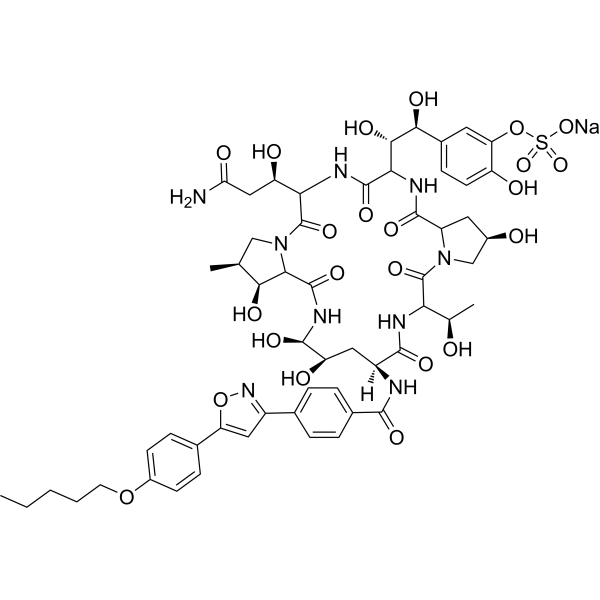
Micafungin sodium (FK 463 sodium) is an antifungal agent which inhibits 1, 3-beta-D-glucan synthesis.
연구목적의 판매만을 진행합니다. 환자를 대상으로 한 판매는 하지 않습니다.
- Purity : 98.91%
- CAS No.: 208538-73-2
- 화학식: C56H70N9NaO23S
- 분자량:1292.26
-
보관:
4°C, sealed storage, away from moisture and light
* In solvent : -80°C, 6 months; -20°C, 1 month (sealed storage, away from moisture and light)

To place orders, for customer services and technical support, please contact: MedChemExpress USA
Tel: 609-228-6898 E-mail: [email protected] [email protected]


-
 Biological Activity
-
Chemical Information
-
용액&용해도
- 순도&문서
- References
-
 Help & FAQs


-
HY-17006
Caspofungin diacetateAntifungal Agent -
HY-13553
AnidulafunginAntifungal Agent -
HY-B0221
Amphotericin BAntifungal Agent -
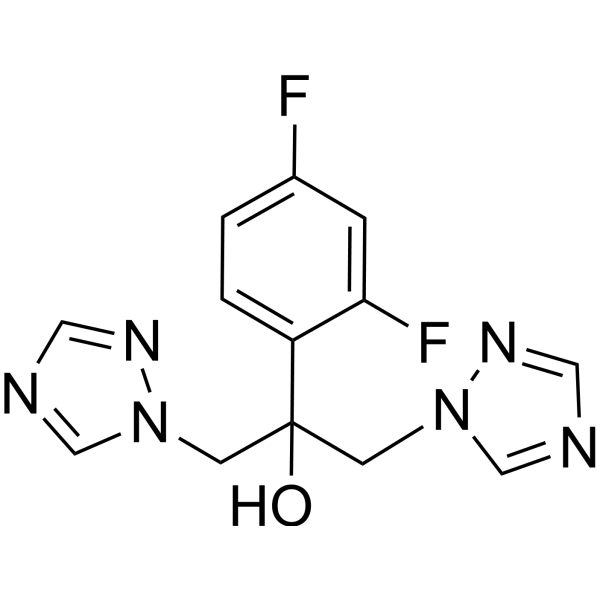
HY-B0101
FluconazoleAntifungal Agent -
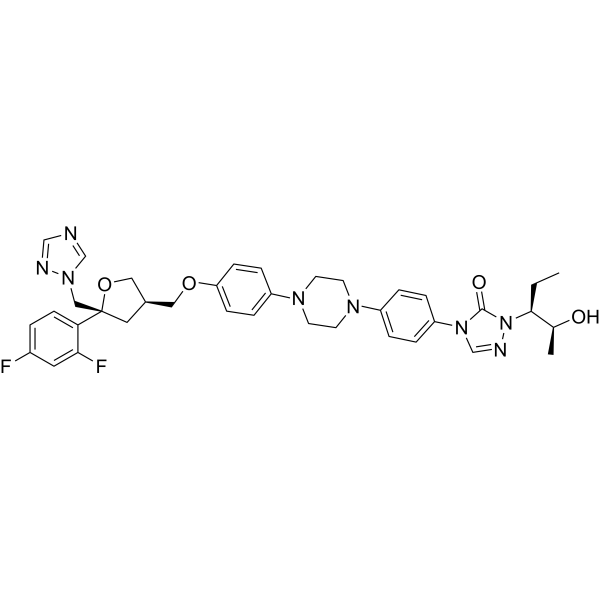
HY-17373
PosaconazoleAnti-fungal Agent -
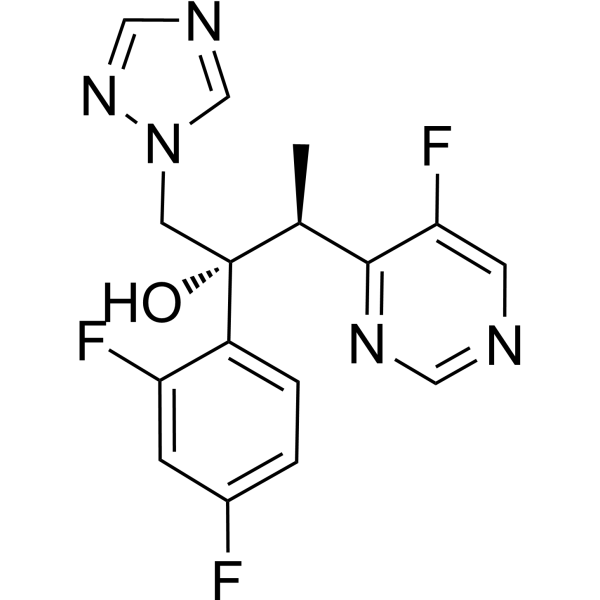
HY-76200
VoriconazoleAntifungal Agent -
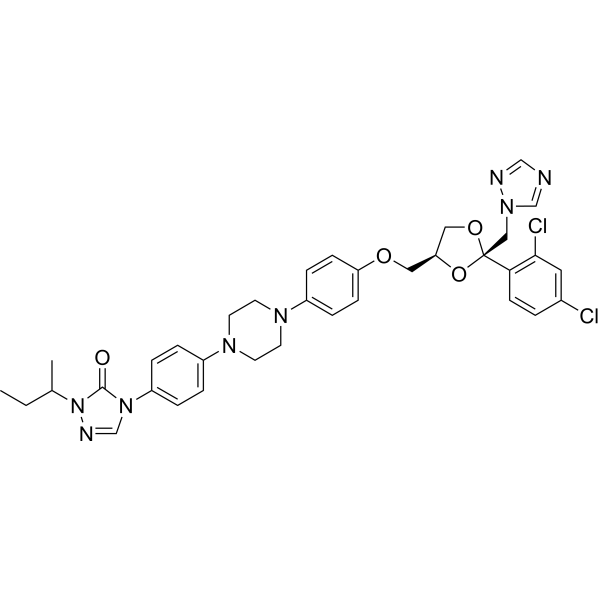
HY-17514
ItraconazoleAntifungal Agent -
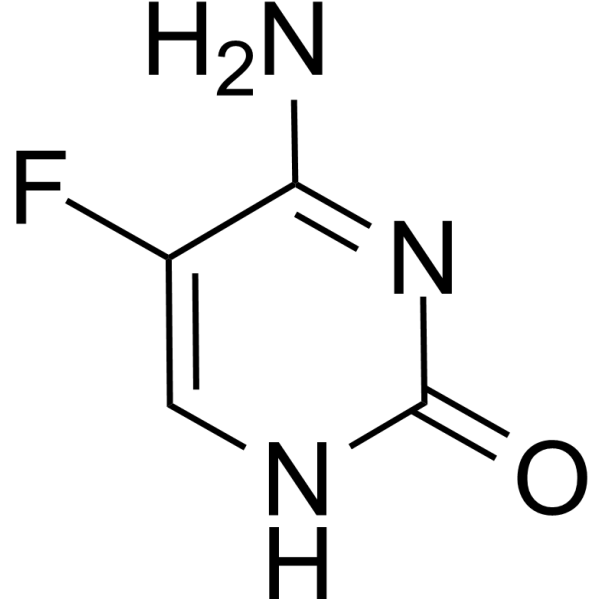
HY-B0139
FlucytosineAntifungal Agent -
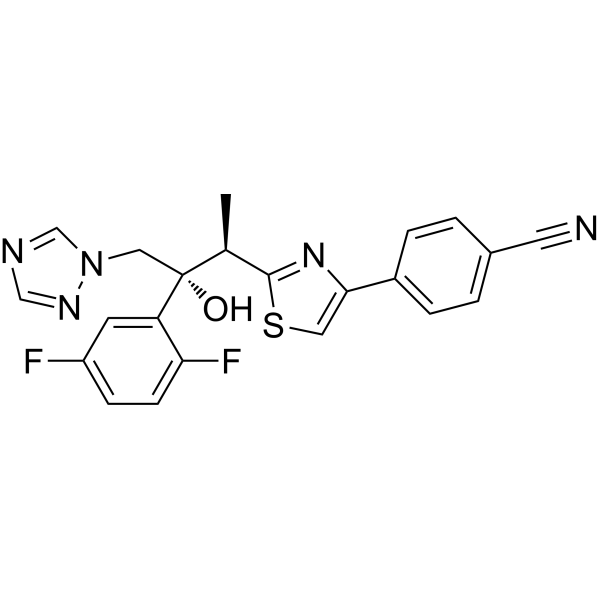
HY-14273
IsavuconazoleTriazole Antifungal -
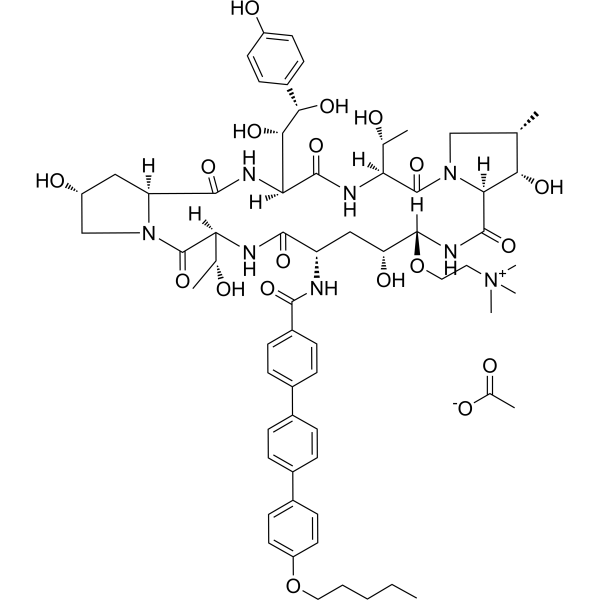
HY-108009A
Rezafungin acetateEchinocandin -
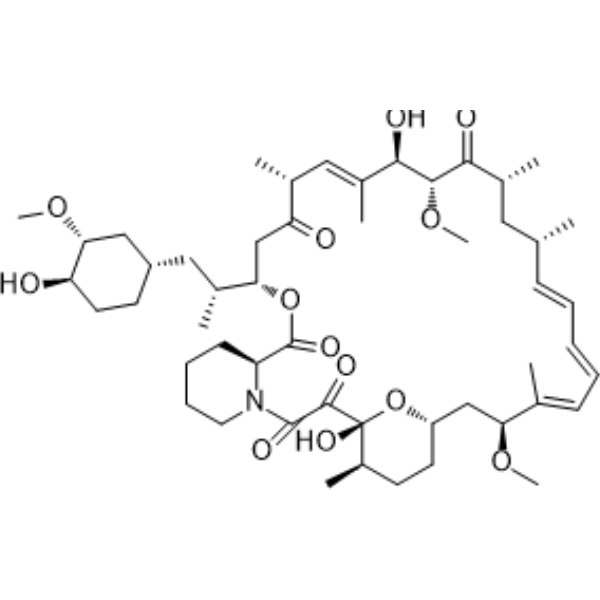
HY-10219
RapamycinmTOR Inhibitor -
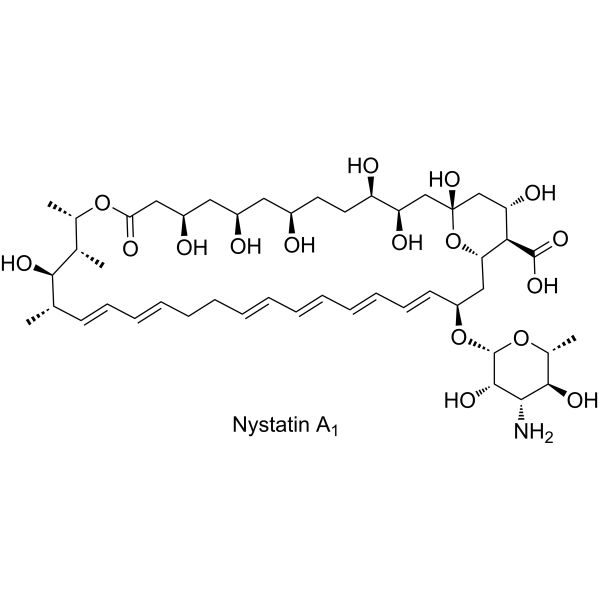
HY-17409
NystatinAntifungal Antibiotic
Publications Citing Use of MedChemExpress (MCE) Micafungin sodium
More- Exp Mol Med. 2026 Mar;58(2):501-518. [Abstract]
- Adv Sci (Weinh). 2026 Jun 28:e76369. [Abstract]
- NPJ Antimicrob Resist. 2025 Apr 17;3(1):31. [Abstract]
- J Clin Microbiol. 2017 Jun;55(6):1883-1893. [Abstract]
- Probiotics Antimicrob Proteins. 2026 Jan 6. [Abstract]
- Chem Biol Interact. 2024 Sep 1:400:111179. [Abstract]
- Sci Rep. 2017 Feb 17:7:42886. [Abstract]
- Appl Microbiol Biotechnol. 2025 Jan 24;109(1):21. [Abstract]
- Microorganisms. 2023 Jun 18;11(6):1608. [Abstract]
- Microorganisms. 2022 Dec 21;11(1):23. [Abstract]
- Antimicrob Agents Chemother. 2023 Aug 17;67(8):e0054323. [Abstract]
- J Antimicrob Chemother. 2020 Aug 1;75(8):2133-2140. [Abstract]
- mSphere. 2020 Oct 28;5(5):e00821-20. [Abstract]
- mSphere. 2018 Nov 14;3(6):e00547-18. [Abstract]
- PLoS Negl Trop Dis. 2019 Aug 20;13(8):e0007681. [Abstract]
- Mycoses. 2021 Mar;64(3):282-291. [Abstract]
- Infect Drug Resist. 2022 Dec 15:15:7459-7473. [Abstract]
- J Microbiol Methods. 2021 Nov:190:106327. [Abstract]
- bioRxiv. 2026 Jun 30:2026.06.29.735437.
- University of Szeged. 2026.
- bioRxiv. 2025 Feb 6:2025.02.05.636768. [Abstract]
- bioRxiv. 2024 May 14.
 Customer Validation & Images

-
Microbiological Assay
-
Microbiological Assay
All Antibiotic Isoforms
More

Biological Activity
제품 설명
In Vitro
Micafungin (10 mg/mL) phenotypicly decreases the formation of biofilm in most of the isolates. For all the genes tested, the levels of mRNA transcription are also decreased significantly in micafungin-treated samples cf. their untreated counterparts[1]. The combination of micafungin and KB425796-C is fungicidal and markedly reduces the number of CFU, in contrast to the fungistatic effects (no reduction in CFU) observed at all examined time points when each drug is used alone[2].
MedChemExpress (MCE) has not independently confirmed the accuracy of these methods. They are for reference only. .
In Vivo
MedChemExpress (MCE) has not independently confirmed the accuracy of these methods. They are for reference only.
Clinical Trial
| NCT Number | Sponsor | Condition | Start Date |
Phase

|
|---|---|---|---|---|
| NCT01329991 | Plexxikon| | 2011-05 | PHASE1 |


Chemical Information
-
CAS No. 208538-73-2
-
Appearance Solid
-
분자량 1292.26
-
화학식 C56H70N9NaO23S
-
Color White to off-white
-
SMILES
O=S(OC1=CC([C@H](O)[C@@H](O)C(NC(C2N(C(C(NC([C@]([H])(C[C@@H](O)[C@@H](O)NC(C3N(C(C([C@H](O)CC(N)=O)N4)=O)C[C@H](C)[C@@H]3O)=O)NC(C5=CC=C(C6=NOC(C7=CC=C(OCCCCC)C=C7)=C6)C=C5)=O)=O)[C@H](O)C)=O)C[C@H](O)C2)=O)C4=O)=CC=C1O)(O[Na])=O
-
Synonyms
FK 463 sodium
-
선적
Room temperature in continental US; may vary elsewhere.
-
보관
4°C, sealed storage, away from moisture and light
* In solvent : -80°C, 6 months; -20°C, 1 month (sealed storage, away from moisture and light)


Publications (22)
-
Journal Impact Factor
-
Most Recent
-
Exp Mol Med
UBE2M as a bridge spanning neddylation and cell cycle regulation in colorectal adenocarcinoma. [Abstract]2026 Mar;58(2):501-518. PMID: 41680469 -
Adv Sci (Weinh)
Calcineurin-Dependent Stress Adaptation Enables Caspofungin Heteroresistance Leading to Stable Resistance in Candida Glabrata. [Abstract]2026 Jun 28:e76369. PMID: 42365577 -
NPJ Antimicrob Resist
Hotspot gene conversion between FKS1 and FKS2 in echinocandin resistant Candida glabrata serial isolates. [Abstract]2025 Apr 17;3(1):31. PMID: 40247099 -
J Clin Microbiol
Antifungal Susceptibility Testing of Malassezia spp. with an Optimized Colorimetric Broth Microdilution Method. [Abstract]2017 Jun;55(6):1883-1893. PMID: 28381607 -
Probiotics Antimicrob Proteins
Screening the γ-core Motif Peptides of Ascomycetous Antifungal Proteins for Antifungal Activity and Potential Therapeutic Applicability. [Abstract]2026 Jan 6. PMID: 41493708 -
Chem Biol Interact
Micafungin protects mouse heart against doxorubicin-induced oxidative injury via suppressing MALT1-dependent k48-linked ubiquitination of Nrf2. [Abstract]2024 Sep 1:400:111179. PMID: 39089415 -
Sci Rep
Biofilm formation of the black yeast-like fungus Exophiala dermatitidis and its susceptibility to antiinfective agents. [Abstract]2017 Feb 17:7:42886. PMID: 28211475 -
Appl Microbiol Biotechnol
Aloin remodels the cell wall of Candida albicans to reduce its hyphal virulence against oral candidiasis. [Abstract]2025 Jan 24;109(1):21. PMID: 39853490 -
Microorganisms
In Silico Identification and In Vitro Validation of Repurposed Compounds Targeting the RSV Polymerase. [Abstract]2023 Jun 18;11(6):1608. PMID: 37375110 -
Microorganisms
Candida albicans Strains Adapted to Caspofungin Due to Aneuploidy Become Highly Tolerant under Continued Drug Pressure. [Abstract]2022 Dec 21;11(1):23. PMID: 36677315 -
Antimicrob Agents Chemother
Rapid Evolution of Multidrug Resistance in a Candida lusitaniae Infection during Micafungin Monotherapy. [Abstract]2023 Aug 17;67(8):e0054323. PMID: 37428075
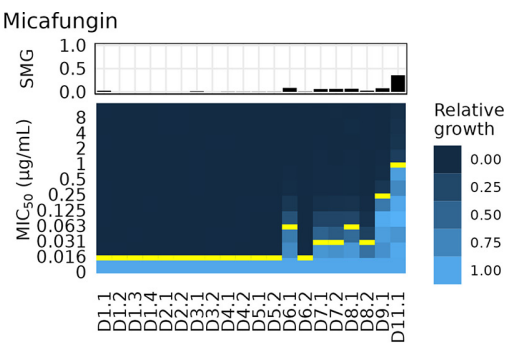
Micafungin sodium purchased from MedChemExpress. Usage Cited in: Antimicrob Agents Chemother. 2023 Aug 17;67(8):e0054323. [Abstract]
Heatmaps of relative growth at increasing concentrations of Micafungin sodium (MICs) and bar charts of tolerance (supra-MIC growth [SMG]) for three drug classes. The MIC is marked with a yellow bar for each isolate.
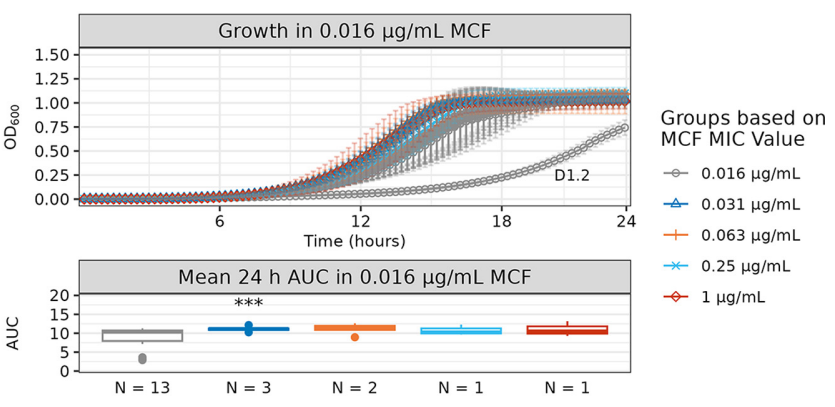
Micafungin sodium purchased from MedChemExpress. Usage Cited in: Antimicrob Agents Chemother. 2023 Aug 17;67(8):e0054323. [Abstract]
Growth and mean AUC-L values in 0.016 μg/mL MCF. A single isolate (D1.2) did not reach stationary phase and is labeled on the growth curve.
-
J Antimicrob Chemother
Antibiofilm activity of antifungal drugs, including the novel drug olorofim, against Lomentospora prolificans. [Abstract]2020 Aug 1;75(8):2133-2140. PMID: 32386411 -
mSphere
Triazole Evolution of Candida parapsilosis Results in Cross-Resistance to Other Antifungal Drugs, Influences Stress Responses, and Alters Virulence in an Antifungal Drug-Dependent Manner. [Abstract]2020 Oct 28;5(5):e00821-20. PMID: 33115837 -
mSphere
Echinocandin-Induced Microevolution of Candida parapsilosis Influences Virulence and Abiotic Stress Tolerance. [Abstract]2018 Nov 14;3(6):e00547-18. PMID: 30429225 -
PLoS Negl Trop Dis
Identification of anti-flaviviral drugs with mosquitocidal and anti-Zika virus activity in Aedes aegypti. [Abstract]2019 Aug 20;13(8):e0007681. PMID: 31430351 -
Mycoses
Antifungal susceptibility testing of dermatophytes: Development and evaluation of an optimised broth microdilution method. [Abstract]2021 Mar;64(3):282-291. PMID: 33084127 -
Infect Drug Resist
Correlation Between Drug Resistance and Virulence of Candida Isolates from Patients with Candidiasis. [Abstract]2022 Dec 15:15:7459-7473. PMID: 36544991 -
J Microbiol Methods
2021 Nov:190:106327. PMID: 34517039 -
-
-
bioRxiv
Heterogeneity of Candida bloodstream isolates in an academic medical center and affiliated hospitals. [Abstract]2025 Feb 6:2025.02.05.636768. PMID: 39975022 -


용액&용해도
In Vitro:
DMSO : 116.67 mg/mL (90.28 mM; Need ultrasonic; Hygroscopic DMSO has a significant impact on the solubility of product, please use newly opened DMSO)
Please refer to the solubility information to select the appropriate solvent. Once prepared, please aliquot and store the solution to prevent product inactivation from repeated freeze-thaw cycles.
Storage method and period of stock solution: -80°C, 6 months; -20°C, 1 month (sealed storage, away from moisture and light). When stored at -80°C, please use it within 6 months. When stored at -20°C, please use it within 1 month.
Please refer to the solubility information to select the appropriate solvent. Once prepared, please aliquot and store the solution to prevent product inactivation from repeated freeze-thaw cycles.
Storage method and period of stock solution: -80°C, 6 months; -20°C, 1 month (sealed storage, away from moisture and light). When stored at -80°C, please use it within 6 months. When stored at -20°C, please use it within 1 month.
Concentration (start) × Volume (start) = Concentration (final) × Volume (final)


순도&문서
-
Data Sheet (286 KB)
-
SDS (393 KB)
- English - EN (393 KB)
- Français - FR (393 KB)
- Deutsch - DE (393 KB)
- Norwegian - NO (393 KB)
- Español - ES (393 KB)
- Swedish - SV (393 KB)
- Italian - IT (393 KB)
- Korean - KR (393 KB)
- Portuguese - PT (393 KB)
-
Handling Instructions (2659 KB)
References
[1]. Bazzi W, et al. The inhibitory effect of micafungin on biofilm formation by Pseudomonas aeruginosa. Biofouling. 2013 Jul 23. [Content Brief]
[2]. Kai H, et al. Synergistic antifungal activity of KB425796-C in combination with micafungin against Aspergillus fumigat us and its efficacy in murine infection models. J Antibiot (Tokyo). 2013 Jun 12. [Content Brief]
[3]. Ikeda F, Wakai Y, Matsumoto S, et al. Efficacy of FK463, a new lipopeptide antifungal agent, in mouse models of disseminated candidiasis and aspergillosis. Antimicrob Agents Chemother. 2000;44(3):614-618. [Content Brief]
[4]. Tawara S, Ikeda F, Maki K, et al. In vitro activities of a new lipopeptide antifungal agent, FK463, against a variety of clinically important fungi. Antimicrob Agents Chemother. 2000;44(1):57-62. [Content Brief]
[5]. Mikamo H, Sato Y, Tamaya T. In vitro antifungal activity of FK463, a new water-soluble echinocandin-like lipopeptide. J Antimicrob Chemother. 2000;46(3):485-487. [Content Brief]


Complete Stock Solution Preparation Table
Please refer to the solubility information to select the appropriate solvent. Once prepared, please aliquot and store the solution to prevent product inactivation from repeated freeze-thaw cycles.
Storage method and period of stock solution: -80°C, 6 months; -20°C, 1 month (sealed storage, away from moisture and light). When stored at -80°C, please use it within 6 months. When stored at -20°C, please use it within 1 month.
| Optional Solvent | Concentration Solvent Mass | 1 mg | 5 mg | 10 mg | 25 mg |
|---|---|---|---|---|---|
| DMSO | 1 mM | 0.7738 mL | 3.8692 mL | 7.7384 mL | 19.3460 mL |
| 5 mM | 0.1548 mL | 0.7738 mL | 1.5477 mL | 3.8692 mL | |
| 10 mM | 0.0774 mL | 0.3869 mL | 0.7738 mL | 1.9346 mL | |
| 15 mM | 0.0516 mL | 0.2579 mL | 0.5159 mL | 1.2897 mL | |
| 20 mM | 0.0387 mL | 0.1935 mL | 0.3869 mL | 0.9673 mL | |
| 25 mM | 0.0310 mL | 0.1548 mL | 0.3095 mL | 0.7738 mL | |
| 30 mM | 0.0258 mL | 0.1290 mL | 0.2579 mL | 0.6449 mL | |
| 40 mM | 0.0193 mL | 0.0967 mL | 0.1935 mL | 0.4836 mL | |
| 50 mM | 0.0155 mL | 0.0774 mL | 0.1548 mL | 0.3869 mL | |
| 60 mM | 0.0129 mL | 0.0645 mL | 0.1290 mL | 0.3224 mL | |
| 80 mM | 0.0097 mL | 0.0484 mL | 0.0967 mL | 0.2418 mL |


Micafungin sodium Related Classifications
HY-16321 Related Classifications
 Powered by Bioz