



-
Eucommiaceae Extract (17)

- 1
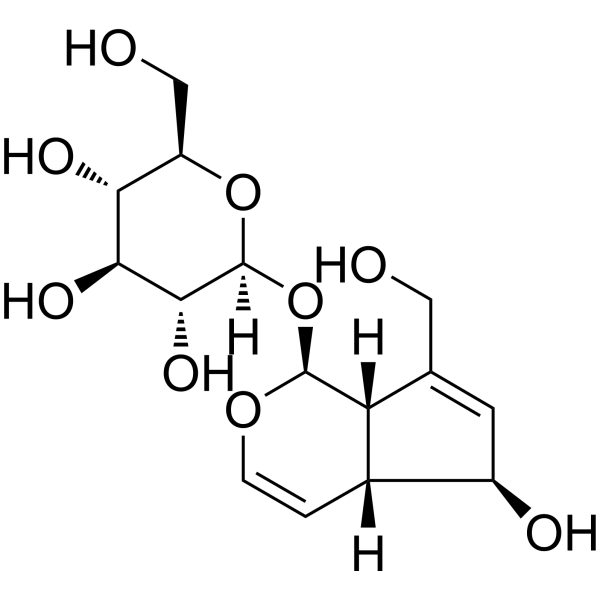
- Formula: C15H22O9
- Molecular Weight: 346.33
Aucubin is an iridoid glycoside component that acn be found in E. ulmoides. Aucubin can cross the blood-brain barrier (BBB) and has anti-anxiety, antidepressive and anti-neuroinflammatory effects. Aucubin has many biological activities, such as antioxidant, anti-aging, anti-inflammatory, antimicrobial, anti-fibrotic, anti-cancer, hepatoprotective, neuroprotective and osteoprotective effects.
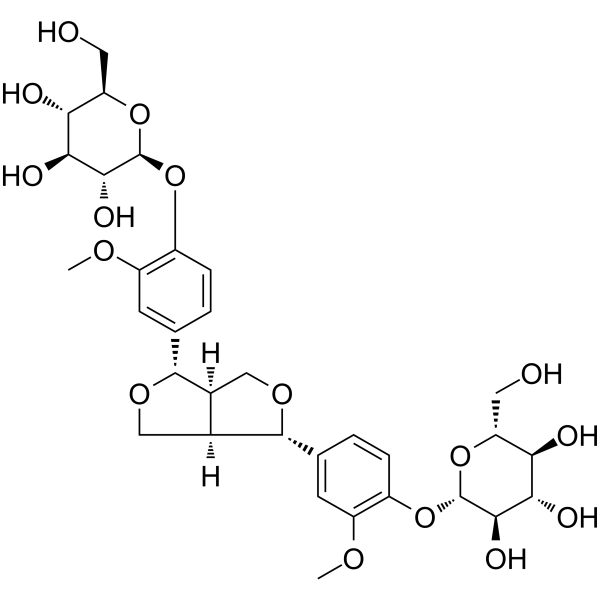
- Formula: C32H42O16
- Molecular Weight: 682.67
Pinoresinol Diglucoside is an orally active lignan with multifunctional bioactivity. Pinoresinol Diglucoside interacts with targets including ALB, HIF1A, GSK3B, BCL2, MARK3, IL6, NF-κB p65, Nrf2, HO-1, and TLR4, and modulates pathways including PI3K-Akt, estrogen, MAPK, Rap1, AKT/mTOR/NF-κB, and TGF-β1/Smads. Pinoresinol Diglucoside regulates osteogenesis, bone resorption, oxidative stress, inflammation, apoptosis, ferroptosis, ferritinophagy, cardiac fibrosis, and vasorelaxation. Pinoresinol Diglucoside can be used for the research of osteoporosis, ischemia/reperfusion-induced brain injury, Alzheimer’s disease, myocardial ischemia-reperfusion injury, chondrodysplasia, diabetic cardiomyopathy, cardiac hypertrophy, hypertension, cisplatin-induced hearing loss, atherosclerotic cardiovascular diseases, and disuse osteoporosis.
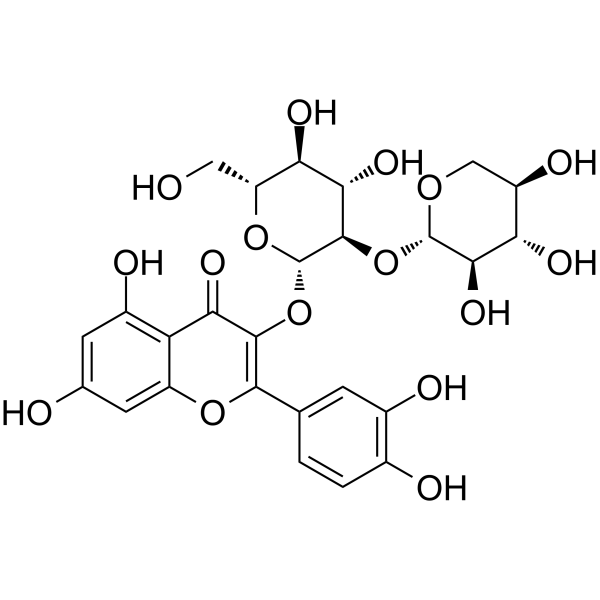
- Formula: C26H28O16
- Molecular Weight: 596.49
Quercetin-3-O-sambubioside is a monomeric compound found in Eucommia ulmoides male flowers. Quercetin-3-O-sambubioside promotes the stimulation of the nerve center. Antioxidant and anticancer activities.

- Formula: C₁₅H₂₂O₉
- Molecular Weight: 346.33
Aucubin (Standard) is the analytical standard of Aucubin. This product is intended for research and analytical applications. Aucubin, an iridoid glucoside, is isolated from Plantago asiatica, Eucommia ulmoides, the leaves of Aucuba japonica and more recently from butterfly larva. Aucubin has many biological activities, such as antioxidant, anti-aging, anti-inflammatory, antimicrobial, anti-fibrotic, anti-cancer, hepatoprotective, neuroprotective and osteoprotective effects.


- Formula: C13H18O2
- Molecular Weight: 206.28
(+)-(6R)-Eucomegastigmane A (Compound 1a) is a grandisinane enantiomer found in the leaves of Eucommia ulmoides.

- Formula: C7H10O
- Molecular Weight: 110.15
3,4-Dimethylcyclopent-2-enone (Compound 29) is a ketone compound detected in the extract of Eucommia ulmoides twig vinegar.

- Formula: C8H16O
- Molecular Weight: 128.21
Oct-7-en-4-ol is a compound that can be isolated from Eucommia ulmoides Oliver.
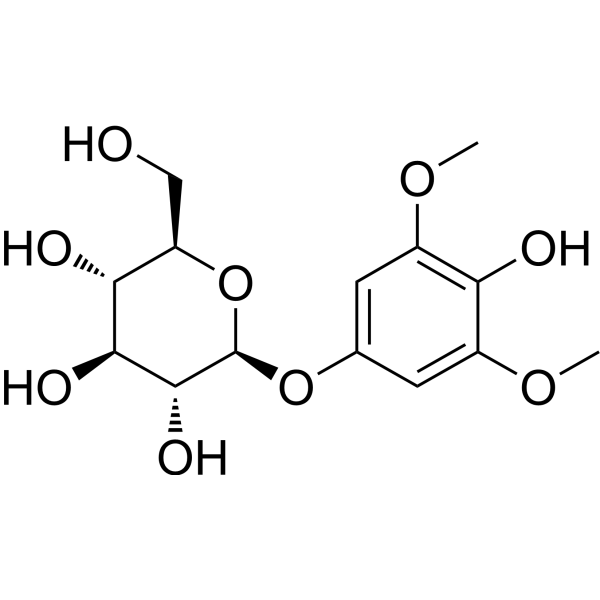
- Formula: C14H20O9
- Molecular Weight: 332.30
Koaburaside is a cytoprotective and anti-inflammatory natural compound. Koaburaside shows antioxidant activity with an IC50 of 9.0 μM for DPPH-free radical scavenging assay. Koaburaside inhibits histamine release and expressions of IL-6 and TNF-α in human mast cells. Koaburaside also effectively inhibits influenza A neuraminidase.
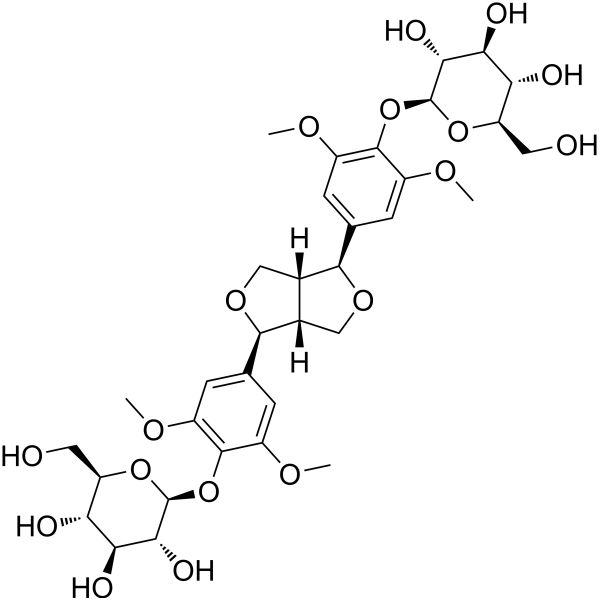
- Formula: C34H46O18
- Molecular Weight: 742.72
Liriodendrin is an orally effective lignan compound with anti-inflammatory, antioxidant, and anti-platelet aggregation activities. Liriodendrin is isolated and extracted from Sargentodoxae caulis and Linaria vulgaris. Liriodendrin regulates the expression of genes related to inflammation and cellular metabolism by inhibiting the NF-κB, PI3K/Akt, and TLR4 signaling pathways, or by activating the PI3K-DDX18 pathway. Liriodendrin increases the expression of HSF1 and HSP27 without cytotoxicity. Liriodendrin is used in studies on ulcerative colitis, myocardial ischemia-reperfusion injury, sepsis-induced acute lung injury, and chronic endometritis.

- Formula: C32H42O16
- Molecular Weight: 682.67
Pinoresinol Diglucoside (Standard) is the analytical standard of Pinoresinol Diglucoside (HY-N0657). This product is intended for research and analytical applications. Pinoresinol Diglucoside is an orally active lignan with multifunctional bioactivity. Pinoresinol Diglucoside interacts with targets including ALB, HIF1A, GSK3B, BCL2, MARK3, IL6, NF-κB p65, Nrf2, HO-1, and TLR4, and modulates pathways including PI3K-Akt, estrogen, MAPK, Rap1, AKT/mTOR/NF-κB, and TGF-β1/Smads. Pinoresinol Diglucoside regulates osteogenesis, bone resorption, oxidative stress, inflammation, apoptosis, ferroptosis, ferritinophagy, cardiac fibrosis, and vasorelaxation. Pinoresinol Diglucoside can be used for the research of osteoporosis, ischemia/reperfusion-induced brain injury, Alzheimer’s disease, myocardial ischemia-reperfusion injury, chondrodysplasia, diabetic cardiomyopathy, cardiac hypertrophy, hypertension, cisplatin-induced hearing loss, atherosclerotic cardiovascular diseases, and disuse osteoporosis.

- Formula: C10H14O5
- Molecular Weight: 214.22
Threo-guaiacylglycerol is a Phenylpropanoids product that can be isolated from the barks of Eucommia ulmoides Oliver.

- Formula: C10H14O5
- Molecular Weight: 214.22
erythro-Guaiacylglycerol is a Phenylpropanoids product that can be isolated from the barks of Eucommia ulmoides Oliver.
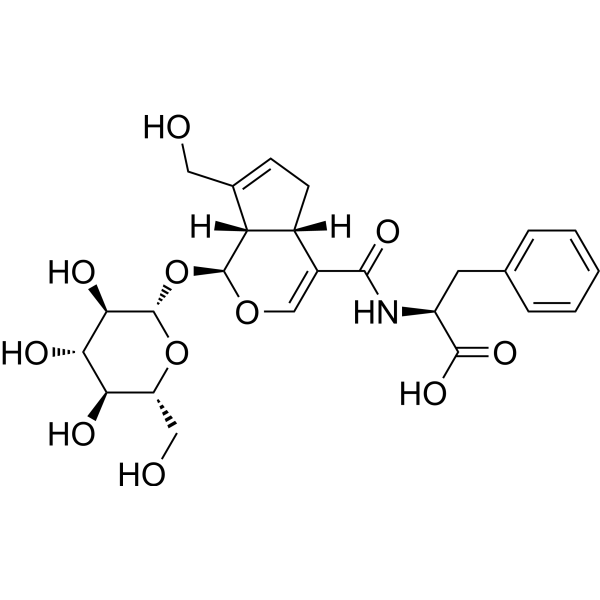
- Formula: C25H31NO11
- Molecular Weight: 521.51
Eucomoside B (compound b) ia a natural product isolated from Green Leaves of Eucommia ulmoides.
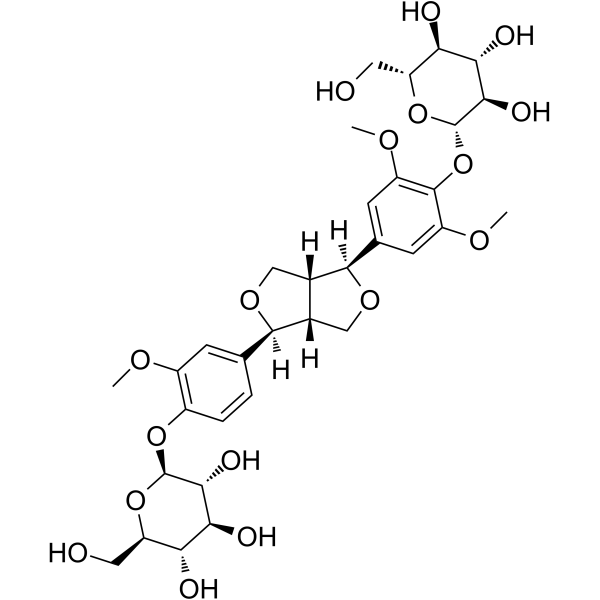
- Formula: C33H44O17
- Molecular Weight: 712.69
(+)-Medioresinol Di-O-β-D-glucopyranoside is a lignan glucoside with strong inhibitory activity of 3', 5'-cyclic monophosphate (cyclic AMP) phosphodiesterase.
- 1



