



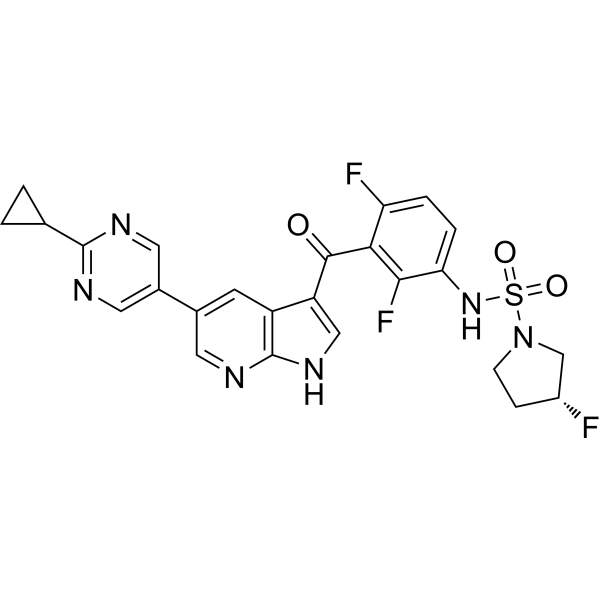
Plixorafenib
Based on 20 publication(s) in Google Scholar
PLX8394 is a potent and selective BRaf inhibitor, with an IC50 of appr 5 nM for BRAFV600E.
Nos produits utilisent uniquement pour la recherche. Nous ne vendons pas aux patients.
- Pureté : 99.10%
- CAS No.: 1393466-87-9
- Formule: C25H21F3N6O3S
- Masse moléculaire:542.53
-
Stockage:Powder -20°C, 3 years , 4°C, 2 years ; In solvent -80°C, 6 months , -20°C, 1 month

To place orders, for customer services and technical support, please contact: MedChemExpress USA
Tel: 609-228-6898 E-mail: [email protected] [email protected]


-
 Activité biologique
-
Chemical Information
-
Solvant et solubilité
- Pureté et documentation
- Références
-
 Help & FAQs


-
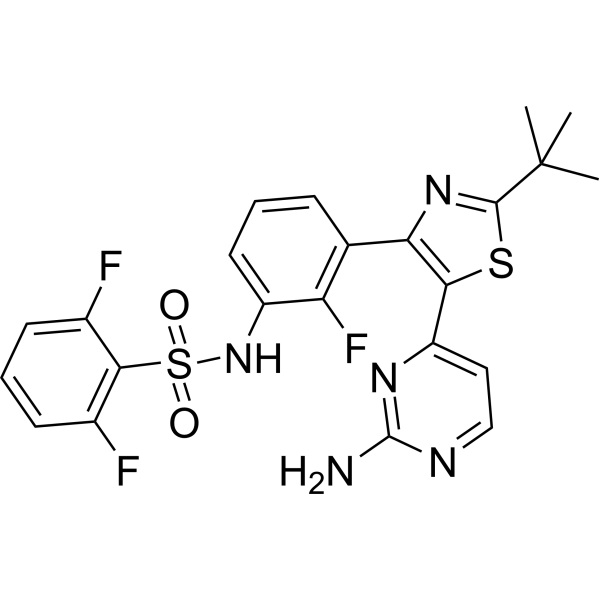
HY-14660
DabrafenibBRAF Inhibitor -
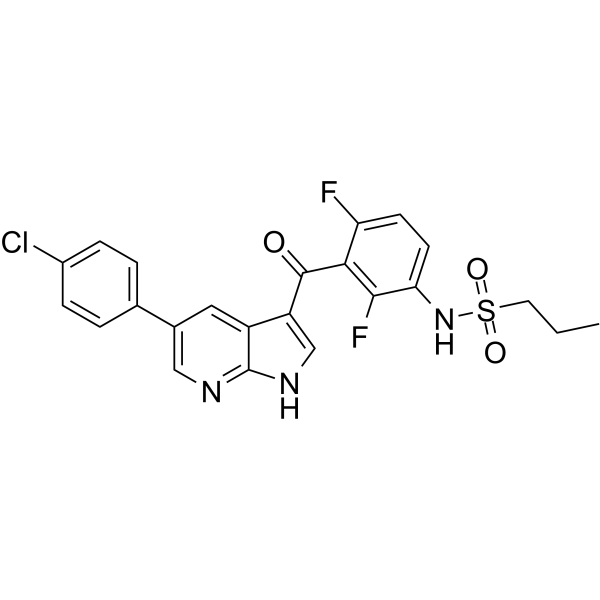
HY-12057
VemurafenibB-Raf Inhibitor -
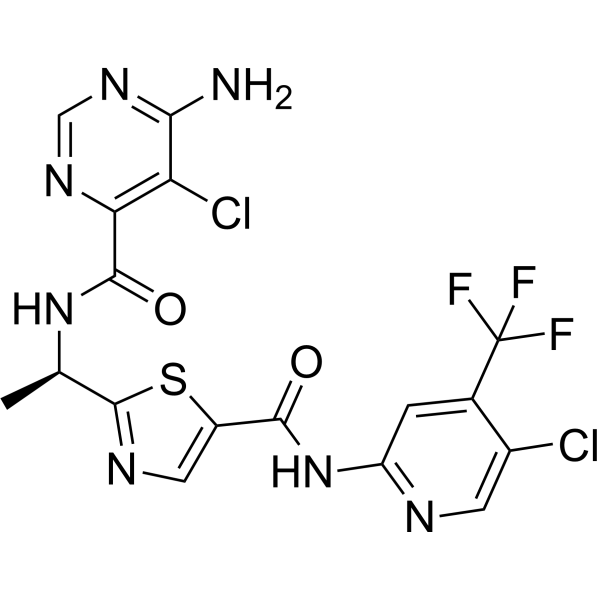
HY-15246
TovorafenibRaf Kinase Inhibitor -
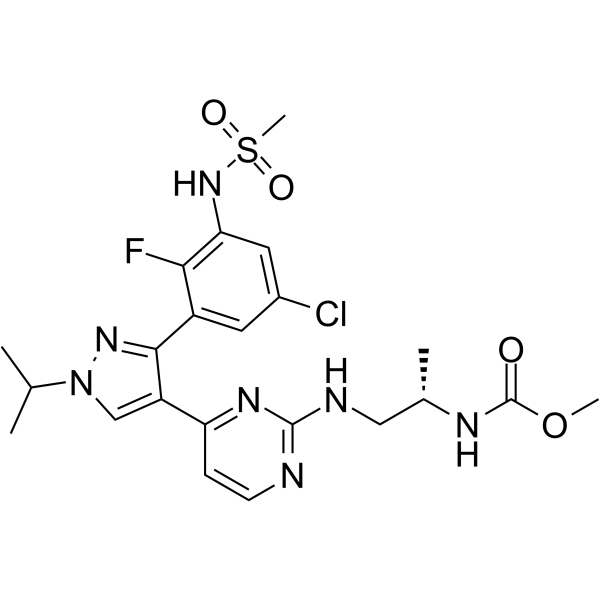
HY-15605
EncorafenibBRAF Inhibitor -
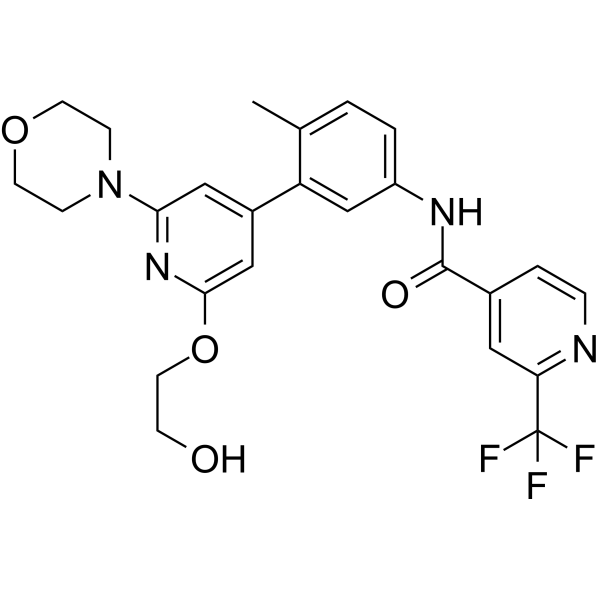
HY-112089
NaporafenibB/CRAF Inhibitor -
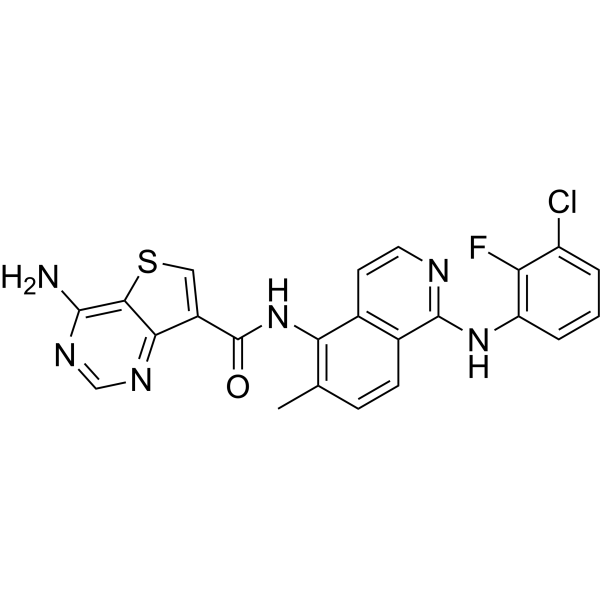
HY-109080
BelvarafenibRAF Inhibitor -
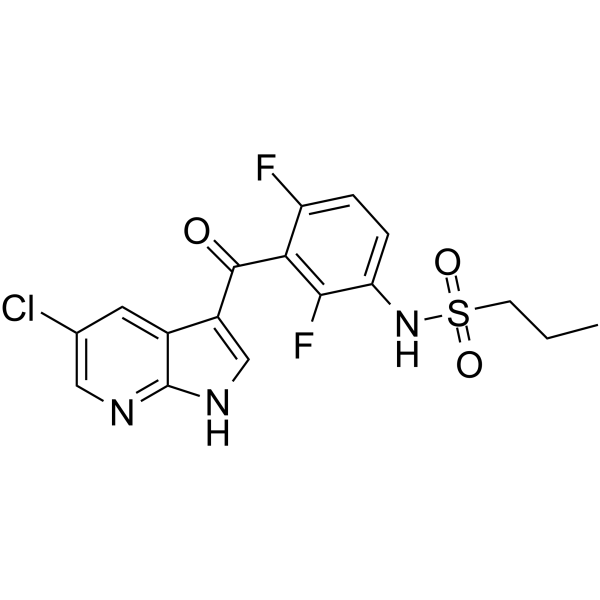
HY-51424
PLX-4720B-Raf Inhibitor -
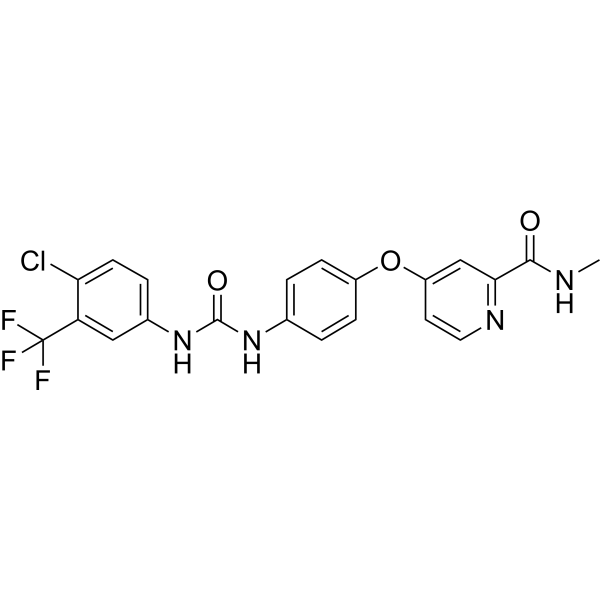
HY-10201
SorafenibMultikinase Inhibitor -
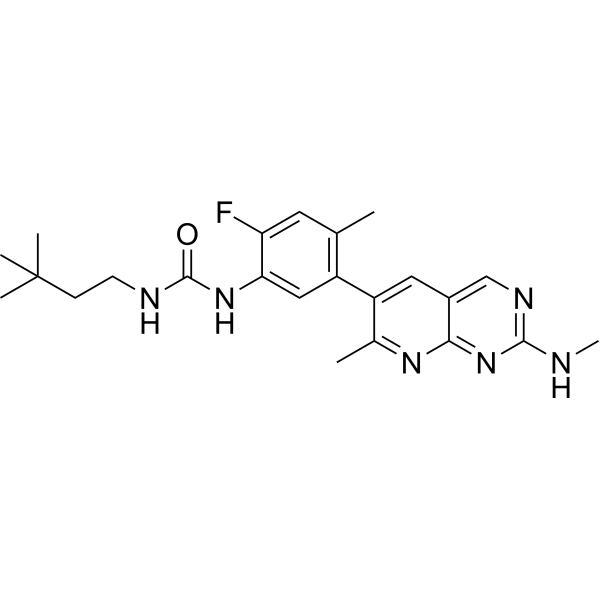
HY-12558
LY3009120Pan RAF Inhibitor -
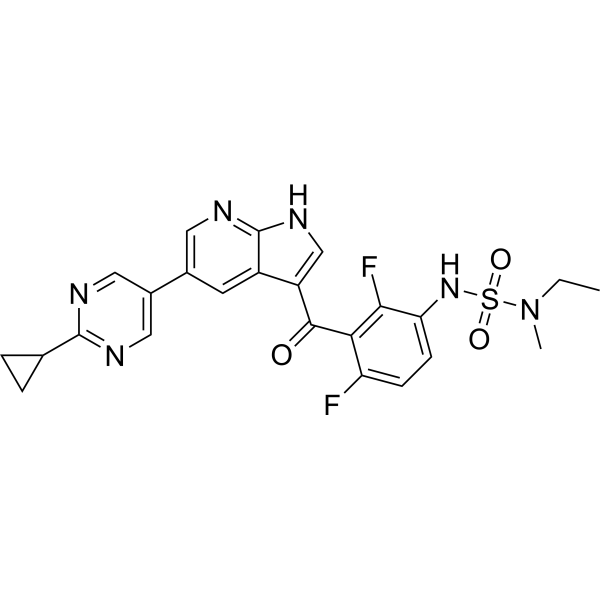
HY-18997
PLX7904BRAF Inhibitor -
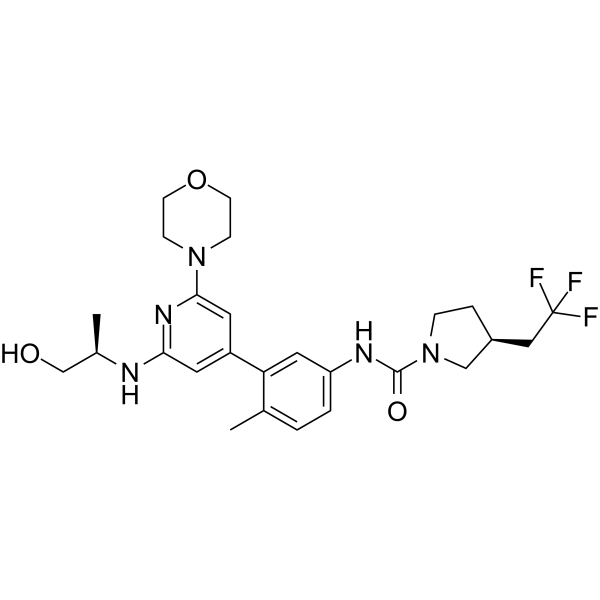
HY-147268
Exarafenibpan-RAF Inhibitor -
HY-158115
NST-628RAF Molecular Glue
Publications Citing Use of MedChemExpress (MCE) Plixorafenib
More- Cancer Discov. 2018 Sep;8(9):1130-1141. [Abstract]
- Nat Commun. 2022 Jul 15;13(1):4109. [Abstract]
- Nat Commun. 2021 Mar 19;12(1):1747. [Abstract]
- Nat Commun. 2018 Nov 14;9(1):4775. [Abstract]
- Proc Natl Acad Sci U S A. 2020 Dec 8;117(49):31105-31113. [Abstract]
- Oncogene. 2023 Dec;42(49):3633-3647. [Abstract]
- EMBO Mol Med. 2021 May 7;13(5):e13466. [Abstract]
- Cell Syst. 2022 Oct 19;13(10):830-843.e3. [Abstract]
- Cell Syst. 2020 Nov 18;11(5):478-494.e9. [Abstract]
- Clin Sci (Lond). 2019 Apr 16;133(8):919-932. [Abstract]
- Sci Signal. 2025 Sep 2;18(902):eadw3231. [Abstract]
- Mol Cancer Ther. 2020 Aug;19(8):1736-1750. [Abstract]
- Biomolecules. 2021 Mar 30;11(4):518. [Abstract]
- Mol Cell Biol. 2016 Sep 26;36(20):2612-25. [Abstract]
- J Chem Eng Data. 2024 Jun 10.
- Research Square Preprint. 2024 Nov 26.
- bioRxiv. 2021 Apr 9.
- bioRxiv. 2020 Jul.
- bioRxiv. 2020 Mar.
- bioRxiv. 2019 Sep.
 Customer Validation & Images

-
WB

-
WB

-
Others

-
WB

-
WB


Activité biologique
Description
IC50 & Target
[1]|
BRafV600E 5 nM (IC50) |
In Vitro
PLX8394 potently inhibits phosphorylation of ERK1/2 in PRT #3 and PRT #4 cells at >25 nM and in addition to parental cells at 10 nM. PLX8394 effectively reduces cyclin D3 and cyclin D1, phosphorylation of retinoblastoma protein, and expression of cyclin A2 in parental cells and PRT #3 and PRT #4 cells. PLX8394 inhibits ERK1/2 phosphorylation and the growth of PLX4032-resistant cells harboring either a BRAF V600K/L505H double mutation or an transposon-induced, N-terminal truncated form of BRAF[1]. PLX8394 significantly impairs tumor cell growth and suppresses MAPK signaling in LA cell lines expressing either endogenous V600E or non-V600 mutant forms of BRAF[2].
MedChemExpress (MCE) has not independently confirmed the accuracy of these methods. They are for reference only. .
In Vivo
MedChemExpress (MCE) has not independently confirmed the accuracy of these methods. They are for reference only.
Essai clinique
| NCT Number | Sponsor | Condition | Start Date |
Phase

|
|---|---|---|---|---|
| NCT01329991 | Plexxikon| | 2011-05 | PHASE1 |


Chemical Information
-
CAS No. 1393466-87-9
-
Appearance Solid
-
Masse moléculaire 542.53
-
Formule C25H21F3N6O3S
-
Color White to light yellow
-
SMILES
O=C(C1=C(F)C(NS(=O)(N2CC[C@@H](F)C2)=O)=CC=C1F)C3=CNC4=C3C=C(C=N4)C5=CN=C(C6CC6)N=C5
-
Synonyms
PLX8394; FORE8394
-
Livraison
Room temperature in continental US; may vary elsewhere.
-
Stockage
Powder -20°C 3 years 4°C 2 years In solvent -80°C 6 months -20°C 1 month


Publications (20)
-
Journal Impact Factor
-
Most Recent
-
Cancer Discov
A Secondary Mutation in BRAF Confers Resistance to RAF Inhibition in a BRAFV600E-Mutant Brain Tumor. [Abstract]2018 Sep;8(9):1130-1141. PMID: 29880583
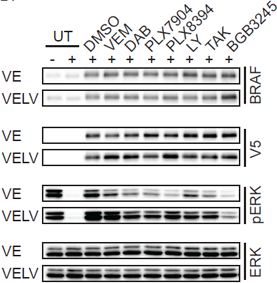
Plixorafenib purchased from MedChemExpress. Usage Cited in: Cancer Discov. 2018 Sep;8(9):1130-1141. [Abstract]
BRAF V600E or V600E/L514V are transiently transfected in SKBR3 for 24 hr. Then the cells are treated with 1 μM GW572016 for 1 hr, followed by treatment with DMSO or the RAF inhibitors indicated for 1 hr (the dose for PLX7904 is 1 μM).
-
Nat Commun
2022 Jul 15;13(1):4109. PMID: 35840569
Plixorafenib purchased from MedChemExpress. Usage Cited in: Nat Commun. 2022 Jul 15;13(1):4109. [Abstract]
Western blot of phosphorylated ERK upon treatment with BRAF paradox-breaking inhibitors. Synchronized control (-Dox) or BRAFV600E-expressing (+Dox) RPE-1 FUCCI cells were harvested 48hrs following incubation with inhibitors. Inhibitors used were the BRAF paradox-breaking inhibitors PLX7094 and PLX8394 (1 μM).
-
Nat Commun
Melanoma subpopulations that rapidly escape MAPK pathway inhibition incur DNA damage and rely on stress signalling. [Abstract]2021 Mar 19;12(1):1747. PMID: 33741929
Plixorafenib purchased from MedChemExpress. Usage Cited in: Nat Commun. 2021 Mar 19;12(1):1747. [Abstract]
Percentage of pRb+ cells in A375, WM278 and two ex vivo patient cultures treated with high doses of dabrafenib, vemurafenib, PLX8394, trametinib or dabrafenib plus trametinib for 4 days.
-
Nat Commun
Sustained activation of the Aryl hydrocarbon Receptor transcription factor promotes resistance to BRAF-inhibitors in melanoma. [Abstract]2018 Nov 14;9(1):4775. PMID: 30429474 -
Proc Natl Acad Sci U S A
Mutation-oriented profiling of autoinhibitory kinase conformations predicts RAF inhibitor efficacies. [Abstract]2020 Dec 8;117(49):31105-31113. PMID: 33229534 -
Oncogene
Inhibition of TGF-β signaling, invasion, and growth of cutaneous squamous cell carcinoma by PLX8394. [Abstract]2023 Dec;42(49):3633-3647. PMID: 37864034
Plixorafenib purchased from MedChemExpress. Usage Cited in: Oncogene. 2023 Dec;42(49):3633-3647. [Abstract]
In HEK293 cells, P-ERK1/2 levels were measured following transient expression of the indicated HA-tagged BRAF mutants and treatment with dabrafenib or PLX8394 (1 h).
-
EMBO Mol Med
CRISPR screens identify tumor-promoting genes conferring melanoma cell plasticity and resistance. [Abstract]2021 May 7;13(5):e13466. PMID: 33724679 -
Cell Syst
Resistor: An algorithm for predicting resistance mutations via Pareto optimization over multistate protein design and mutational signatures. [Abstract]2022 Oct 19;13(10):830-843.e3. PMID: 36265469 -
Cell Syst
Receptor-Driven ERK Pulses Reconfigure MAPK Signaling and Enable Persistence of Drug-Adapted BRAF-Mutant Melanoma Cells. [Abstract]2020 Nov 18;11(5):478-494.e9. PMID: 33113355 -
Clin Sci (Lond)
A pan-RAF inhibitor LY3009120 inhibits necroptosis by preventing phosphorylation of RIPK1 and alleviates dextran sulfate sodium-induced colitis. [Abstract]2019 Apr 16;133(8):919-932. PMID: 30944150 -
Sci Signal
MAPK and mTORC1 signaling converge to drive cyclin D1 protein production to enable cell cycle reentry in melanoma persister cells. [Abstract]2025 Sep 2;18(902):eadw3231. PMID: 40892895 -
Mol Cancer Ther
A Cell-Based MAPK Reporter Assay Reveals Synergistic MAPK Pathway Activity Suppression by MAPK Inhibitor Combination in BRAF-Driven Pediatric Low-Grade Glioma Cells. [Abstract]2020 Aug;19(8):1736-1750. PMID: 32451331 -
Biomolecules
Allosteric Kinase Inhibitors Reshape MEK1 Kinase Activity Conformations in Cells and In Silico. [Abstract]2021 Mar 30;11(4):518. PMID: 33808483
Plixorafenib purchased from MedChemExpress. Usage Cited in: Biomolecules. 2021 Mar 30;11(4):518. [Abstract]
Dynamics of indicated MEK1 KinCon reporter signals upon exposure to four MEKi (1 µM), the RAFi PLX8394 (1 µM) or DMSO for 1 h.
-
Mol Cell Biol
2016 Sep 26;36(20):2612-25. PMID: 27503857 -
-
-
-
-
-


Solvant et solubilité
In Vitro:
DMSO : 100 mg/mL (184.32 mM; ultrasonic and warming and heat to 60°C; Hygroscopic DMSO has a significant impact on the solubility of product, please use newly opened DMSO)
Please refer to the solubility information to select the appropriate solvent. Once prepared, please aliquot and store the solution to prevent product inactivation from repeated freeze-thaw cycles.
Storage method and period of stock solution: -80°C, 6 months; -20°C, 1 month. When stored at -80°C, please use it within 6 months. When stored at -20°C, please use it within 1 month.
Please refer to the solubility information to select the appropriate solvent. Once prepared, please aliquot and store the solution to prevent product inactivation from repeated freeze-thaw cycles.
Storage method and period of stock solution: -80°C, 6 months; -20°C, 1 month. When stored at -80°C, please use it within 6 months. When stored at -20°C, please use it within 1 month.
Concentration (start) × Volume (start) = Concentration (final) × Volume (final)
In Vivo:
Select the appropriate dissolution method based on your experimental animal and administration route.
- For the following dissolution methods, please ensure to first prepare a clear stock solution using an In Vitro approach and then sequentially add co-solvents:
- To ensure reliable experimental results, the clarified stock solution can be appropriately stored based on storage conditions. As for the working solution for In Vivo experiments, it is recommended to prepare freshly and use it on the same day.
- The percentages shown for the solvents indicate their volumetric ratio in the final prepared solution. If precipitation or phase separation occurs during preparation, heat and/or sonication can be used to aid dissolution.
Add each solvent one by one: 10% DMSO 40% PEG300 5% Tween-80 45% Saline
Solubility: ≥ 2.08 mg/mL (3.83 mM); Clear solution
This protocol yields a clear solution of ≥ 2.08 mg/mL (saturation unknown).
Taking 1 mL working solution as an example, add 100 μL DMSO stock solution (20.8 mg/mL) to 400 μL PEG300, and mix evenly; then add 50 μL Tween-80 and mix evenly; then add 450 μL Saline to adjust the volume to 1 mL.
Preparation of Saline: Dissolve 0.9 g sodium chloride in ddH₂O and dilute to 100 mL to obtain a clear Saline solution.
In Vivo Dissolution Calculator
Please enter the basic information of animal experiments:
-
-
-
-
Recommended: Prepare an additional quantity of animals to account for potential losses during experiments.
Please enter your animal formula composition:
-
%DMSO +
Recommended: Keep the proportion of DMSO in working solution below 2% if your animal is weak.
-
%+
-
+%Tween-80 + +
-
%Saline +
The co-solvents required include: DMSO, . All of co-solvents are available by MedChemExpress (MCE). , Tween 80. All of co-solvents are available by MedChemExpress (MCE).
Working solution concentration: 0.22 mg/mL
Method for preparing stock solution: mg drug dissolved in μL DMSO. Stock solution concentration: mg/mL.
1. Take μL DMSO stock solution;
2. Add μL .
μL , mix evenly;
3. Then add μL Tween 80, mix evenly;
4. Then add μL
Please ensure that the stock solution in the first step is dissolved to a clear state, and add co-solvents in sequence. You can use ultrasonic heating (ultrasonic cleaner, recommended frequency 20-40 kHz), vortexing, etc. to assist dissolution.


Pureté et documentation
-
Fiche technique (280 KB)
-
SDS (396 KB)
- English - EN (396 KB)
- Français - FR (396 KB)
- Deutsch - DE (396 KB)
- Norwegian - NO (396 KB)
- Español - ES (396 KB)
- Swedish - SV (396 KB)
- Italian - IT (396 KB)
- Korean - KR (396 KB)
- Portuguese - PT (396 KB)
-
Instruction de manipulation (2659 KB)
Références
[1]. Basile KJ, et al. Inhibition of mutant BRAF splice variant signaling by next-generation, selective RAF inhibitors. Pigment Cell Melanoma Res. 2014 May;27(3):479-484. [Content Brief]
[2]. Okimoto RA, et al. Preclinical efficacy of a RAF inhibitor that evades paradoxical MAPK pathway activation in protein kinase BRAF-mutant lung cancer. Proc Natl Acad Sci U S A. 2016 Nov 22;113(47):13456-13461 [Content Brief]


Complete Stock Solution Preparation Table
Please refer to the solubility information to select the appropriate solvent. Once prepared, please aliquot and store the solution to prevent product inactivation from repeated freeze-thaw cycles.
Storage method and period of stock solution: -80°C, 6 months; -20°C, 1 month. When stored at -80°C, please use it within 6 months. When stored at -20°C, please use it within 1 month.
| Optional Solvent | Concentration Solvent Mass | 1 mg | 5 mg | 10 mg | 25 mg |
|---|---|---|---|---|---|
| DMSO | 1 mM | 1.8432 mL | 9.2161 mL | 18.4322 mL | 46.0804 mL |
| 5 mM | 0.3686 mL | 1.8432 mL | 3.6864 mL | 9.2161 mL | |
| 10 mM | 0.1843 mL | 0.9216 mL | 1.8432 mL | 4.6080 mL | |
| 15 mM | 0.1229 mL | 0.6144 mL | 1.2288 mL | 3.0720 mL | |
| 20 mM | 0.0922 mL | 0.4608 mL | 0.9216 mL | 2.3040 mL | |
| 25 mM | 0.0737 mL | 0.3686 mL | 0.7373 mL | 1.8432 mL | |
| 30 mM | 0.0614 mL | 0.3072 mL | 0.6144 mL | 1.5360 mL | |
| 40 mM | 0.0461 mL | 0.2304 mL | 0.4608 mL | 1.1520 mL | |
| 50 mM | 0.0369 mL | 0.1843 mL | 0.3686 mL | 0.9216 mL | |
| 60 mM | 0.0307 mL | 0.1536 mL | 0.3072 mL | 0.7680 mL | |
| 80 mM | 0.0230 mL | 0.1152 mL | 0.2304 mL | 0.5760 mL | |
| 100 mM | 0.0184 mL | 0.0922 mL | 0.1843 mL | 0.4608 mL |


Plixorafenib Related Classifications
HY-18972 Related Classifications
 Powered by Bioz