



Pazufloxacin mesylate
Based on 1 publication(s) in Google Scholar
Pazufloxacin mesylate is an orally active fluoroquinolone antimicrobial agent. Pazufloxacin mesylate inhibits DNA gyrase with IC50 values of 0.88 μg/mL (E. coli) and 1.9 μg/mL (P. aeruginosa). Pazufloxacin mesylate exhibits broad-spectrum antimicrobial activity, with MIC90 values ranging from 0.025 to 100 μg/mL against Gram-positive and Gram-negative bacteria, non-fermenting bacteria, Legionella spp., and anaerobic bacteria. Pazufloxacin mesylate is indicated for research on systemic infections, lung infections, urinary tract infections, and Legionella pneumonia.
For research use only. We do not sell to patients.
- Purity : 99.97%
- CAS No.: 163680-77-1
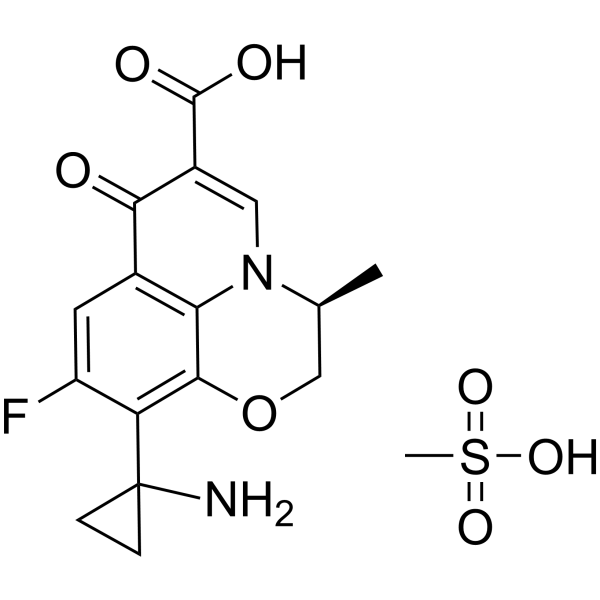
- Formula: C17H19FN2O7S
- Molecular Weight:414.41
-
Storage:
4°C, sealed storage, away from moisture
* In solvent : -80°C, 6 months; -20°C, 1 month (sealed storage, away from moisture)

To place orders, for customer services and technical support, please contact: MedChemExpress USA
Tel: 609-228-6898 E-mail: [email protected] [email protected]


-
 Biological Activity
-
Chemical Information
-
Solvent & Solubility
- Purity & Documentation
- References
-
 Help & FAQs


-
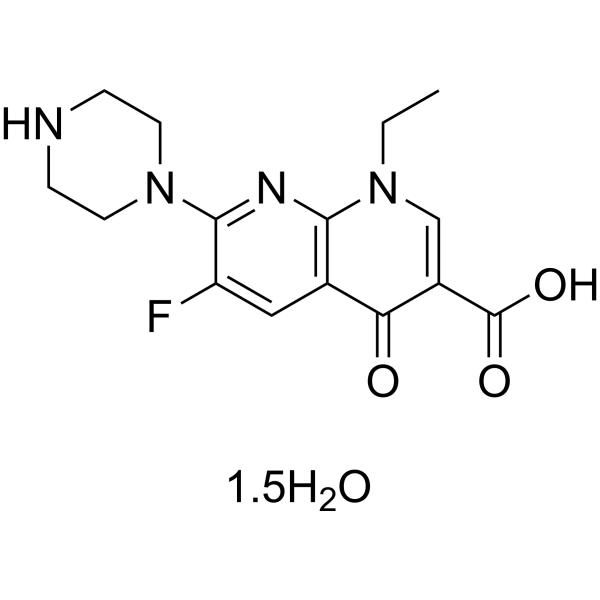
HY-B0268A
Enoxacin hydrate -
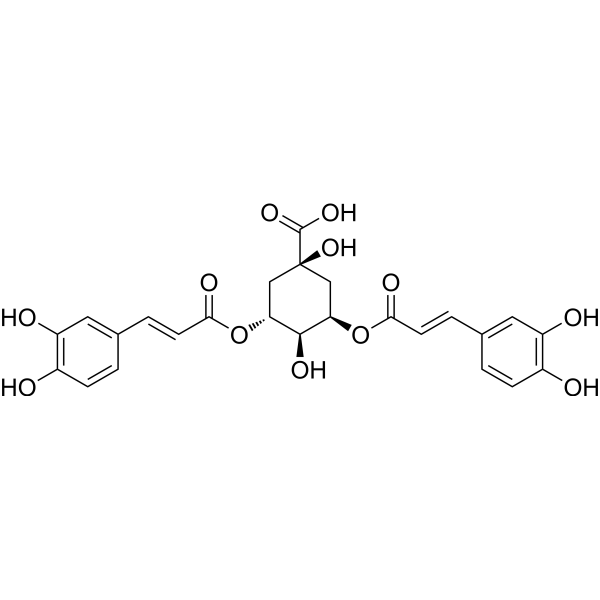
HY-N0056
Isochlorogenic acid A -
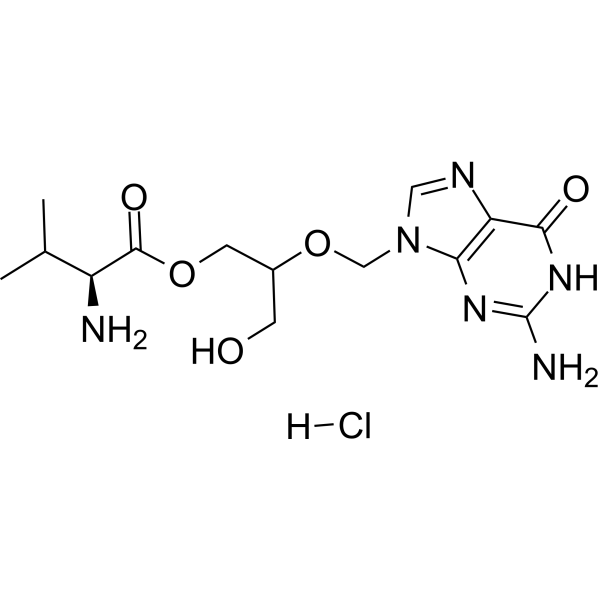
HY-A0032A
Valganciclovir hydrochloride -
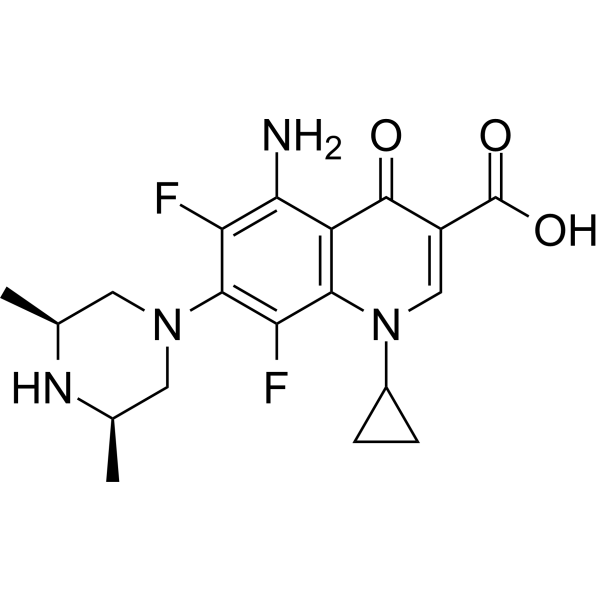
HY-B0308
Sparfloxacin -
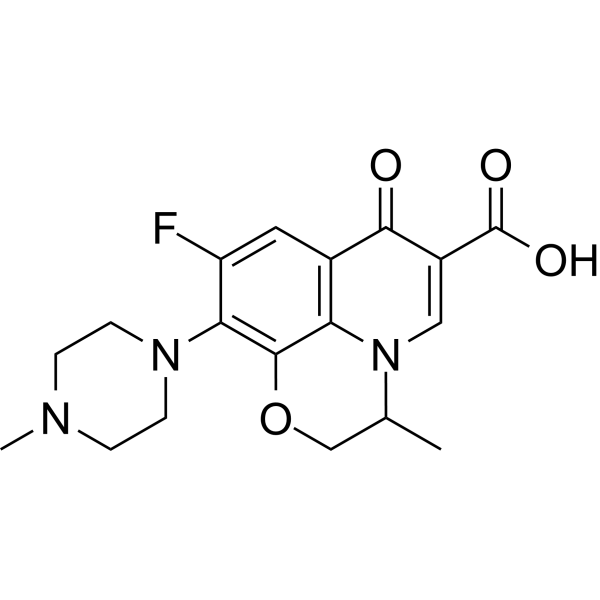
HY-B0125
Ofloxacin -
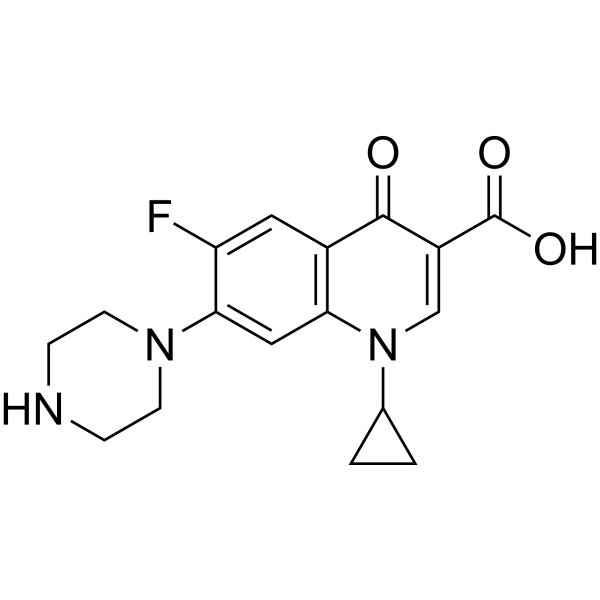
HY-B0356
Ciprofloxacin -
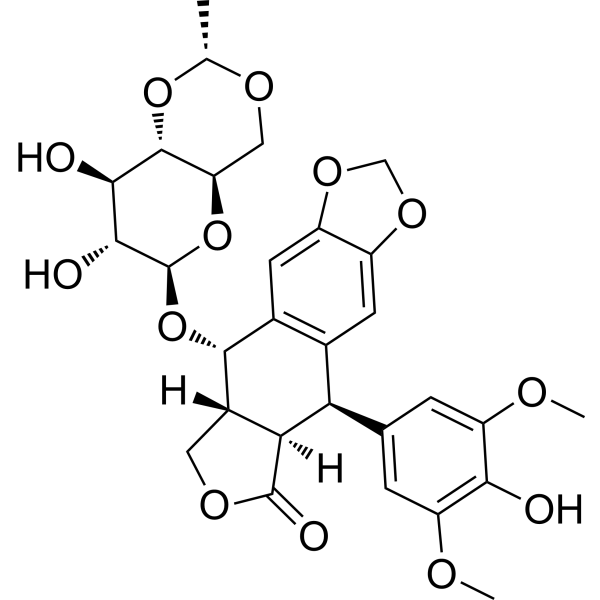
HY-13629
Etoposide -

HY-B0125R
Ofloxacin (Standard) -

HY-B0724AR
Pazufloxacin mesylate (Standard) -

HY-B0356R
Ciprofloxacin (Standard) -

HY-13629R
Etoposide (Standard) -
HY-W013699
Chlorhexidine diacetate
Publications Citing Use of MedChemExpress (MCE) Pazufloxacin mesylate
MoreAll DNA/RNA Synthesis Isoforms
More

Biological Activity
Description
IC50 & Target
|
Quinolone |
In Vitro
Pazufloxacin mesylate shows broad-spectrum antibacterial activity with MIC90s ranging from 0.025 to 100 μg/mL against gram-positive bacteria, gram-negative bacteria, non-fermenters, Legionella spp., and anaerobes[1].
Pazufloxacin mesylate inhibits DNA gyrase with IC50s of 0.88 μg/mL (E. coli) and 1.9 μg/mL (P. aeruginosa)[2].
MedChemExpress (MCE) has not independently confirmed the accuracy of these methods. They are for reference only.
In Vivo
Pazufloxacin (5 mg/kg/day; i.p.; twice a day; 7 days) mesylate in combination with Sivelestat (HY-17443) reduces bacterial counts and inflammatory cells in the early phase of Legionella pneumonia in A/J mice, but does not significantly improve survival compared to monotherapy[5].
MedChemExpress (MCE) has not independently confirmed the accuracy of these methods. They are for reference only.


Chemical Information
-
CAS No. 163680-77-1
-
Appearance Solid
-
Molecular Weight 414.41
-
Formula C17H19FN2O7S
-
Color White to off-white
-
SMILES
O=C(C(C1=O)=CN2[C@@H](C)COC3=C(C4(N)CC4)C(F)=CC1=C23)O.CS(=O)(O)=O
-
Synonyms
T-3762; Pazufloxacin methanesulfonate; Pazufloxacin mesilate
-
Shipping
Room temperature in continental US; may vary elsewhere.
-
Storage
4°C, sealed storage, away from moisture
* In solvent : -80°C, 6 months; -20°C, 1 month (sealed storage, away from moisture)


Publications (1)
-
Journal Impact Factor
-
Most Recent
-
Int J Biol Macromol
Reticuline isomerase AKR1B1 with aldo-keto reductase activity and detoxification function from the insect Blaps rhynchopetera. [Abstract]2026 Mar:352:151224. PMID: 41791543


Solvent & Solubility
In Vitro:
DMSO : 100 mg/mL (241.31 mM; Need ultrasonic; Hygroscopic DMSO has a significant impact on the solubility of product, please use newly opened DMSO)
H2O : ≥ 100 mg/mL (241.31 mM)
* "≥" means soluble, but saturation unknown.
Please refer to the solubility information to select the appropriate solvent. Once prepared, please aliquot and store the solution to prevent product inactivation from repeated freeze-thaw cycles.
Storage method and period of stock solution: -80°C, 6 months; -20°C, 1 month (sealed storage, away from moisture). When stored at -80°C, please use it within 6 months. When stored at -20°C, please use it within 1 month.
* Note: If you choose water as the stock solution, please dilute it to the working solution, then filter and sterilize it with a 0.22 μm filter before use.
Please refer to the solubility information to select the appropriate solvent. Once prepared, please aliquot and store the solution to prevent product inactivation from repeated freeze-thaw cycles.
Storage method and period of stock solution: -80°C, 6 months; -20°C, 1 month (sealed storage, away from moisture). When stored at -80°C, please use it within 6 months. When stored at -20°C, please use it within 1 month.
* Note: If you choose water as the stock solution, please dilute it to the working solution, then filter and sterilize it with a 0.22 μm filter before use.
Concentration (start) × Volume (start) = Concentration (final) × Volume (final)
In Vivo:
Select the appropriate dissolution method based on your experimental animal and administration route.
- For the following dissolution methods, please ensure to first prepare a clear stock solution using an In Vitro approach and then sequentially add co-solvents:
- To ensure reliable experimental results, the clarified stock solution can be appropriately stored based on storage conditions. As for the working solution for In Vivo experiments, it is recommended to prepare freshly and use it on the same day.
- The percentages shown for the solvents indicate their volumetric ratio in the final prepared solution. If precipitation or phase separation occurs during preparation, heat and/or sonication can be used to aid dissolution.
Add each solvent one by one: 10% DMSO 40% PEG300 5% Tween-80 45% Saline
Solubility: ≥ 2.5 mg/mL (6.03 mM); Clear solution
This protocol yields a clear solution of ≥ 2.5 mg/mL (saturation unknown).
Taking 1 mL working solution as an example, add 100 μL DMSO stock solution (25.0 mg/mL) to 400 μL PEG300, and mix evenly; then add 50 μL Tween-80 and mix evenly; then add 450 μL Saline to adjust the volume to 1 mL.
Preparation of Saline: Dissolve 0.9 g sodium chloride in ddH₂O and dilute to 100 mL to obtain a clear Saline solution.
Add each solvent one by one: 10% DMSO 90% (20% SBE-β-CD in Saline)
Solubility: ≥ 2.5 mg/mL (6.03 mM); Clear solution
This protocol yields a clear solution of ≥ 2.5 mg/mL (saturation unknown).
Taking 1 mL working solution as an example, add 100 μL DMSO stock solution (25.0 mg/mL) to 900 μL 20% SBE-β-CD in Saline, and mix evenly.
Preparation of 20% SBE-β-CD in Saline (4°C, storage for one week): 2 g SBE-β-CD powder is dissolved in 10 mL Saline, completely dissolve until clear.
For the following dissolution methods, please prepare the working solution directly:
It is recommended to prepare fresh solutions and use them promptly within a short period of time.
The percentages shown for the solvents indicate their volumetric ratio in the final prepared solution. If precipitation or phase separation occurs during preparation, heat and/or sonication can be used to aid dissolution.
Add each solvent one by one: PBS
Solubility: 150 mg/mL (361.96 mM); Clear solution; Need ultrasonic
In Vivo Dissolution Calculator
Please enter the basic information of animal experiments:
-
-
-
-
Recommended: Prepare an additional quantity of animals to account for potential losses during experiments.
Working solution concentration: 0.22 mg/mL
This product has good water solubility, please refer to the measured solubility data in water/PBS/Saline for details.


Purity & Documentation
-
Data Sheet (281 KB)
-
SDS (393 KB)
- English - EN (393 KB)
- Français - FR (393 KB)
- Deutsch - DE (393 KB)
- Norwegian - NO (393 KB)
- Español - ES (393 KB)
- Swedish - SV (393 KB)
- Italian - IT (393 KB)
- Korean - KR (393 KB)
- Portuguese - PT (393 KB)
-
Handling Instructions (2659 KB)
References
[1]. Fukuoka, Y., et al., In vitro and in vivo antibacterial activities of T-3761, a new quinolone derivative. Antimicrob Agents Chemother, 1993. 37(3): p. 384-92. [Content Brief]
[2]. Muratani, T., M. Inoue, and S. Mitsuhashi, In vitro activity of T-3761, a new fluoroquinolone. Antimicrob Agents Chemother, 1992. 36(10): p. 2293-303. [Content Brief]
[3]. Takei M, et al. Target preference of 15 quinolones against Staphylococcus aureus, based on antibacterial activities and target inhibition. Antimicrob Agents Chemother. 2001 Dec;45(12):3544-7. [Content Brief]
[4]. Sousa J, et al. First liquid chromatography method for the simultaneous determination of levofloxacin, pazufloxacin, gatifloxacin, moxifloxacin and trovafloxacin in human plasma. J Chromatogr B Analyt Technol Biomed Life Sci. 2013 Jul 1;930:104-11. [Content Brief]
[5]. Morinaga Y, et al. In vivo efficacy of sivelestat in combination with pazufloxacin against Legionella pneumonia. Exp Lung Res. 2010 Oct;36(8):484-90. [Content Brief]


Complete Stock Solution Preparation Table
Please refer to the solubility information to select the appropriate solvent. Once prepared, please aliquot and store the solution to prevent product inactivation from repeated freeze-thaw cycles.
Storage method and period of stock solution: -80°C, 6 months; -20°C, 1 month (sealed storage, away from moisture). When stored at -80°C, please use it within 6 months. When stored at -20°C, please use it within 1 month.
| Optional Solvent | Concentration Solvent Mass | 1 mg | 5 mg | 10 mg | 25 mg |
|---|---|---|---|---|---|
| DMSO / H2O | 1 mM | 2.4131 mL | 12.0653 mL | 24.1307 mL | 60.3267 mL |
| 5 mM | 0.4826 mL | 2.4131 mL | 4.8261 mL | 12.0653 mL | |
| 10 mM | 0.2413 mL | 1.2065 mL | 2.4131 mL | 6.0327 mL | |
| 15 mM | 0.1609 mL | 0.8044 mL | 1.6087 mL | 4.0218 mL | |
| 20 mM | 0.1207 mL | 0.6033 mL | 1.2065 mL | 3.0163 mL | |
| 25 mM | 0.0965 mL | 0.4826 mL | 0.9652 mL | 2.4131 mL | |
| 30 mM | 0.0804 mL | 0.4022 mL | 0.8044 mL | 2.0109 mL | |
| 40 mM | 0.0603 mL | 0.3016 mL | 0.6033 mL | 1.5082 mL | |
| 50 mM | 0.0483 mL | 0.2413 mL | 0.4826 mL | 1.2065 mL | |
| 60 mM | 0.0402 mL | 0.2011 mL | 0.4022 mL | 1.0054 mL | |
| 80 mM | 0.0302 mL | 0.1508 mL | 0.3016 mL | 0.7541 mL | |
| 100 mM | 0.0241 mL | 0.1207 mL | 0.2413 mL | 0.6033 mL |
* Note: If you choose water as the stock solution, please dilute it to the working solution, then filter and sterilize it with a 0.22 μm filter before use.


Pazufloxacin mesylate Related Classifications
HY-B0724A Related Classifications
 Powered by Bioz