Infection
-
Infection Related Products (18904)
Related Products (18904)

-
Antibodies (22)
-
N4-Acetylsulfamethoxazole-13C6
 0 ImagesCat. No.: HY-W748688Synonyms: Acetylsulfamethoxazole-13C6
N4-Acetylsulfamethoxazole-13C6 (Acetylsulfamethoxazole-13C6) is the 13C-labeled N4-Acetylsulfamethoxazole (HY-W013266). N4-Acetylsulfamethoxazole (Acetylsulfamethoxazole) is a metabolite of?Sulfamethoxazole (HY-B0322). Sulfamethoxazole is a sulfonamide bacteriostatic antibiotic, used for bacterial infections.
-
MsbA-IN-4
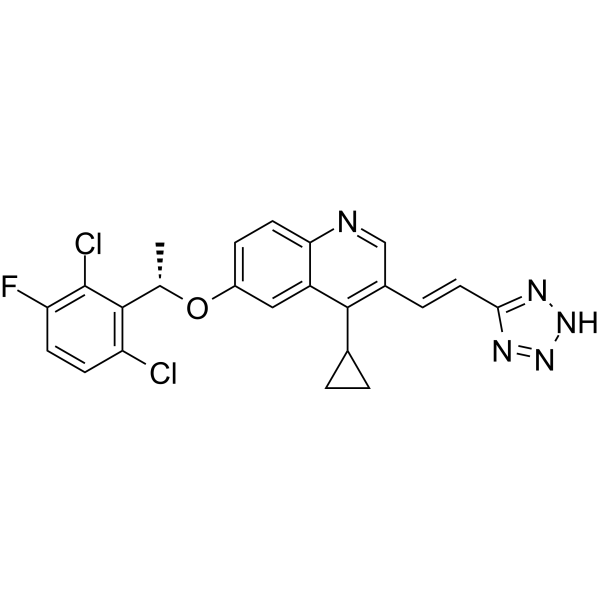 0 ImagesCat. No.: HY-144282CAS No.: 2909443-80-5
MsbA-IN-4 (compound 32) is a potent and highly selective MsbA inhibitor with an IC50 value of 3 nM. MsbA-IN-4 has inhibitory activity against Escherichia coli with a MIC of 12 μM.
-
Spermine-15N2
 0 ImagesCat. No.: HY-B1777SCAS No.: 93827-50-0Synonyms: NSC 268508-15N2; Neuridine-15N2
Spermine-15N2 (NSC 268508-15N2) is the 15N-labeled Spermine (HY-B1777). Spermine is a natural antioxidant and anti-inflammatory agent. Spermine is known to inhibit some bacterial cultures, especially strains of Staphylococcus aureus. Spermine induces neurotoxicity in the striarum dose-dependently. Spermine can reversibly inhibits DNA synthetic response, mixed lymphocyte response and the induction of cytolytic lymphocyte response in primary cultures of murine spleen cells. Spermine tetrahydrochloride is a polyamine nitric oxide donor that can provide nitric oxide to platelets and inhibit platelet activation to a certain extent concentration-dependently. Spermine tetrahydrochloride occurs in mammalian tissues, plants, bacteria, ribosomes and bacteriophage. Spermine tetrahydrochloride inhibits primary human embryo lung fibroblasts in vitro.
-
DNJ-20
 0 ImagesCat. No.: HY-173411CAS No.: 3081926-49-7
DNJ-20 is an α-glucosidase inhibitor (IC50: 55.3 μg/mL). DNJ-20 has broad-spectrum anti-SARS-CoV-2 activity. DNJ-20 inhibits the correct processing of viral glycoproteins by interfering with the endoplasmic reticulum-associated glycoprotein folding process (ERQC), thereby blocking the formation and infection of viral particles. DNJ-20 has IC50 values up to 1.49 uM against several SARS-CoV-2 variants, as well as HCoV-229E and HCoV-0C43。DNJ-20 can be used for pan-coronavirus research.
-
Antileishmanial agent-17
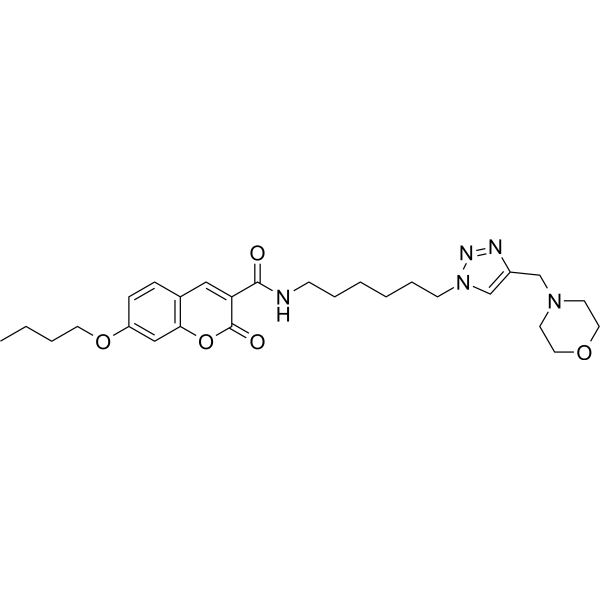 0 ImagesCat. No.: HY-149958CAS No.: 2934738-40-4
Antileishmanial agent-17 is a coumarin hybrid compound with antileishmanial effects (IC50 <0.78 μM). Antileishmanial agent-17 is safe to normal VERO cells. Antileishmanial agent-17 binds to folate pathway enzymes pteridine reductase and DHFR-TS. And Antileishmanial agent-17 shows the most potent with IC50 value of 0.40 μM against promastigote and 0.68 μM against amastigote, respectivley.
-
Antimalarial agent 35
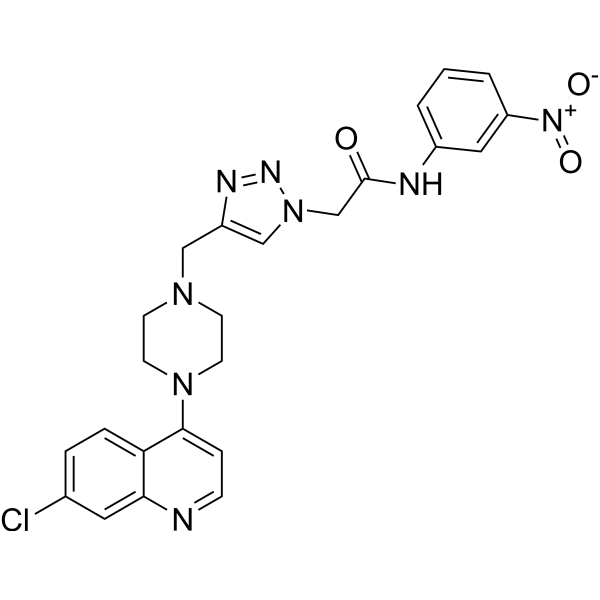 0 ImagesCat. No.: HY-163070CAS No.: 3054155-49-3
Antimalarial agent 35 (compound QP11) is a selective inhibitor FP2. Antimalarial agent 35 has antimalarial activity and shows synergistic effects when combined with chloroquine(HY-17589A).
-
Antifungal agent 52
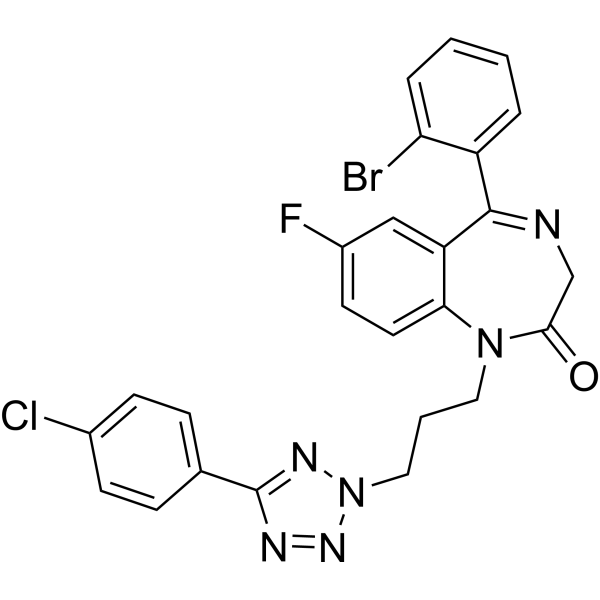 0 ImagesCat. No.: HY-143335CAS No.: 2901064-06-8
Antifungal agent 52 (compound 6c) is a tetrazole derivative. Antifungal agent 52 inhibits the synthesis of Ergosterol (HY-N0181). Antifungal agent 52 exhibit a significant antifungal activity against Candida albicans. Antifungal agent 52 affects C. albicans sessile cell membrane permeabilization.

-
Benzoic acid-d
 0 ImagesCat. No.: HY-N0216S7CAS No.: 406679-59-2
Benzoic acid-d is the deuterium labeled Benzoic acid (HY-N0216). Benzoic acid is an aromatic alcohol existing naturally in many plants and is a common additive to food, drinks, cosmetics and other products. It acts as preservatives through inhibiting both bacteria and fungi.
-
(E)-3,4-Dimethoxychalcone
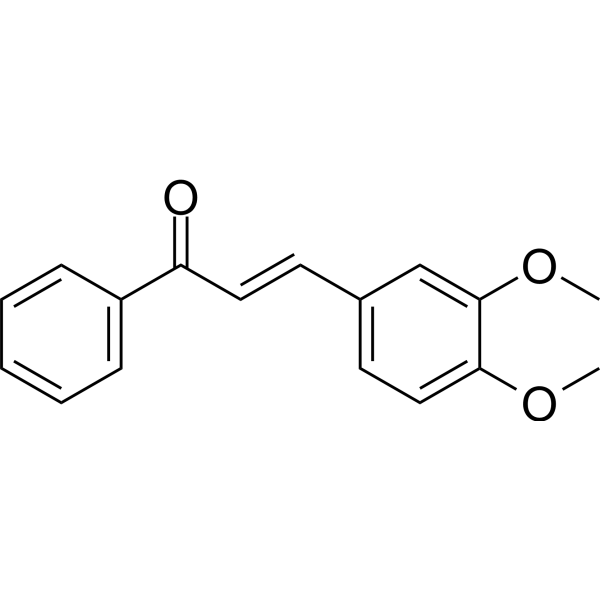 0 ImagesCat. No.: HY-W083373CAS No.: 53744-27-7Synonyms: Antibacterial agent 65
(E)-3,4-Dimethoxychalcone is an isoform of 3,4-Dimethoxychalcone (HY-W083373A), a potential antimicrobial and antioxidant agent.
-
Antifungal agent 45
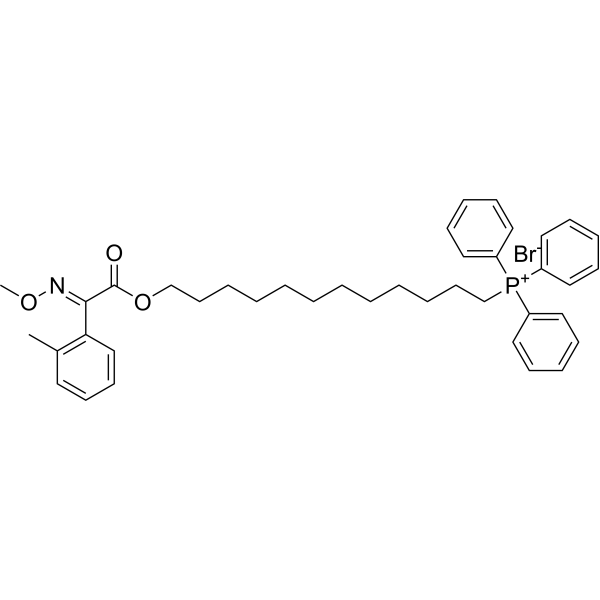 0 ImagesCat. No.: HY-151556
Antifungal agent 45 is with fungicidal activities. Antifungal agent 45 shows excellent characteristics superior to Kresoxim-methyl (HY-125776), in which the activity enhancement against Phytophthora capsici was the most remarkable, with an EC50 value of about 5 μM.
-
Ro 09-1428
 0 ImagesCat. No.: HY-117736CAS No.: 134452-47-4
Ro 09-1428 is a broad-spectrum parenteral cephalosporin. Ro 09-1428 has potent antibacterial activities against Pseudomonas aeruginosa and Acinetobacter caloaceticus, with MIC90s of 0.39 and 6.25 μg/mL, respectively, better than Ceftazidime (HY-B0593). Additionally, Ro 09-1428 shows high activity against Escherichia coli, Kkbsielia pneumoniae, Proteus mirabilis, P. aeruginosa, staphylococci, and more. Ro 09-1428 preferentially attacks PBP 3 for target in E. coli and P. aeruginosa, which is promising for research of septicemias and serious P. aeruginosa infections.
-
Viridicatol (Standard)
 0 ImagesCat. No.: HY-116474RCAS No.: 14484-44-7
Viridicatol (Standard) is the analytical standard of Viridicatol (HY-116474). This product is intended for research and analytical applications. Viridicatol is a quinolone alkaloid with anti-inflammatory, antibacterial, antifungal, osteogenic and chondrogenic activities. Viridicatol reduces the phosphorylation levels of ERK, JNK, p38 and STAT6; inhibits MMP-2, MMP-9, NF-κB signaling pathway and PTP1B; downregulates genes related to mast cell activation; and binds to SHN3 to activate the Wnt/SHN3 signaling pathway. Viridicatol inhibits the expression of pro-inflammatory mediators and cytokines, and promotes osteogenic/chondrogenic differentiation. Viridicatol can be used in studies related to fibrosarcoma, allergy, bacterial infection, fungal infection and osteoporosis.
-
YXX0237
 0 ImagesCat. No.: HY-183331CAS No.: 860445-85-8
YXX0237 is an orally active anti-hypoxic agent. YXX0237 upregulates mRNA expression of FGF21 and GDF15 via activation of the ISR/ATF4 transcriptional axis. YXX0237 exhibits low cytotoxicity. YXX0237 enhances hypoxic survival in mice. YXX0237 can be used for the research of acute mountain sickness and hypoxia-related diseases.
-
Thalrugosaminine
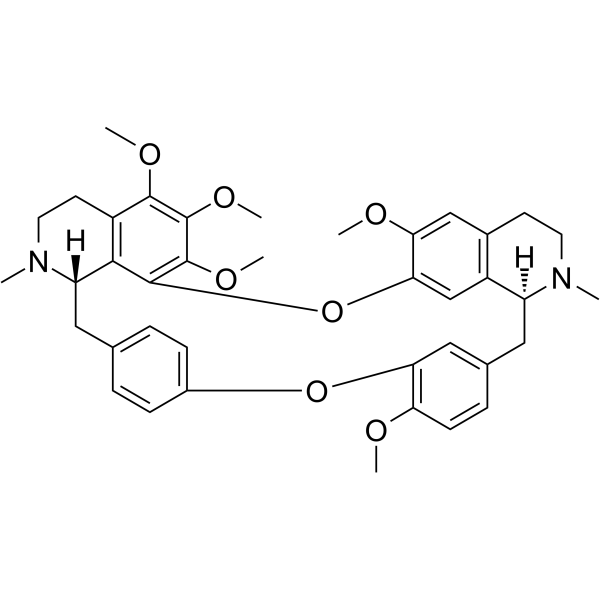 0 ImagesCat. No.: HY-N6078CAS No.: 22226-73-9
Thalrugosaminine is a benzylisoquinoline alkaloid isolated from the roots of Thalictrum minus. Thalrugosaminine shows good antibacterial activity with MIC values of 64-128 µg/ml.
-
Chitin, from crab carapace
 0 ImagesCat. No.: HY-126389CCAS No.: 1398-61-4
Chitin, from crab carapace is a long-chain polymer of N-acetylglucosamine with β-(1-4) linkages. Chitin, from crab carapace is found in the exoskeleton of crabs. Chitin, from crab carapace inhibits the activation of NF-κB p65, alters the translocation of NF-κB p65 to the nucleus, and interacts with the cell wall of Candida species. Chitin, from crab carapace exerts antifungal and anti-inflammatory effects. Chitin, from crab carapace can be used in the research of gastric ulcer and candidiasis.
-
Gramicidin B
 0 Images
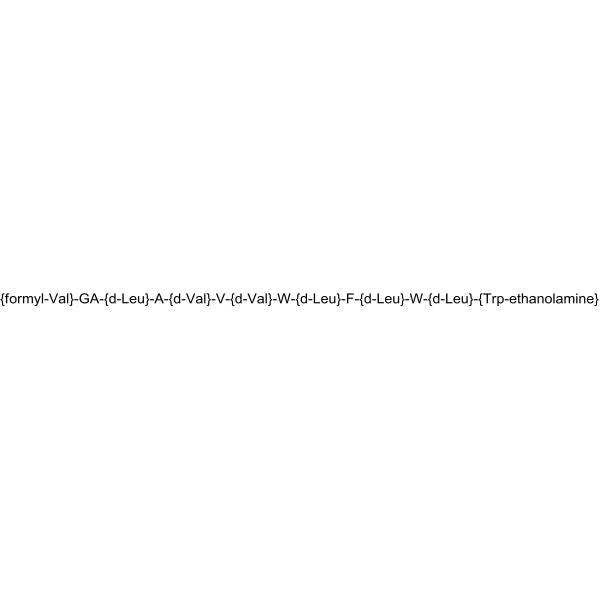
Gramicidin B is a nonribosomal peptide antibiotic.
-
DC-756
 0 ImagesCat. No.: HY-106998CAS No.: 218281-25-5
DC-756 is a fluoroquinolone antibiotic. DC-756 possesses potent activity against Gram-positive and Gram-negative pathogens comparable to Trovafloxacin (HY-A0170), with MIC, against Ofloxacin (HY-B0125)-resistant strains 16-fold better than Trovafloxacin. DC-756 is well absorbed orally in rats and found to have good photostability. DC-756 can be used to study bacterial resistance.
-
InhA-IN-7
 0 ImagesCat. No.: HY-160678CAS No.: 952588-17-9
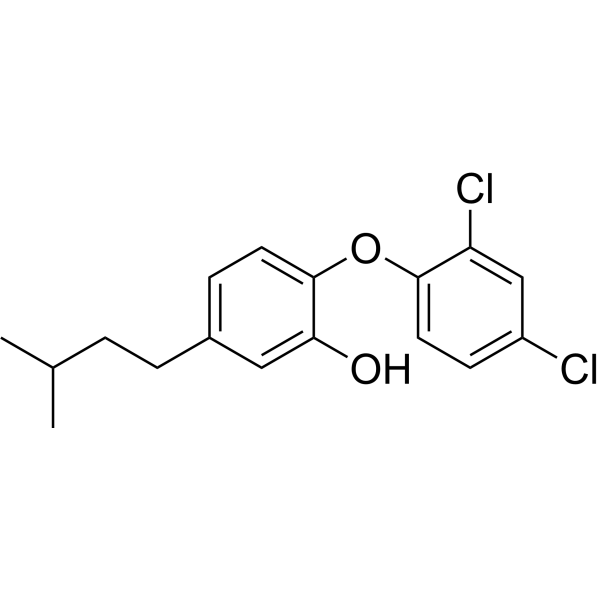
InhA-IN-7 (Compound 11) is a Triclocan (HY-B1119) derivative with inhibitory activity towards enoyl-acyl carrier protein reductase (InhA) with an IC50 of 96 nM. InhA-IN-7 inhibits proliferations of Mycobacterium tuberculosis wildtype and mutant strains with MICs ranging from 19 to 75 μM.
-
Ethionamide-d3
 0 ImagesCat. No.: HY-B0276SCAS No.: 2748267-66-3Synonyms: 2-Ethylthioisonicotinamide-d3
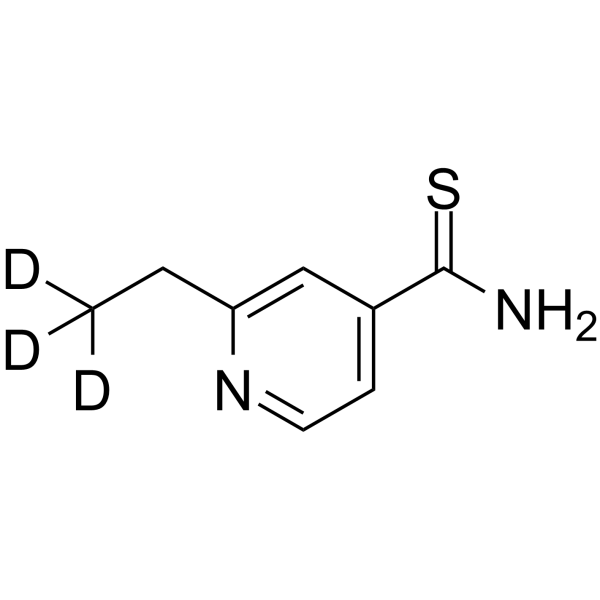
Ethionamide-d3 is the deuterium labeled Ethionamide. Ethionamide (2-ethylthioisonicotinamide) is an antibiotic used in the treatment of tuberculosis.