



Carviolin
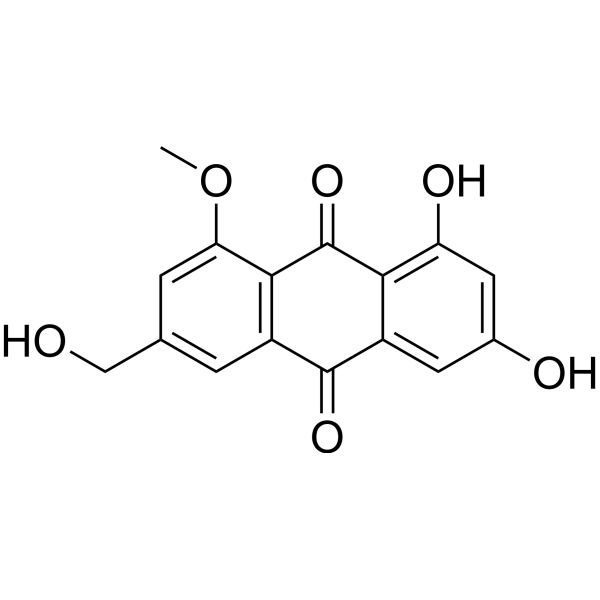
Carviolin is a compound isolated from the mycelia of the ascomycete Neobulgaria pura. Carviolin inhibits the formation of appressoria in germinating conidia of Magnaporthe grisea on inductive (hydrophobic) surface. Carviolin exhibits moderate cytotoxic, but no antifungal, antibacterial, or phytotoxic activities.
For research use only. We do not sell to patients.
- CAS No.: 478-35-3
- Formula: C16H12O6
- Molecular Weight:300.26
-
Storage:
Please store the product under the recommended conditions in the Certificate of Analysis.

To place orders, for customer services and technical support, please contact: MedChemExpress USA
Tel: 609-228-6898 E-mail: [email protected] [email protected]


-
 Biological Activity
-
Chemical Information
- Protocols
- Purity & Documentation
- References
-
 Help & FAQs


-
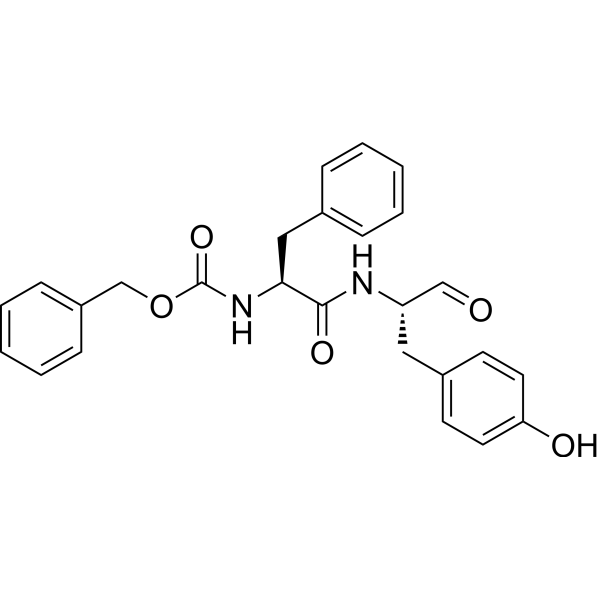
HY-128140
Z-FY-CHOCTSL Inhibitor -
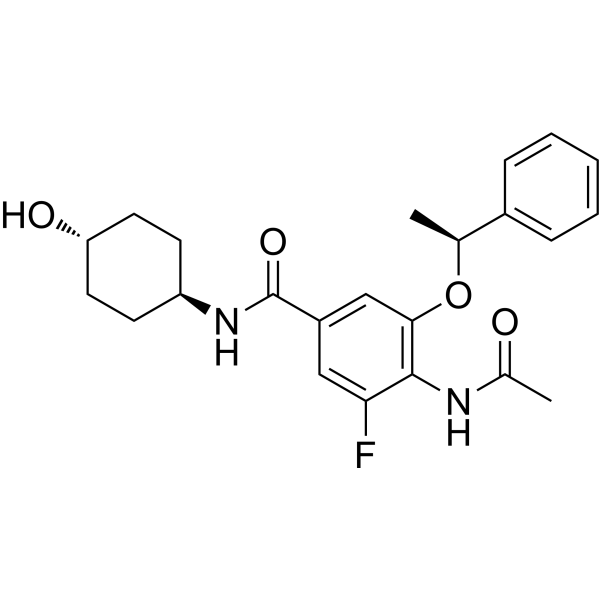
HY-136571
GSK046BET BD2 Inhibitor -
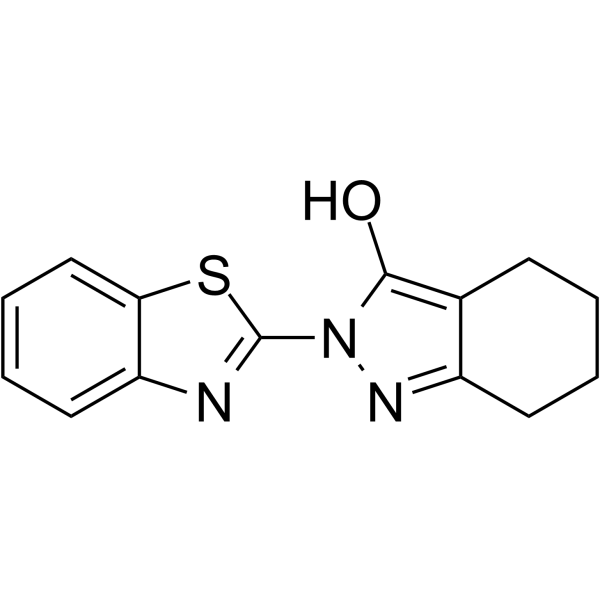
HY-131140
BD750Immunosuppressant -
HY-W015210
4-Deoxypyridoxine hydrochlorideBiochemical Assay Reagent -

HY-126489
Tetromycin B -
HY-N1418
(S)-(-)-TetrahydroberberineInsecticide -
HY-N9194
5-Methoxycanthin-6-oneLeishmanicidal Agent -
HY-N8385
19,20-Epoxycytochalasin CAntiplasmodial Agent -

HY-138223
6-PrenylindoleAntifungal Agent -

HY-138074
Milbemycin A4 oximeNematicide -

HY-139090
3-Oxobetulin acetateAntancer -

HY-126638
Marcfortine ANematode


Biological Activity
Description
Cellular Effect
|
Cell Line

|
Type | Value | Description | References |
|---|---|---|---|---|
| Jurkat | IC50 |
>100 μM
Compound: 9
|
Cytotoxicity against human Jurkat cells after 24 hrs by MTT assay
Cytotoxicity against human Jurkat cells after 24 hrs by MTT assay
|
[PMID: 21146414] |
| K562 | IC50 |
>100 μM
Compound: 9
|
Inhibition of NF-kappaB activity in TNFalpha-stimulated human K562 cells after 24 hrs by luciferase reporter gene assay
Inhibition of NF-kappaB activity in TNFalpha-stimulated human K562 cells after 24 hrs by luciferase reporter gene assay
|
[PMID: 21146414] |
| U-937 | IC50 |
>100 μM
Compound: 9
|
Cytotoxicity against human U937 cells after 24 hrs by MTT assay
Cytotoxicity against human U937 cells after 24 hrs by MTT assay
|
[PMID: 21146414] |


Chemical Information
-
CAS No. 478-35-3
-
Molecular Weight 300.26
-
Formula C16H12O6
-
SMILES
O=C1C2=C(C=C(CO)C=C2OC)C(C3=CC(O)=CC(O)=C13)=O
-
Structure Classification
-
Initial Source
Penicillium dravuni
-
Shipping
Room temperature in continental US; may vary elsewhere.
-
Storage
Please store the product under the recommended conditions in the Certificate of Analysis.


Purity & Documentation
References

Calculators
Concentration (start) × Volume (start) = Concentration (final) × Volume (final)


Carviolin Related Classifications
HY-N10267 Related Classifications
 Powered by Bioz