Infection
-
Infection Related Products (18904)
Related Products (18904)

-
Antibodies (22)
-
2-PADQZ
 0 ImagesCat. No.: HY-132286CAS No.: 60547-97-9
2-PADQZ is an antiviral compound with activity against influenza viruses. 2-PADQZ specifically binds to the influenza A virus RNA promoter and forms a binding site at the internal loop. 2-PADQZ has a significant inhibitory effect on H1N1 and H3N2 influenza A viruses and influenza B viruses.

-
Antifungal agent 61
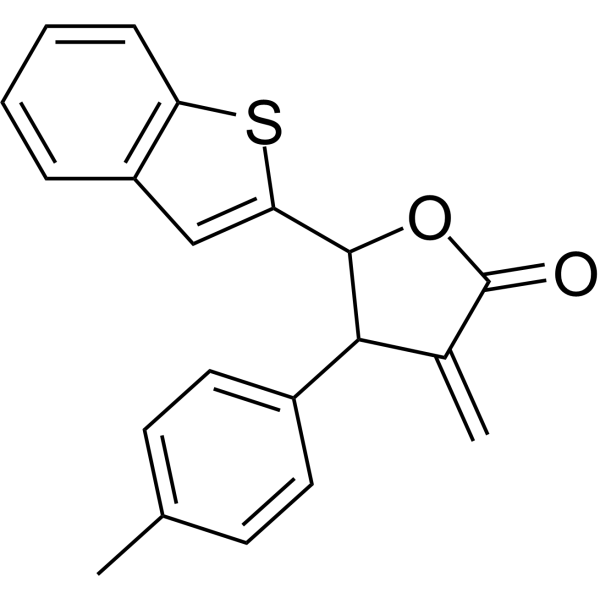 0 ImagesCat. No.: HY-155084CAS No.: 2982657-98-5
Antifungal agent 61 (Compound 38) is an antifungal agent. Antifungal agent 61 inhibits V. mali with an EC50 value of 0.50 mg/L. Antifungal agent 61 inhibits V. mali by causing cell deformation and contraction, reducing the number of intracellular mitochondria, thickening the cell wall, and increasing the permeability of the cell membrane.
-
Bellericagenin A
 0 ImagesCat. No.: HY-N13031CAS No.: 141630-18-4
Bellericagenin A is a pentacyclic triterpenic acid isolated from the bark of Terminalia bellerica. Bellericagenin A exhibits antimicrobial activity. Bellericagenin A exhibits a high affinity to alcohol dehydrogenase (ADH), which has the potential for ameliorating the alcoholic liver injury.
-
HLI373
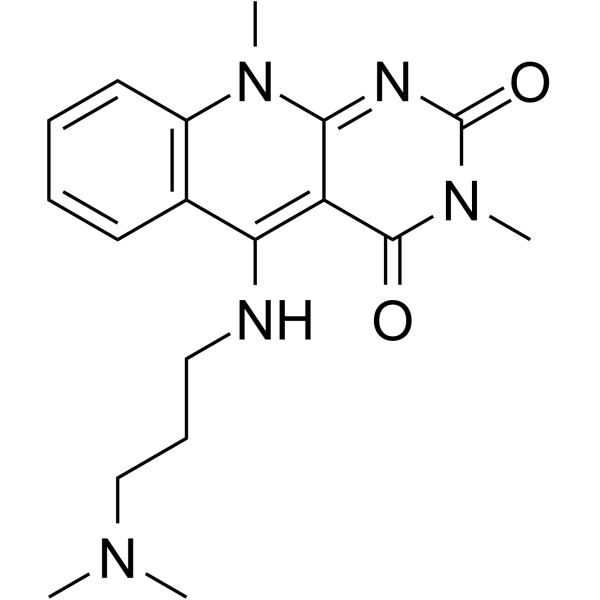 0 ImagesCat. No.: HY-108640CAS No.: 502137-98-6
-
Dehydroabietic acid (Standard)
 0 Images
Dehydroabietic acid (Standard) is the analytical standard of Dehydroabietic acid. This product is intended for research and analytical applications. Dehydroabietic acid is a diterpene resin acid that can be isolated from Pinus and Picea. Dehydroabietic acid has anti-bacterial, anti-fungal, anti-inflammatory, and anticancer activities. Dehydroabietic acid is a dual PPAR-α/γ agonist and PPAR-γ partial agonist, which can attenuate insulin resistance (IR) and hepatic steatosis induced by HFD-consumption in mice.
-
8-Gingerol (Standard)
 0 ImagesCat. No.: HY-N0447RCAS No.: 23513-08-8
8-Gingerol (Standard) is the analytical standard of 8-Gingerol. This product is intended for research and analytical applications. 8-Gingerol, found in the rhizomes of ginger (Z. officinale) with oral bioavailability, activates TRPV1, with an EC50 of 5.0 μM. 8-Gingerol inhibits COX-2, and inhibits the growth of H. pylori in vitro.
-
N4-Acetylsulfamethoxazole (Standard)
 0 ImagesCat. No.: HY-W013266RCAS No.: 21312-10-7Synonyms: Acetylsulfamethoxazole (Standard)
N4-Acetylsulfamethoxazole (Acetylsulfamethoxazole) Standard of N4-Acetylsulfamethoxazole (HY-W013266). This product is intended for research and analytical applications. N4-Acetylsulfamethoxazole (Acetylsulfamethoxazole) is the N4-acetylated metabolite of Sulfamethoxazole (HY-B0322).

-
Lenacapavir-d5
 0 ImagesCat. No.: HY-111964S1Synonyms: GS-6207-d5
Lenacapavir-d5 (GS-6207-d5) is the deuterium labeled Lenacapavir (HY-111964). Lenacapavir (GS-6207) is an HIV-1 capsid inhibitor. Lenacapavir binds to the interface between capsid hexamers and CA monomers, disrupts capsid assembly and viral maturation, inhibits nuclear translocation of HIV-1 DNA, interferes with CA-mediated protein-protein interactions, reduces the formation of 2-LTR circles and pre-integration proviruses, induces aberrant capsids, and decreases the production of mature HIV-1. Lenacapavir exhibits activity against a variety of HIV-1 subtypes and clinical isolates. Lenacapavir is applicable to research related to human immunodeficiency virus type 1 (HIV-1) infection.
-
UDP-galacturonic acid trisodium
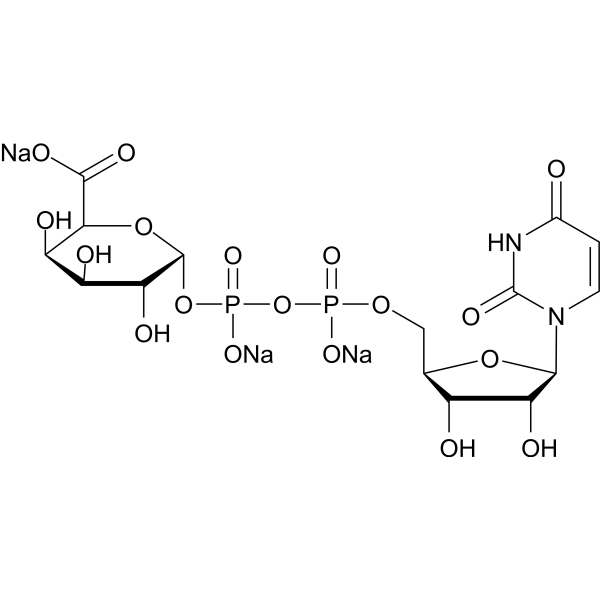 0 ImagesCat. No.: HY-125954BCAS No.: 148407-07-2
UDP-galacturonic acid trisodium is a nucleotide sugar complex that serves as a cofactor for UDP-glucuronosyltransferases and a substrate for galacturonosyltransferases in bacterial surface polysaccharide and plant pectin biosynthesis. UDP-galacturonic acid trisodium is used in the study of plant development and bacterial pathogenic mechanisms.
-
Antifungal agent 92
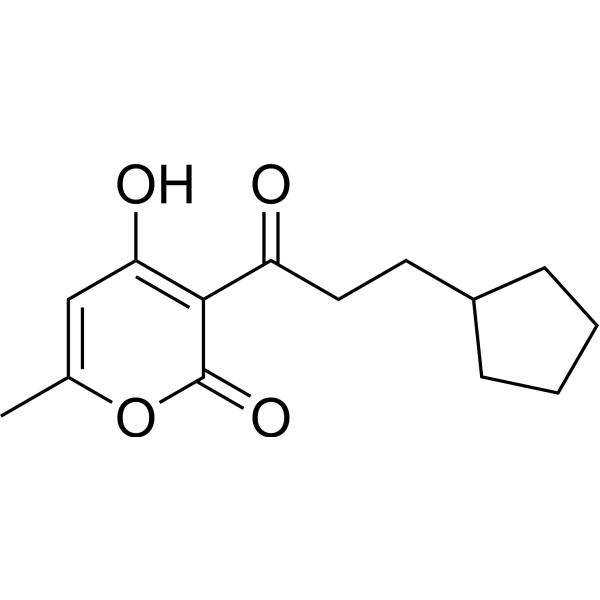 0 ImagesCat. No.: HY-163337CAS No.: 3020687-94-6
Antifungal agent 92 (Compound 21) is a potent antifungal agent with an EC50 of 4.4 μM against Sclerotinia sclerotiorum. Antifungal agent 92 can induce abnormal mitochondrial morphology, loss of mitochondrial membrane potential, and reactive oxygen species (ROS) accumulation in Sclerotinia sclerotiorum. Antifungal agent 92 is a moderate promiscuous inhibitor of mitochondrial complexes II and III.
-
Spiroamantadine
 0 ImagesCat. No.: HY-122261CAS No.: 34522-38-8Synonyms: DU-34569 maleate
Spiroamantadine (DU-34569 maleate) is a compound related to Amantadine (HY-B0402) with anti-influenza virus activity.
-
Erisonersen sodium
 0 ImagesCat. No.: HY-177630ACAS No.: 2834724-81-9Synonyms: ION 717 sodium
Erisonersen sodium, an antisense oligonucleotide, is a prion protein synthesis reducer. It is used for the study of Prion disease.
-
Rolitetracycline (Standard)
 0 Images
Saflufenacil (Standard) is the analytical standard of Saflufenacil. This product is intended for research and analytical applications. Saflufenacil is a herbicide of the pyrimidinedione chemical class preplant burndown and selective preemergence dicot weed control in multiple crops, including corn. Saflufenacil is a potent inhibitor of protoporphyrinogen IX oxidase (PPO).
-
BiPNQ
 0 ImagesCat. No.: HY-121187CAS No.: 313513-16-5
BiPNQ is a potent inhibitor of Trypanosoma cruzi, the causative agent of Chagas disease.
-
Genkwanol C
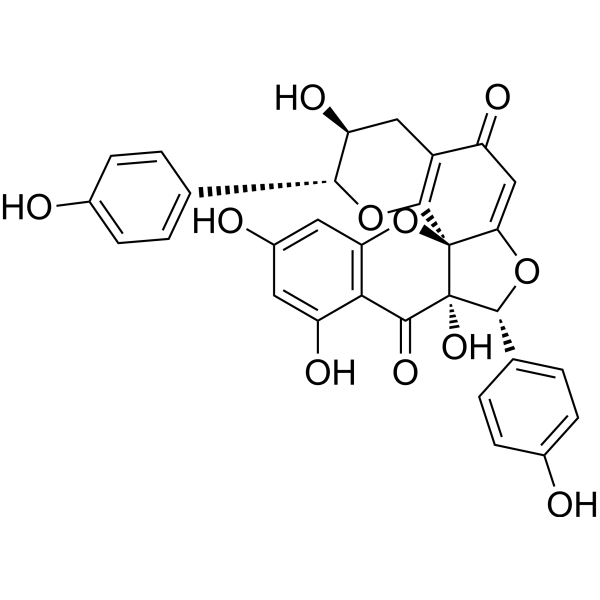 0 ImagesCat. No.: HY-N10920CAS No.: 151283-11-3
-
Type II topoisomerase inhibitor 1
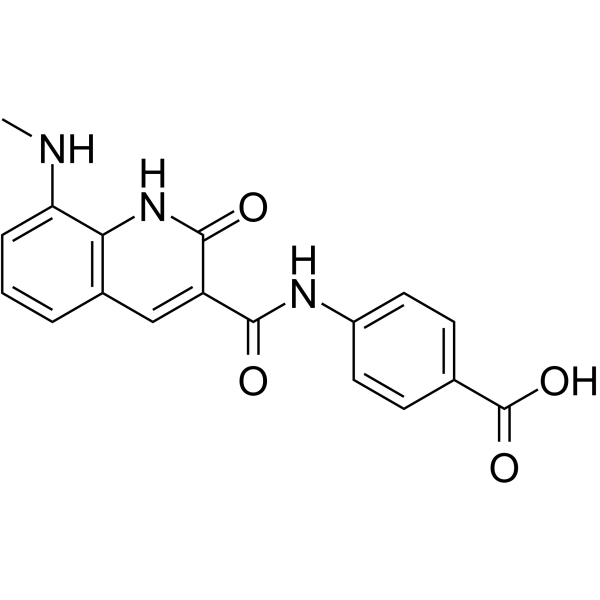 0 ImagesCat. No.: HY-150044CAS No.: 2245691-60-3
Type II topoisomerase inhibitor 1 is a potent and selective E. coli DNA gyrase inhibitor (IC50: 1.7 nM), and forms hydrogen bonds with Asp73 residue. Type II topoisomerase inhibitor 1 inhibits topoisomerase IV activity (IC50: 0.98 μM). Type II topoisomerase inhibitor 1 can be used in the research of antibacterial area.
-
Spergualin trihydrochloride
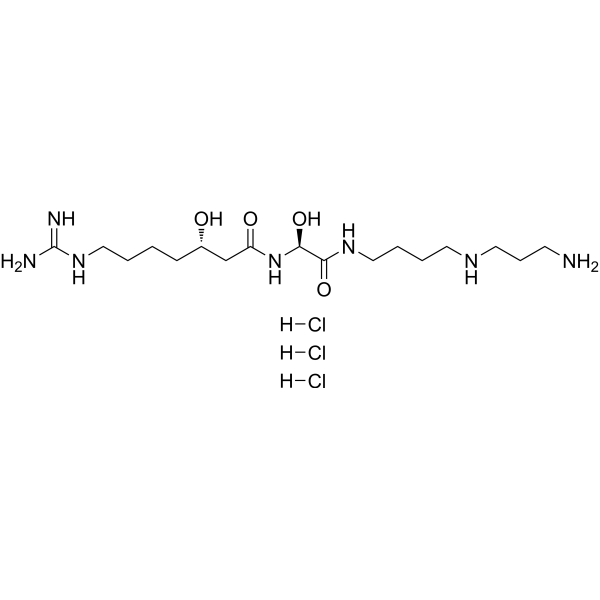 0 ImagesCat. No.: HY-15087ACAS No.: 80952-47-2
Spergualin trihydrochloride is a natural occurring antibiotic initially identified from culture filtrates of Bacillus laterosporus BMG162-aF2.
-
Zika virus-IN-3
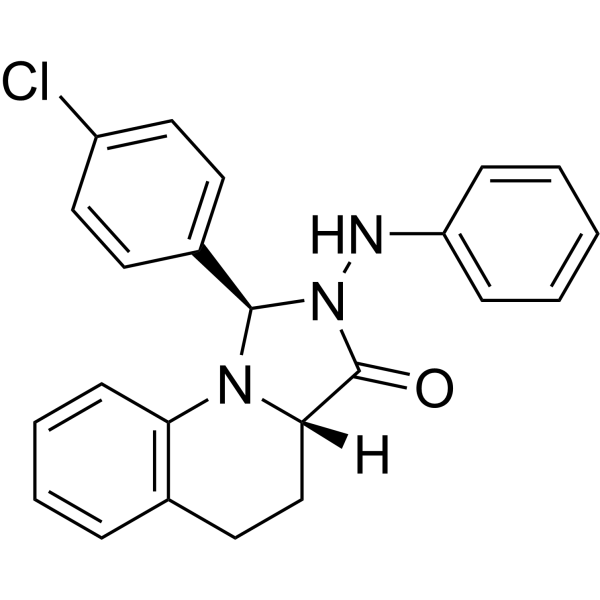 0 ImagesCat. No.: HY-146193CAS No.: 2527915-11-1
Zika virus-IN-3 (Compd 7) is a Zika virus inhibitor, with an EC50 of 3.4 μM .