



Neoaureothin
Neoaureothin is a bacterial metabolite that has been found in Streptomyces. It is an androgen receptor (AR) antagonist that inhibits binding of dihydrotestosterone (DHT) to ARs (IC50=13 μM) and inhibits DHT-induced expression of prostate-specific antigen in LNCaP cells (IC50=1.75 nM). Neoaureothin is cytotoxic to A549, HCT116, and HepG2 cells (IC50s=34.3, 47, and 37.2 μg/mL, respectively). It also has nematocidal activity against the pine wood nematode B. xylophilus (LC50=0.84 μg/mL) and increases survival of P. densiflora trees inoculated with B. xylophilus.
商品は「研究用試薬」です。人や動物の医療用・臨床診断用・食品用の製品ではありません。
研究用途以外に使用した場合、当社は一切の責任を負いかねます。
- CAS 番号: 59795-94-7
- 分子式: C28H31NO6
- 分子量:477.55
-
保管条件:
Please store the product under the recommended conditions in the Certificate of Analysis.


To place orders, for customer services and technical support, please contact: MedChemExpress USA
Tel: 609-228-6898 E-mail: [email protected] [email protected]


-
 生物活性
生物活性
-
化学情報
- プロトコル
- 純度とドキュメンテーション
- 参考文献
-
 Help & FAQs


-
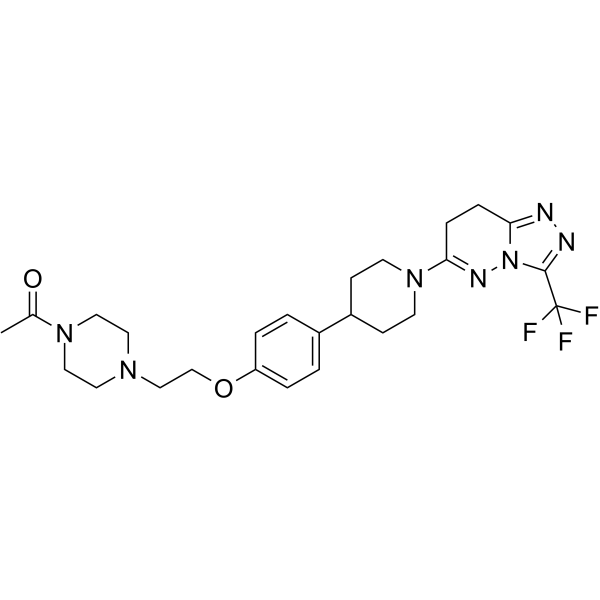
HY-16079
AZD3514AR Inhibitor -
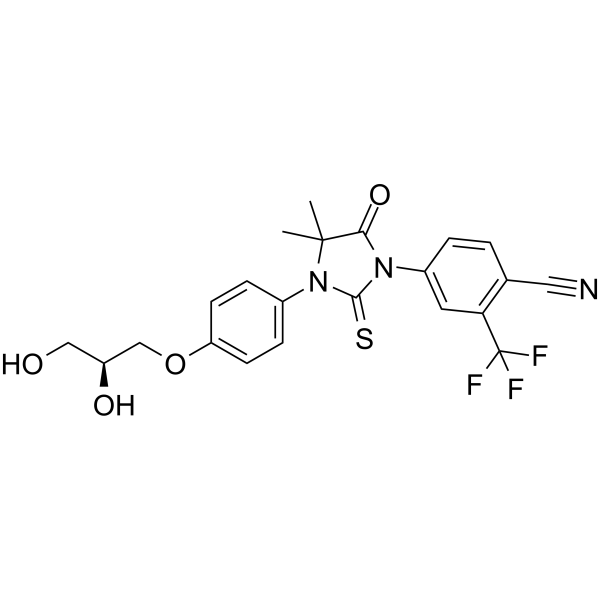
HY-137448
RezvilutamideAndrogen Receptor Antagonist -

HY-103576
LGD-3303 -
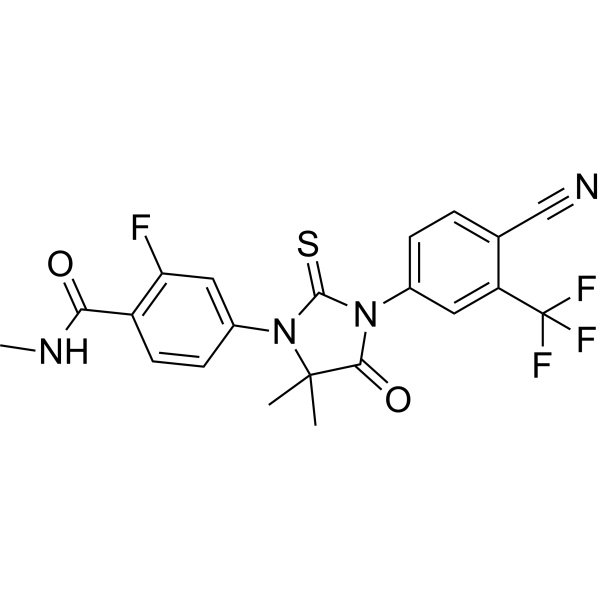
HY-70002
EnzalutamideAndrogen Receptor Antagonist -

HY-N11224
Pregnanetriol17α-Hydroxyprogesterone Metabolite -

HY-70002R
Enzalutamide (Standard)Androgen Receptor Antagonist -
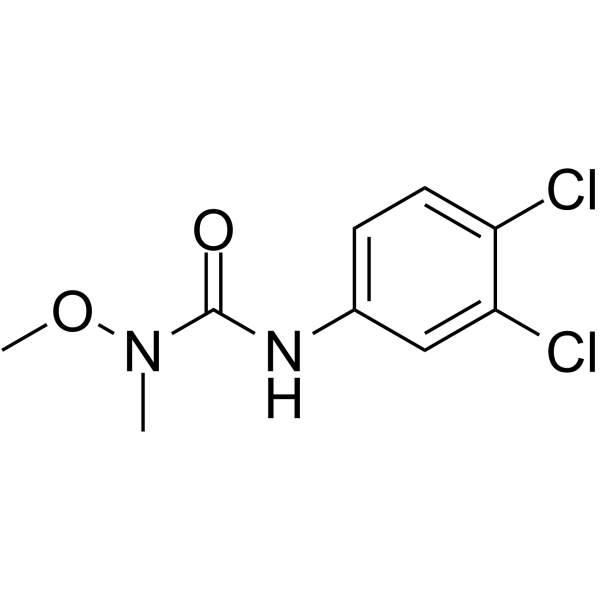
HY-B1866
LinuronPhenylurea Herbicide -

HY-103576R
LGD-3303 (Standard)Reference Standard -
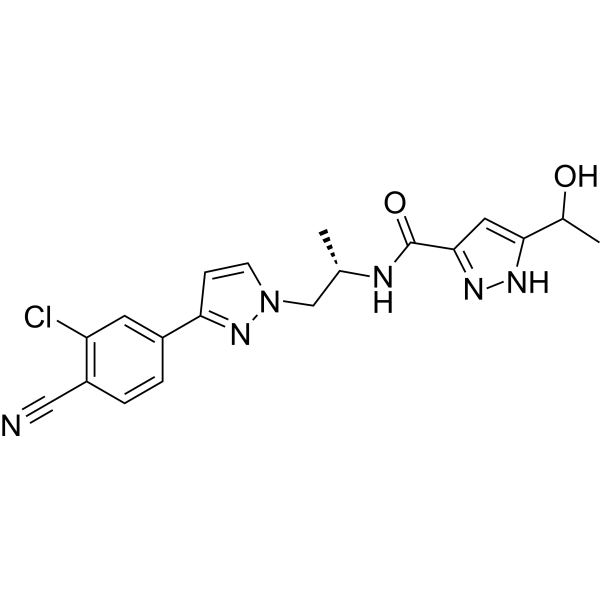
HY-16985
DarolutamideAndrogen Receptor Antagonist -
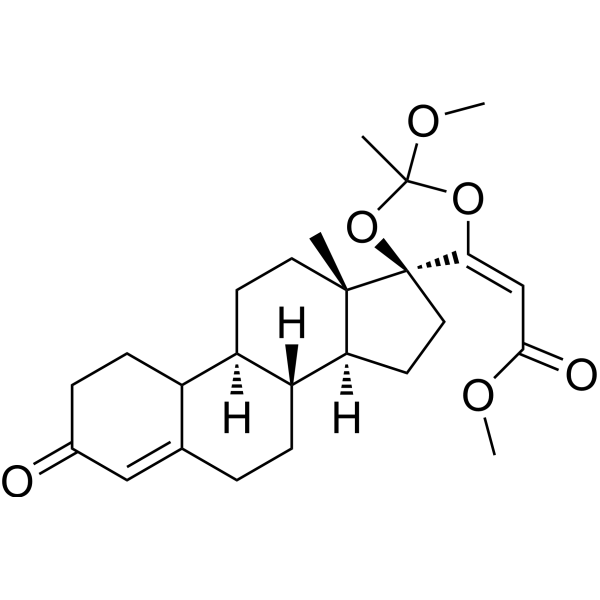
HY-107480
YK11Androgen Receptor Partial Agonist -
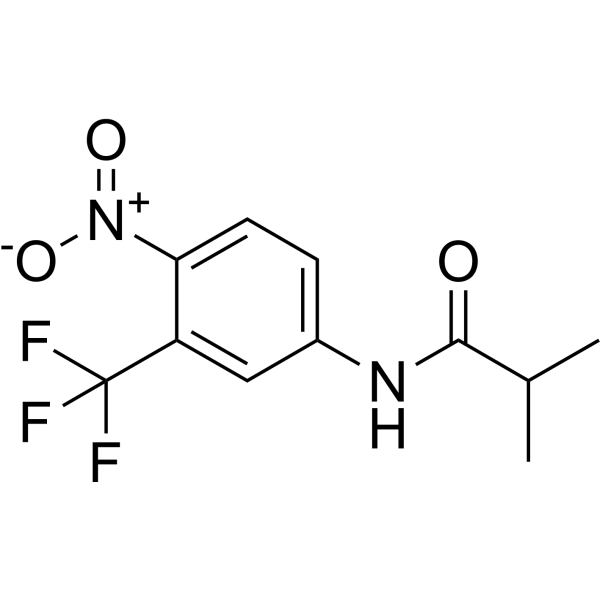
HY-B0022
FlutamideAntiandrogen Agent -
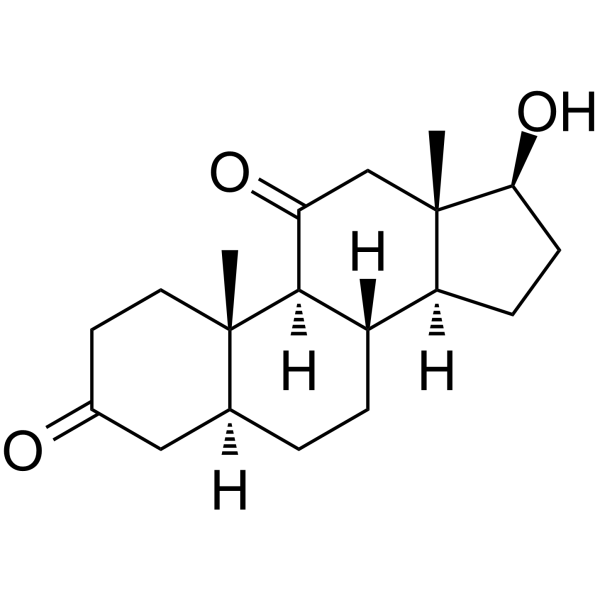
HY-135794
11-KetodihydrotestosteroneAndrogen Receptor Agonist


生物活性
製品説明


化学情報
-
CAS 番号 59795-94-7
-
分子量 477.55
-
分子式 C28H31NO6
-
SMILES
CC(C1=O)=C([C@@](OC/2)([H])CC2=C\C(C)=C\C(C)=C\C(C)=C\C(C=C3)=CC=C3[N+]([O-])=O)OC(OC)=C1C
-
別名
NSC 260179; Spectinabilin
-
輸送条件
Room temperature in continental US; may vary elsewhere.
-
保管条件
Please store the product under the recommended conditions in the Certificate of Analysis.


純度とドキュメンテーション
参考文献

Calculators
濃度 (開始) × 体積 (開始) = 濃度 (終了) × 体積 (終了)


Neoaureothin 関連分類
HY-N8504 関連分類
 Powered by Bioz