Infection
-
Infection Related Products (18812)
Related Products (18812)

-
Antibodies (22)
-
KSP-1007
 0 ImagesCat. No.: HY-171112CAS No.: 2380240-20-8
KSP-1007 is a bicyclic boronate-based broad-spectrum β-lactamase inhibitor. KSP-1007 can effectively inhibit class A, B, C and D β-lactamases, including serine-type, metallo-type (such as NDM, VIM, IMP) and Acinetobacter baumannii OXA-type enzymes. KSP-1007 can enhance the antibacterial activity of Meropenem (HY-13678), reduce its MIC value, and be effective against carbapenemase-producing Enterobacteriaceae, Acinetobacter baumannii, and Pseudomonas aeruginosa. KSP-1007 can be used for the research of bacterial infection.
-
Maltol-3-O-(4'-O-p-coumaroyl-6'-O-(3-hydroxy-3-methylglutaroyl))-β-glucopyranoside
 0 ImagesCat. No.: HY-N20632CAS No.: 942503-47-1
Maltol-3-O-(4'-O-p-coumaroyl-6'-O-(3-hydroxy-3-methylglutaroyl))-β-glucopyranoside is a sortase A inhibitor of Streptococcus mutans, with an IC50 value of 94.3 μM. Maltol-3-O-(4'-O-p-coumaroyl-6'-O-(3-hydroxy-3-methylglutaroyl))-β-glucopyranoside inhibits saliva-induced aggregation of Streptococcus mutans. Maltol-3-O-(4'-O-p-coumaroyl-6'-O-(3-hydroxy-3-methylglutaroyl))-β-glucopyranoside can be used in caries-related research.
-
Temephos-d12
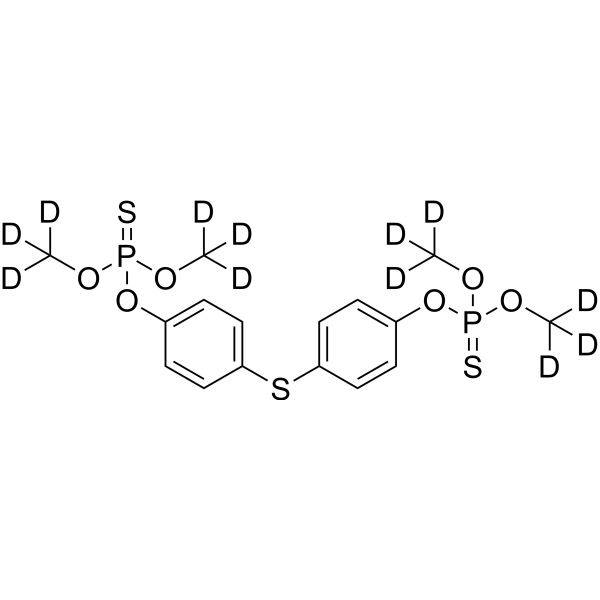 0 ImagesCat. No.: HY-B1120SCAS No.: 1219795-39-7Synonyms: Temefos-d12
Temephos-d12 is the deuterium labeled Temephos. Temephos (Temefos) is an orally active, blood-brain barrier-permeable organophosphate insecticide and AChE inhibitor. By irreversibly inhibiting AChE to induce cholinergic overactivation, Temephos effectively blocks larval development of Aedes aegypti (yellow fever mosquito) and Aedes albopictus (Asian tiger mosquito), and is commonly used in studies related to Dengue Virus, Zika Virus and other relevant pathogens. Temephos exhibits genotoxicity and neurodevelopmental toxicity, and may also cause liver injury, reproductive system abnormalities and cholinergic poisoning symptoms in mammals. Temephos tends to accumulate in adipose tissues and aquatic organisms, and is excreted via feces after metabolism through oxidation and hydrolysis. Note that CYP-mediated metabolic detoxification may reduce the actual larvicidal efficacy of Temephos against some mosquito species. Temephos can be used in research related to dengue fever, Zika virus disease, chikungunya and dracunculiasis.
-
DS-2969b
 0 ImagesCat. No.: HY-116880CAS No.: 2092352-48-0
DS-2969b is an orally active GyrB inhibitor with antibacterial activity. DS-2969b is is active against Clostridium difficile infection (MIC90: 0.06 μg/mL), which is 2-, 16-, and 32-fold lower than those of Fidaxomicin (HY-17580), Metronidazole (HY-B0318), and Vancomycin (HY-B0671), respectively. DS-2969b inhibits the supercoiling activity of C. difficile DNA gyrase. DS-2969b also exhibits activity against other Gram-positive anaerobes, including strict and facultative anaerobes. DS-2969b is safe and well tolerated in preclinical toxicology studies.
-
HCV-IN-37
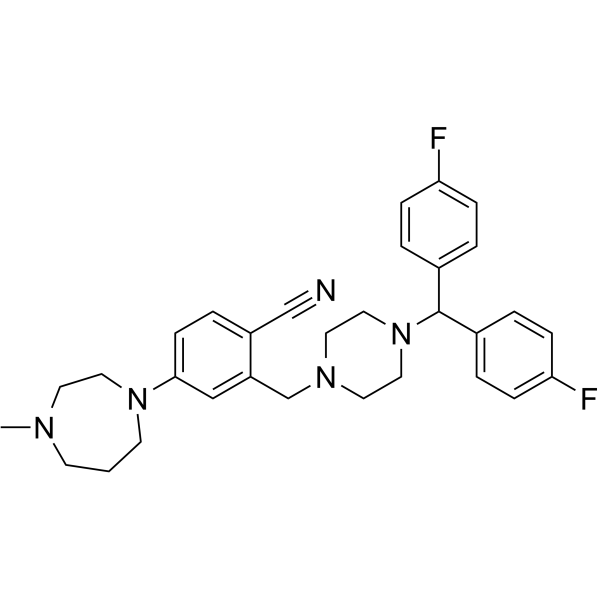 0 ImagesCat. No.: HY-144110CAS No.: 2425804-98-2
HCV-IN-37 (Compound 3d) is a potent inhibitor of HCV. HCV-IN-37 is orally available and long-lasting in rat plasma after oral administration to rats by a single dose of 15 mg/kg. The high potency of active derivative HCV-IN-37 is primarily driven by the inhibitory effect on the virus entry stage.
-
Trichostatin C
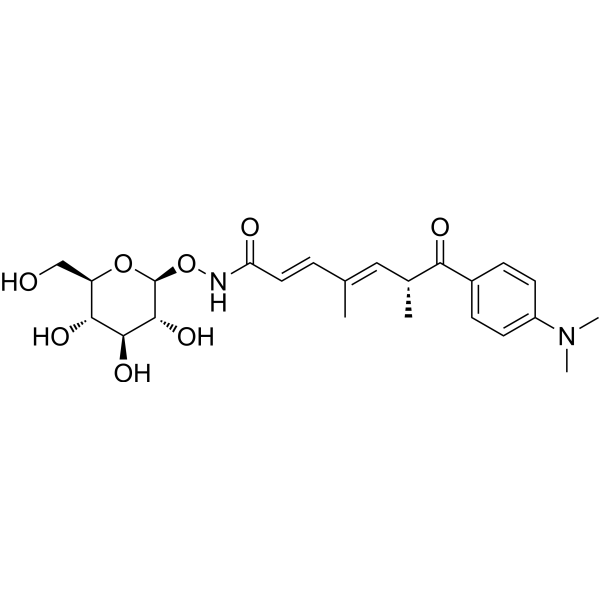 0 ImagesCat. No.: HY-126566CAS No.: 68676-88-0
Trichostatin C is an inhibitor for histone deacetylase (HDAC), induces apoptosis and arrests cell cycle at G2/M phase, and exhibits anticancer activity against lung cancer and urothelial bladder cancer. Trichostatin C induces differentation of Friend leukemic cells. Trichostatin C exhibits antifungal activity.
-
Antimicrobial agent-33
 0 ImagesCat. No.: HY-131048CAS No.: 51244-45-2
Antimicrobial agent-33 (Compound 2b) is an antimicrobial agent, with MIC values of 2-64 μg/mL. Antimicrobial agent-33 is an active compound against Staph. Aureus.
-
DS-003
 0 ImagesCat. No.: HY-114217CAS No.: 676489-50-2
DS003 is a novel gp120 binder and BMS-378806 (HY-14134) analogue. DS003 has potent and broad anti-HIV-1 activity.
-
Clindamycin hydrochloride monohydrate (Standard)
 0 ImagesCat. No.: HY-N7118RCAS No.: 58207-19-5
Clindamycin (hydrochloride monohydrate) (Standard) is the analytical standard of Clindamycin (hydrochloride monohydrate). This product is intended for research and analytical applications. Clindamycin hydrochloride monohydrate is an oral protein synthesis inhibitory agent that has the ability to suppress the expression of virulence factors in Staphylococcus aureus at sub-inhibitory concentrations (sub-MICs). Clindamycin hydrochloride monohydrate resistance results from enzymatic methylation of the antibiotic binding site in the 50S ribosomal subunit (23S rRNA). Clindamycin hydrochloride monohydrate decreases the production of Panton-Valentine leucocidin (PVL), toxic-shock-staphylococcal toxin (TSST-1) or alpha-haemolysin (Hla).
-
Remdesivir de(ethylbutyl 2-aminopropanoate)
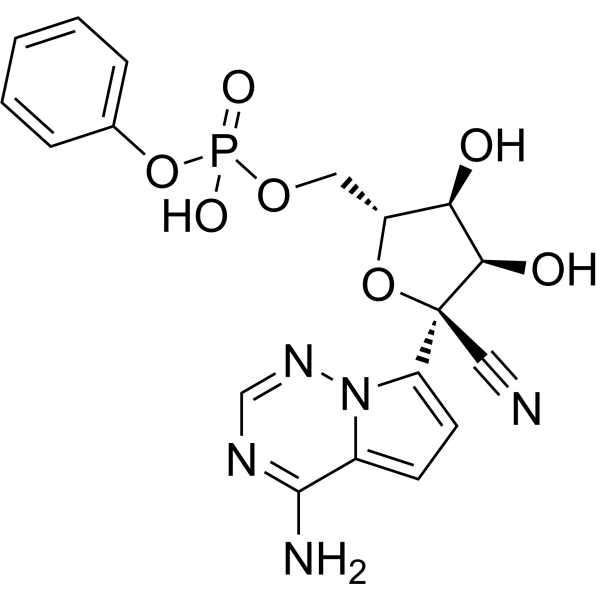 0 ImagesCat. No.: HY-145949CAS No.: 2607871-93-0
Remdesivir de(ethylbutyl 2-aminopropanoate) is an impurity of Remdesivir. Remdesivir, a nucleoside analogue with effective antiviral activity, has EC50s of 74 nM for SARS-CoV and MERS-CoV in HAE cells, and 30 nM for murine hepatitis virus in delayed brain tumor cells. Remdesivir is highly effective in the control of SARS-CoV-2 (COVID-19) infection in vitro.
-
Trypaflavin bromide
 0 ImagesCat. No.: HY-B1509BCAS No.: 857613-80-0
Trypaflavin bromide is an orally active acridine compound and antimalarial agent. Trypaflavin bromide invades germ cells. Trypaflavin bromide induces aberrations in unfertilized oocytes. Trypaflavin bromide increases the frequency of chromosomal aberrations. Trypaflavin bromide shows weak mutagenicity. Trypaflavin bromide is highly toxic to Leishmania, causing immediate lysis of the leptomonads.
-
Eugenitin
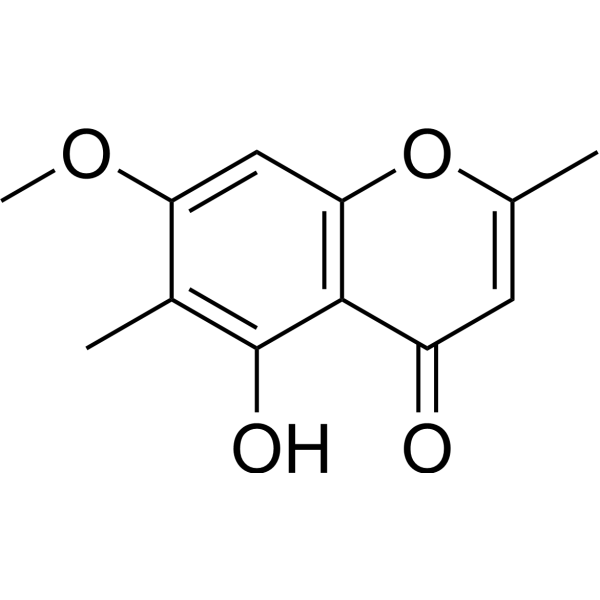 0 ImagesCat. No.: HY-W663230CAS No.: 480-12-6
Eugenitin is a polyketide isolated from the fungus Mycoleptodiscus indicus that is related to the South American medicinal plant. Eugenitin inhibits Leishmania major with LD50=39.9 μM. Eugenitin has low cytotoxicity (IC50 >131 μM) against several human cancer cell lines.
-
TLR7 agonist 21
 0 ImagesCat. No.: HY-163670CAS No.: 3040038-00-1
TLR7 agonist 21 (Compound 27B) is a selective agonist for Toll-like receptor 7(TLR7), with an EC50 of 17.53 nM (for human TLR7) and 41.7 nM (for mouse TLR7). TLR7 agonist 21 stimulates the secretion of pro-inflammatory cytokines, such as IL-6, TNF-α, IFN-α1, and IL-4. TLR7 agonist 21 acts as a vaccine adjuvant, increases levels of IgG and IgA, and protects the mouse from influenza virus infections.
-
FM-2665
 0 ImagesCat. No.: HY-189096
FM-2665 is an arylpyrazole Insecticide and acaricide with activity against Plutella xylostella, Tetranychus cinnabarinus, and Myzus persicae.
-
HG4
 0 ImagesCat. No.: HY-P5709
HG4 is a fast-acting antimicrobial peptide. HG4 shows anti-biofilm and anti-inflammatory activities. HG4 is active against Gram-positive pathogens, especially against MRSA strains (MIC: 32-64 μg/mL). HG4 can bind to bacterial lipids and reduces ATP concentration in S. aureus MRSA USA300 cells.
-
Pirlimycin
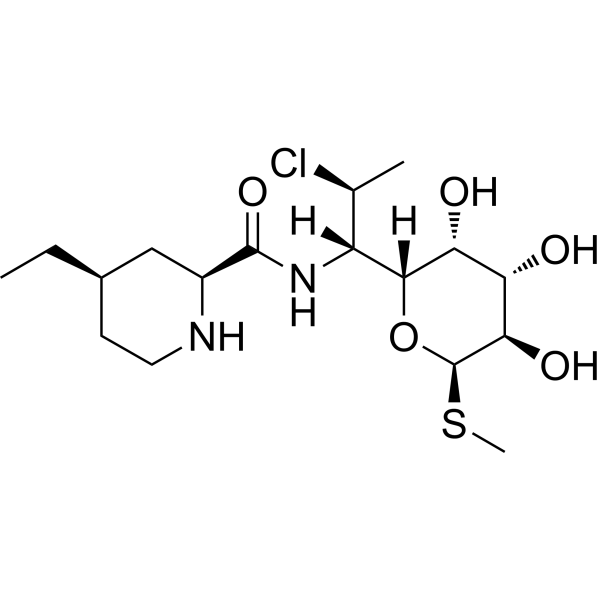 0 ImagesCat. No.: HY-106597CAS No.: 79548-73-5
Pirlimycin is an orally active lincosamide Antibiotic, Clindamycin (HY-B1455) analog, and antimalarial agent. Pirlimycin inhibits Plasmodium growth. Pirlimycin exhibits antibacterial activity against various aerobic bacteria, particularly Staphylococcus and Streptococcus species. Pirlimycin can be used for research on bovine mastitis.
-
D-Glucoheptose
 0 ImagesCat. No.: HY-N11733CAS No.: 62475-58-5
D-Glucoheptose is a heptose monosaccharide that serves as a starting material for sedoheptulose. D-Glucoheptose has a strong association with the genus Symbiobacterium. The content of D-Glucoheptose in urine of the control group without liver injury is higher than that in the anti-tuberculosis drug-induced liver injury group. D-Glucoheptose can be used in studies related to anti-tuberculosis drug-induced liver injury.
-
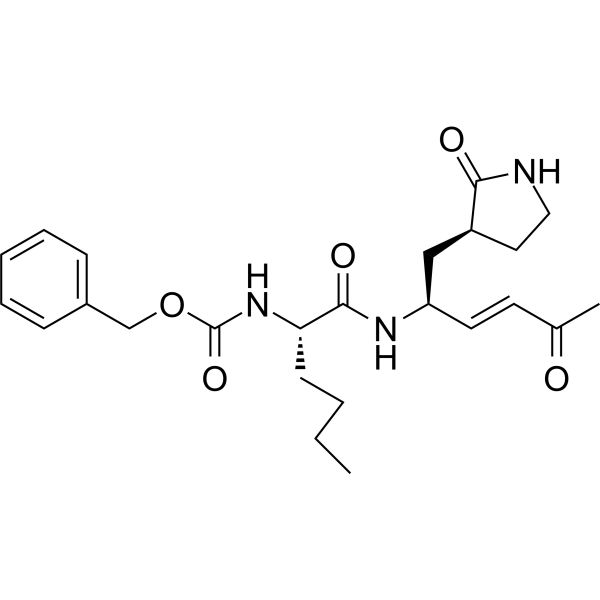
Helvolic acid-13C33
 0 ImagesCat. No.: HY-N6728SSynonyms: Fumigacin-13C33
Helvolic acid-13C33 (Fumigacin-13C33) is the 13C-labeled Helvolic acid (HY-N6728). Helvolic acid (Fumigacin) is an antibiotic isolated from Xylaria sp, active against the Gram-positive bacteria.
-
Antibacterial agent 131
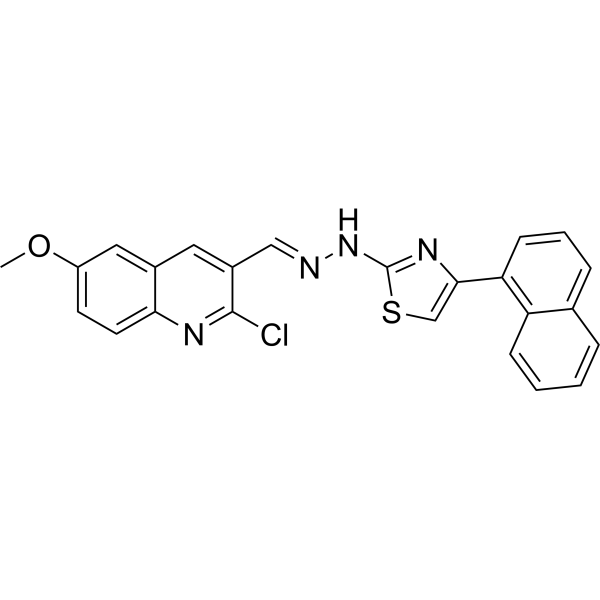 0 Images
Antibacterial agent 131 is a quinoline derivative. Antibacterial agent 131 has antimicrobial effect. Antibacterial agent 131 destroys the integrity of the fungal cells via blocking ergosterol production.