Inflammation/Immunology
-
Inflammation/Immunology Related Products (20898)
Related Products (20898)

-
Antibodies (115)
-
Related Compound Screening Libraries (4)
-
Centella asiatica extract
 0 ImagesCat. No.: HY-N18667CAS No.: 84696-21-9
Centella asiatica extract is an orally active herbal extract. Centella asiatica extract scavenges free radicals, increases stratum corneum hydration, improves epidermal barrier function, and reduces skin redness and skin pH. Centella asiatica extract inhibits pro-inflammatory cytokines, suppresses p38 MAPK phosphorylation, reduces mast cell infiltration, and decreases the expression of TNF-α, IL-4, IL-5, IL-6, IL-17, CXCL9, iNOS and COX-2. Centella asiatica extract upregulates the expression of BDNF and downregulates the expression of VGLUT1, and exhibits neuroprotective effects under hypoxic conditions. Centella asiatica extract inhibits pro-inflammatory M1 macrophage polarization and prevents adipose tissue senescence. Centella asiatica extract can be used in studies related to hypoxia-induced neurological dysfunction, atopic dermatitis, and obesity-induced insulin resistance.
-
Pan-RAS-IN-8
 0 ImagesCat. No.: HY-177762CAS No.: 3103594-37-9
Pan-RAS-IN-8 (Page 152, third row, third from left to right) is a pan-RAS inhibitor. Pan-RAS-IN-8 blocks the binding of RAS to downstream effector molecules by forming a ternary complex, thereby inhibiting the activation of the MAPK and PI3K-AKT signaling pathways. Pan-RAS-IN-8 can be used for the research of cancer, inflammatory diseases and autoimmune diseases.
-
Viscumneoside V
 0 Images
Viscumneoside V is a plant-derived anti-inflammatory agent present in Viscum album var. coloratum. Viscumneoside V inhibits the expression of MCP-1 and promotes the production of RANTES in LPS-stimulated immune cells. Viscumneoside V can be used for research related to skin rashes.
-
(Rac)-NPD6433
 0 ImagesCat. No.: HY-167879CAS No.: 895908-81-3
(Rac)-NPD6433 is a racemate of NPD6433. NPD6433 is a triazenyl indole with broad-spectrum activity against all screening fungal strains. NPD6433 targets the enoyl reductase domain of fatty acid synthase 1 (Fas1), covalently inhibiting its flavin mononucleotide-dependent NADPH-oxidation activity and arresting essential fatty acid biosynthesis.
-
M62812 free base
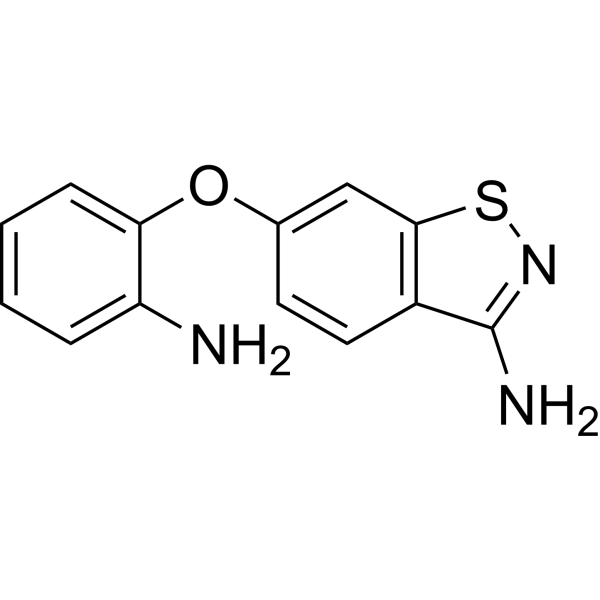 0 ImagesCat. No.: HY-103639CAS No.: 613262-61-6
M62812 (free base) is a toll-like receptor 4 (TLR4) signal transduction inhibitor. M62812 can suppress endothelial cell and leukocyte activation and prevents lethal septic shock in mice. M62812 can be used for the research of sepsis.
-
GSK789
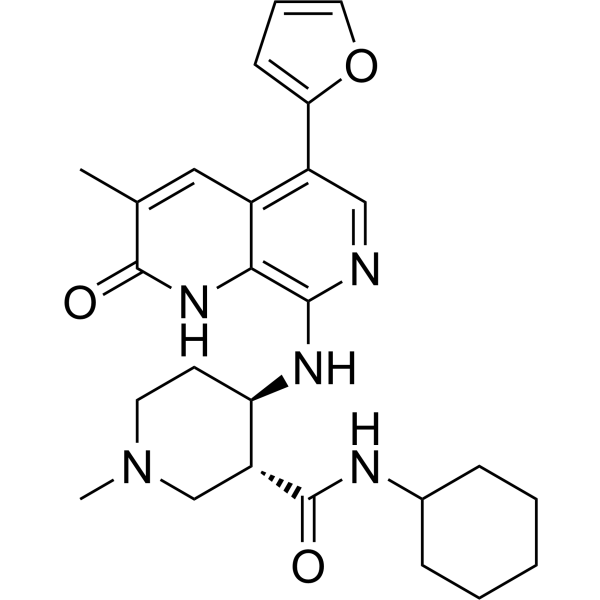 0 ImagesCat. No.: HY-138623CAS No.: 2540591-06-6
GSK789 is a selective inhibitor of BET BD1. GSK789 inhibits the growth of leukemia cell lines. GSK789 inhibits LPS-stimulated production of MCP-1, TNFα and IL-6 in human whole blood. GSK789 exhibits antiproliferative, anti-inflammatory and immunomodulatory activities. GSK789 can be used in research related to cancers such as leukemia, as well as inflammatory and immune diseases.
-
Cortodoxone-d7
 0 ImagesCat. No.: HY-W653985Synonyms: 11-Deoxycortisol-d7; Cortexolone-d7; Reichstein's substance S-d7
Cortodoxone-d7 (11-Deoxycortisol-d7) is a deuterium labeled Cortodoxone (HY-77839). Cortodoxone (11-Deoxycortisol; cortexolone) is a glucocorticoid steroid hormone and also is a glucocorticoid antagonist. Cortodoxone increases tryptophan oxygenase (TO) activity and induces the secretion of corticosterone. Cortodoxone regulates T cell proliferation and activation.
-
SRTCX1003
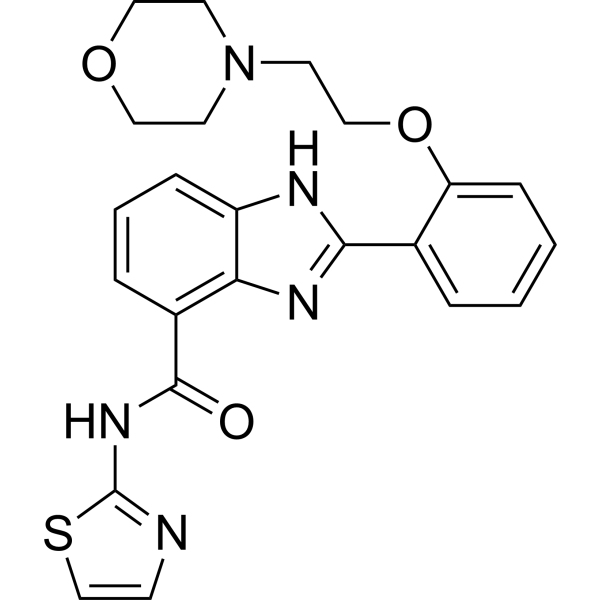 0 ImagesCat. No.: HY-124240CAS No.: 1203480-86-7
SRTCX1003 is an orally active SIRT1 activator. SRTCX1003 suppresses inflammatory responses.
-
(±)-Isopaucifloral F
 0 ImagesCat. No.: HY-N15473CAS No.: 1001259-00-2Synonyms: (±)-Isopauciflorol F
Isopaucifloral F ((±)-Isopaucifloral F) is a Resveratrol (HY-16561)-derived sesquiterpenes. Isopaucifloral F is an orally active ERβ agonist (EC50: 46.96 μM). Isopaucifloral F has antiosteoporosis activity. LD50 in rats: > 5 mg/kg.
-
Brompheniramine (Standard)
 0 ImagesCat. No.: HY-B0480ARCAS No.: 86-22-6Synonyms: (±)-Brompheniramine (Standard)
Brompheniramine (Standard) is the analytical standard of Brompheniramine. This product is intended for research and analytical applications. Brompheniramine ((±)-Brompheniramine) is a potent and orally active antihistamine of the alkylamine class. Brompheniramine is a selective histamine H1 receptor antagonist with a Kd of 6.06 nM. Brompheniramine can block the hERG channels, calcium channels, and sodium channels with IC50s of 0.90 μM, 16.12 μM and 21.26 μM, respectively. Brompheniramine has anticholinergic, antidepressant and anesthetic properties and can be used for allergic rhinitis research[4].
-
Ibudilast-d7
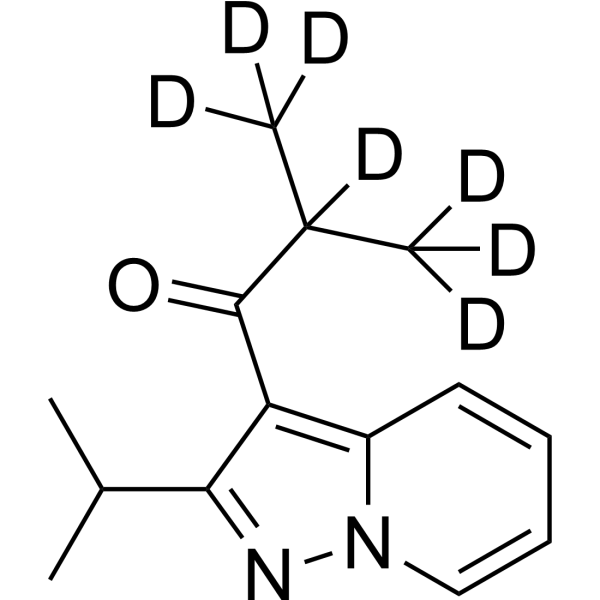 0 ImagesCat. No.: HY-B0763S1CAS No.: 2713301-45-0
Ibudilast-d7 is the deuterium labeled Ibudilast. Ibudilast (KC-404; AV-411; MN-166) is a cyclic AMP phosphodiesterase (PDE) inhibitor. Ibudilast has platelet anti-aggregatory effects. Ibudilast can be used for the research of asthma for its inhibitory effects on tracheal smooth muscle contractility. Ibudilast may be a useful neuroprotective and anti-dementia agent counteracting neurotoxicity in activated microglia.
-
IT 066 hydrochloride
 0 ImagesCat. No.: HY-19105ACAS No.: 126463-66-9
IT 066 hydrochloride is a Histamine H2 receptor antagonist. IT 066 hydrochloride possesses antioxidant activity and can protect rats against acute gastric mucosal injury induced by ischemia-reperfusion. IT 066 hydrochloride can also inhibit secretagogue-induced gastric acid secretion in rats and exert a long-acting anti-lesion effect on experimental gastric and duodenal lesions in rats. IT 066 hydrochloride is applicable for the research of gastrointestinal diseases.
-
S-Allyl-L-cysteine (Standard)
 0 ImagesCat. No.: HY-W013573RCAS No.: 21593-77-1
S-Allyl-L-cysteine (Standard) is the analytical standard of S-Allyl-L-cysteine. This product is intended for research and analytical applications. S-Allyl-L-cysteine, one of the organosulfur compounds found in AGE, possess various biological effects including neurotrophic activity, anti-cancer activity, anti-inflammatory activity.
-
BTK-IN-48
 0 ImagesCat. No.: HY-182293CAS No.: 3114078-55-3
-
Carbaryl-d3
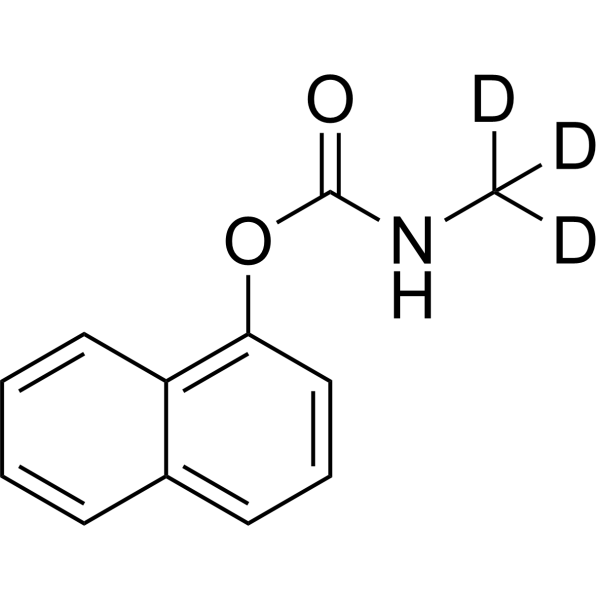 0 ImagesCat. No.: HY-B1315SCAS No.: 1433961-56-8
-
Antimalarial agent-71
 0 ImagesCat. No.: HY-189416
Antimalarial agent-71 is an antimalarial agent and antioxidant. Antimalarial agent-71 is computationally predicted to bind within the PfNDH2 binding pocket, which is located on the type II NADH dehydrogenase of the mitochondrial electron transport chain. Antimalarial agent-71 inhibits the growth of Plasmodium falciparum 3D7 parasites in whole-cell assays. Antimalarial agent-71 scavenges DPPH free radicals. Antimalarial agent-71 can be used in research on malaria and antioxidation.

-
EVP-21
 0 ImagesCat. No.: HY-187969CAS No.: 2742654-01-7
-
Anti-RNF43 Antibody
 0 ImagesCat. No.: HY-P992297
-
GsAF-1
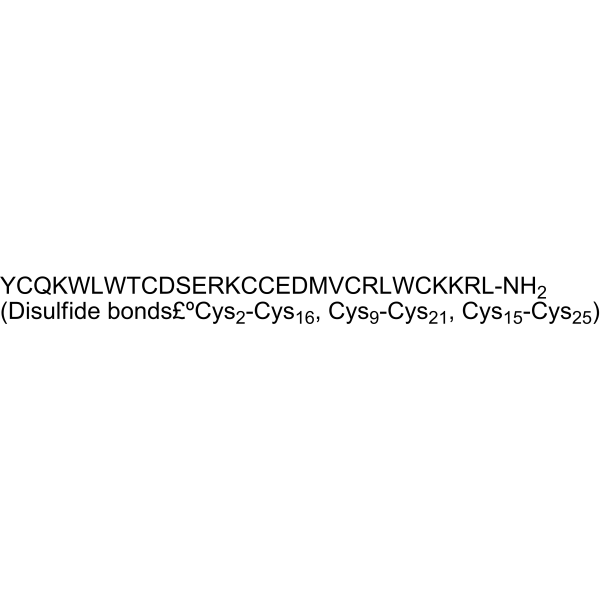 0 ImagesCat. No.: HY-P5167CAS No.: 518309-03-0
GsAF-1 is a peptide toxin containing three disulfide bonds. GsAF-1 can be isolated from the venom of the Chilean pink tarantula. GsAF-1 can be used for research of moderate-to-severe pain.