



Autophagy
Autophagy is a conserved cellular degradation and recycling process in the lysosome. In mammalian cells, there are three primary types of autophagy: microautophagy, macroautophagy, and chaperone-mediated autophagy (CMA). Microphagy captures cargoes by means of invaginations or protrusions of the lysosomal membrane directly, CMA uses chaperones to identify cargo proteins and then unfolds and transfers them into the lysosomal, while macroautophagy sequesters cargo by autophagosomes-de novo synthesized of double-membrane vesicles-and subsequently transport it to the lysosome.
Macroautophagy is the best studied and it occurs at a low level constitutively and can also be further induced under stress conditions, such as nutrient or energy starvation with a salient feature of autophagy protein degradation. Stress-induced macrophagy plays an important role in protein catabolism with another key protein degradation pathway, the ubiquitin–proteasome system (UPS).
As the study progressed, autophagy gains its importance under basal, nutrient-rich conditions, and is now recognized as a critical housekeeping pathway in catabolism of diverse cellular constituents, such as protein aggregates (aggrephagy), lipid droplets (lipophagy), iron complex (Ferritinophagy) and carbohydrate. Except for macromolecules, autophagy can also target several organelles and structures, such as mitochondria (mitophagy), peroxisome (pexophagy), endoplasmic reticulum (reticulophagy or ER-phagy), ribosome (ribophagy), spermatozoon-inherited organelles following fertilization (allophagy), secretory granules within pancreatic cells (zymophagy) and intracellular pathogens (xenophagy).
Autophagy and its dysfunction are associated with a variety of human pathologies, including ageing, cancer, neurodegenerative disease, heart disease and metabolic diseases, such as diabetes. Plenty of drugs and natural products are involved in autophagy modulation through multiple signaling pathways. Small molecules that can regulate autophagy seem to have great potential to intervene such diseases in animal models or clinical courses.
All Product Categories
-
Autophagy Inhibitors
(488)
View all products
-
Autophagy Agonists
(6)
View all products
-
Autophagy Activators
(124)
View all products
-
Autophagy Modulators
(59)
View all products
-
Autophagy Chemicals
(2)
View all products
-
Autophagy Inducers
(2220)
View all products
-
Autophagy Controls
(5)
View all products
-
Autophagy Ligand
(1)
View all products
-
Autophagy Related Products (3441)
Related Products (3441)

-
Antibodies (31)
-
Autophagy Signaling Pathway
-
MHY1485 (Standard)
 0 ImagesCat. No.: HY-B0795RCAS No.: 326914-06-1MHY1485 (Standard) is the analytical standard of MHY1485 (HY-B0795). This product is intended for research and analytical applications. MHY1485 is a potent cell-permeable mTOR activator that targets the ATP domain of mTOR. MHY1485 inhibits autophagy by suppression of fusion between autophagosomes and lysosomes.
-
Naproxen-d3
 0 ImagesCat. No.: HY-15030S1CAS No.: 1094102-82-5Synonyms: (S)-Naproxen-d3

-
U0126 (Standard)
 0 ImagesCat. No.: HY-12031ARCAS No.: 109511-58-2U0126 (Standard) is the analytical standard of U0126 (HY-12031A). This product is intended for research and analytical applications. U0126 is a potent, non-ATP competitive and selective MEK1 and MEK2 inhibitor, with IC50s of 72 nM and 58 nM, respectively. U0126 is an autophagy and mitophagy inhibitor.
-
Momelotinib mesylate
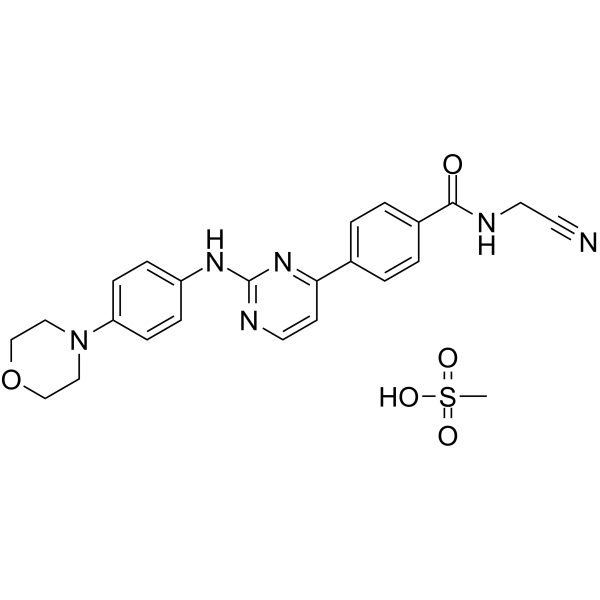 0 ImagesCat. No.: HY-10963CAS No.: 1056636-07-7Synonyms: CYT387 mesylateMomelotinib mesylate (CYT387 mesylate) is an ATP-competitive inhibitor of JAK1/JAK2 with IC50 of 11 nM/18 nM, appr 10-fold selectivity versus JAK3.
-
6-(1-Hydroxyethyl)-5,6-dihydrochelerythrine
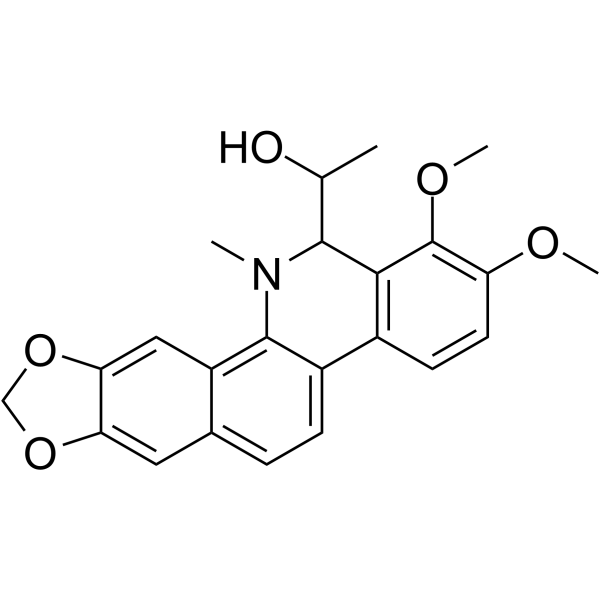 0 ImagesCat. No.: HY-N10365CAS No.: 2715007-88-66-(1-Hydroxyethyl)-5,6-dihydrochelerythrine, a alkaloid, significantly perturbates the features of cellular organelles including early endosomes, mitochondria and autophagosomes (Parkinson’s Disease patient-derived olfactory cells).
-
C8-Ceramide (Standard)
 0 ImagesCat. No.: HY-108391RCAS No.: 74713-59-0Synonyms: N-Octanoyl-D-erythro-sphingosine (Standard)C8-Ceramide (Standard) is the analytical standard of C8-Ceramide (HY-108391). This product is intended for research and analytical applications. C8-Ceramide (N-Octanoyl-D-erythro-sphingosine) is a cell-permeable analog of naturally occurring ceramides. C8-Ceramide has anti-proliferation properties and acts as a potent chemotherapeutic agent. C8-Ceramide stimulates dendritic cells to promote T cell responses upon virus infections. C8-Ceramide induces slight activation of protein Kinase (PKC) in vitro.
-
Sirtinol (Standard)
 0 ImagesCat. No.: HY-13515RCAS No.: 410536-97-9Sirtinol (Standard) is the analytical standard of Sirtinol. This product is intended for research and analytical applications. Sirtinol is a sirtuin (SIRT) inhibitor, with IC50s of 48 μM, 57.7 μM and 131 μM for ySir2, hSIRT2 and hSIRT2, respectively.
-
UA8967
 0 ImagesCat. No.: HY-118598CAS No.: 17511-50-1UA8967 is a membrane-active antitumor agent. UA8967 exhibits enhanced cytotoxicity against cancer cells harboring a deletion of the tumor suppressor gene DPC4. By disrupting the integrity of the cytoplasmic membrane, UA8967 triggers early caspase-independent autophagy and ultimately leads to non-apoptotic cell lytic death. UA8967 can be used in research on colon cancer and pancreatic cancer.
-
BIX-01294 (Standard)
 0 ImagesCat. No.: HY-10587RCAS No.: 935693-62-2BIX-01294 (Standard) is the analytical standard of BIX-01294 (HY-10587). This product is intended for research and analytical applications. BIX-01294 is a reversible and highly selective G9a and GLP Histone Methyltransferase inhibitor, with IC50s of of 1.7 μM and 0.9 μM, respectively. BIX-01294 inhibits G9a/GLP by competing for binding with the amino acids N-terminal of the substrate lysine residue. BIX-01294, a (1H-1,4-diazepin-1-yl)-quinazolin-4-yl amine derivative, induces necroptosis and autophagy. BIX-01294 has antitumor activity in recurrent tumor cells.
-
Thiamet G (Standard)
 0 ImagesCat. No.: HY-12588RCAS No.: 1009816-48-1
-
Chlorpromazine (Standard)
 0 ImagesChlorpromazine (Standard) is the analytical standard of Chlorpromazine (HY-12708). This product is intended for research and analytical applications. Chlorpromazine is an orally active, blood-brain barrier-transparent antipsychotic agent that effectively antagonises D2 dopamine receptors and 5-HT2A, which is widely used in schizophrenia and other psychiatric disorders. Chlorpromazine exerts anti-cancer activity through a variety of pathways, including anti-proliferation, induction of autophagy and cycle arrest (G2-M phase), inhibition of cytochrome c oxidase (CcO), inhibition of tumour growth and metastasis, and inhibition of tumour immune escape. Chlorpromazine also blocks hNav1.7 channels (IC50=25.9 μM; concentration-dependent) and HERG potassium channels (IC50=21.6 μM), which has potential for analgesic and cardiac arrhythmic studies. Chlorpromazine also can inhibit clathrin-mediated endocytosis.
-
Lucanthone (Standard)
 0 ImagesLucanthone (Standard) is the analytical standard of Lucanthone. This product is intended for research and analytical applications. Lucanthone is an endonuclease inhibitor of Apurinic endonuclease-1 (APE-1).


-
AGN 205327
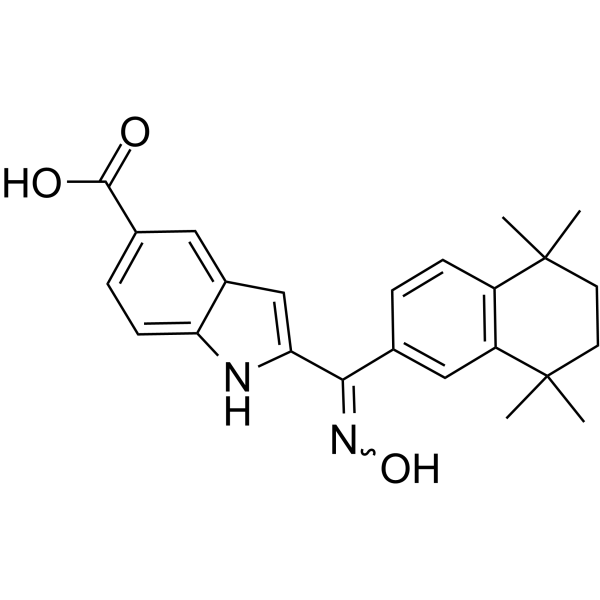 0 ImagesCat. No.: HY-16685CAS No.: 2070018-29-8AGN 205327 is a potent synthetic RARs agonist with EC50 of 3766/734/32 nM for RARα/β/γ respectively; no inhibition on RXR.
-
Atorvastatin strontium
 0 ImagesCat. No.: HY-B0589HCAS No.: 1072903-92-4Strontium atorvastatin is a cholesterol-lowering drug with activity in ameliorating cardiovascular disease-related events. Strontium atorvastatin exerts its biological activity by inhibiting HMG-CoA reductase in liver tissue. Strontium atorvastatin is also used to suppress dyslipidemia.
-
Daurisoline-d5
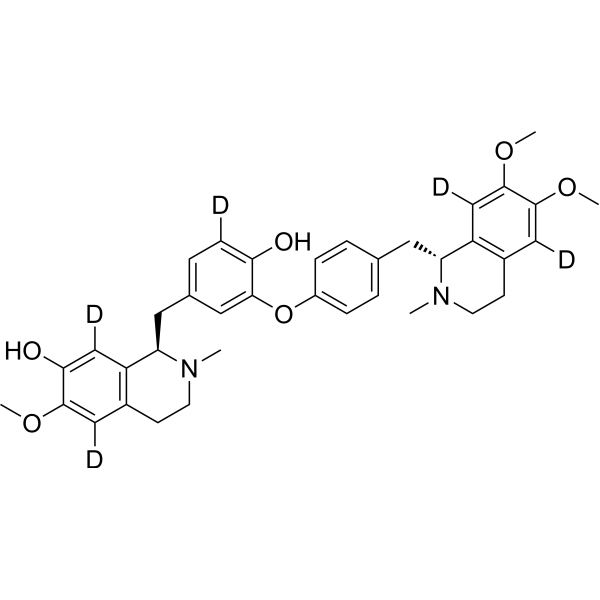 0 ImagesCat. No.: HY-N0221S1Synonyms: (R,R)-Daurisoline-d5Daurisoline-d5 is the deuterium labeled Daurisoline (HY-N0221). Daurisoline is a bis-benzylisoquinoline alkaloid that can be isolated from Menispermum dauricum and Rhizoma Menispermi. Daurisoline exerts a blocking effect on hERG and has antiarrhythmic effects. Daurisoline is a potent autophagy blocker that can be used for the research of cancer.
-
Topotecan hydrochloride (Standard)
 0 ImagesSynonyms: SKF 104864A hydrochloride (Standard); NSC 609669 hydrochloride (Standard)Topotecan (hydrochloride) (Standard) is the analytical standard of Topotecan (hydrochloride). This product is intended for research and analytical applications. Topotecan Hydrochloride (SKF 104864A Hydrochloride) is a Topoisomerase I inhibitor with potent antineoplastic activities.
-
8-Chloroadenosine (Standard)
 0 ImagesCat. No.: HY-103400RCAS No.: 34408-14-5Synonyms: 8-Cl-Ado (Standard)8-Chloroadenosine (Standard) is the analytical standard of 8-Chloroadenosine. This product is intended for research and analytical applications. 8-Chloroadenosine (8-Cl-Ado), a unique ribonucleoside analog, depletes endogenous ATP that subsequently induces the phosphorylation and activation of AMPK. 8-Chloroadenosine induces autophagic cell death. 8-Chloroadenosine effectively inhibited in vivo tumor growth in mice.




