Btk
Bruton tyrosine kinase
Bruton tyrosine kinase (Btk) is a member of the Tec family kinases with a well-characterized role in B-cell antigen receptor (BCR)-signaling and B-cell activation.
Btk plays a crucial role in B cell development and activation through the BCR signaling pathway and represents a new target for diseases characterized by inappropriate B cell activity. Btk is a kinase expressed exclusively in B cells and myeloid cells and has a well characterized, vital role in B cells highlighted by the human primary immune deficiency disease, X-linked agammaglobulinemia (XLA), which results from mutation in the Btk gene. Btk plays an essential role in the BCR signaling pathway. Antigen binding to the BCR results in B cell receptor oligomerization, Syk and Lyn kinase activation, followed by Btk kinase activation. Once activated, Btk forms a signaling complex with proteins such as BLNK, Lyn, and Syk and phosphorylates phospholipase C (PLC)γ2. This leads to downstream release of intracellular Ca2+ stores and propagation of the BCR signaling pathway through extracellular signal-regulated kinase and NF-κB signaling, ultimately resulting in transcriptional changes to foster B cell survival, proliferation, and/or differentiation.
All Product Categories
-
Btk Related Products (270)
Related Products (270)

-
Recombinant Proteins (19)
-
Antibodies (3)
-
GSTO1-IN-2
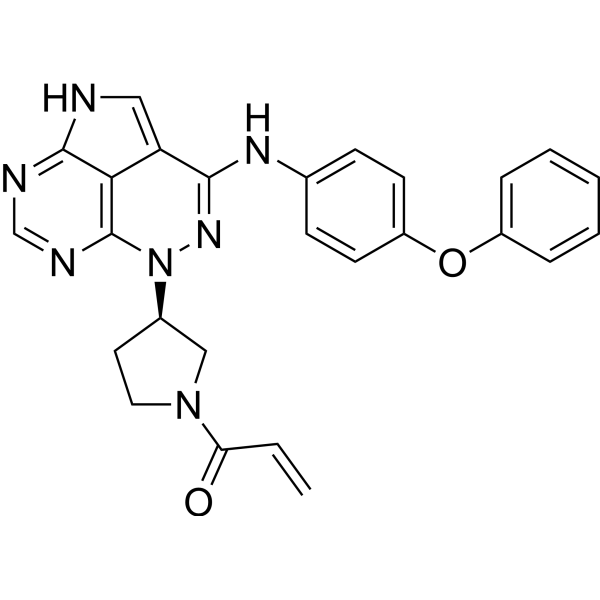
 0 ImagesCat. No.: HY-161876CAS No.: 3020776-77-3GSTO1-IN-2 (Compound B-9) is a dual covalent inhibitor of GSTO1/BTK with IC50 values of 441 nM and 6.2 nM respectively.
-
JAK3/BTK-IN-7
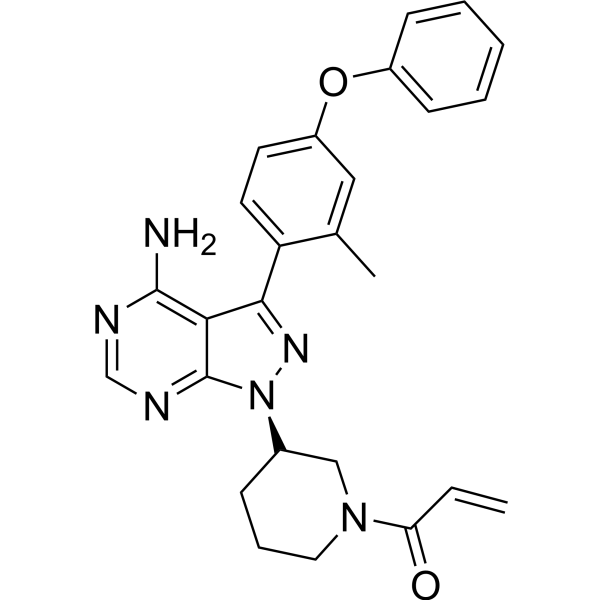
 0 ImagesCat. No.: HY-163183CAS No.: 2844387-16-0JAK3/BTK-IN-7 (XL-12) is a JAK3/BTK inhibitor with IC50 values of 2 nM and 14 nM, respectively. JAK3/BTK-IN-7 has anti-inflammatory activity and can be used in the study of rheumatoid arthritis.

-
BTK-IN-18
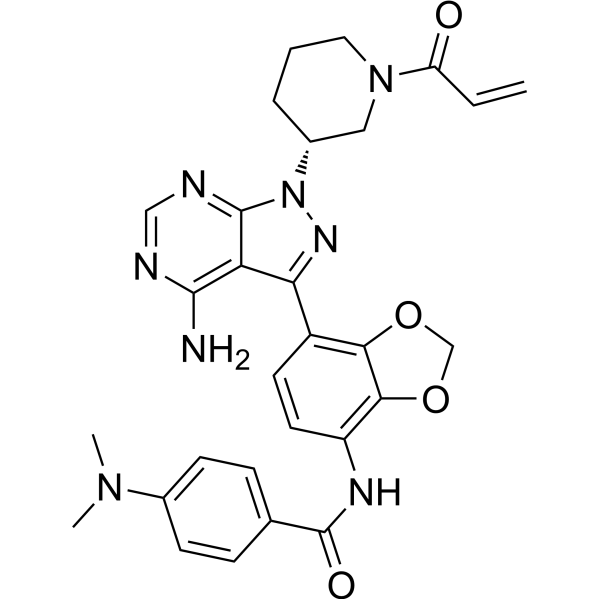
 0 ImagesCat. No.: HY-152201CAS No.: 1374239-71-0
-
BTK-IN-41
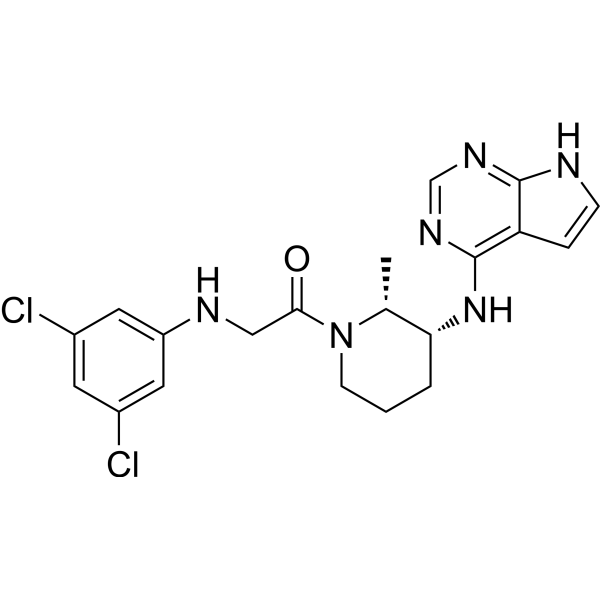
 0 ImagesCat. No.: HY-171131CAS No.: 2251799-53-6BTK-IN-41 (Compound 47) is the inhibitor for BTK with an IC50 of 5.4 nM. BTK-IN-41 inhibits the diffuse large B cell lymphoma cell TDM-8 with IC50 of 13.8 nM.
-
BTK-IN-33
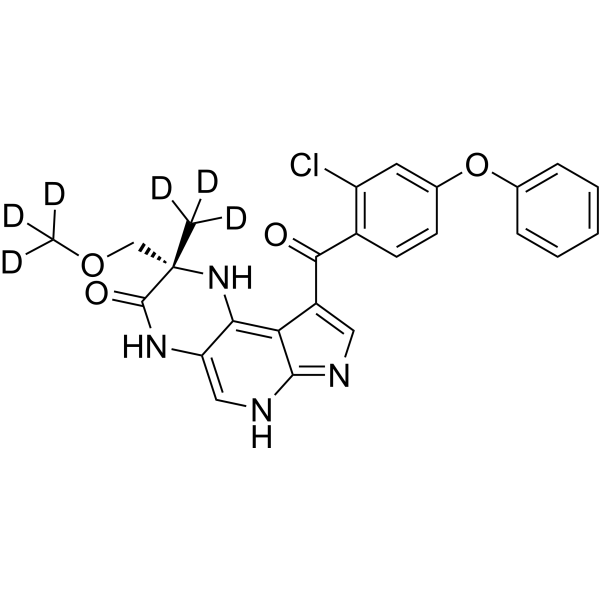 0 ImagesCat. No.: HY-160219SCAS No.: 2765854-31-5BTK-IN-33 is a Btk inhibitor with anticancer effects (WO2023174300A1; compound I).
-
PF-303
 0 ImagesCat. No.: HY-164002CAS No.: 1609465-78-2PF-303 is a potent, oral inhibitor of Bruton's tyrosine kinase (BTK) (IC50=0.64 nM). The melamine portion of PF-303 forms a covalent bond with BTK's Cys481, which is reversible and exhibits a high selectivity compared to irreversible covalent BTK inhibitors. PF-303 can be used to model and study the effects of BTK inhibition on the mature immune system, including effects on B-cell subsets, antibody responses, and T-cell-mediated activation.
-
BTK-IN-40
 0 ImagesCat. No.: HY-170324CAS No.: 1791400-83-3BTK-IN-40 (compound 375) is a BTK inhibitor.
-
WS-11
 0 ImagesCat. No.: HY-169228CAS No.: 2759280-09-4
-
PROTAC DDa-1
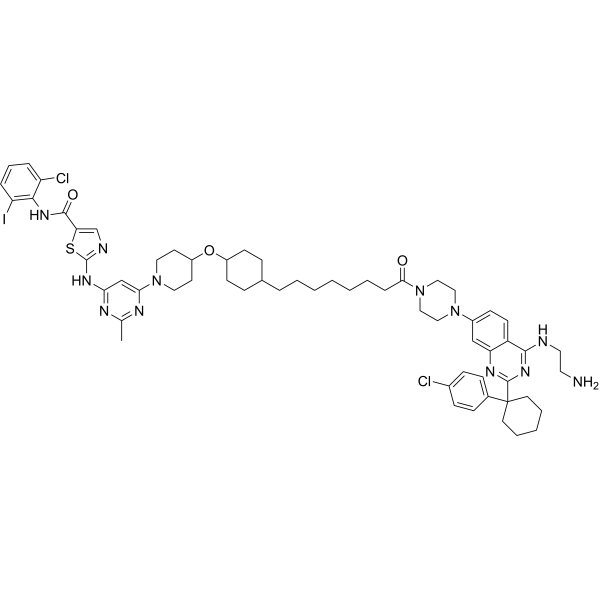 0 ImagesCat. No.: HY-156745CAS No.: 3036944-98-3PROTAC DDa-1 is a multi-targeted DCAF1-recruiting tyrosine kinase PROTAC degrader. PROTAC DDa-1 mediates the degradation of TNK2, CSK, LIMK2, TEC, and BTK, with a DC50 of 90 nM for BTK. PROTAC DDa-1 reduces the viability of BTK-dependent diffuse large B-cell lymphoma cells. PROTAC DDa-1 can be used for the research of diffuse large B-cell lymphoma.

-
PROTAC BTK Degrader-5
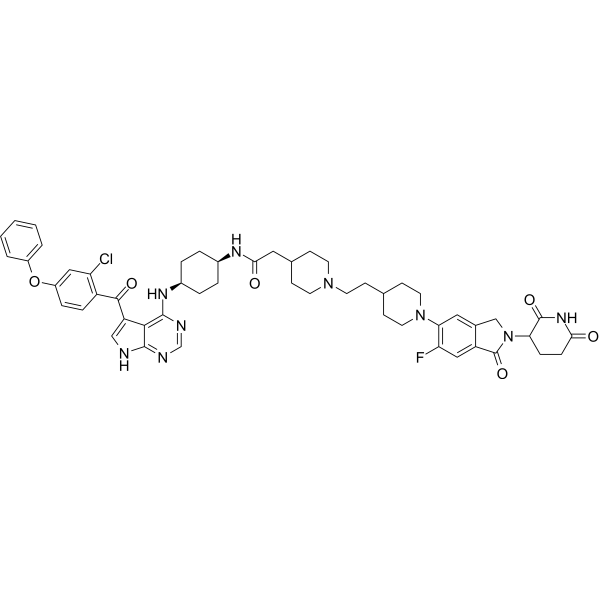 0 ImagesCat. No.: HY-155072CAS No.: 3049086-75-8PROTAC BTK degraders-5(compound 3e) is a selective BTK PROTAC degrader with a DC50 value of 7.0 nM in JeKo-1 cells. PROTAC BTK degraders-5 has no off-target effect on degrading CRBN neosubstates. PROTAC BTK degraders-5 has anti-proliferation effect on various lymphoma tumor cells and can be used in chronic lymphoid malignancies research.
-
BTK-IN-26
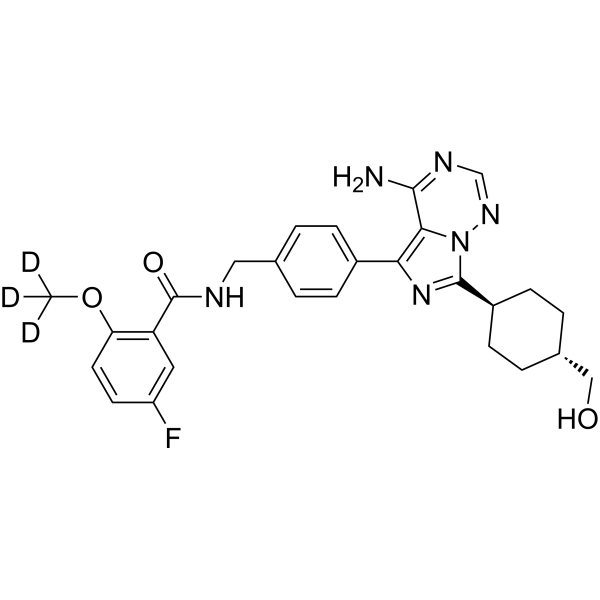 0 ImagesCat. No.: HY-153951SCAS No.: 2762043-61-6
-
BTK-IN-50
 0 ImagesCat. No.: HY-184940BTK-IN-50 is a covalent BTK inhibitor with an IC50 of 6 nM. BTK-IN-50 blocks collagen-induced platelet aggregation by inhibiting the GPVI-mediated BTK-PLCγ2-PKC signaling cascade, and attenuates CRP-XL-induced phosphorylation of BTK, PLCγ2 and PKC substrates in platelets. BTK-IN-50 can be used for research related to thrombosis.
-
BTK-IN-31
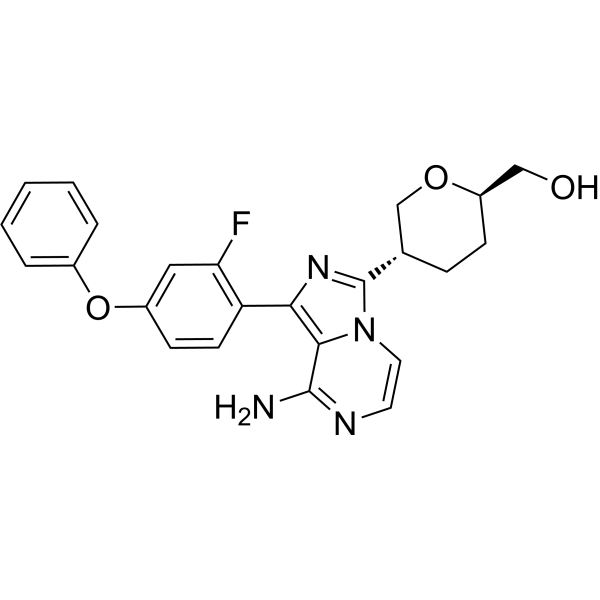 0 ImagesCat. No.: HY-160168CAS No.: 2662512-02-7BTK-IN-31 (Compound 2) is a selective, non-covalently reversible, and blood-brain barrier (BBB) permeable Btk inhibitor. BTK-IN-31 has research potential in immune disorders, cancer, cardiovascular disease, viral infections, inflammation, metabolic/endocrine dysfunction, and neurological disorders.
-
I-As-1
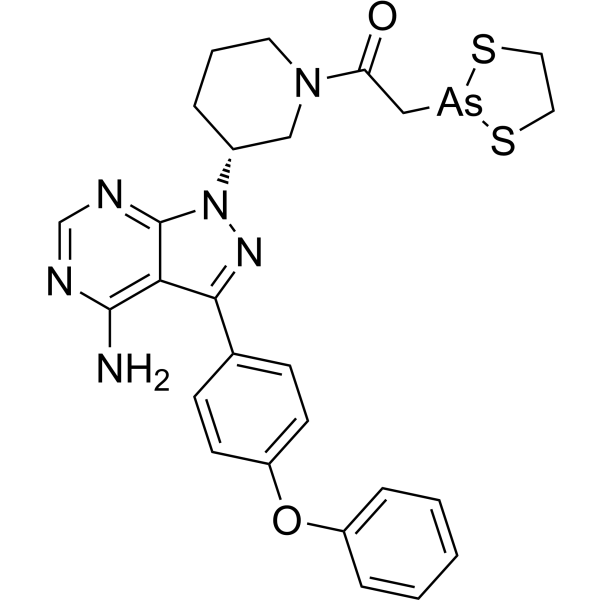 0 ImagesCat. No.: HY-162407CAS No.: 2891500-11-9I-As-1 is a potent inhibitor of Bruton’s tyrosine kinase (BTK), with the IC50 of 2.35 nM. I-As-1 shows antiproliferative activities among Ramos cells and OCI-LY10 cells with IC50s of 0.52 μM and 0.11 μM, respectively.
-
Birelentinib
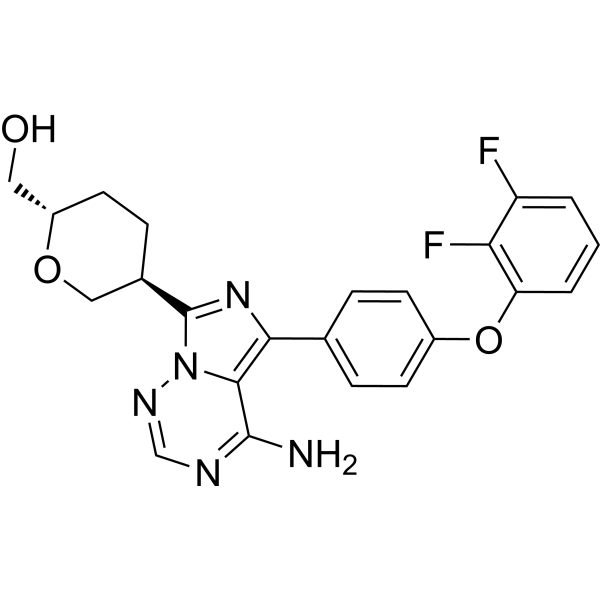 0 ImagesCat. No.: HY-160167CAS No.: 2662512-15-2Synonyms: DZD8586Birelentinib (DZD8586) is an orally effective, selective, non-covalent inhibitor targeting LYN tyrosine kinase and BTK tyrosine kinase, capable of penetrating the blood-brain barrier. Birelentinib exhibits concentration-dependent antiproliferative effects in RI-1 cells and diffuse large B-cell lymphoma (DLBCL) cell lines carrying BTK resistance mutations (such as C481X, V416L, etc.). Birelentinib blocks both BTK-dependent and independent signaling of the B-cell receptor (BCR), thereby inhibiting tumor cell proliferation and inducing cell death. Birelentinib can be used in research to overcome resistance to existing covalent and non-covalent BTK inhibitors in B-cell non-Hodgkin lymphoma (B-NHL).