



Blk
Blk, or B lymphoid kinase, is a Src family tyrosine kinase that shows B-lineage expression and tyrosine kinase activity, indicating a B-cell-restricted signaling role[1]. Mechanistically, Blk links to B cell receptor biology because, in a COS-cell reconstitution system, only Blk among Lyn, Blk, Hck, Syk, and Fyn phosphorylated and associated with Igα/Igβ chimeras[2]. In mice, Blk appears early in bone-marrow B-cell development and remains high in mature B cells, yet Blk-deficient mice showed unaltered B-cell development, activation, and humoral immune responses, supporting functional redundancy among Src family kinases[3]. In disease genetics, variants upstream of BLK associate with systemic lupus erythematosus, while autoimmune BLK haplotypes show reduced BLK expression and altered B-cell activation phenotypes in rheumatoid arthritis models[4][5]. Compared with related Src isoforms, Blk is distinguished by B-lineage enrichment, selective Igα/Igβ coupling in reconstituted BCR signaling, and redundancy rather than absolute requirement in mouse B-cell immunity[1][2][3]. For experimental applications, activated Blk undergoes E6AP-mediated ubiquitination and proteasomal degradation, and selective irreversible BLK inhibitors provide chemical tools for probing BLK-dependent signaling[6][7].
References:
- [1]. Dymecki SM, et al. Specific expression of a tyrosine kinase gene, blk, in B lymphoid cells. Science. 1990 Jan 19;247(4940):332-6. [Content Brief]
- [2]. Saouaf SJ, et al. Reconstitution of the B cell antigen receptor signaling components in COS cells. J Biol Chem. 1995 Nov 10;270(45):27072-8. [Content Brief]
- [3]. Texido G, et al. The B-cell-specific Src-family kinase Blk is dispensable for B-cell development and activation. Mol Cell Biol. 2000 Feb;20(4):1227-33. [Content Brief]
- [4]. Hom G, et al. Association of systemic lupus erythematosus with C8orf13-BLK and ITGAM-ITGAX. N Engl J Med. 2008 Feb 28;358(9):900-9. [Content Brief]
- [5]. Simpfendorfer KR, et al. Autoimmune disease-associated haplotypes of BLK exhibit lowered thresholds for B cell activation and expansion of Ig class-switched B cells. Arthritis Rheumatol. 2015 Nov;67(11):2866-76. [Content Brief]
- [6]. Oda H, et al. Regulation of the Src family tyrosine kinase Blk through E6AP-mediated ubiquitination. Proc Natl Acad Sci U S A. 1999 Aug 17;96(17):9557-62. [Content Brief]
- [7]. Fu T, et al. Discovery of selective irreversible inhibitors of B-Lymphoid tyrosine kinase (BLK). Eur J Med Chem. 2022 Feb 5;229:114051. [Content Brief]
All Product Categories
-
Blk Related Products (4)
Related Products (4)

-
GLPG3312
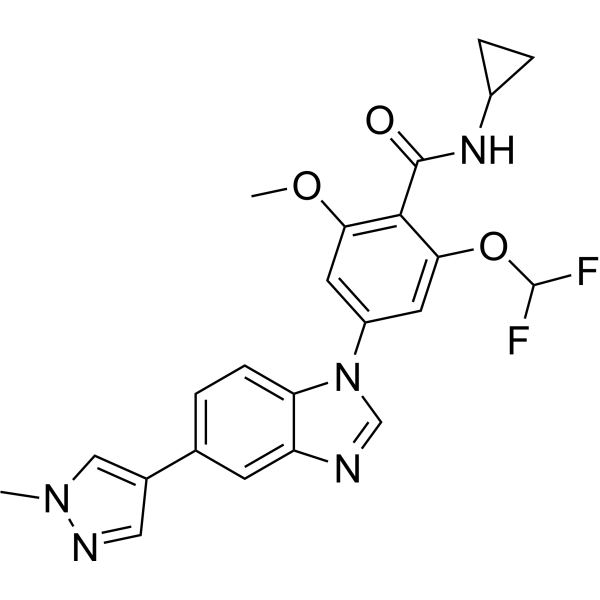 0 ImagesGLPG3312 (Compound 28) is an orally active SIK inhibitor with IC50 values of 2.0 nM, 0.7 nM and 0.6 nM for SIK1, SIK2 and SIK3, respectively. GLPG3312 exhibits anti-inflammatory and immunomodulatory activity in vitro on human primary myeloid cells and in vivo in mouse models. GLPG3312 has good oral bioavailability and can be used for research on inflammatory and immune diseases.
-
BLK degrader 1
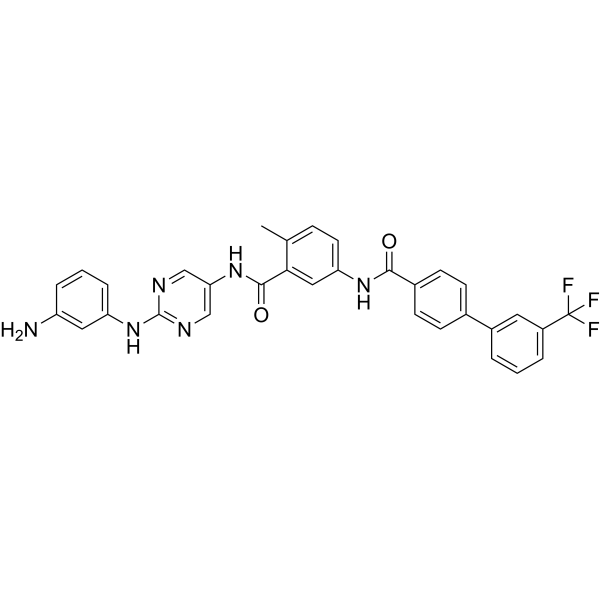 0 ImagesBLK degrader 1 is a selective B lymphoid tyrosine kinase (BLK) degrader with a BLK DC50 of 49 nM in cells. BLK degrader 1 induces ubiquitin-proteasome-dependent BLK degradation through binding. BLK degrader 1 exhibits anticancer activity in multiple B lymphocyte cell lines and downregulates CDK2 protein levels. BLK degrader 1 can be used in research related to B cell lymphoma.

-
BMS-243117
 0 ImagesCat. No.: HY-120622CAS No.: 225521-80-2



