



Lck
Lck (lymphocyte-specific protein tyrosine kinase) is a Src-family non-receptor tyrosine kinase that functions as a central initiator of T-cell activation and antigen receptor signaling through phosphorylation-dependent intracellular signal transduction mechanisms[1][2]. Mechanistically, Lck operates at the proximal stage of the T-cell receptor (TCR) signaling pathway, where it phosphorylates immunoreceptor tyrosine-based activation motifs (ITAMs) and promotes downstream signaling events required for T-cell activation, differentiation, and immune responses[2][3]. Genetic studies demonstrated that loss of functional Lck disrupts TCR-mediated signaling and impairs cellular responsiveness, establishing its essential role in lymphocyte biology and experimental models of immune deficiency[4]. Disease relevance is supported by evidence linking LCK deficiency to severe immunological dysfunction, while dysregulated Lck signaling has also been investigated in hematologic malignancies and other immune-associated disorders[1][4]. Compared with related Src-family kinases, particularly Fyn, Lck has a more dominant role in initiating proximal TCR signaling, whereas Fyn contributes to overlapping but nonessential signaling functions in many T-cell activation contexts[3][5]. Structurally, Lck contains SH2, SH3, and catalytic kinase domains that coordinate activation-state regulation through phosphorylation-dependent conformational changes[2]. For experimental applications, Lck remains a widely used target for kinase inhibition studies and mechanistic analyses of T-cell signaling networks, making it a valuable tool for immune signaling research and therapeutic target validation[6].
Références:
- [1]. Uniprotkb.
- [2]. Rossy J, et al. How does the kinase Lck phosphorylate the T cell receptor? Spatial organization as a regulatory mechanism. Front Immunol. 2012 Jun 19;3:167. [Content Brief]
- [3]. Lck gene information from NCBI.
- [4]. Straus DB, et al. Genetic evidence for the involvement of the lck tyrosine kinase in signal transduction through the T cell antigen receptor. Cell. 1992 Aug 21;70(4):585-93. [Content Brief]
- [5]. Wikipedia.
- [6]. Elkamhawy A, et al. New horizons in drug discovery of lymphocyte-specific protein tyrosine kinase (Lck) inhibitors: a decade review (2011-2021) focussing on structure-activity relationship (SAR) and docking insights. J Enzyme Inhib Med Chem. 2021 Dec;36(1):1574-1602. [Content Brief]
-
Lck Produits associés (28)
Produits associés (28)

-
Anticorps (1)
- 1
- 2
-
GLPG3312
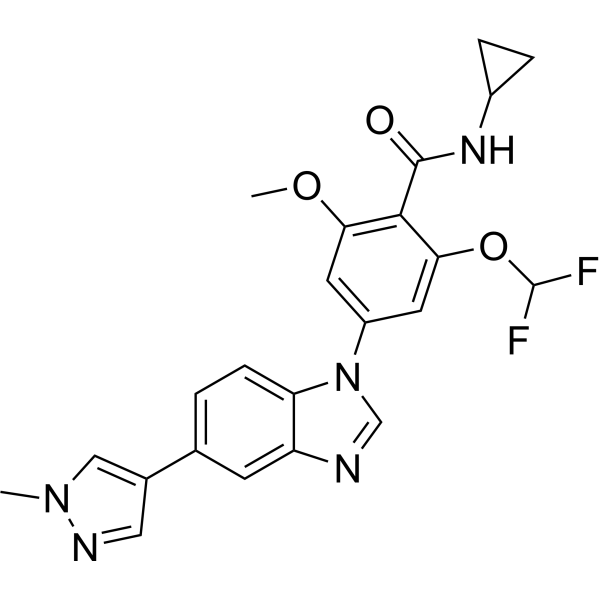 0 ImagesGLPG3312 (Compound 28) is an orally active SIK inhibitor with IC50 values of 2.0 nM, 0.7 nM and 0.6 nM for SIK1, SIK2 and SIK3, respectively. GLPG3312 exhibits anti-inflammatory and immunomodulatory activity in vitro on human primary myeloid cells and in vivo in mouse models. GLPG3312 has good oral bioavailability and can be used for research on inflammatory and immune diseases.
-
Velzatinib
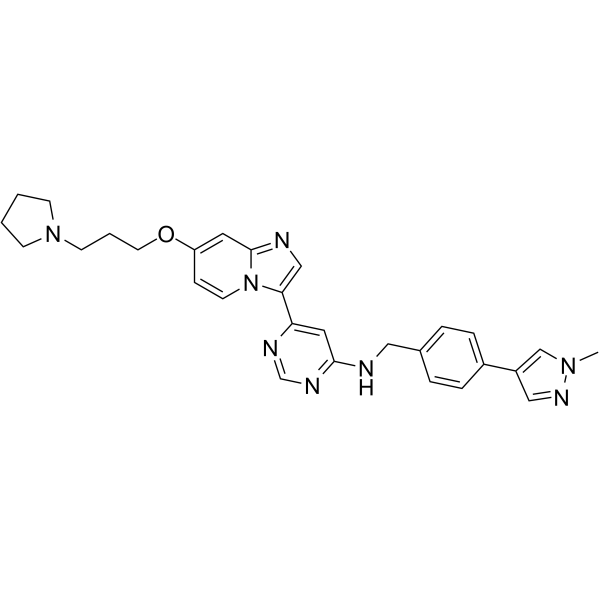 0 ImagesSynonyms: M4205; IDRX-42
-
PRT062607 Hydrochloride
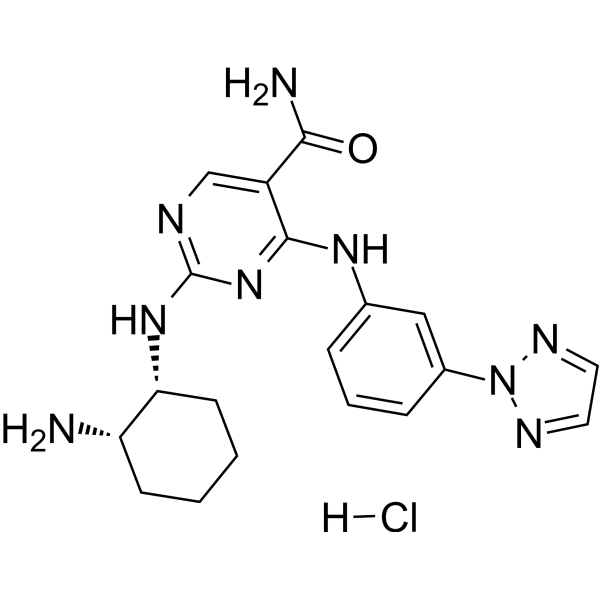 0 ImagesSynonyms: P505-15 Hydrochloride
-
(R)-9b
 0 Images(R)-9b is an ATP-competitive kinase inhibitor. (R)-9b binds to the ATP-binding site of ACK1/TNK2, inhibiting their kinase activity and autophosphorylation, with a human IC50 of 56 nM. (R)-9b also inhibits JAK2, Tyk2, ALK, c-Src, ABL1, CHK1, FGFR1, LCK, and ROS/ROS1. (R)-9b can be used for research on prostate cancer.
-
AZM475271
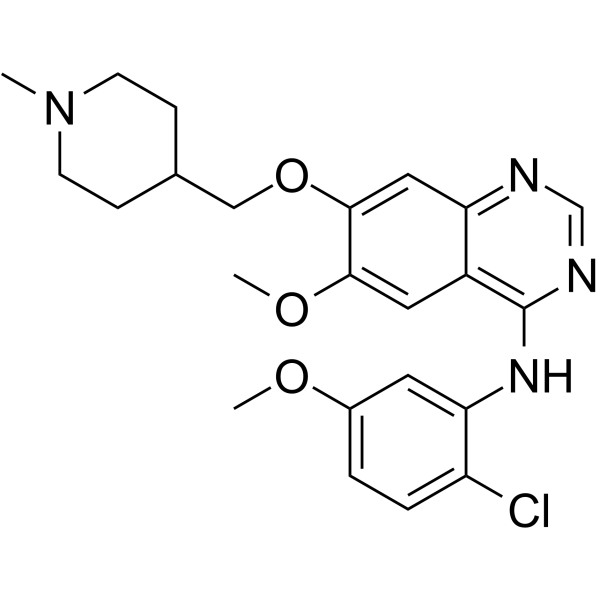 0 ImagesSynonyms: M475271AZM475271 (M475271) is an orally active and selective Src kinase inhibitor. AZM475271 inhibits phosphorylation of c-Src kinase, Lck, c-yes (IC50s = 0.01, 0.03, 0.08 μM, respectively). AZM475271 induces apoptosis. AZM475271 reduces tumor cell proliferation and migration in vitro and in vivo, and reduces microvessel density (MVD). AZM475271 inhibits tumor growth and metastasis. AZM475271 sensitizes tumor cells to the cytotoxic effects of Gemcitabine (HY-17026).
-
Lck Inhibitor III free base
 0 ImagesCat. No.: HY-112335ACAS No.: 918870-44-7Lck Inhibitor III free base is a Lck inhibitor with an IC50 of 867 nM. Lck Inhibitor III free base inhibits the production of interleukin-2 (IL-2). Lck Inhibitor III free base can be used in the study of autoimmune diseases.
-
Lck Inhibitor III
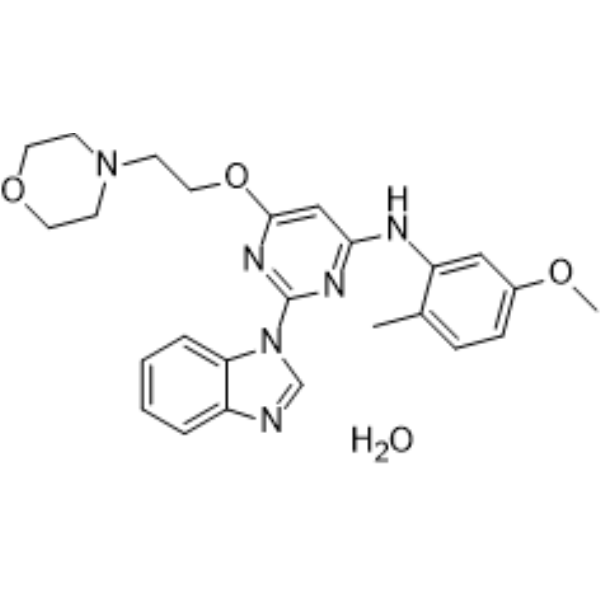 0 ImagesCat. No.: HY-112335CAS No.: 1188890-30-3Lck Inhibitor III is a Lck inhibitor with an IC50 of 867 nM. Lck Inhibitor III inhibits the production of interleukin-2 (IL-2). Lck Inhibitor III can be used in the study of autoimmune diseases.
-
N-Deshydroxyethyl Dasatinib
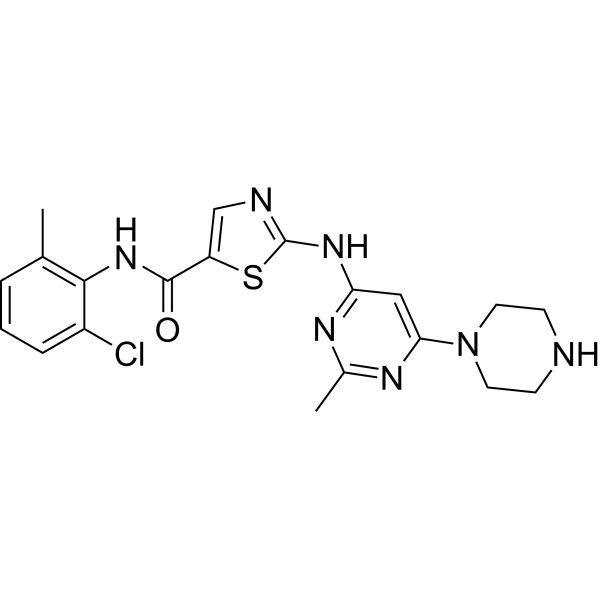 0 ImagesCat. No.: HY-107447CAS No.: 910297-51-7Synonyms: N-Deshydroxyethyl BMS-354825N-Deshydroxyethyl Dasatinib (N-Deshydroxyethyl BMS-354825) is a metabolite of Dasatinib, Dasatinib is a multi-kinase inhibitor that potently inhibits Bcr-Abl, Src family and platelet-derived growth factor receptor kinases. N-Deshydroxyethyl Dasatinib can be used in cancer and immune disease research.
-
SB 220025
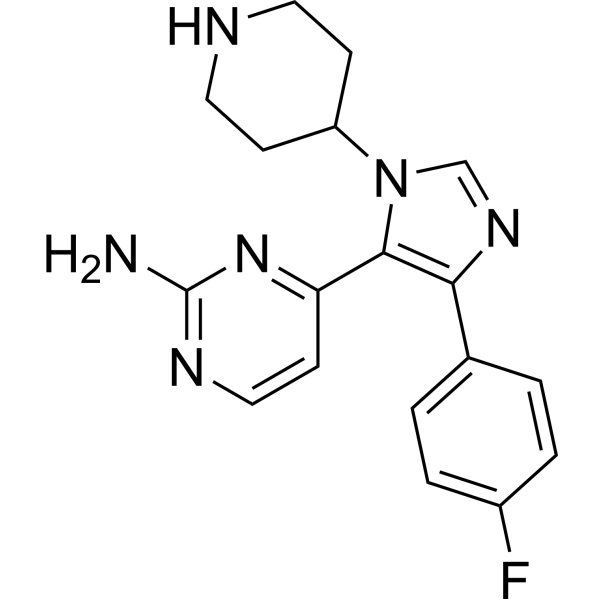 0 ImagesSB 220025 is a reversible, orally active, cell-permeable, ATP-competitive and selective human p38 MAPK inhibitor (IC50 = 60 nM). SB 220025 also inhibits p56Lck and PKC with IC50 values of 3.5 and 2.89 µM, respectively. SB 220025 inhibits the expression of IL-8 gene in response to globular adiponectin (gAd), reduces inflammatory cytokine production and inhibits angiogenesis. SB 220025 effectively prevents the progression of arthritis in a chronic inflammatory disease model and can be used in the study of inflammation.
-
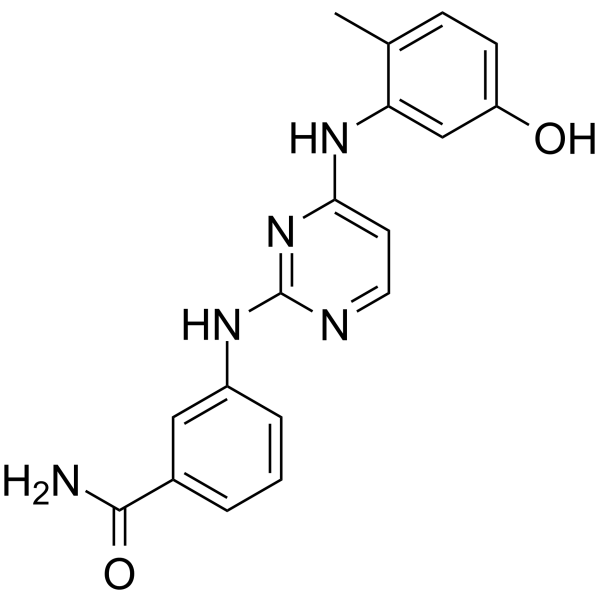
PRT062607 acetate
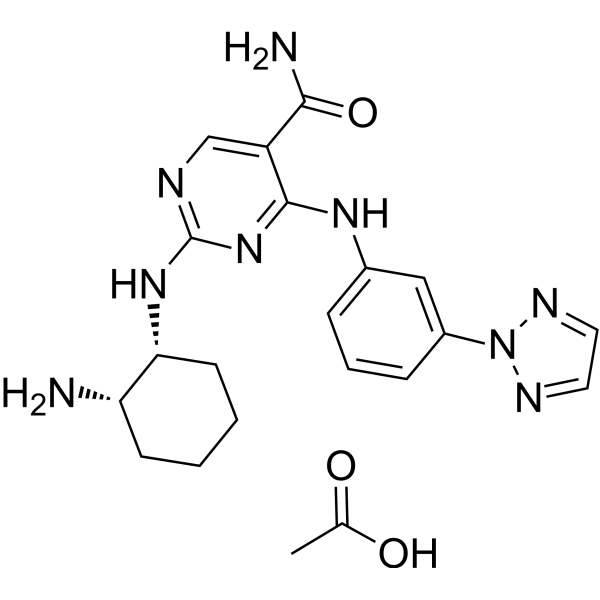 0 ImagesSynonyms: P505-15 acetate; PRT-2607 acetate; BIIB-057 acetate
-
Lck-IN-5
 0 ImagesLck-IN-5 (example C10) is a potent and selective lymphocyte-specific protein tyrosine kinase (LCK) inhibitor. Lck-IN-5 selectively disrupts the interaction between the SH3 domain of LCK and the RK motif of CD3ε, thereby impairing LCK recruitment to the TCR. Lck-IN-5 modulates the activity of CD3ε-containing CAR and TRuC T cells, attenuating cytokine production and promoting a central-memory-like phenotype associated with enhanced persistence. Lck-IN-5 can be used for autoimmune diseases and graft-versus-host disease research.

-
BMS-279700
 0 ImagesCat. No.: HY-114980CAS No.: 240814-54-4BMS-279700 is an orally active Src-family kinase p56Lck inhibitor. BMS-279700 can block the production of proinflammatory cytokines (IL-2 and TNFα). BMS-279700 can inhibit T cell proliferation. BMS-279700 can be used for the researches of inflammation and immunology.
-
Lck-IN-6
 0 ImagesCat. No.: HY-112448CAS No.: 918870-43-6Lck-IN-6 (Compound 12g) is a Lck inhibitor with an IC50 of 3 nM. Lck-IN-6 inhibits the production of IL-2. Lck-IN-6 can be used in the research of rheumatoid arthritis and inflammatory bowel disease.
-
LCK degrader-3
 0 ImagesCat. No.: HY-180928CAS No.: 3095032-59-7LCK degrader-3 (Compound 20) is a CRBN-based LCK molecular glue degrader. LCK degrader-3 can be used in the research of acute lymphoblastic leukemia.
-
LCK degrader-2
 0 ImagesCat. No.: HY-175463CAS No.: 3095032-50-8LCK degrader-2 is a selective CRBN-dependent molecular glue degrader targeting LCK. LCK degrader-2 induces the proximity effect between LCK and CRBN, stabilizes the CRBN-LCK ternary complex, and triggers the ubiquitination and degradation of LCK. LCK degrader-2 can be used for the research of acute lymphoblastic leukemia.


-
SJ11646
 0 ImagesSJ11646 is a LCK PROTAC degrader with a DC50 value of 0.00838 pM against LCK. SJ11646 recruits CRBN and LCK to form a ternary complex, inducing cereblon-mediated proteasomal degradation of LCK. SJ11646 induces cytotoxicity in T-ALL cells, but such cytotoxicity is reduced in cells harboring the LCKT316I mutation. SJ11646 can be used in studies related to T-cell acute lymphoblastic leukemia.
- 1
- 2




