



1370261-98-5
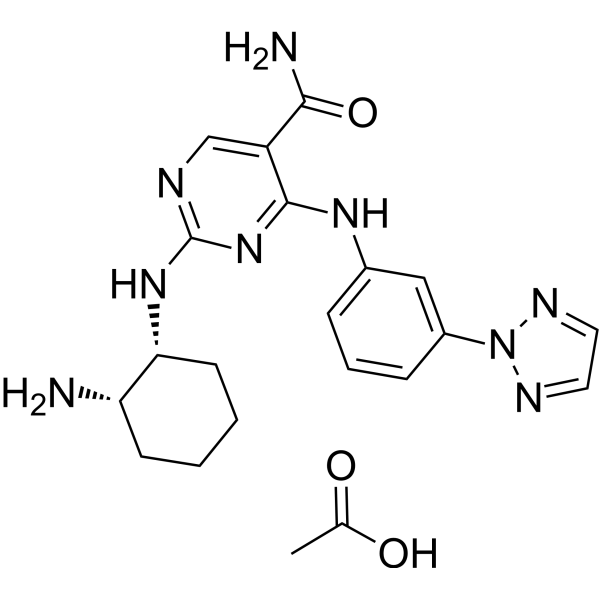
Chemical Structure
PRT062607 acetate
Synonym(s): P505-15 acetate; PRT-2607 acetate; BIIB-057 acetate
- CAS. Nr.: 1370261-98-5
- Formula:C21H27N9O3
- Molecular Weight:453.50
IUPAC Name: 4-((3-(2H-1,2,3-triazol-2-yl)phenyl)amino)-2-(((1R,2S)-2-aminocyclohexyl)amino)pyrimidine-5-carboxamide acetate
InChIKey: ISHXQLKRUSVKDD-IDVLALEDSA-N
SMILES: NC(C1=CN=C(N[C@H]2[C@@H](N)CCCC2)N=C1NC3=CC=CC(N4N=CC=N4)=C3)=O.OC(C)=O
Biological Activity: PRT062607 (P505-15) acetate is an orally available Syk inhibitor (IC50: 1 nM) that inhibits inflammation and induction Apoptosis. PRT062607 acetate exerts potent antitumor activity in tumor xenograft mouse models[1].[2].
| Art. -Nr. | Produktname | Reinheit | Beschreibung | Pricing | |||||||||||||||||||
|---|---|---|---|---|---|---|---|---|---|---|---|---|---|---|---|---|---|---|---|---|---|---|---|
|
|
PRT062607 acetate | 99.83% | PRT062607 (P505-15) acetate is an orally available Syk inhibitor (IC50: 1 nM) that inhibits inflammation and induction Apoptosis. PRT062607 acetate exerts potent antitumor activity in tumor xenograft mouse models.. | ||||||||||||||||||||
|
loading...
/
|
|||||||||||||||||||||||
-
Similarity Score 0.94
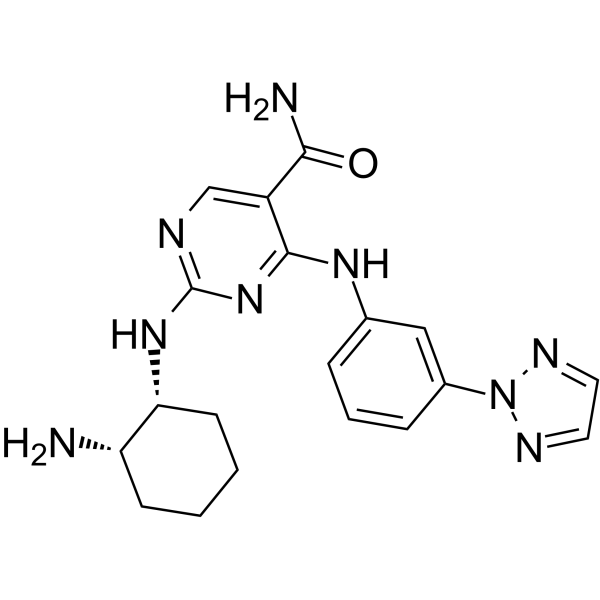 HY-15322PRT062607
-
Similarity Score 0.94
 HY-15322A(rel)-PRT062607
-
Similarity Score 0.94
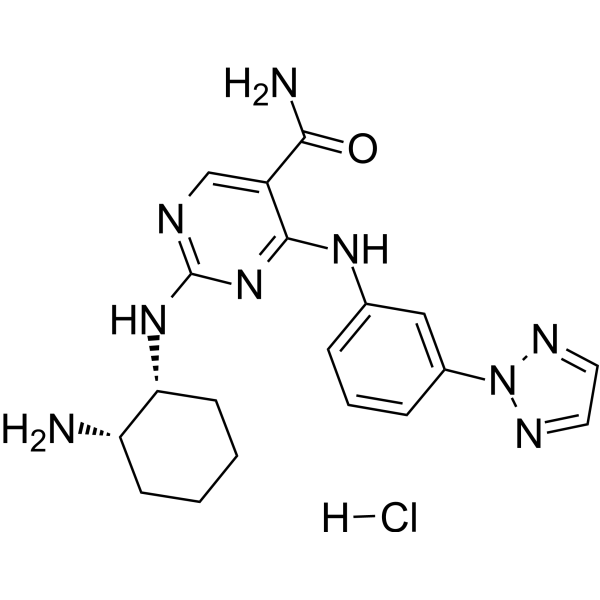 HY-15323PRT062607 Hydrochloride
-
Similarity Score 0.83
 HY-120533Syk-IN-11
-
Similarity Score 0.72
 HY-12974APRT-060318 dihydrochloride
-
Similarity Score 0.72
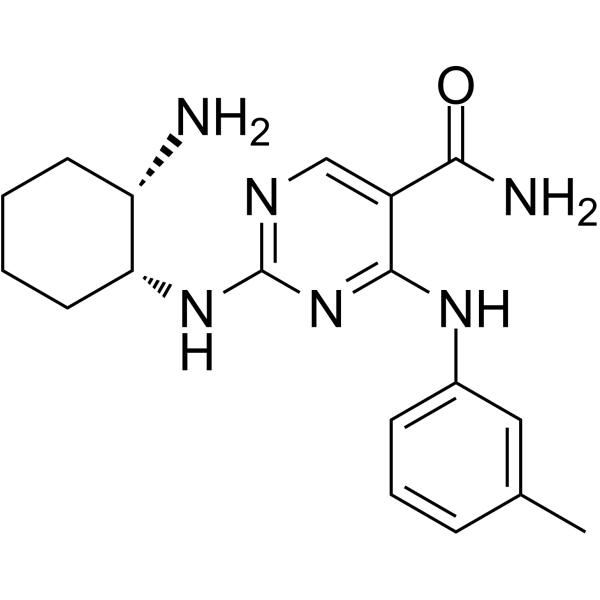 HY-12974PRT-060318
-
Similarity Score 0.60
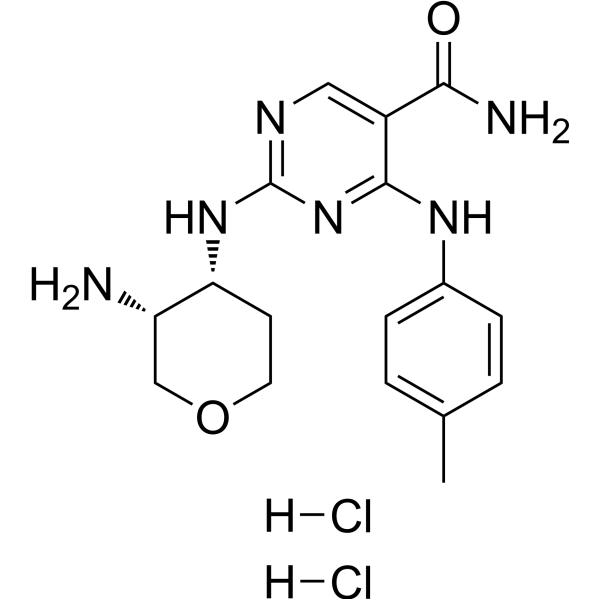 HY-12736AGSK143 dihydrochloride
-
Similarity Score 0.59
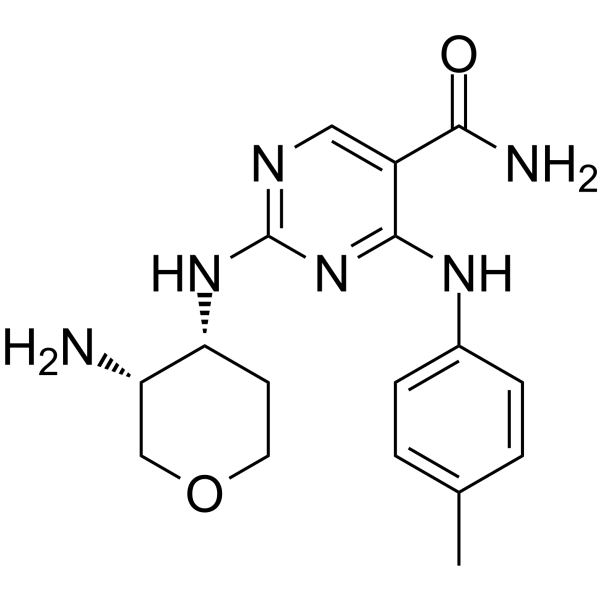 HY-12736GSK143
-
Similarity Score 0.53
 HY-118976CGP-74514 hydrochloride
-

Explore the MedChemAI to find more analogs


References
- [1]. Spurgeon SE, et al. The selective SYK inhibitor P505-15 (PRT062607) inhibits B cell signaling and function in vitro and in vivo and augments the activity of fludarabine in chronic lymphocytic leukemia. J Pharmacol Exp Ther. 2013 Feb;344(2):378-87. [Content Brief]
- [2]. Coffey G, et al. Specific inhibition of spleen tyrosine kinase suppresses leukocyte immune function and inflammation in animal models of rheumatoid arthritis. J Pharmacol Exp Ther. 2012 Feb;340(2):350-9. [Content Brief]



