



Fungal
An antifungal agent is a drug that selectively eliminates fungal pathogens from a host with minimal toxicity to the host.
Classes: 1. Polyene Antifungal Drugs: Amphotericin, nystatin, and pimaricin interact with sterols in the cell membrane (ergosterol in fungi, cholesterol in humans) to form channels through which small molecules leak from the inside of the fungal cell to the outside. 2. Azole Antifungal Drugs: Fluconazole, itraconazole, and ketoconazole inhibit cytochrome P450-dependent enzymes (particularly C14-demethylase) involved in the biosynthesis of ergosterol, which is required for fungal cell membrane structure and function. 3. Allylamine and Morpholine Antifungal Drugs: lylamines (naftifine, terbinafine) inhibit ergosterol biosynthesis at the level of squalene epoxidase. The morpholine drug, amorolfine, inhibits the same pathway at a later step. 4. Antimetabolite Antifungal Drugs: 5-Fluorocytosine acts as an inhibitor of both DNA and RNA synthesis via the intracytoplasmic conversion of 5-fluorocytosine to 5-fluorouracil.
All Product Categories
-
Fungal Related Products (2751)
Related Products (2751)

-
Antibodies (1)
-
Related Compound Screening Libraries (1)
-
Topazolin
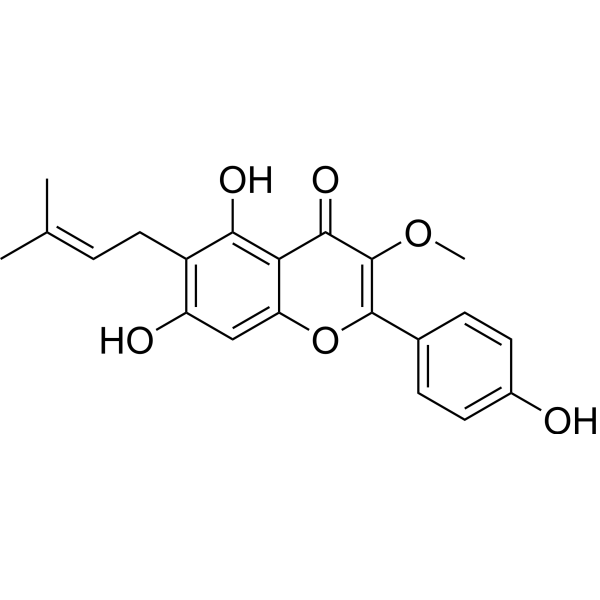 0 ImagesCat. No.: HY-133169CAS No.: 109605-79-0Topazolin is a flavone. Topazolin has weak fungi-toxic activity against Cladosporium herbarum AHU 9262.
-
Elsinochrome A
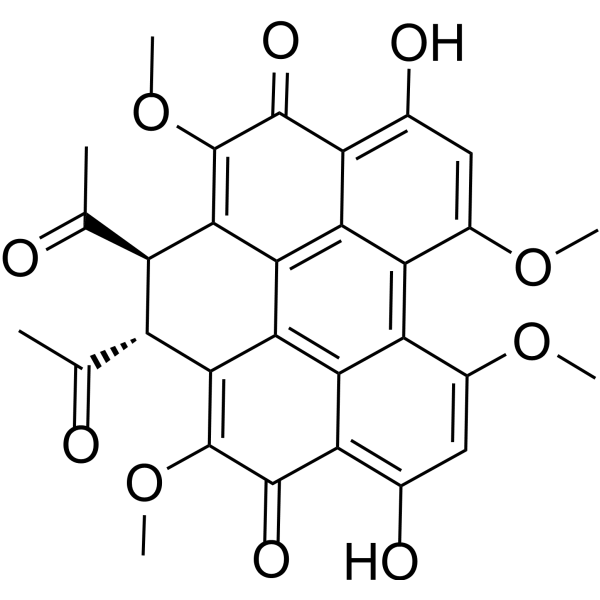 0 ImagesCat. No.: HY-N10611CAS No.: 24568-67-0Elsinochrome A is a perylene quinone photosensitizer, and can generate reactive oxygen species (ROS) to induce apoptosis and autophagy under light excitation. Elsinochrome A also shows antifungal activity against C. albicans biofilm through photodynamic antimicrobial chemotherapy (PACT). Elsinochrome A can be used for research of photodynamic therapy (PDT) (Ex: 460 nm).
-
Hydroxyphenyllactic acid-d4
 0 ImagesCat. No.: HY-113219SHydroxyphenyllactic acid-d4 is the deuterium labeled Hydroxyphenyllactic acid (HY-113219). Hydroxyphenyllactic acid is an antifungal metabolite.
-
ECO-02301
 0 ImagesCat. No.: HY-N19232CAS No.: 735316-93-5ECO-02301 is an antifungal agent identified in Streptomyces aizunensis NRRL B-11277. ECO-02301 exhibits antifungal activity against human pathogenic fungi including Candida albicans, and can be used in research related to fungal infections.
-
5-(12Z-Heptadecenyl)-resorcinol
 0 ImagesCat. No.: HY-N7519CAS No.: 103462-06-25-(12Z-Heptadecenyl)-resorcinol serves as the main component of Antifungal mixtures. 5-(12Z-Heptadecenyl)-resorcinol can be isolated from mango peels. Antifungal mixtures composed of 5-(12Z-Heptadecenyl)-resorcinol exhibit activity against Alternaria alternata. 5-(12Z-Heptadecenyl)-resorcinol can be used in studies related to mango fruit black spot disease.
-
Aszonapyrone A
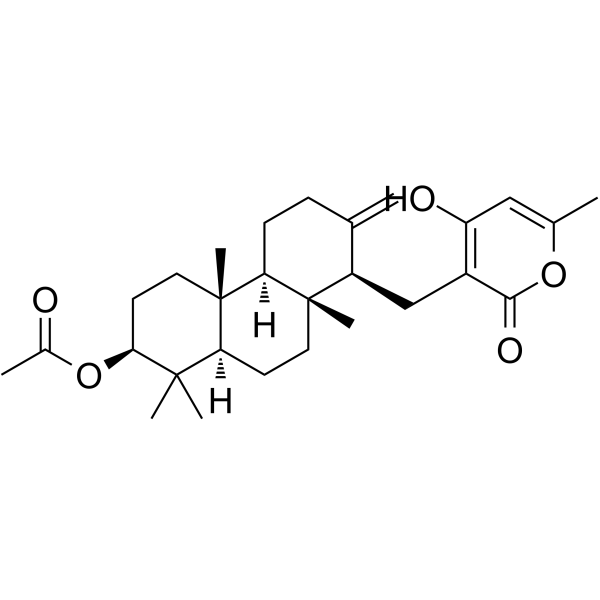 0 ImagesCat. No.: HY-N8258CAS No.: 83103-08-6Aszonapyrone A is a metabolite produced by Aspergillus zonatus.
-
Wyerone
 0 ImagesCat. No.: HY-N21819CAS No.: 20079-30-5Wyerone is a furan-acetylene phytoalexin that exhibits antifungal activity and selective toxicity against Gram-positive bacteria. Wyerone is abundantly biosynthesized and accumulated in broad bean tissues following infection by Botrytis, and it inhibits the growth of Gram-positive bacteria. Wyerone is applicable to studies related to plant infections.
-
Hexetidine (Standard)
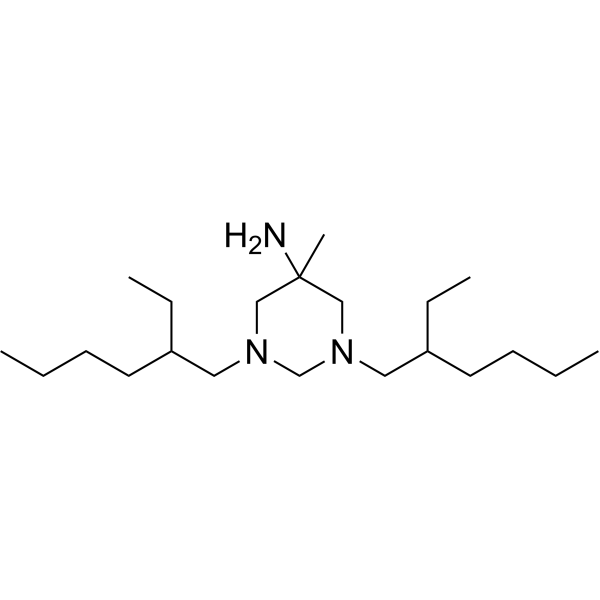 0 ImagesHexetidine (Standard) is the analytical standard of Hexetidine. This product is intended for research and analytical applications. Hexetidine is an orally active antiseptic with broad antibacterial and antifungal activity. Hexetidine give important potential for treatment of oral infections.
-
(+)-Benalaxyl
 0 ImagesCat. No.: HY-124894CAS No.: 97716-85-3(+)-Benalaxyl is a broad-spectrum benzamide fungicide. (+)-Benalaxyl inhibits the growth of the freshwater algae S. obliquus, with an EC50 value of 8.441 mg/L. (+)-Benalaxyl can induce the production of chlorophyll a and b, as well as increase the activity of superoxide dismutase (SOD) and the generation of malondialdehyde (MDA). (+)-Benalaxyl has inhibitory effects on catalase (CAT). (+)-Benalaxyl is effective against diseases caused by oomycetes.
-
4-O-Methylsappanol
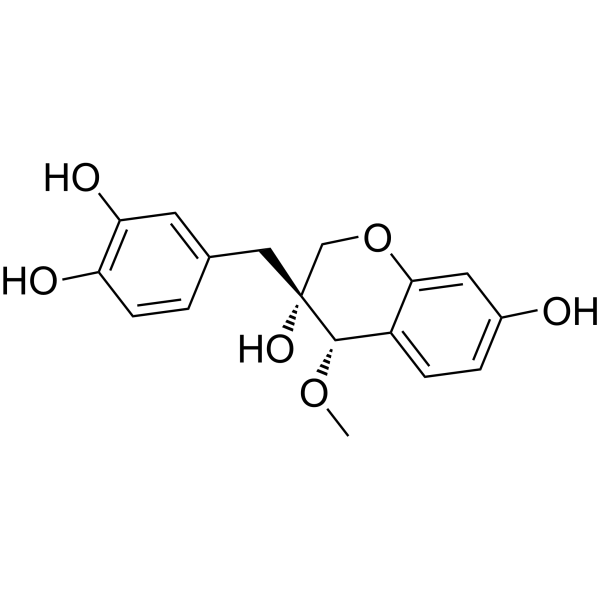 0 ImagesCat. No.: HY-N2640CAS No.: 104778-16-74-O-Methylsappanol is a natural isoflavonoid with antifungal activities. 4-O-Methylsappanol shows activity against Beauveria bassiana. 4-O-Methylsappanol (EC50 of 4.6 μM) strongly suppresses Melanin (Melanin) synthesis in HMV-II cells.
-
Toonaciliatin M
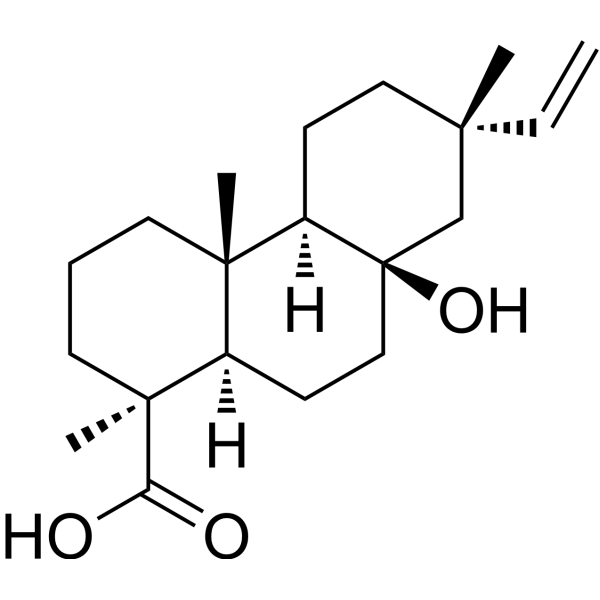 0 ImagesCat. No.: HY-N11079CAS No.: 93930-04-2Toonaciliatin M (compound 6) is a pmaradiene-type diterpenoid that can be isolated from Toona ciliate. Toonaciliatin M show antifungal activity against Trichophyton rubrum with an MIC value of 12.5 µg/mL.
-
Gly(Boc)-GGG
 0 ImagesCat. No.: HY-187118CAS No.: 174308-47-5Gly (Boc)-GGG is a tetrapeptide that can be used to inhibit bacterial or fungal activity. Gly (Boc)-GGG acts synergistically with Fluconazole (HY-B0101) to inhibit fungal growth. Gly (Boc)-GGG acts synergistically with Erythromycin (HY-B0220) to inhibit bacterial growth. Gly (Boc)-GGG itself has no significant antifungal or antibacterial activity. Gly (Boc)-GGG can be used in the research of bacterial and fungal infections.
-
CDA-IN-2
 0 ImagesCat. No.: HY-171542CAS No.: 2559404-67-8CDA-IN-2 (Compound VS#2-3) is a chitin deacetylase (Chitin Deacetylase, CDA) inhibitor with antifungal activity. At a concentration of 100 μM, it can inhibit the CDA PxCDA1 and PxCDA2 of P. xanthii by 83.7% and 74.5% respectively. CDA-IN-2 can be applied to the research in the field of controlling agricultural fungal diseases, such as dealing with resistant powdery mildew and Botrytis cinerea .
-
Paecilaminol
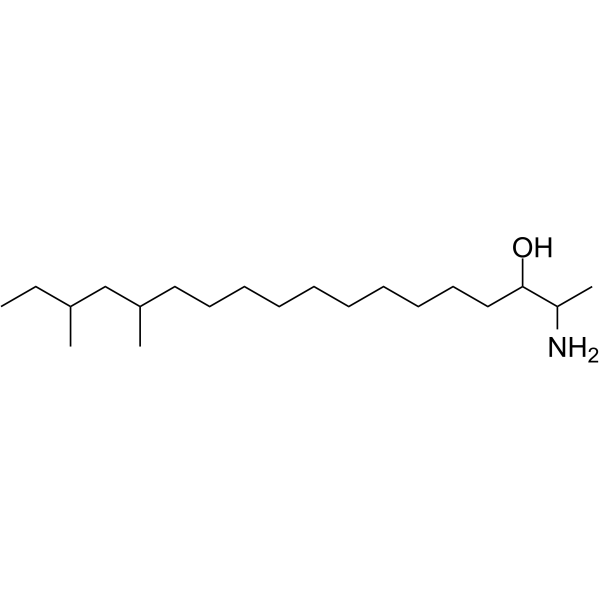 0 ImagesCat. No.: HY-N10184CAS No.: 540770-33-0Synonyms: FKI-0550Paecilaminol is an amino alcohol and NADH-fumarate reductase inhibitor (IC50 = 5.1 μM against Ascaris suum) that also inhibits both helminth and mammalian mitochondrial complexes I and III, exhibiting antifungal, antibacterial, nematocidal, insecticidal, and cancer cell growth-inhibitory activities. Paecilaminol can be used in research on helminth infections.
-
Sulconazole
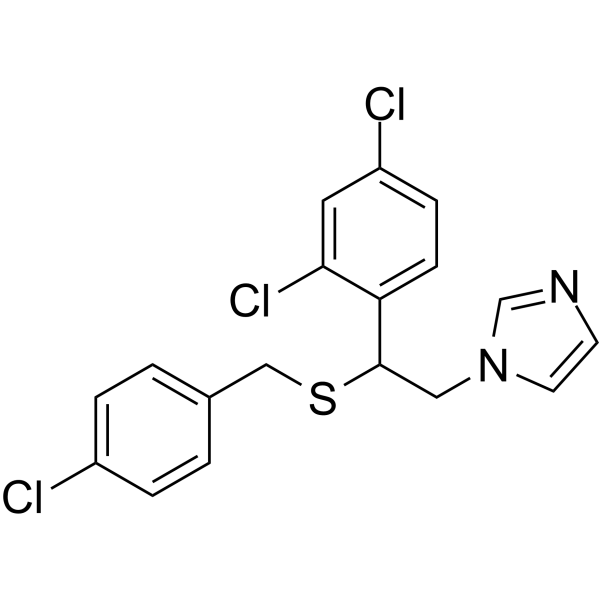 0 ImagesCat. No.: HY-B1460BCAS No.: 61318-90-9Synonyms: (±)-SulconazoleSulconazole is a potent antifungal agent in the imidazole class. Sulconazole blocks the NF-κB/IL-8 signaling pathway and CSC (Cancer stem cells) formation. Sulconazole inhibits tumor growth, and can be used for breast cancer research.
-
Rapamycin-13C,d3-1
 0 ImagesCat. No.: HY-W765245Synonyms: Sirolimus-13C,d3-1; AY-22989-13C,d3-1Rapamycin-13C,d3-1 (Sirolimus-13C,d3-1) is the deuterated, 13C-labeled Rapamycin (HY-10219). Rapamycin (Sirolimus; AY 22989) is a potent and specific blood-brain barrier-transmissible mTOR inhibitor with an IC50 of 0.1 nM in HEK293 cells. Rapamycin is a molecular glue that binds FKBP12 and mTOR proteins together, thereby inhibiting mTOR kinase activity. Rapamycin binds to FKBP12 and specifically acts as an allosteric inhibitor of mTORC1. Rapamycin is an autophagy activator, an immunosuppressant.
-
Gibellulin A
 0 ImagesCat. No.: HY-N19815CAS No.: 1853217-91-0Synonyms: Aspergilol E
-
Antifungal agent 176
 0 ImagesCat. No.: HY-189069Antifungal agent 176 is an antifungal agent. Antifungal agent 176 disrupts the cell wall and cell membrane integrity of Phomopsis sp., leading to electrolyte leakage and malondialdehyde accumulation. Antifungal agent 176 induces dissipation of mitochondrial membrane potential in Phomopsis sp., indicating impaired mitochondrial function. Antifungal agent 176 exhibits protective efficacy against kiwifruit soft rot caused by Phomopsis sp. Antifungal agent 176 can be used in studies related to Phomopsis sp. infections such as kiwifruit soft rot.
-
Zarilamid
 0 ImagesCat. No.: HY-121801CAS No.: 84527-51-5Zarilamid is a fungicide which is active against a broad spectrum of Oomycete fungi. Zarilamid inhibits nuclear division in germinating zoospore cysts of Phytophthora capsici. Zarilamide inhibits growth of tobacco roots and causes swelling of the root tips, destructs microtubule cytoskeleton and inhibits mitosis.
-
Histone H3 (73-83)
 0 ImagesCat. No.: HY-P11465CAS No.: 738626-01-2Histone H3 (73-83) is a histone H3 fragment. Histone H3 (73-83) can be obtained from incomplete tryptic digestion of underivatized wild-type histone H3. Histone H3 (73-83) can be used in the research of yeast infection.




