



Glycosidase
Glycosidase
Glycosidase are a class of enzymes which catalyze the hydrolysis of glycosidic bonds. In living organisms, Glycosidase are involved in carbohydrate metabolism. They can degrade polysaccharides such as starch and glycogen into monosaccharides, providing energy for cells. Glycosidase also participate in the synthesis and modification of biological macromolecules such as glycoproteins and glycolipids, playing a crucial role in cell recognition and signal transduction. Additionally, in plants and microorganisms, Glycosidase are involved in the metabolism of cell wall polysaccharide components, affecting cell growth, differentiation, and morphogenesis. Gene mutations of Glycosidase can trigger genetic diseases, leading to abnormal metabolism in the body and damage to organ functions. Changes in their activity are associated with various diseases such as diabetes, infectious diseases, and tumors, and can influence the occurrence and development of diseases[1][2].
References:
- [1]. Wang X, et al. Metabolites extracted from microorganisms as potential inhibitors of glycosidases (α-glucosidase and α-amylase): A review. Front Microbiol. 2022 Nov 17;13:1050869.
- [2]. Ohtsubo K, et al. Glycosylation in cellular mechanisms of health and disease. Cell. 2006 Sep 8;126(5):855-67. [Content Brief]
All Product Categories
-
Glycosidase Inhibitors
(447)
View all products
-
Glycosidase Antagonist
(1)
View all products
-
Glycosidase Activators
(20)
View all products
-
Glycosidase Modulators
(8)
View all products
-
Glycosidase Chemical
(1)
View all products
-
Glycosidase Inducers
(2)
View all products
-
Glycosidase Degrader
(1)
View all products
-
Glycosidase Controls
(5)
View all products
-
Glycosidase Substrates
(23)
View all products
-
Glycosidase Ligands
(3)
View all products
-
Glycosidase Related Products (686)
Related Products (686)

-
Antibodies (3)
-
α-Glucosidase-IN-22
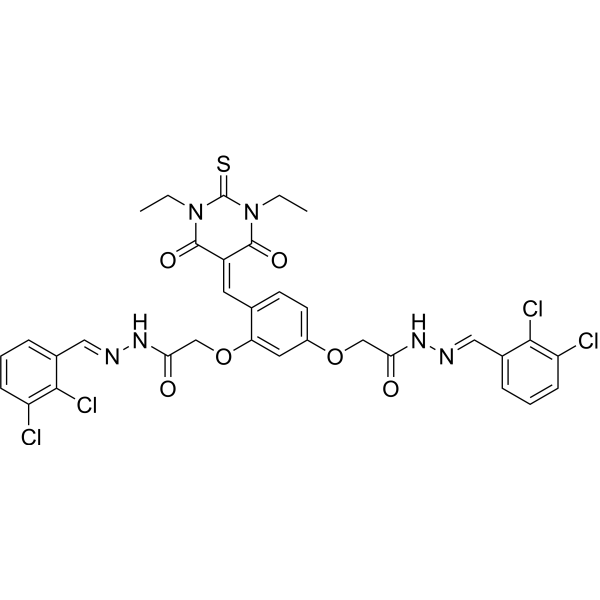
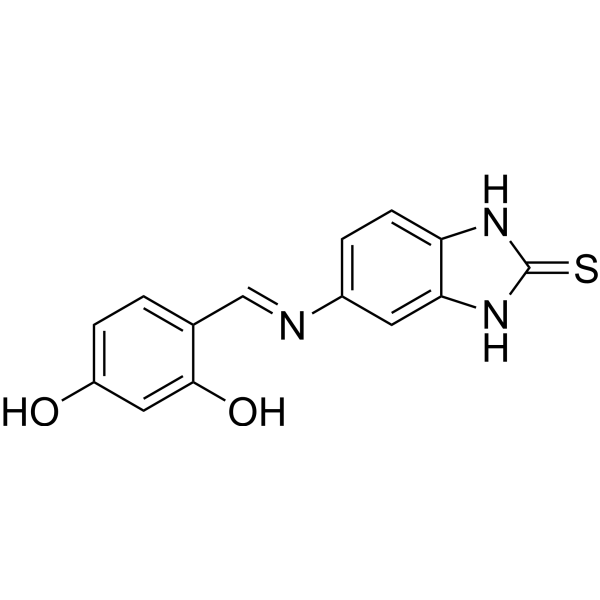 0 Imagesα-Glucosidase-IN-22 (Compound 7i) is a α-glucosidase inhibitor with an IC50 value of 0.64 μM. α-Glucosidase-IN-22 can be used for the research of type 2 diabetes.
-
Carpachromene
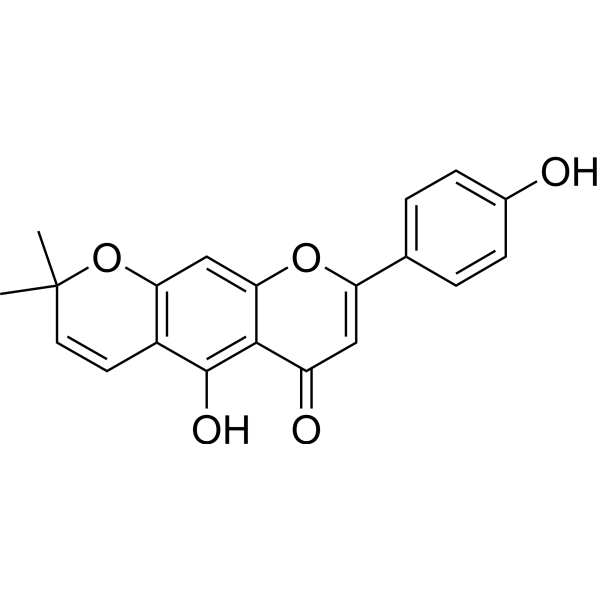 0 ImagesCarpachromene is a potent α-glucosidase enzyme inhibitor. Carpachromene ameliorates insulin resistance in HepG2 cells via modulating IR/IRS1/PI3k/Akt/GSK3/FoxO1 pathway.
-
Endo-β-N-acetylglucosaminidase D
 0 ImagesCat. No.: HY-E70132CAS No.: 37278-88-9Synonyms: Endo DEndo-β-N-acetylglucosaminidase D (Endo D), isolated from Streptococcus pneumoniae. Endo-β-N-acetylglucosaminidase D hydrolyzes Fc N-glycan of intact IgG antibodies after sequential removal of the sialic acid, galactose, and internal GlcNAc residues in the N-glycan. Endo-β-N-acetylglucosaminidase D possesses transglycosylation activity with sugar oxazoline as the donor substrate.
-
Endoglycosidase D (N322Q mutant)
 0 ImagesCat. No.: HY-E70882Synonyms: EndoD N322QEndoglycosidase D (N322Q mutant) (EndoD N322Q) is a mutant endoglycosidase, which can be highly efficient to transfer Man5GlcNAc oxazoline to a similar cyclic glycopeptide carrying two free GlcNAc moieties to give a doubly glycosylated peptide.
-
2,4,6-Triphenylaniline
 0 ImagesCat. No.: HY-W112651CAS No.: 6864-20-62,4,6-Triphenylaniline has anti-diabetic activity and can be encapsulated in nano-emulsions (NE) to enhance stability and permeability. The NE loaded with 2,4,6-Triphenylaniline inhibits α-glucosidase and α-amylase.
-
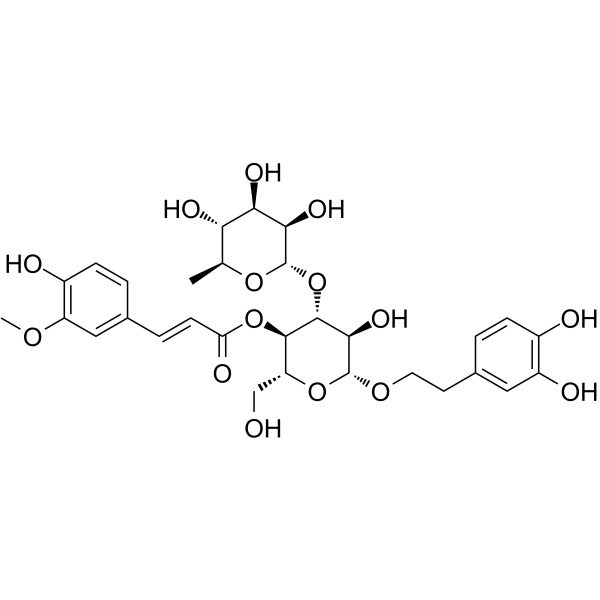
(S)-N-(1H-Indole-3-acetyl)tryptophan
 0 Images(S)-N-(1H-Indole-3-acetyl)tryptophan (compound 4a) is a Tryptophan derivative that weakly inhibits β-D-glucosidase.
-
Retinyl glucoside
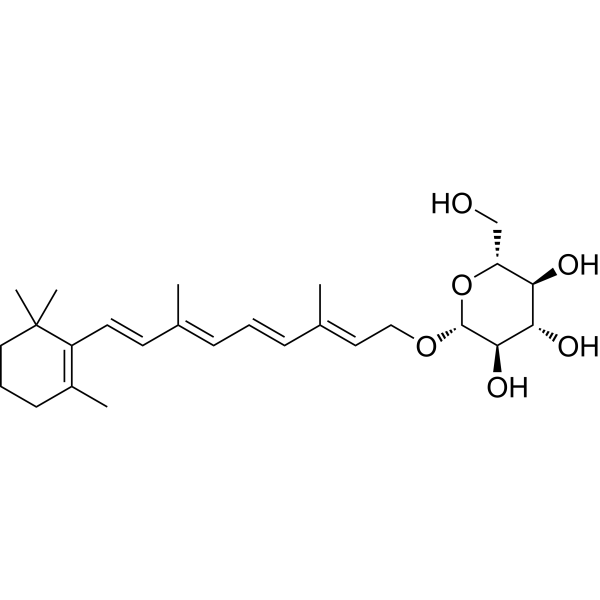 0 ImagesCat. No.: HY-A0058CAS No.: 136778-12-6Synonyms: Retinyl β-D-glucosideRetinyl glucoside (Retinyl β-D-glucoside) is a lipid β-D-glucoside of retinol, and also serves as a substrate for broad-spectrum β-glucosidase (β-glucosidase). Retinyl glucoside can be hydrolyzed by guinea pig hepatocyte cytosolic and membrane-associated β-glucosidases as well as almond β-glucosidase to release retinol and glucose, but it is not hydrolyzed by human placental glucocerebrosidase. Retinyl glucoside can be used in the research of Gaucher's disease.
-
PNGase F (Lyophilized)
 0 ImagesCat. No.: HY-P2929CCAS No.: 83534-39-8PNGase F (Lyophilized), a glycosidase, catalyzes the cleavage of an internal glycoside bond in an oligosaccharide. PNGase F (Lyophilized) removes nearly all N-linked oligosaccharides from glycoproteins. PNGase F (Lyophilized) can release N-glycans from glycoproteins in glycoanalytical workflows.
-
p-Nitrophenyl β-D-lactoside
 0 Imagesp-Nitrophenyl β-D-lactoside is a substrate of β-lactosidase and can be used to determine β-lactosinase activity. p-Nitrophenyl β-D-lactoside is a substrate of cellobiohydrolase. p-Nitrophenyl β-D-lactoside is a class of biochemical reagents used in glycobiology research.
-
Quinic acid-13C3
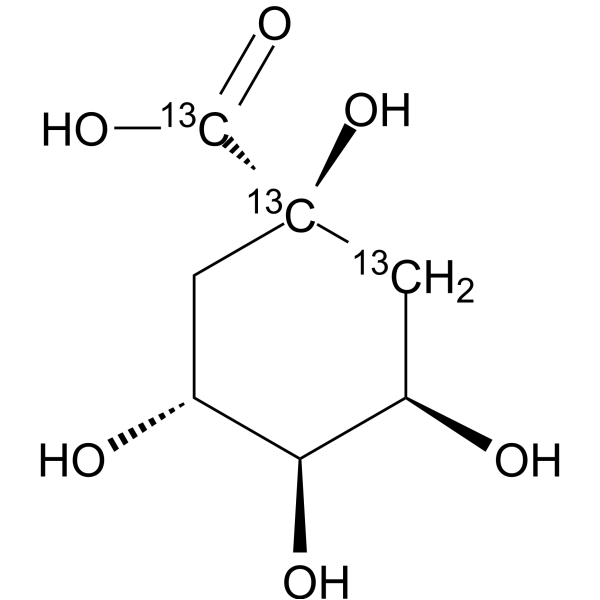 0 ImagesCat. No.: HY-N0464SPurity: 99.5%Quinic acid-13C3 is the 13C-labeled D-(-)-Quinic acid. D-(-)-Quinic acid scavenges hydrogen peroxide (IC50=87.11 μg/mL) and exhibits antioxidant activity. D-(-)-Quinic acid is the inhibitor for MAO and α-Glucosidase (IC50 =93.75 μg/mL). D-(-)-Quinic acid is orally active.
-
Endoglycosidase M (N175Q mutant)
 0 ImagesCat. No.: HY-E70879Synonyms: EndoM N175QEndoglycosidase M (N175Q mutant) (EndoM N175Q) can transfer natural N-glycans or oxazoline N-glycans to any peptide or protein with a GlcNAc residue to form a β1-4-glycosidic linkage. Endoglycosidase M (N175Q mutant) is a useful tool in the synthesis of homogeneous glycopeptides and glycoproteins.
-
Malabaricone B
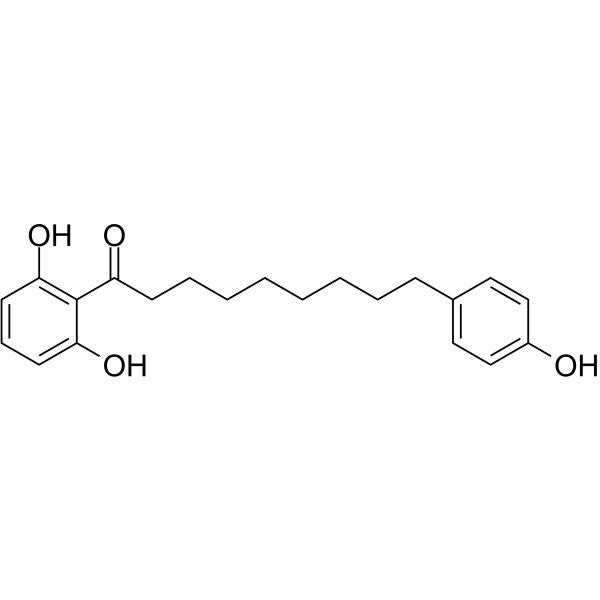 0 ImagesMalabaricone B, a naturally occurring plant phenolic, is an orally active α-glucosidase inhibitor with an IC50 of 63.7 µM. Malabaricone B has anticancer, antimicrobial, anti-oxidation and antidiabetic activities.
-
Casuarictin
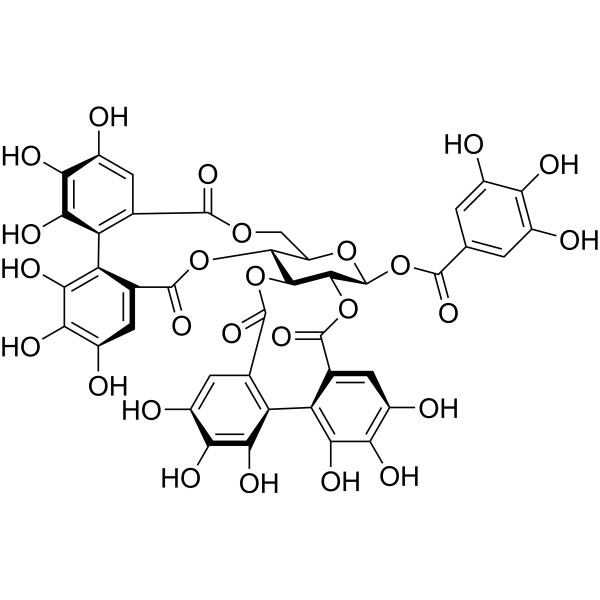 0 ImagesCasuarictin is a potent and competitive α-glucosidase inhibitor with an IC50 of 0.21 μg/mL. Casuarictin is a presenilin stabilization factor like protein (PSFL) protein inhibitor. Casuarictin can be used for Alzheimer's disease research.
-
Validamine
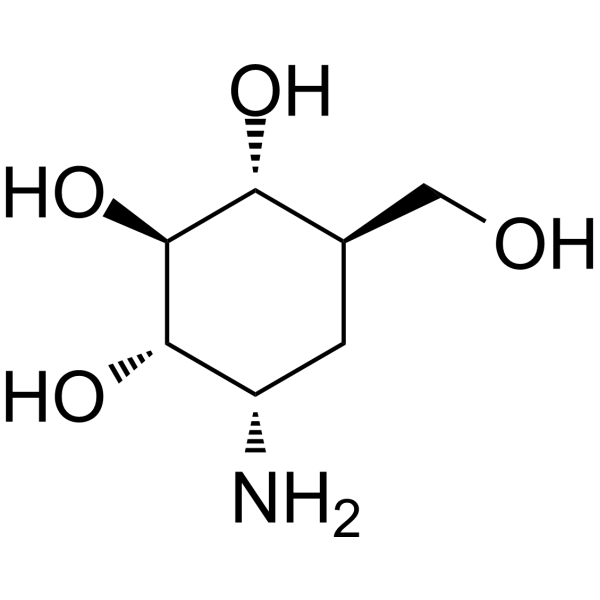 0 ImagesCat. No.: HY-N2383CAS No.: 32780-32-8Synonyms: (1R,2S,3S,4S,6R)-4-Amino-6-(hydroxymethyl)cyclohexane-1,2,3-triolValidamine competitively inhibits β-glucosidase in a pH-dependent and dose-dependent manner, with an IC50 value of 2.92mM, and the maximum inhibitory ability is at the optimum pH value of this enzyme.
-
Mulberry Leaf Extract
 0 ImagesCat. No.: HY-N13248Mulberry Leaf Extract is a mulberry leaf extract, and its components include: 1-Deoxynojirimycin. Mulberry Leaf Extract can effectively alleviate the adverse effects of high-fat diet on blood lipids and renal function, regulate lipid metabolism abnormalities, and significantly inhibit the accumulation of glycosylated substances in glomeruli. Mulberry Leaf Extract can regulate the key signaling pathways of diabetic nephropathy, but does not directly affect blood glucose levels..
-
Diphlorethohydroxycarmalol
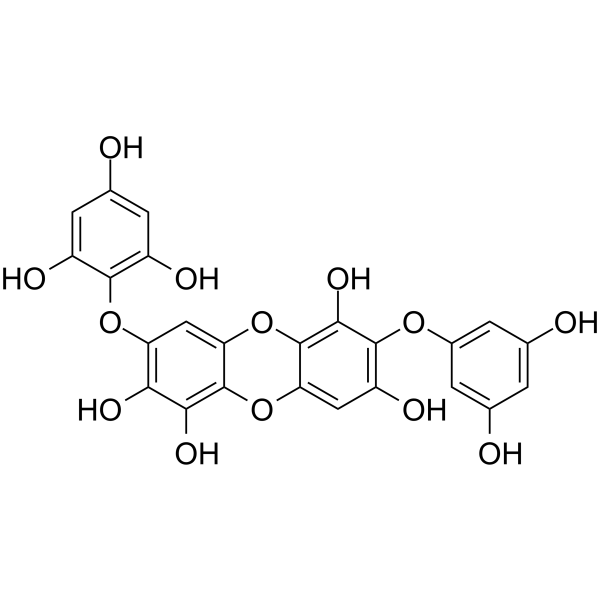 0 ImagesDiphlorethohydroxycarmalol, a kind of phlorotannin, is an orally active α-glucosidase and α-amylase inhibitor with IC50s of 0.16 mM and 0.53 mM, respectively. Diphlorethohydroxycarmalol has anti-diabetic activities.
-
Ambroxol hydrochloride (Standard)
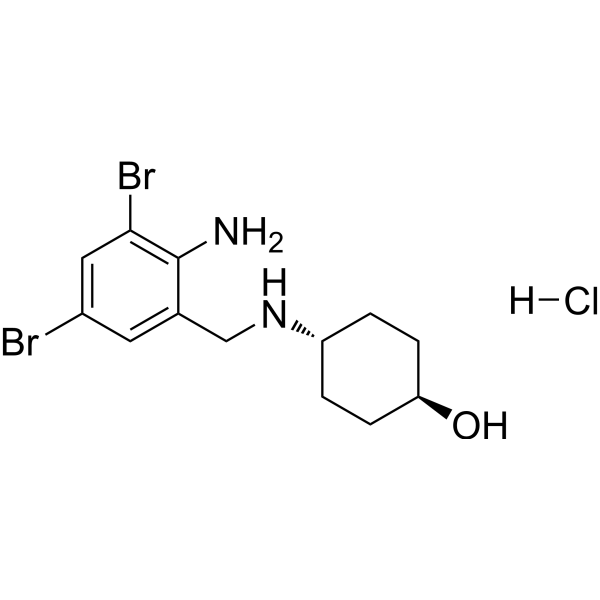 0 ImagesSynonyms: NA-872 hydrochloride (Standard)Ambroxol (hydrochloride) (Standard) is the analytical standard of Ambroxol (hydrochloride). This product is intended for research and analytical applications. Ambroxol hydrochloride (NA-872 hydrochloride), an active metabolite of the proagent Bromhexine, has potent expectorant effects. Ambroxol hydrochloride is a glucocerebrosidase (GCase) chaperone and increases glucocerebrosidase activity. Ambroxol hydrochloride induces lung autophagy and has the potential for Parkinson disease and neuronopathic Gaucher disease research.




