



SETDB1/KMT2G
SETDB1 (SET domain bifurcated 1) and KMT2G (also known as SETD1B) are histone lysine methyltransferases that catalyze H3K9 and H3K4 methylation, respectively, regulating chromatin compaction and transcriptional repression or activation[1][2][3]. Mechanistically, SETDB1 silences tumor suppressor genes through H3K9 trimethylation, promoting proliferation, migration, and metastasis in multiple cancers, including melanoma and glioma[1][2][4][5][6][7][8]. KMT2G mediates H3K4 methylation, influencing enhancer activity, neuronal plasticity, and T-cell proliferation[9][10][3][11]. In disease models, SETDB1 overexpression enhances tumor growth by activating pathways such as AKT/mTOR and modulating macrophage recruitment, whereas cytoplasmic SETDB1 contributes to the Warburg effect and epithelial-mesenchymal transition[4][7]. KMT2G dysfunction is associated with genome instability, leukemogenesis, and impaired memory function, distinguishing its tumor suppressor and neurodevelopmental roles from other KMT2 family isoforms[10][12][11][13]. Compared with closely related isoforms, SETDB1 uniquely targets H3K9 residues and exerts both nuclear and cytoplasmic functions, while KMT2G focuses on H3K4 methylation and enhancer regulation[9][2][3][11]. Experimental modulation of SETDB1 using inhibitors like APQ or mithramycin restores epigenetic balance and suppresses tumorigenic phenotypes, offering translational potential for cancer and neurodegenerative diseases[14][5][8]. KMT2G-related interventions, including PROTACs and menin-KMT2A inhibitors, demonstrate isoform-specific effects on proliferation, differentiation, and immune checkpoint responses, providing insights for precision therapeutics[18][12]. Therefore, SETDB1 and KMT2G represent complementary epigenetic regulators with distinct substrate specificity, cellular localization, and therapeutic relevance in cancer, neurodevelopment, and immune modulation[1][4][3][11].
References:
- [1]. Van HT, et al. KMT2 Family of H3K4 Methyltransferases: Enzymatic Activity-dependent and -independent Functions. J Mol Biol. 2024 Apr 1;436(7):168453. [Content Brief]
- [2]. Wang Q, et al. The Histone-Lysine N-Methyltransferase (KMT2) Family in Health and Disease. MedComm (2020). 2026 Apr 9;7:e70728. [Content Brief]
- [3]. Karanth AV, et al. Emerging role of SETDB1 as a therapeutic target. Expert Opin Ther Targets. 2017 Mar;21(3):319-331. [Content Brief]
- [4]. Markouli M, et al. Structure, Activity and Function of the SETDB1 Protein Methyltransferase. Life (Basel). 2021 Aug 11;11(8):817. [Content Brief]
- [5]. Ghosh A, et al. Investigation of the guaiazulene-p-chloranil charge transfer complex in solution: a combined spectroscopic and quantum chemical approach. Sci Rep. 2026 Jun 8. [Content Brief]
- [6]. Liu C, et al. The emerging paradigms of SETD family enzymes as epigenetic regulators of the immune response in inflammatory diseases. Front Immunol. 2026 Jan 23;17:1725917. [Content Brief]
- [7]. Federico A. Molecular and functional characterization of the role of the histone methyltransferase SETDB1 in malignant melanoma. Heidelberg University dissertation. 2020.
- [8]. Hwang YJ, et al. Modulation of SETDB1 activity by APQ ameliorates heterochromatin condensation, motor function, and neuropathology in a Huntington's disease mouse model. J Enzyme Inhib Med Chem. 2021 Dec;36(1):856-868. [Content Brief]
- [9]. da Silva Santos ME, et al. KMT2 (MLL) family of methyltransferases in head and neck squamous cell carcinoma: A systematic review. Head Neck. 2024 Feb;46(2):417-434. [Content Brief]
- [10]. Yang W, et al. Cytoplasmic localization of SETDB1‑induced Warburg effect via c‑MYC‑LDHA axis enhances migration and invasion in breast carcinoma. Int J Mol Med. 2024 Apr;53(4):40. [Content Brief]
- [11]. Liang N, et al. The predictive values of loss-of-function variants in histone methyltransferases for response to immune checkpoint inhibitors in solid tumors. J Clin Oncol. 2021;39(15_suppl):2586.
- [12]. Luo F, et al. LINC00115 promotes chemoresistant breast cancer stem-like cell stemness and metastasis through SETDB1/PLK3/HIF1α signaling. Mol Cancer. 2024 Mar 22;23(1):60. [Content Brief]
- [13]. Kerimoglu C, et al. KMT2A and KMT2B Mediate Memory Function by Affecting Distinct Genomic Regions. Cell Rep. 2017 Jul 18;20(3):538-548. [Content Brief]
- [14]. Hogeling SM, et al. Bleximenib, the novel menin-KMT2A inhibitor JNJ-75276617, impairs long-term proliferation and immune evasion in acute myeloid leukemia. Haematologica. 2025 Jun 1;110(6):1278-1291. [Content Brief]
- [15]. Xu J, et al. KMT2D Deficiency Promotes Myeloid Leukemias which Is Vulnerable to Ribosome Biogenesis Inhibition. Adv Sci (Weinh). 2023 Jul;10(19):e2206098. [Content Brief]
All Product Categories
-
SETDB1/KMT2G Related Products (4)
Related Products (4)

-
SETDB1-TTD-IN-1
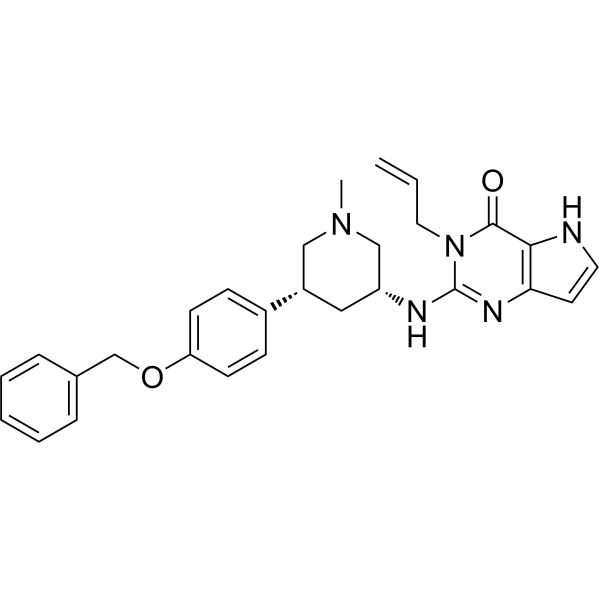 0 ImagesSETDB1-TTD-IN-1 is a SETDB1 methyltransferase activator and SETDB1-TTD competitive inhibitor (Kd of 88 nM), and selectivity for SETDB1-TTD over other tudor and bromodomain proteins. SETDB1-TTD-IN-1 stimulates methyltransferase activity via increased catalytic activity, promotes Akt1 Lys64 methylation, Akt1 Thr308 phosphorylation and activation. SETDB1-TTD-IN-1 prevents SETDB1-TTD-histone H3 peptide association, induces global gene expression changes, exhibits cellular target engagement, and acts as a tool compound for SETDB1-TTD function exploration. SETDB1-TTD-IN-1 can be used for the research of breast cancer.
-
MS4322
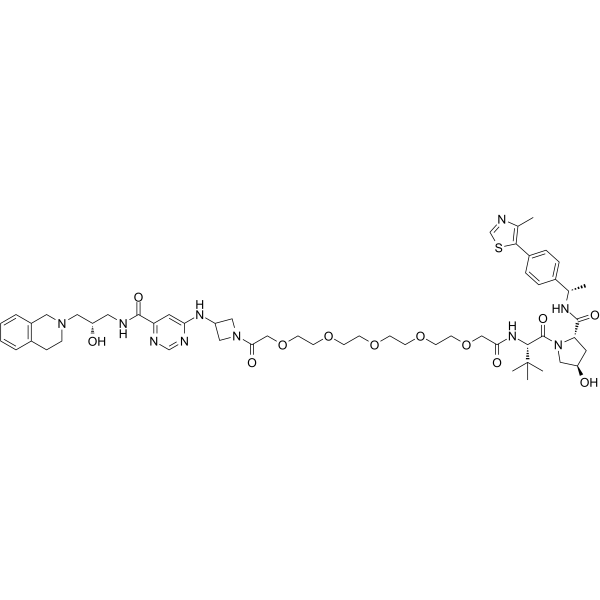 0 ImagesSynonyms: YS43-22MS4322 (YS43-22) is a specific PRMT5 PROTAC degrader. MS4322 reduces the PRMT5 protein level with a DC50 of 1.1 μM in MCF-7 cells. MS4322 inhibits the methyltransferase activity of PRMT5 with an IC50 of 18 nM. MS4322 promotes ubiquitination and degradation of PRMT5. MS4322 can be used for the research of breast cancer, lung cancer, and hepatocellular cancer. (Pink: PRMT5 ligand (HY-173092); Blue: E3 ligase ligand HY-112078); Black: linker (HY-124780); E3+linker (HY-173093 )).
-
MS4322 (isomer)
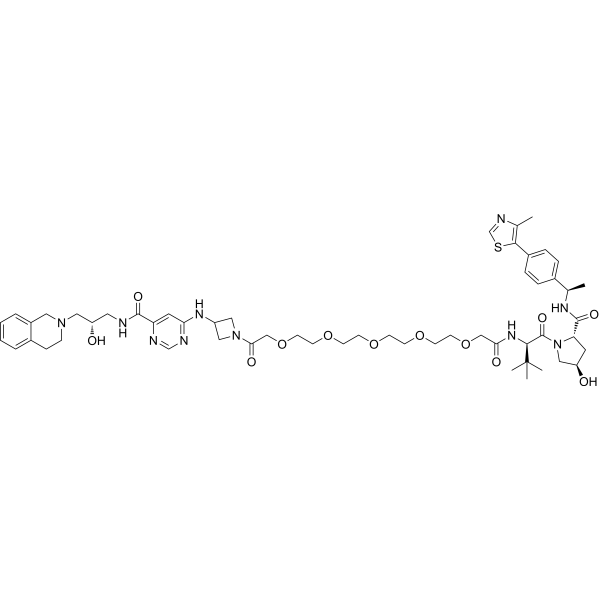 0 ImagesSynonyms: YS43-22 (isomer)MS4322 (YS43-22) isomer is an isomer of MS4322. MS4322 is a specific PRMT5 PROTAC degrader. MS4322 reduces the PRMT5 protein level with a DC50 of 1.1 μM in MCF-7 cells. MS4322 inhibits the methyltransferase activity of PRMT5 with an IC50 of 18 nM. MS4322 promotes ubiquitination and degradation of PRMT5. MS4322 can be used for the research of breast cancer, lung cancer, and hepatocellular cancer.
-
SETDB1-TTD-IN-1 TFA
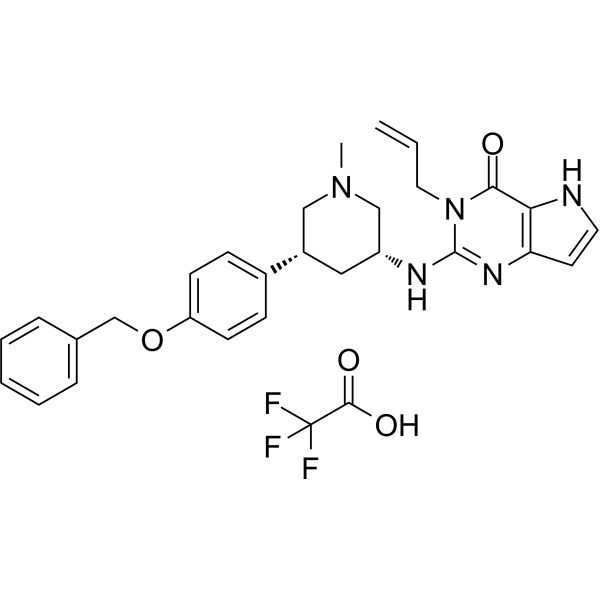 0 ImagesCat. No.: HY-141539APurity: 99.77%SETDB1-TTD-IN-1 TFA is a potent, selective and endogenous binder competitive ligand of SET domain bifurcated protein 1 tandem tudor domain (SETDB1-TTD) that binds to TTD, with a Kd of 88 nM. SETDB1-TTD-IN-1 TFA increases SETDB1 methyltransferase activity. SETDB1-TTD-IN-1 TFA can be used for the research of biological functions and disease associations of SETDB1-TTD.



