



Neurokinin Receptor
NK receptor; Tachykinin receptor
There are three main classes of neurokinin receptors: NK1R (the substance P preferring receptor), NK2R, and NK3R. These tachykinin receptors belong to the class I (rhodopsin-like) G-protein coupled receptor (GPCR) family. The various tachykinins have different binding affinities to the neurokinin receptors: NK1R, NK2R, and NK3R. These neurokinin receptors are in the superfamily of transmembrane G-protein coupled receptors (GPCR) and contain seven transmembrane loops. Neurokinin-1 receptor interacts with the Gαq-protein and induces activation of phospholipase C followed by production of inositol triphosphate (IP3) leading to elevation of intracellular calcium as a second messenger. Further, cyclic AMP (cAMP) is stimulated by NK1R coupled to the Gαs-protein. The neurokinin receptors are expressed on many cell types and tissues.
Neurokinin Receptor Isoform Specific Products
All Product Categories
-
Neurokinin Receptor Inhibitors
(23)
View all products
-
Neurokinin Receptor Agonists
(42)
View all products
-
Neurokinin Receptor Antagonists
(156)
View all products
-
Neurokinin Receptor Activator
(1)
View all products
-
Neurokinin Receptor Modulators
(7)
View all products
-
Neurokinin Receptor Controls
(3)
View all products
-
Neurokinin Receptor Related Products (280)
Related Products (280)

-
Antibodies (4)
-
Neurokinin Receptor Isoform Comparison
-
Ezlopitant
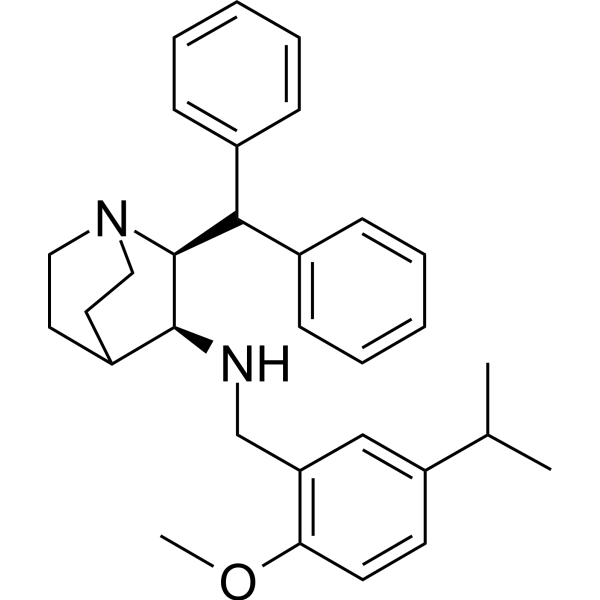 0 ImagesCat. No.: HY-106982CAS No.: 147116-64-1Synonyms: CJ-11,974Ezlopitant (CJ-11,974) is a selective, non-peptidic neurokinin-1 (NK-1)-receptor antagonist. Ezlopitant inhibits both acute and delayed emetic reactions induced by Cisplatin (HY-17394) in ferrets via acting on NK1 receptors in the central nervous system. Ezlopitant has the potential for pain, chemotherapy-induced emesis and irritable bowel syndrome research.
-
Substance P (5-11)
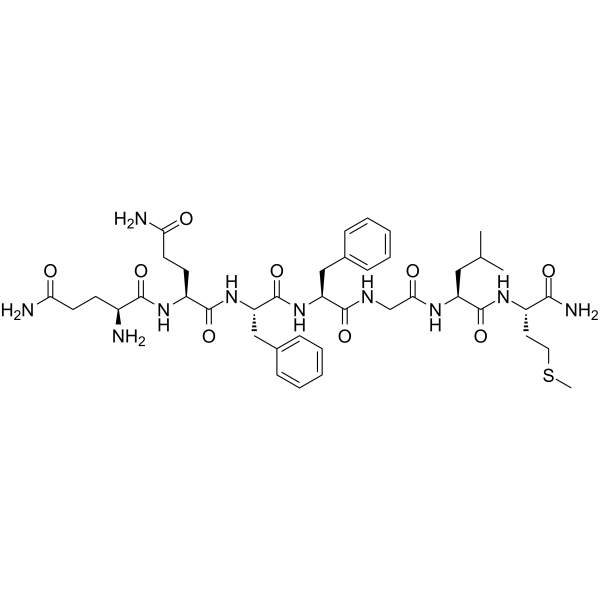 0 ImagesCat. No.: HY-P3890CAS No.: 51165-09-4Substance P (5-11), the C-terminal heptapeptide of Substance P (HY-P0201), is a neuropeptide. Substance P (5-11) binds to NK-1 tachykinin receptor.
-
NK3R-IN-1
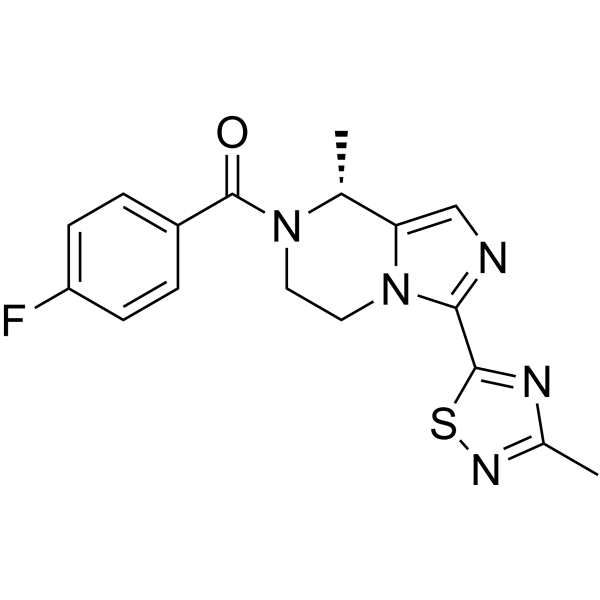 0 ImagesCat. No.: HY-149358CAS No.: 2854331-14-7NK3R-IN-1 (compound 16x), a imidazolepiperazine derivative, is an orally active Neurokinin Receptor NK3R inhibitor. NK3R-IN-1 decreases blood luteinizing hormone levels in ovariectomy (OVX) model.
-
GR 83074
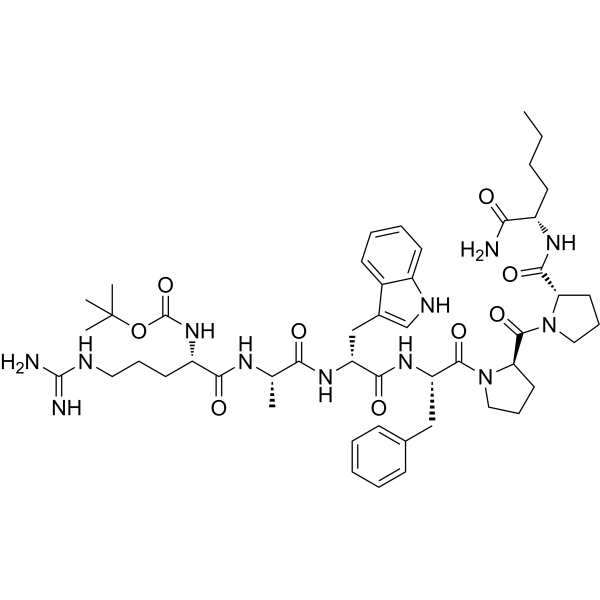 0 ImagesCat. No.: HY-P3854CAS No.: 141636-44-4GR 83074 is a potent and selective NK-2 (Neurokinin Receptor) antagonist with a pKB of 8.23. GR 83074 is inactive as an NK-3 antagonist and exhibits a 340-fold NK-2/NK-1 selectivity.
-
CJ-17493
 0 ImagesCat. No.: HY-10050CAS No.: 225655-10-7CJ-17493 is a neurokinin-1 (NK1) receptor antagonist, with a Ki of 0.2 nM. CJ-17493 shows moderate affinity for the verapamil-binding site of L-type Ca2+ channels (IC50 = 164 nM) and site 2 of sodium channels (IC50 = 48 nM). CJ-17493 can be used for the study of neurological diseases.
![[Dehydro-Pro4] Substance P (4-11)](https://file.medchemexpress.com/product_pic/hy-p3820.gif "Click to View [Dehydro-Pro4] Substance P (4-11) Product Detail")
-
Uperolein
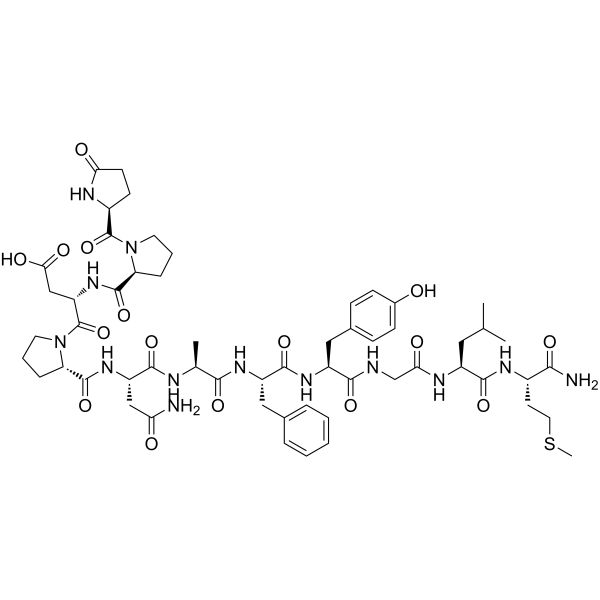 0 ImagesCat. No.: HY-P2793CAS No.: 55601-63-3Uperolein is a physalaemin-like endecapeptide, produced in the skin of Uperoleia rugosa and Uperoleia marmorata. Uperolein has a spasmodic effect on both the gastrointestinal tract and longitudinal muscles.
-
[Nle11]-Substance P
![[Nle11]-Substance P](https://file.medchemexpress.com/product_pic/hy-p1506.gif "Click to View [Nle11]-Substance P Product Detail") 0 ImagesCat. No.: HY-P1506CAS No.: 57462-42-7[Nle11]-Substance P is a substance P analog that avoids methionine oxidation problems.
0 ImagesCat. No.: HY-P1506CAS No.: 57462-42-7[Nle11]-Substance P is a substance P analog that avoids methionine oxidation problems.
-
MLGFFQQPKPR-NH2
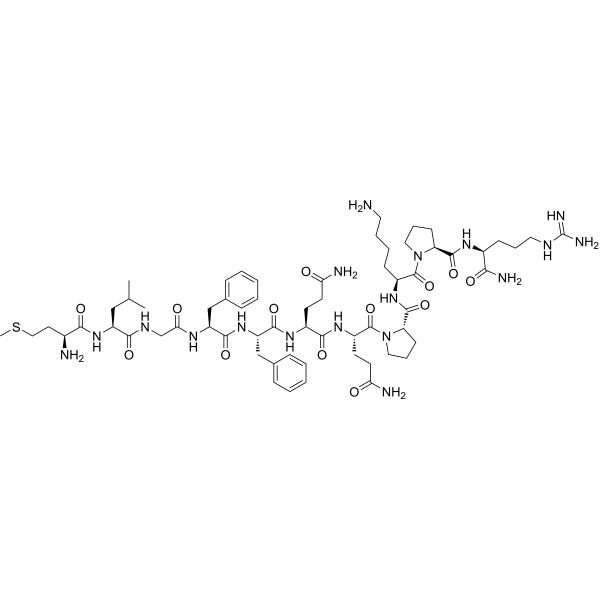 0 ImagesCat. No.: HY-P3887CAS No.: 1802883-75-5MLGFFQQPKPR-NH2 is a reversed Substance P peptide. Substance P is a neuropeptide.
-
L 743310
 0 ImagesCat. No.: HY-117952CAS No.: 187724-86-3L 743310 is a non-peptide, selective antagonist of the human neurokinin hNK1 receptor, with high affinity for primate and cloned human hNK1 receptors and lower affinity for rodent NK1 receptors. L 743310 inhibits resiniferatoxin-induced plasma protein extravasation in guinea pig esophagus. L 743310 has a dose-dependent inhibitory effect on cisplatin-induced emesis.
-
Tyr0-Neurokinin B
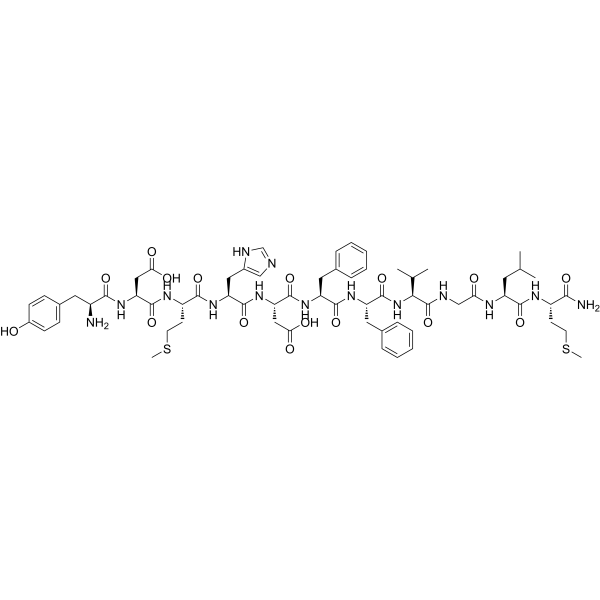 0 ImagesCat. No.: HY-P3847CAS No.: 131019-53-9Synonyms: Tyr-NKBTyr0-Neurokinin B (Tyr-NKB) is an analogue of Neurokinin B. Tyr0-Neurokinin B can exerts contractions in bladder.
-
Scyliorhinin II
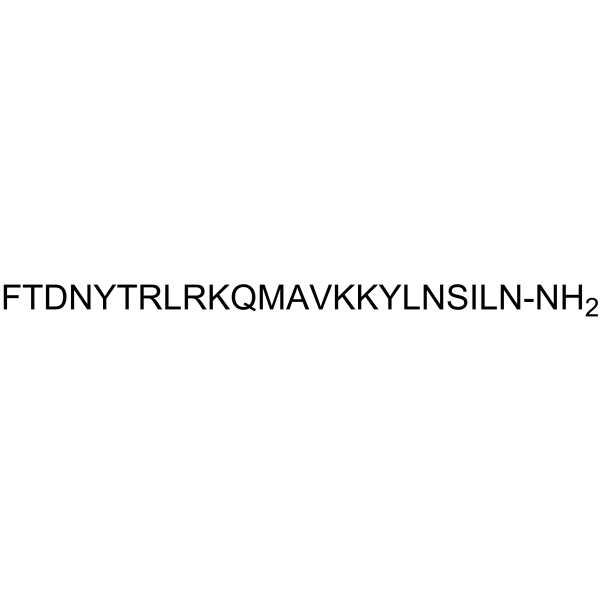 0 ImagesCat. No.: HY-P1588CAS No.: 112748-19-3Scyliorhinin II is a selective neurokinin-3 receptor agonist, with a Ki of 2.5 nM for neurokinin-3 receptor in rat cerebral cortex.
-
GR 82334
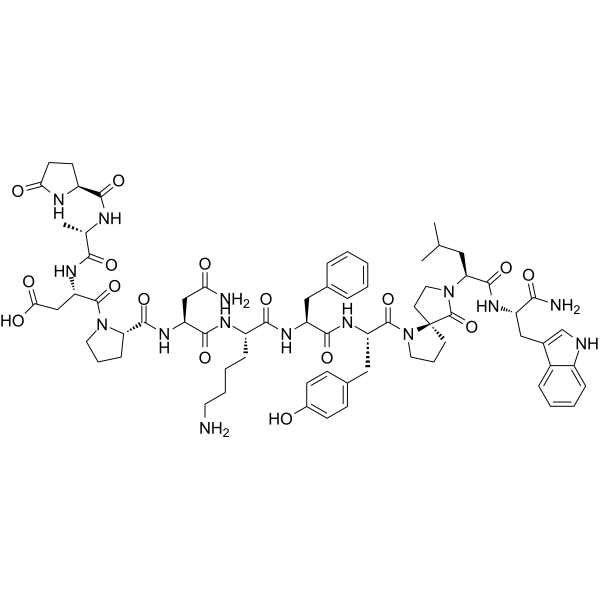 0 ImagesCat. No.: HY-P1193CAS No.: 129623-01-4GR 82334 is a potent and specific reversible tachykinin NK1 receptor antagonist. GR 82334 inhibits substance P-induced sensitization by blocking SP NK1 receptors in naked mole-rats.
-
RO5328673
 0 ImagesCat. No.: HY-182423CAS No.: 1310817-94-7RO5328673 is an orally active, blood-brain barrier permeable neurokinin receptor antagonist that effectively targets human NK3 receptors (Ki=0.4 nM, Ka=0.1 nM), human NK2 receptors (Ki=1.1 nM, Ka=0.9 nM), and guinea pig NK3 receptors (Ka=0.1 nM and 0.13 nM). RO5328673 acts as an insurmountable antagonist of NK3 receptors with a slow dissociation rate, while it shows rapid association and dissociation rates at human NK2 receptors. RO5328673 potently inhibits senktide (HY-P0187)-induced enhancement of spontaneous activity in dopaminergic neurons and reverses senktide-induced changes in motor activity of gerbils. RO5328673 is widely applicable to research related to schizophrenia.
-
SLV-317
 0 ImagesCat. No.: HY-19429ACAS No.: 393183-40-9SLV-317 is an antagonist of the neurokinin-1 receptor with oral activity. SLV-317 can effective antagonist of substance P-induced effects.
-
RO4583298
 0 ImagesCat. No.: HY-129448CAS No.: 825643-56-9RO4583298 is a potent, orally active dual antagonist of NK1 (human and gerbil)/NK3 (human, cynomolgus monkey, gerbil and guinea-pig). RO4583298 inhibits senktide-induced potentiation of spontaneous activity of dopaminergic neurons. RO4583298 can block gerbil foot tapping response and inhibits mouse tail whips.
-
[D-Pro4,D-Trp7,9,10] Substance P (4-11)
![[D-Pro4,D-Trp7,9,10] Substance P (4-11)](https://file.medchemexpress.com/product_pic/hy-p3806.gif "Click to View [D-Pro4,D-Trp7,9,10] Substance P (4-11) Product Detail") 0 ImagesCat. No.: HY-P3806CAS No.: 86917-57-9[D-Pro4,D-Trp7,9,10] Substance P (4-11) is a potent tachykinin antagonist.
0 ImagesCat. No.: HY-P3806CAS No.: 86917-57-9[D-Pro4,D-Trp7,9,10] Substance P (4-11) is a potent tachykinin antagonist.
-
Esmolol hydrochloride solution
 0 ImagesCat. No.: HY-FLB1392CAS No.: 81161-17-3Esmolol hydrochloride solution is mainly composed of Esmolol hydrochloride (HY-B1392). Esmolol hydrochloride is an ultra-short-acting cardioselective β1-adrenergic blocker. Esmolol hydrochloride exerts its antiarrhythmic effect by activating Neurokinin 1 Receptor. Esmolol hydrochloride attenuates post resuscitation myocardial dysfunction. Esmolol hydrochloride improves diabetic wound healing by inhibiting aldose reductase and the production of advanced glycation end products and promoting fibroblast migration. Esmolol hydrochloride can be used to study cardiac diseases such as arrhythmias and diabetic foot ulcers.
-
MEN 10208
 0 ImagesCat. No.: HY-P2439CAS No.: 129781-07-3MEN 10208 is a neurokinin A antagonist prepared by solid phase synthesis. The Fmoc strategy has more advantages than the Boc strategy in its preparation, and can obtain products with higher yield and purity.
-
[D-Pro4,D-Trp7,9] Substance P (4-11)
![[D-Pro4,D-Trp7,9] Substance P (4-11)](https://file.medchemexpress.com/product_pic/hy-p3803.gif "Click to View [D-Pro4,D-Trp7,9] Substance P (4-11) Product Detail") 0 ImagesCat. No.: HY-P3803CAS No.: 81039-85-2[D-Pro4,D-Trp7,9] Substance P (4-11) is a potent antagonist of Substance P (HY-P0201). [D-Pro4,D-Trp7,9] Substance P (4-11) decreases plasma aldosterone (ALDO) concentration.
0 ImagesCat. No.: HY-P3803CAS No.: 81039-85-2[D-Pro4,D-Trp7,9] Substance P (4-11) is a potent antagonist of Substance P (HY-P0201). [D-Pro4,D-Trp7,9] Substance P (4-11) decreases plasma aldosterone (ALDO) concentration.




