



Uperolein
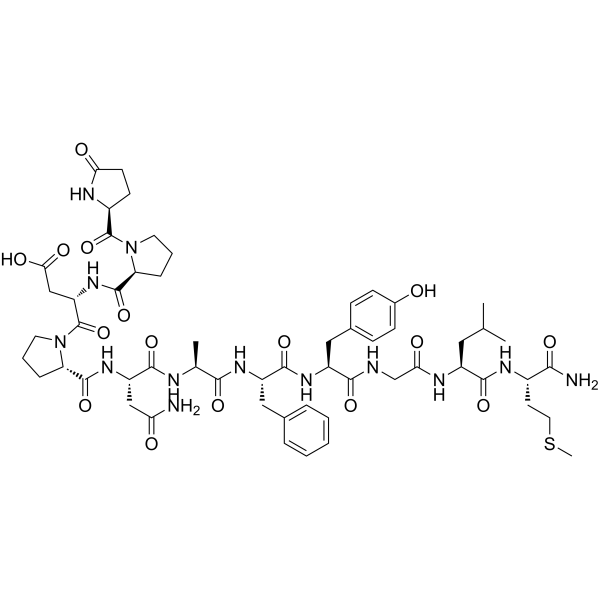
Uperolein is a physalaemin-like endecapeptide, produced in the skin of Uperoleia rugosa and Uperoleia marmorata. Uperolein has a spasmodic effect on both the gastrointestinal tract and longitudinal muscles.
연구목적의 판매만을 진행합니다. 환자를 대상으로 한 판매는 하지 않습니다.
- CAS No.: 55601-63-3
- 화학식: C57H79N13O16S
- 분자량:1234.38
-
보관:
Please store the product under the recommended conditions in the Certificate of Analysis.

To place orders, for customer services and technical support, please contact: MedChemExpress USA
Tel: 609-228-6898 E-mail: [email protected] [email protected]


-
 Biological Activity
-
Chemical Information
- 순도&문서
- References
-
 Help & FAQs




Biological Activity
제품 설명
In Vitro
Uperolein (10-100 ng/mL) is a tachykinin analogue, causes or reinforces rhythmic movements and increases the tone in isolated circular and longitudinal muscle of the human gastrointestinal tract from the stomach to the colon[2].
MedChemExpress (MCE) has not independently confirmed the accuracy of these methods. They are for reference only.
In Vivo
MedChemExpress (MCE) has not independently confirmed the accuracy of these methods. They are for reference only.


Chemical Information
-
CAS No. 55601-63-3
-
분자량 1234.38
-
화학식 C57H79N13O16S
-
Sequence Shortening
{Pyr}-PDPNAFYGLM-NH2
-
선적
Room temperature in continental US; may vary elsewhere.
-
보관
Please store the product under the recommended conditions in the Certificate of Analysis.


순도&문서
References
[1]. Poulter L, et al. Levitide, a neurohormone-like peptide from the skin of Xenopus laevis. Peptide and peptide precursor cDNA sequences. J Biol Chem. 1988 Mar 5;263(7):3279-83. [Content Brief]
[2]. Anastasi A, et al. Structure of uperolein, a physalaemin-like endecapeptide occurring in the skin of Uperoleia rugosa and Uperoleia marmorata. Experientia. 1975 Apr 15;31(4):394-5. [Content Brief]
[3]. Zappia L, et al. Effects of natural analogues of substance P on the motility of human gastrointestinal tract in vitro. J Pharm Pharmacol. 1978 Sep;30(9):593-4. [Content Brief]
[4]. Bertaccini G, et al. Action of some natural peptides on the stomach of the anaesthetized rat. Naunyn Schmiedebergs Arch Pharmacol. 1977 Jun;298(2):163-6. [Content Brief]

Calculators
Concentration (start) × Volume (start) = Concentration (final) × Volume (final)


Uperolein Related Classifications
HY-P2793 Related Classifications
 Powered by Bioz