



PAI-1
Plasminogen activator inhibitor-1
PAI-1 (Plasminogen activator inhibitor-1, also known as SERPINE1) is a member of serine protease inhibitor (SERPIN) family that acts as the primary inhibitor of two main mammalian plasminogen activators, urinary-type (uPA) and tissue-type (tPA). As the main negative regulator of plasminogen activation, PAI-1 is an essential factor in regulation of the physiological balance between thrombosis and fibrinolysis. PAI-1 is a labile molecule that exists in four different forms: active, latent, cleaved and target bound form.
High PAI-1 levels are associated with many cardiovascular diseases. PAI-1 also plays important roles in cell migration, adhesion, senescence, cancer invasion and tissue remodeling. Moreover, the PAI-1 level was extensively validated as the biological prognostic factor in breast cancer and as a marker of a poor prognosis in other cancers. PAI-1 is also one of the plasma biomarkers associated with nonalcoholic fatty liver disease. These associations have made PAI-1 an attractive pharmaceutical target.
All Product Categories
-
PAI-1 Related Products (84)
Related Products (84)

-
Recombinant Proteins (4)
-
Antibodies (4)
-
2-O-(2,4,6-Trihydroxyphenyl)-6,6'-bieckol
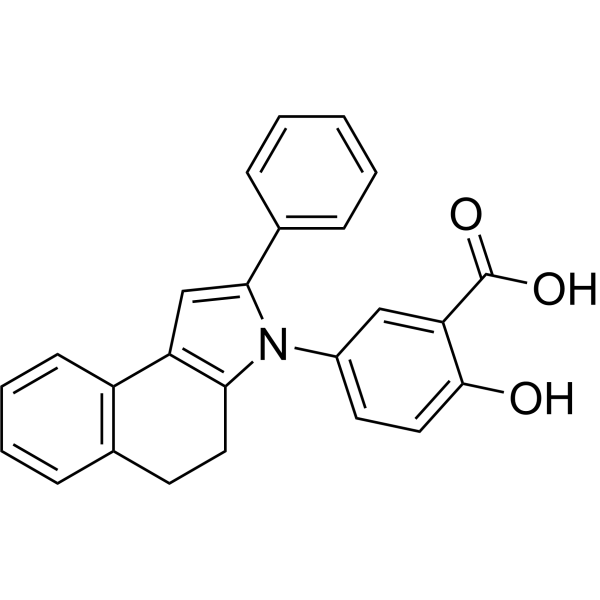
 0 ImagesCat. No.: HY-N18088CAS No.: 89079-38-92-O-(2,4,6-Trihydroxyphenyl)-6,6'-bieckol is a bisphenol compound and a serine protease inhibitor. 2-O-(2,4,6-Trihydroxyphenyl)-6,6'-bieckol exhibits inhibitory activities against α2-macroglobulin, α2-plasmin inhibitor and plasmin, with corresponding IC50 values of 1.9 μg/mL, 0.7 μg/mL and 13 μg/mL.
-
6-Aminocaproic acid hydrochloride
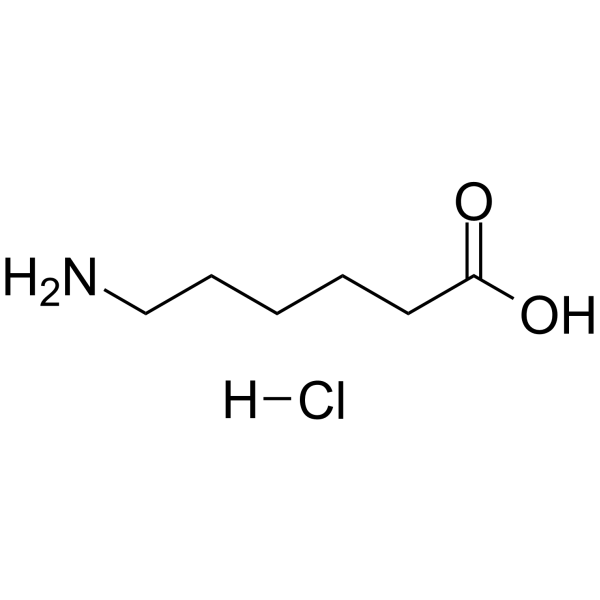 0 ImagesSynonyms: EACA hydrochloride; Epsilon-Amino-n-caproic Acid hydrochloride; 6-Aminohexanoic acid hydrochloride6-Aminocaproic acid hydrochloride, a monoamino carboxylic acid, is a potent and orally active inhibitor of plasmin and plasminogen. 6-Aminocaproic acid is a potent antifibrinolytic agent. 6-Aminocaproic acid prevents clot lysis through the competitive binding of lysine residues on plasminogen, inhibiting plasmin formation and reducing fibrinolysis. 6-Aminocaproic acid can be used for the research of bleeding disorders.
-
XR 5118 hydrochloride
 0 ImagesCat. No.: HY-117537CAS No.: 174766-49-5XR 5118 hydrochloride is an inhibitor of plasminogen activator inhibitor 1 (PAI-1) (IC50: 12 µM). XR5118 binds to PAI-1 and reduces plasma PAI-1 activity levels. XR5118 hydrochloride promotes endogenous thrombolysis and inhibits thrombus accretion. XR 5118 hydrochloride can be used for research of cancer and thrombotic disease.
-
Sphingosylphosphorylcholine-d9
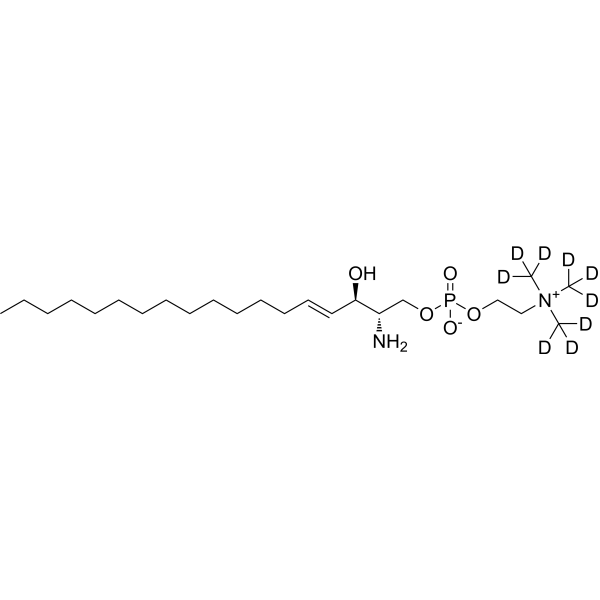 0 ImagesSphingosylphosphorylcholine-d9 is deuterium labeled Sphingosylphosphorylcholine.
-
Upamostat hydrogen sulfate
 0 ImagesCat. No.: HY-16512CAS No.: 798560-68-6Synonyms: WX-671 hydrogen sulfateUpamostat (WX-671) hydrogen sulfate, a prodrug of WX-UK1 (HY-100415), is an orally active serine protease inhibitor. Upamostat hydrogen sulfate inhibits the urokinase-type plasminogen activator (uPA) system, blocking the plasminogen activation process mediated by it, thereby suppressing the invasion, migration and metastasis of tumor cells. Upamostat hydrogen sulfate can be used in the research of metastatic breast cancer and locally advanced pancreatic cancer.
-
6-Aminocaproic acid (Standard)
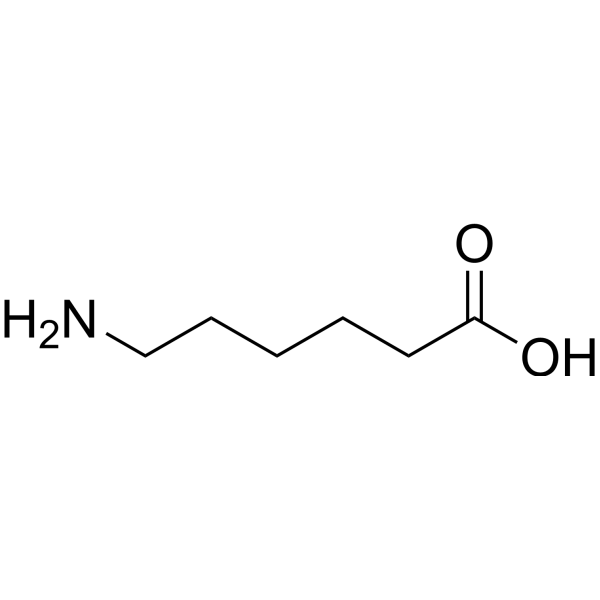 0 ImagesSynonyms: EACA(Standard); Epsilon-Amino-n-caproic Acid(Standard); 6-Aminohexanoic acid (Standard)6-Aminocaproic acid (Standard) is the analytical standard of 6-Aminocaproic acid. This product is intended for research and analytical applications. 6-Aminocaproic acid (EACA), a monoamino carboxylic acid, is a potent and orally active inhibitor of plasmin and plasminogen. 6-Aminocaproic acid is a potent antifibrinolytic agent. 6-Aminocaproic acid prevents clot lysis through the competitive binding of lysine residues on plasminogen, inhibiting plasmin formation and reducing fibrinolysis. 6-Aminocaproic acid can be used for the research of bleeding disorders.
-
D-Val-Leu-Lys-AMC
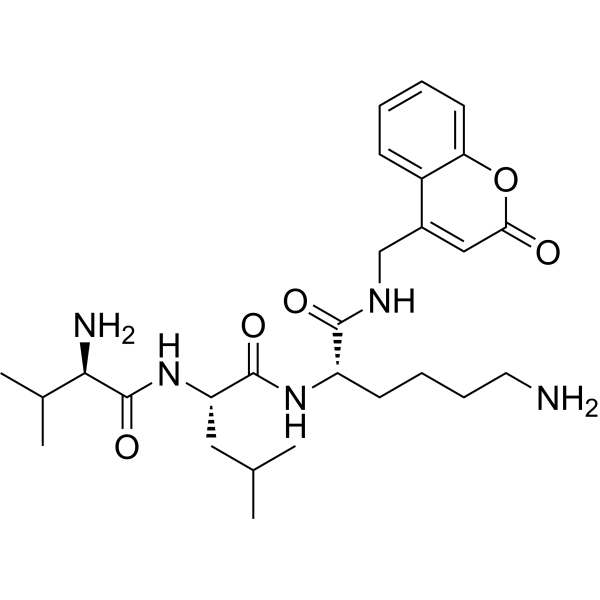 0 ImagesCat. No.: HY-P4341CAS No.: 152881-17-9D-Val-Leu-Lys-AMC is a selective fluorogenic peptide substrate of plasmin. D-Val-Leu-Lys-AMC can be used for the quantification of enzymatic activity of plasmin. Ex: 360-380 nm, Em: 440-460 nm.
-
UKI-1-d8 acetate
 0 ImagesCat. No.: HY-100415S1Synonyms: WX-UK1-d8 acetate; UKI-1C-d8 acetateUKI-1-d8 acetate (WX-UK1-d8 acetate) is the deuterium labeled UKI-1 acetate. UKI-1 (WX-UK1) is a potent urokinase-type plasminogen activator (uPA) inhibitor with a Ki of 0.41 μM. UKI-1 is also a low molecular weight serine protease inhibitor. UKI-1 is a potent antimetastatic agent and inhibits the invasive capacity of carcinoma cells.
-
WB 3559 A
 0 ImagesCat. No.: HY-113769CAS No.: 96053-97-3WB 3559 A is a fibrinolytic plasminogen activator. WB 3559 A accelerates the conversion of plasminogen to plasmin and directly degrades fibrin in thrombi. WB 3559 A is promising for research of acute thrombotic diseases (e.g., myocardial infarction, pulmonary embolism).
-
Toddalolactone (Standard)
 0 ImagesToddalolactone (Standard) is the analytical standard of Toddalolactone. This product is intended for research and analytical applications. Toddalolactone, a main component of Toddalia asiatica, inhibits the activity of recombinant human plasminogen activator inhibitor-1 (PAI-1), with an IC50 value of 37.31 μM.
-
Anti-SERPINE1 Antibody
 0 ImagesCat. No.: HY-P990504Purity: ≥99.0%Anti-SERPINE1 Antibody is a human-derived antibody expressed in CHO, targeting SERPINE1. The Anti-SERPINE1 Antibody has a huIgG1 type heavy chain and a huκ type light chain, with a predicted molecular weight (MW) of 150 kDa. The isotype control for Anti-SERPINE1 Antibody can be referenced as Human IgG1 kappa, Isotype Control (HY-P99001).
-
PAI-1-IN-2
 0 ImagesCat. No.: HY-187010CAS No.: 1190221-46-5
-
1-Decanesulfonic acid
 0 ImagesCat. No.: HY-187154CAS No.: 20283-21-01-Decanesulfonic acid is an alkanesulfonate anionic surfactant that acts as a neutralizer of plasminogen activator inhibitor-1 (PAI-1). 1-Decanesulfonic acid binds to the hydrophobic region in the flexible linker domain of active PAI-1. 1-Decanesulfonic acid induces PAI-1 polymerization via a two-step neutralization mechanism.
-
Loureirin B (Standard)
 0 ImagesCat. No.: HY-N1504RCAS No.: 119425-90-0Loureirin B (Standard) is the analytical standard of Loureirin B. This product is intended for research and analytical applications. Loureirin B, a flavonoid extracted from Dracaena cochinchinensis, is an inhibitor of plasminogen activator inhibitor-1 (PAI-1), with an IC50 of 26.10 μM; Loureirin B also inhibits KATP, the phosphorylation of ERK and JNK, and has anti-diabetic activity.
-
D-Val-Leu-Arg-pNA hydrochloride
 0 ImagesCat. No.: HY-114150BCAS No.: 1262750-87-7D-Val-Leu-Arg-pNA hydrochloride is a substrate for glandular kinin-releasing enzymes. D-Val-Leu-Arg-pNA hydrochloride can be used to determine the activities of plasminogen activator and plasmin. D-Val-Leu-Arg-pNA hydrochloride is also used to study the fibrinolytic activity of various organisms, such as bacteria and worms.
-
XR 1853
 0 ImagesCat. No.: HY-187613CAS No.: 158944-02-6
-
TM5441 (Standard)
 0 ImagesTM5441 (Standard) is the analytical standard of TM5441 (HY-101761). This product is intended for research and analytical applications. TM5441 is an orally bioavailable inhibitor of plasminogen activator inhibitor-1 (PAI-1), has IC50 values between 13.9 and 51.1 μM and induces intrinsic apoptosis in several human cancer cell lines. TM5441 attenuates Nω-nitro-l-arginine methyl ester-induced cardiac hypertension and vascular senescence.
-
UK-371804 hydrochloride
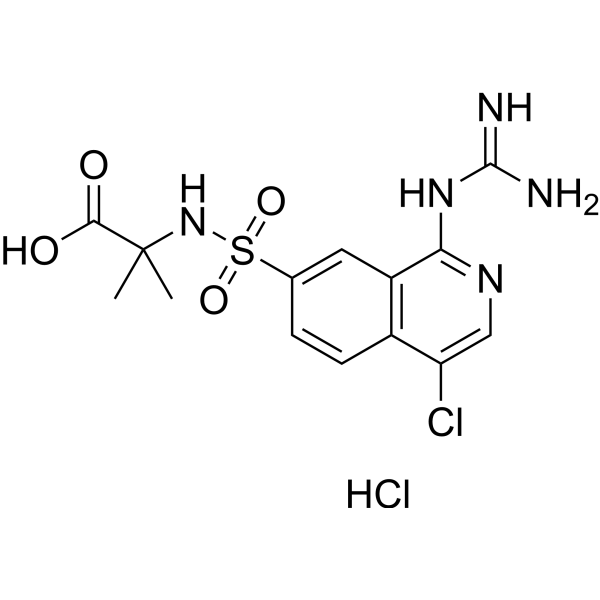 0 ImagesCat. No.: HY-101214ACAS No.: 256476-36-5UK-371804 hydrochloride (compound 24) is a urokinase-type plasminogen activator (uPA) inhibitor with a Ki of 10 nM.
-
CJ-463
 0 ImagesCat. No.: HY-123191CAS No.: 600142-19-6CJ-463 is a potent and selective uPA inhibitor. CJ-463 has antitumor activity.




