



Proteasome
Proteasomes are very large protein complexes inside all eukaryotes and archaea, and in some bacteria. In eukaryotes, they are located in the nucleus and the cytoplasm. The main function of the proteasome is to degrade unneeded or damaged proteins by proteolysis, a chemical reaction that breaks peptide bonds. Enzymes that carry out such reactions are called proteases. Proteasomes are part of a major mechanism by which cells regulate the concentration of particular proteins and degrade misfolded proteins. The degradation process yields peptides of about seven to eight amino acids long, which can then be further degraded into amino acids and used in synthesizing new proteins. Proteins are tagged for degradation with a small protein called ubiquitin. The tagging reaction is catalyzed by enzymes called ubiquitin ligases. Once a protein is tagged with a single ubiquitin molecule, this is a signal to other ligases to attach additional ubiquitin molecules. The result is a polyubiquitin chain that is bound by the proteasome, allowing it to degrade the tagged protein.
All Product Categories
-
Proteasome Inhibitors
(223)
View all products
-
Proteasome Activators
(10)
View all products
-
Proteasome Modulator
(1)
View all products
-
Proteasome Degraders
(3)
View all products
-
Proteasome Controls
(3)
View all products
-
Proteasome Substrates
(6)
View all products
-
Proteasome Ligands
(7)
View all products
-
Proteasome Related Products (291)
Related Products (291)

-
Antibodies (22)
-
5-Amino-8-hydroxyquinoline
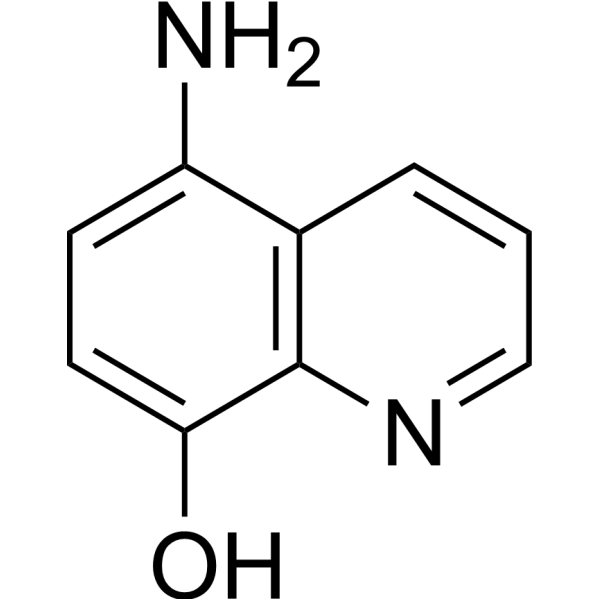 0 ImagesCat. No.: HY-W001023CAS No.: 13207-66-4Synonyms: 5A8HQ; 5AHQ5-Amino-8-hydroxyquinoline (5A8HQ; 5AHQ) is an orally active non-competitive 20S proteasome inhibitor. 5-Amino-8-hydroxyquinoline can inhibit NF-κB activity and induce cancer cells death and shows low cytotoxicity towards normal hematopoietic cells. 5-Amino-8-hydroxyquinoline can be used for the research of cancer, such as leukemia.
-
PR-39 TFA
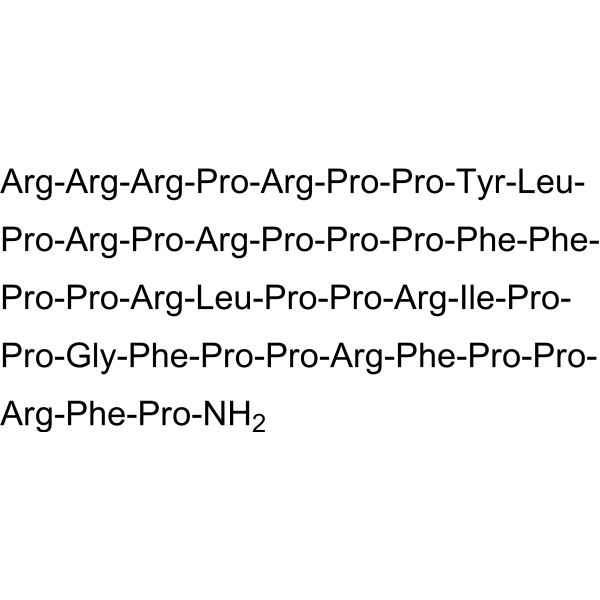 0 ImagesCat. No.: HY-P1259APurity: 99.89%PR-39 TFA, a natural proline- and arginine-rich antibacterial peptide, is a noncompetitive, reversible and allosteric proteasome inhibitor. PR-39 TFAreversibly binds to the α7 subunit of the proteasome and blocks degradation of NF-κB inhibitor IκBα by the ubiquitin-proteasome pathway. PR-39 TFA stimulates angiogenesis, inhibits inflammatory responses and significant reduces myocardial infarct size in mice.
-
LU-002i
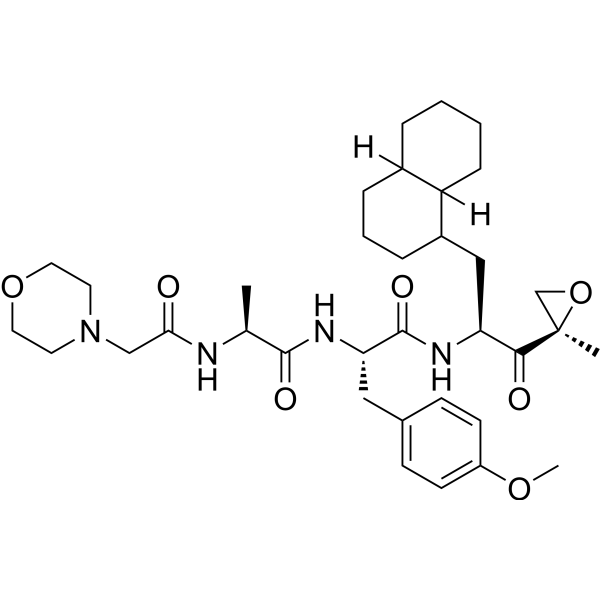 0 ImagesLU-002i is a subunit-selective human proteasome β2c and β2i inhibitor with an IC50 value of 220 nM for β2i.
-
Carfilzomib (Standard)
 0 ImagesSynonyms: PR-171 (Standard)Carfilzomib (Standard) is the analytical standard of Carfilzomib. This product is intended for research and analytical applications. Carfilzomib (PR-171) is an irreversible proteasome inhibitor with an IC50 of 5 nM in ANBL-6 and RPMI 8226 cells.
-
RA375
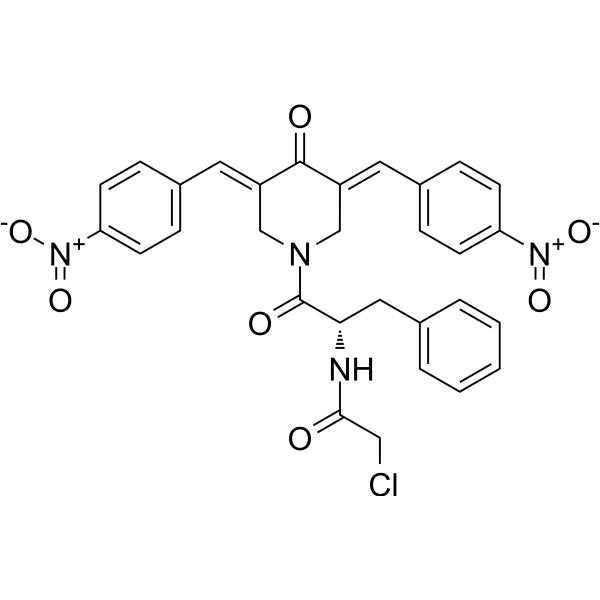 0 ImagesRA375 is a RPN13 (26S proteasome regulatory subunit) inhibitor. RA375 activates UPR signaling, ROS production and apoptosis. RA375 exhibits ten-fold greater activity against cancer lines than RA190, reflecting its nitro ring substituents and the addition of a chloroacetamide warhead.
-
Biotin-epoxomicin
 0 ImagesCat. No.: HY-P11307CAS No.: 1334608-28-4Biotin-epoxomicin is a Proteasome subunit binder. Biotin-epoxomicin serves as an affinity reagent for identifying proteasomal catalytic subunits, and facilitates affinity purification of active proteasomal subunits for LC-MS identification. Biotin-epoxomicin can be used to study solid tumors derived from B16 melanoma.
-
Proteasome inhibitor IX
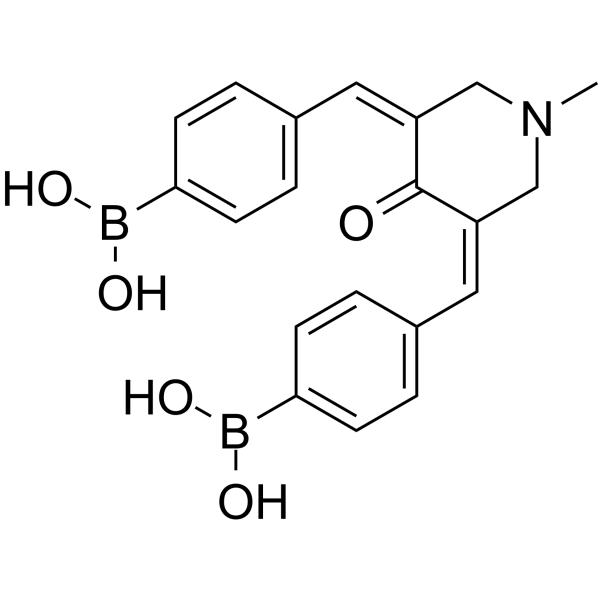 0 ImagesSynonyms: PS-IX; AM114Proteasome inhibitor IX (PS-IX; AM114) is a Chalcone derivative and a chymotrypsin-like activity of the 20S proteasome inhibitor with an IC50 value of ~1 μM. Proteasome inhibitor IX exhibits HCT116 p53+/+ cells growth inhibitory activity with an IC50 value of 1.49 μM. Proteasome inhibitor IX has potent anticancer activity.
-
Aspergillopepsin I
 0 ImagesAspergillopepsin I (Aspergillus acid protease) is a metal-containing aspartic protease that catalyzes the hydrolysis of peptide bonds in soybean 7S globulin, soybean 11S globulin and various proteins, with broad specificity. Aspergillopepsin I is intended for use in wine production, where it hydrolyzes haze-forming proteins into small peptides to prevent turbidity during storage. Aspergillopepsin I can be used in studies related to soybean protein hydrolysis and wine production.
-
Boc3Arg
 0 ImagesCat. No.: HY-23020CAS No.: 108787-91-3Boc3Arg is the tert-butyl carbamate-protected arginine. Boc3Arg is an efficient tag to induce degradation through directly localizing the protein to the 20S proteasome.
-
Zetomipzomib
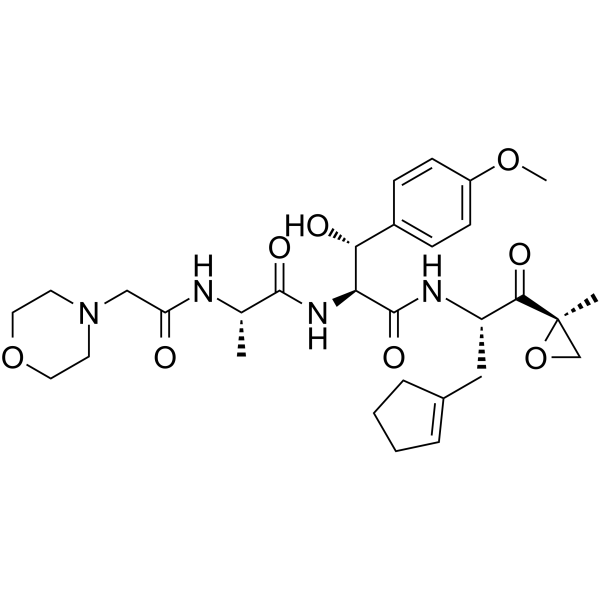 0 ImagesSynonyms: KZR-616Zetomipzomib (KZR-616), a first-in-class inhibitor of the immunoproteasome, selectively targets the LMP7 (IC50: 39/57 nM=hLMP7/mLMP7) and LMP2 (IC50: 131/179 nM=hLMP7/mLMP7) subunits of the immunoproteasome. Zetomipzomib has the potential for the research of multiple autoimmune diseases.
-
Immunoproteasome activator 1
 0 ImagesImmunoproteasome activator 1 (compound A) is a selective immunoproteasome activator that increases the presentation of individual MHC-I–bound peptides by over 100-fold. Immunoproteasome activator 1 binds to the proteasome structural subunit PSMA1 and promotes the association of the proteasome activator PA28α/β (PSME1/PSME2) with immunoproteasomes.
-
Dazcapistat
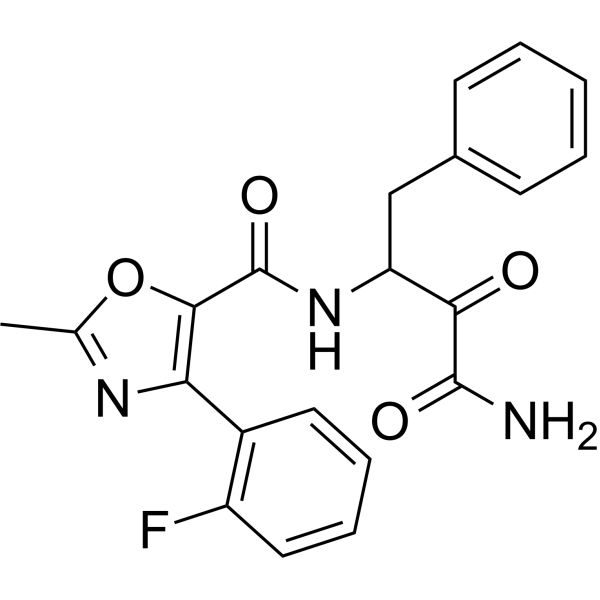 0 ImagesSynonyms: BLD-2660Dazcapistat (BLD-2660) is an orally active small-molecule inhibitor of calpain 1, 2, and 9 (calpain 1, 2, 9). Dazcapistat reduces the expression/production level of IL-6 in injured lung tissue and alleviates fibrosis. Dazcapistat exerts anti-fibrotic effects in various animal models of fibrosis in the skin, liver and lung. Dazcapistat can be used in research related to coronavirus disease 2019 (COVID-19) and idiopathic pulmonary fibrosis.
-
PR-924
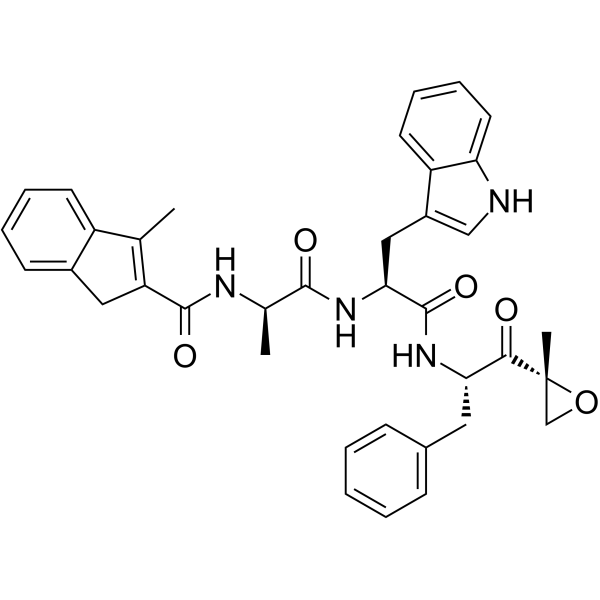 0 ImagesPR-924 is a selective tripeptide epoxyketone immunoproteasome subunit LMP-7 inhibitor with an IC50 of 22 nM. PR-924 covalently modifies proteasomal N-terminal threonine active sites. PR-924 inhibits growth and triggers apoptosis in multiple myeloma (MM) cells. PR-924 has antitumor activities.
-
NIC-0102
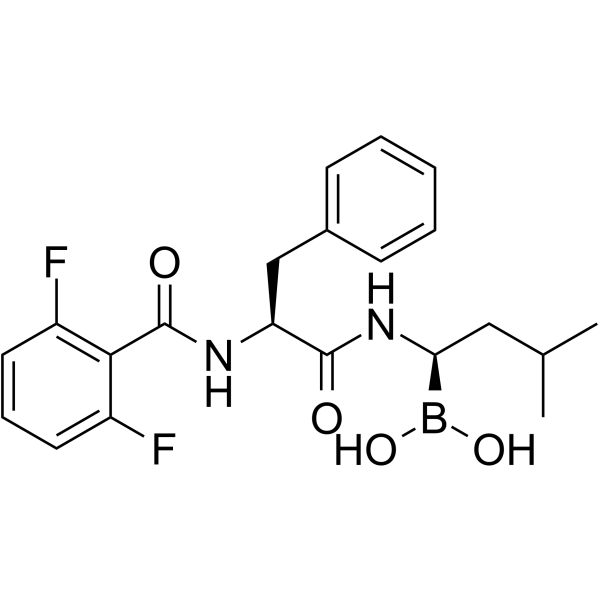 0 ImagesNIC-0102 is an orally active proteasome inhibitor (pIC50=7.55) that specifically inhibits NLRP3 inflammatory vesicle activation. NIC-0102 shows potent anti-inflammatory effects in a model of dextran sulfate sodium (DSS)-induced ulcerative colitis. NIC-0102 also inhibits production of pro-IL-1β.
-
Collagenase (Type C, animal free)
 0 ImagesCat. No.: HY-E70005MCAS No.: 9001-12-1Collagenase (Type C, animal free) is a proteolytic enzyme targeting collagen, capable of releasing corneal endothelial cells (CECs) without damaging cell junctions.
-
AK 295
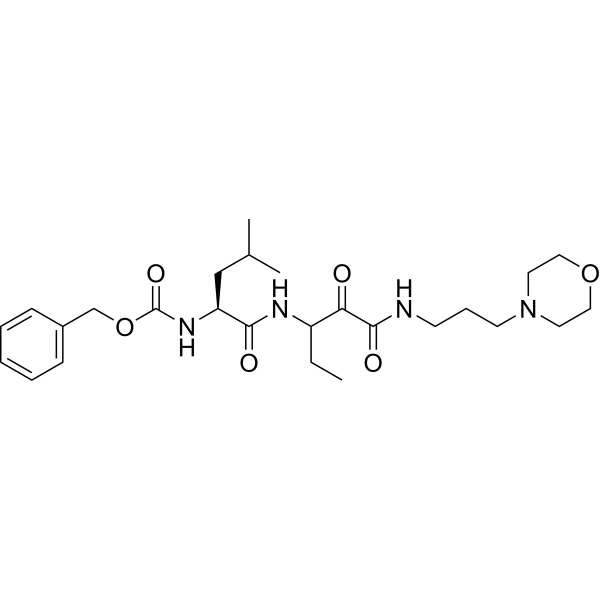 0 ImagesSynonyms: CX 295AK 295 (CX 295) is a selective calpain inhibitor. AK 295 can inhibit apoptosis through a calpain-dependent pathway. AK 295 shows potent neuroprotective effect. AK 295 can inhibit the activity of the cysteine protease calpain and reduce myocardial injury. AK 295 can be used for the researches of infection, inflammation, cardiovascular and neurological disease, such as stroke and viral myocarditis.
-
Biotin-(Oaa)3-epoxomicin
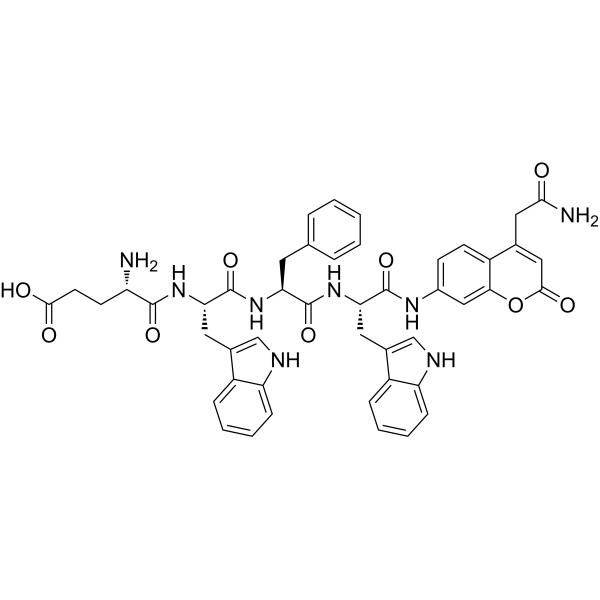
 0 ImagesBiotin-(Oaa)3-epoxomicin is a biotin-labeled form of Epoxomicin (HY-13821), prepared by conjugating Epoxomicin with biotin via three hydrophilic oxaacetyl amino acid (Oaa) linkers. Biotin-(Oaa)3-epoxomicin is primarily used in proteomic studies for the capture, identification and target validation of proteasome complexes, to determine the intracellular targets of epoxomicin. Epoxomicin acts as a proteasome inhibitor and NF-κB inhibitor, which effectively blocks inflammatory responses in mouse ear edema assays. It inhibits proteasome activity via covalent binding to catalytic subunits including LMP7, X, MECL1 and Z, with the strongest inhibitory effect on chymotrypsin-like activity, and does not interfere with non-proteasomal proteases such as trypsin and papain.
-
DPLG3
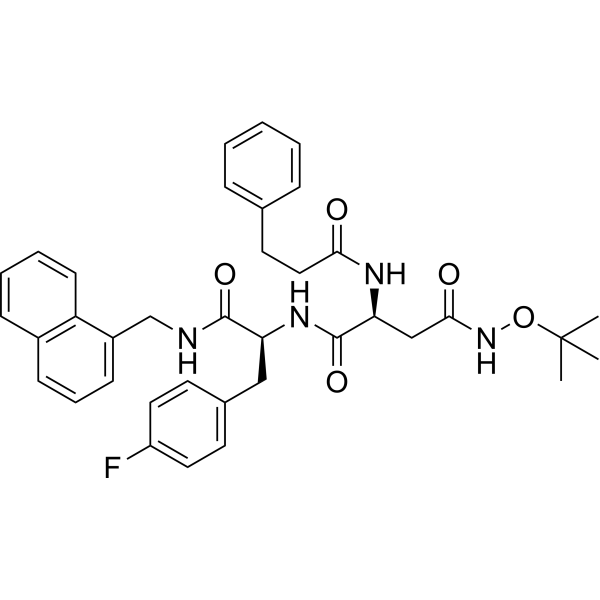 0 ImagesDPLG3 is a specific chymotryptic-like β5i subunits inhibitor, with an IC50 of 4.5 nM. DPLG3 inhibits mouse i-20S with IC50 of 9.4 nM. DPLG3 downregulates the protein levels of NF-κB p50 and p65. DPLG3 can be used for immune disease research.
-
PSI
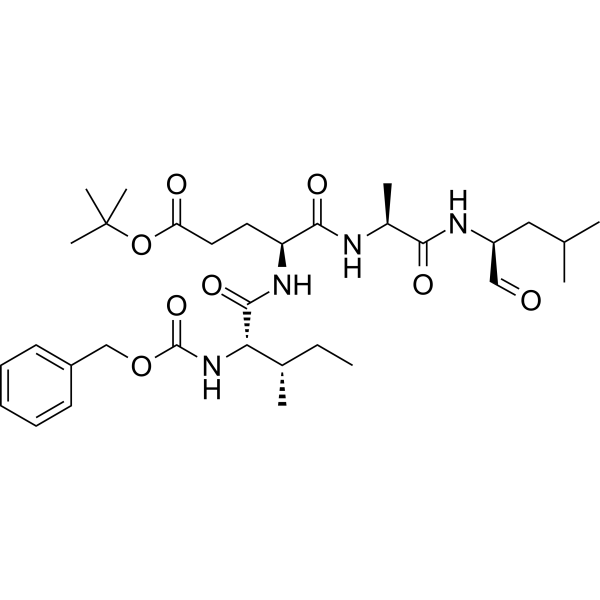 0 ImagesCat. No.: HY-P1258CAS No.: 158442-41-2Synonyms: Proteasome Inhibitor 1; Z-Ile-Glu(OtBu)-Ala-Leu-CHOPSI (Proteasome Inhibitor 1) is a potent proteasome inhibitor. PSI inhibits the proliferation of primary effusion lymphoma (PEL) cells. PSI has the potential for the research of Kaposi’s sarcoma-associated herpesvirus (KSHV) infection and KSHV-associated lymphomas.




