



Sodium Channel
Na channels; Na+ channels
Sodium channels are integral membrane proteins that form ion channels, conducting sodium ions (Na+) through a cell's plasma membrane. They are classified according to the trigger that opens the channel for such ions, i.e. either a voltage-change (Voltage-gated, voltage-sensitive, or voltage-dependent sodium channel also called VGSCs or Nav channel) or a binding of a substance (a ligand) to the channel (ligand-gated sodium channels). In excitable cells such as neurons, myocytes, and certain types of glia, sodium channels are responsible for the rising phase of action potentials. Voltage-gated Na+ channels can exist in any of three distinct states: deactivated (closed), activated (open), or inactivated (closed). Ligand-gated sodium channels are activated by binding of a ligand instead of a change in membrane potential.
Sodium Channel Isoform Specific Products
-
Sodium Channel
(627)
View all products
-
Nav1.1
(11)
View all products
-
Nav1.2
(16)
View all products
-
Nav1.3
(14)
View all products
-
Nav1.4
(14)
View all products
-
Nav1.5
(21)
View all products
-
Nav1.6
(12)
View all products
-
Nav1.7
(61)
View all products
-
Nav1.8
(41)
View all products
-
Nav1.9
(2)
View all products
All Product Categories
-
Sodium Channel Inhibitors
(619)
View all products
-
Sodium Channel Agonists
(10)
View all products
-
Sodium Channel Antagonists
(30)
View all products
-
Sodium Channel Activators
(35)
View all products
-
Sodium Channel Modulators
(28)
View all products
-
Sodium Channel Controls
(5)
View all products
-
Sodium Channel Ligands
(3)
View all products
-
Sodium Channel Related Products (800)
Related Products (800)

-
Antibodies (9)
-
Related Compound Screening Libraries (1)
-
Sodium Channel Isoform Comparison
-
BDS-II
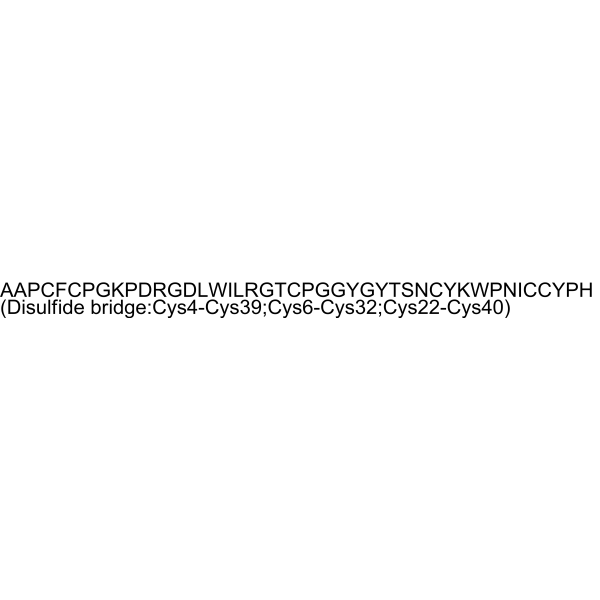 0 ImagesCat. No.: HY-P5818BDS-II is a peptide toxin, and is composed of 43 amino acids. BDS-II is a selective Kv3.4 channel inhibitor.
-
Ranolazine-d8 dihydrochloride
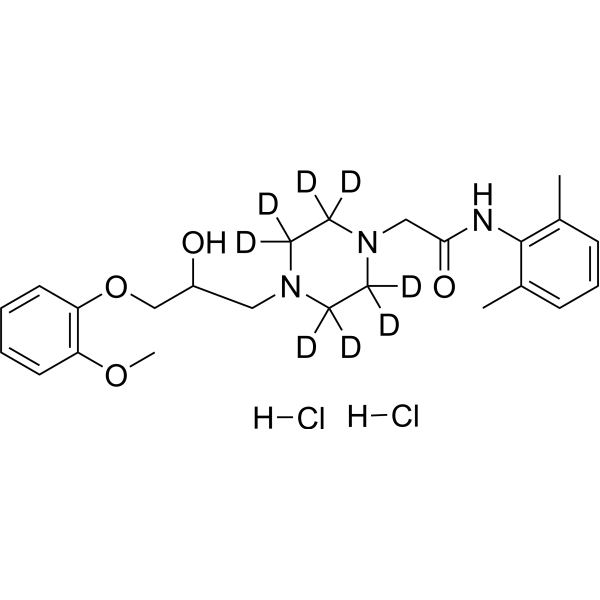 0 ImagesSynonyms: CVT 303-d8 dihydrochloride; RS 43285-d8Ranolazine-d8 (dihydrochloride) is the deuterium labeled Ranolazine dihydrochloride. Ranolazine dihydrochloride (CVT 303 dihydrochloride) is an anti-angina agent that achieves its effects by inhibiting the late phase of inward sodium current (INa and IKr with IC50 values of 6 μM and 12 μM, respectively) without affecting heart rate or blood pressure (BP). Ranolazine dihydrochloride is also a partial fatty acid oxidation inhibitor.

-
Propafenone-(phenyl-dd5) hydrochloride
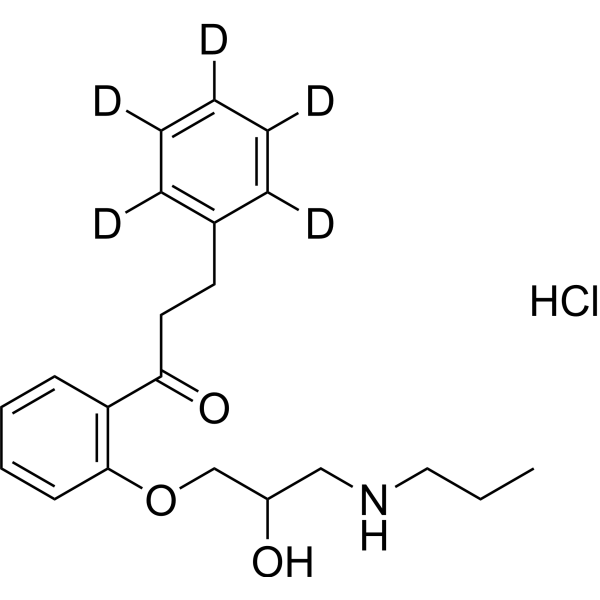 0 ImagesCat. No.: HY-B0432AS4CAS No.: 93909-48-9Propafenone-(phenyl-dd5) (hydrochloride) is the deuterium labeled Propafenone hydrochloride[1]. Propafenone hydrochloride is a class of anti-arrhythmic medication, which treats illnesses associated with rapid heart beats such as atrial and ventricular arrhythmias[2].
-
GS-462808
 0 ImagesCat. No.: HY-120774CAS No.: 1354198-41-6GS-462808 is an oral active late sodium current inhibitor (Late INai) of the cardiac Nav1.5 channel with the IC50 of 1.33 μM. GS-462808 can be used for study of arrhythmia.
-
Budiodarone-d10 tartrate
 0 ImagesCat. No.: HY-14834ASSynonyms: ATI-2042-d10 tartrateBudiodarone-d10 tartrate (ATI-2042-d10 tartrate) is the deuterium labeled Budiodarone tartrate (HY-14834A). Budiodarone (ATI-2042) tartrate is a chemical analogue of Amiodarone (HY-14187) with balanced, multiple cardiac ion channel (potassium, sodium and calcium channels) inhibiting activity. Budiodarone tartrate is an antiarrhythmic agent.
-
Sulcardine
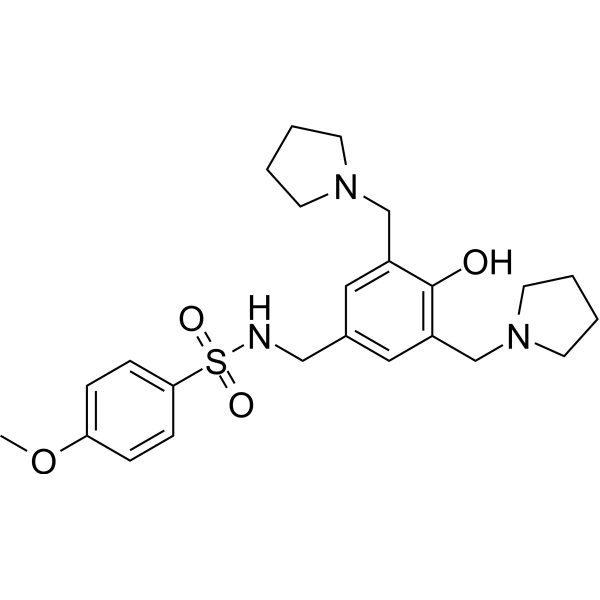 0 ImagesCat. No.: HY-156976CAS No.: 343935-60-4Sulcardine is a multi-ion channel blocker that can reduce INa and ICa with IC50 values of 26.9 µM and 69.2 µM, respectively. Sulcardine is a potent hNav1.5 channel blocker with a mild inhibitory effect on hERG channels. Sulcardine has anti-arrhythmic effects.
-
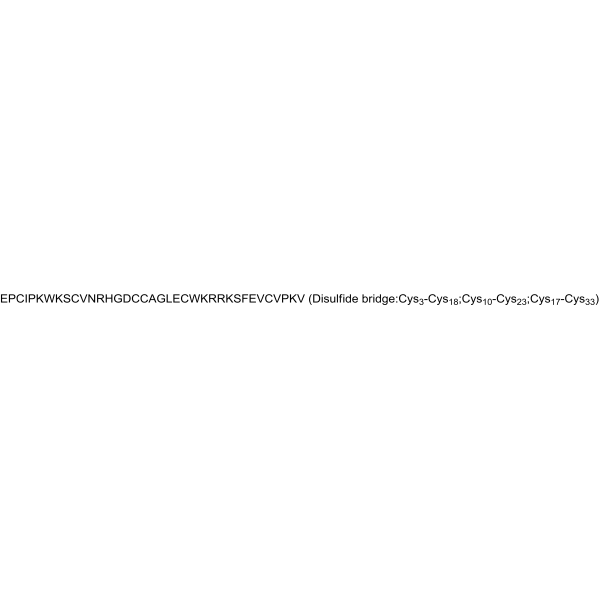
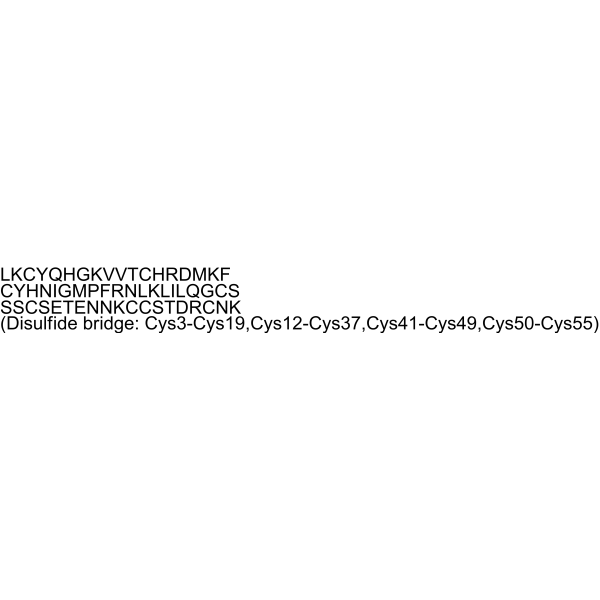
Scorpion toxin Tf2
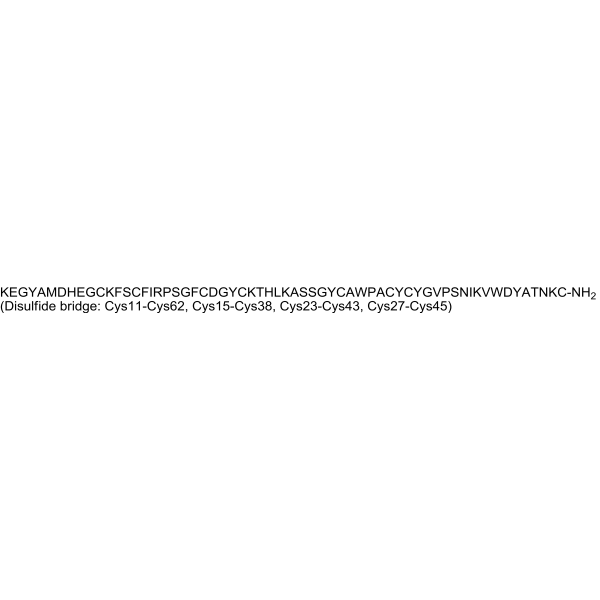 0 ImagesCat. No.: HY-P5152Scorpion toxin Tf2 is a selective human voltage-gated sodium channel Nav1.3 (hNav1.3) activator. Scorpion toxin Tf2 selectively shifts the channel's activation voltage to more negative values, enabling channel opening at resting membrane potentials. Scorpion toxin Tf2 can be used for the research of epilepsy, nociception (after spinal cord injury).
-
Topiramate D12 (Standard)
 0 ImagesCat. No.: HY-110234RCAS No.: 1279037-95-4Synonyms: McN 4853 D12 (Standard); RWJ 17021 D12 (Standard)Topiramate D12 (Standard) is the analytical standard of Topiramate D12. This product is intended for research and analytical applications. Topiramate D12 (McN 4853 D12) is a deuterium labeled Topiramate. Topiramate is a broad-spectrum antiepileptic agent. Topiramate is a GluR5 receptor antagonist. Topiramate produces its antiepileptic effects through enhancement of GABAergic activity, inhibition of kainate/AMPA receptors, inhibition of voltage-sensitive sodium and calcium channels, increases in potassium conductance, and inhibition of carbonic anhydrase.
-
Carisbamate-d215N
 0 ImagesCat. No.: HY-W707539Synonyms: RWJ-333369-d215NCarisbamate-d2,-15N (RWJ-333369-d2,-15N) is the deuterium labeled Carisbamate (HY-14948). Carisbamate (RWJ-333369) is an orally active neuromodulator. Carisbamate prevents the development and production of epilep-like discharges and has a neuroprotective effect after in vitro epilepticus-like injury. Carisbamate has good antiepileptic activity in genetic models of generalized and nonconvulsive epilepsy.
-
NIP 142
 0 ImagesCat. No.: HY-W705705CAS No.: 203002-58-8NIP-142 is a benzopyran derivative with multiple ion channel-blocking effects. NIP-142 selectively blocks the potassium ion channels enriched in atrial muscle, prolonging the effective refractory period (ERP) and action potential duration (APD) of the atrium, while having minimal effect on ventricular repolarization. NIP-142 also inhibits L-type/T-type calcium channels and sodium channels, further contributing to its anti-arrhythmic effect. NIP-142 shows significant efficacy in various atrial fibrillation models. NIP-142 can be used for research on arrhythmias.
-
Lidocaine hydrochloride hydrate (Standard)
 0 ImagesSynonyms: Lignocaine hydrochloride hydrate (Standard)Lidocaine (hydrochloride hydrate) (Standard) is the analytical standard of Lidocaine (hydrochloride hydrate). This product is intended for research and analytical applications. Lidocaine (Lignocaine) hydrochloride hydrate inhibits sodium channels involving complex voltage and using dependence. Lidocaine hydrochloride hydrate decreases growth, migration and invasion of gastric carcinoma cells via up-regulating miR-145 expression and further inactivation of MEK/ERK and NF-κB signaling pathways. Lidocaine hydrochloride hydrate is an amide derivative and has potential for the research of ventricular arrhythmia.
-
Fluphenazine dimaleate
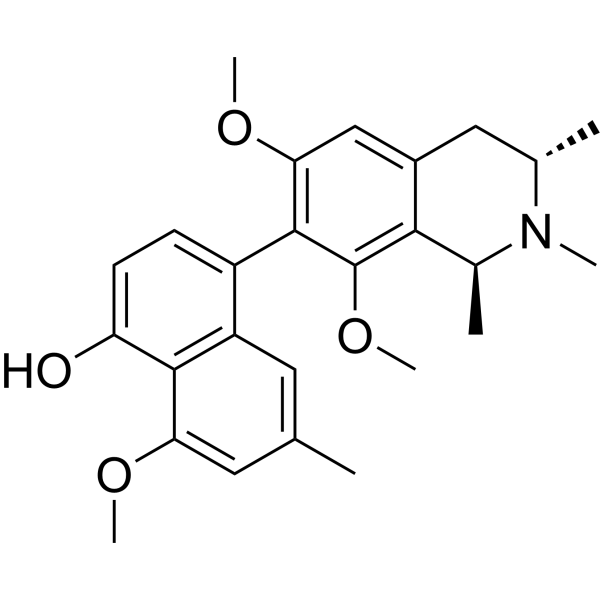
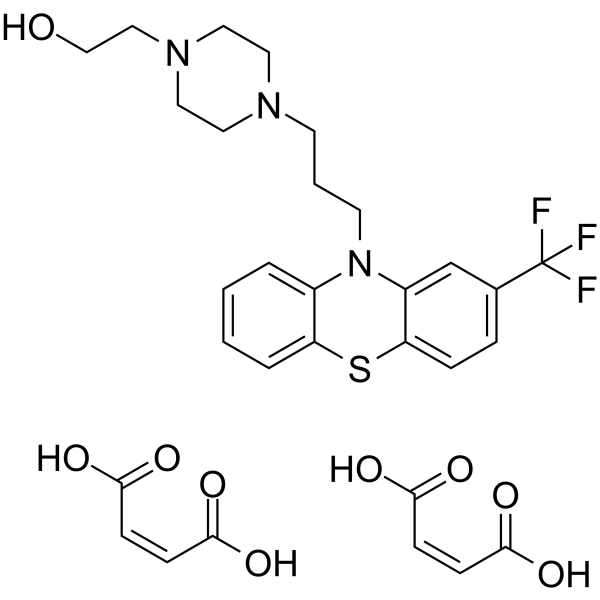 0 ImagesCat. No.: HY-119980ACAS No.: 3093-66-1Fluphenazine dimaleate is a potent, orally active phenothiazine-based dopamine receptor antagonist. Fluphenazine dimaleate blocks neuronal voltage-gated sodium channels. Fluphenazine dimaleate acts primarily through antagonism of postsynaptic dopamine-2 receptors in mesolimbic, nigrostriatal, and tuberoinfundibular neural pathways. Fluphenazine dimaleate can antagonize Methylphenidate-induced stereotyped gnawing and inhibit climbing behaviour in mice. Fluphenazine dimaleate can be used for researching psychosis and painful peripheral neuropathy associated with diabetes and has potential to inhibit SARS-CoV-2.
-
Mexiletine hydrochloride (Standard)
 0 ImagesMexiletine (hydrochloride) (Standard) is the analytical standard of Mexiletine (hydrochloride). This product is intended for research and analytical applications. Mexiletine is an orally effective antiarrhythmic agent which has also been found to be effective for myotonia and neuropathic pain. Mexiletine exerts its efficacy through blocking sodium channels (IC50 : 75±8 μM for tonic block, 23.6±2.8 μM for use-dependent block), therefore can be used for cardiovascular and neurological research.
-
Cofirasersen sodium scrambled negative control
 0 ImagesCat. No.: HY-139786CCofirasersen sodium scrambled negative control is the sequence scrambled negative control of Cofirasersen sodium.
-
Detajmium L-tartrate
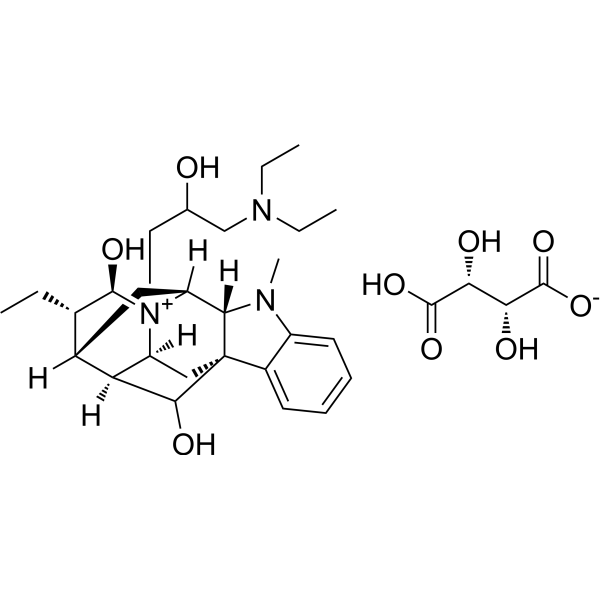 0 ImagesCat. No.: HY-115839ACAS No.: 33774-52-6Synonyms: Detajmium bitartrate; TachmalcorDetajmium (L-tartrate) is an antiarrhythmic compound. Detajmium has effect on V max in both dog ventricular muscle and Purkinje fibers was frequency dependent.
-
Fomocaine
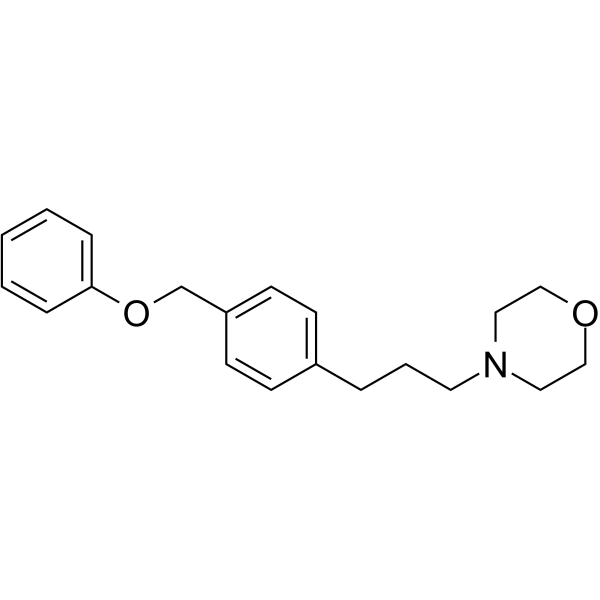 0 ImagesCat. No.: HY-B1656CAS No.: 17692-39-6Synonyms: P 652Fomocaine (P 652) is an orally active local agent that can suppress or relieve pain. Fomocaine shows antiarrhythmic activity.




